How Would ChatGPT Do on Bulgaria's School-Leaving Exam?
The world may talk endlessly about the Turing test, but Bulgaria has its own equivalent that is just as telling: the matura, the school-leaving exam in Bulgarian language and literature. I gave ChatGPT this year's exam with no extra instructions, sat it myself as a rival, and handed both papers to a real examiner, who graded them and tried to guess which one was written by the algorithm and which by an overage school-leaver. Which of us embarrassed himself more? Grab the popcorn.
 02
How to Generate Yourself an Influencer
How could you not like Elena Dimitrova, or simply EcoElena? Blonde, smiling, upbeat, she travels, lives in harmony with nature, hands out useful tips and offers exotic recipes. There is just one more detail: she doesn't exist, and in a month of posts in her name, 84,519 people saw her, nine proposed romance, and not one noticed that every letter and pixel was generated by AI.
 03
“AI Is Handling More and More Tasks. The Question Is What We Want Next”
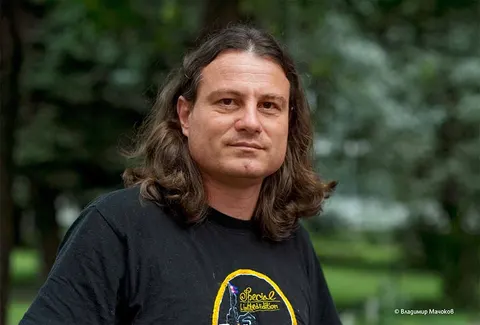
Prof. Preslav Nakov is a specialist in natural language processing, ranked among the top scientists in the field worldwide. Which are the hottest directions to watch for news in artificial intelligence, and in text processing in particular? Where does enthusiasm outrun reality? Are we close to a general AI that can resemble and even surpass humans, is it possible at all, and should it frighten us or, on the contrary, fill us with enthusiasm for the future?
 04
What Is ChatGPT's IQ?
What is the intelligence quotient of advanced artificial intelligence? Does it reach, or even surpass, the average 100 points of today's humanity? And why does it matter? Let's find out together!
 05
RoboGod: What Should Artificial Intelligence Believe In?
If one day we create a technology indistinguishable from a human, will it… believe in God? What will its God look like? Might it try to become God itself? Or… simply be God? Technology and religion have always had a complicated relationship. But will they find the road to the future and to the survival of the human species together?
 06
“Laugh, ’Cause the Universe Is Endless, but Life Ain’t”
This piece was the April Fools’ greeting from Digital Stories, an unconventional interview with a beloved, out-of-the-box writer, and today it reads very differently and is even more worth reading: Stoyan Nikolov (Torlaka) passed away just days ago, at only 42, leaving behind distinctive, meaningful books that will be read for a long time, and three boys who will grow up as brave and defiant as he was, and as his Northwest is. “Laugh, ’cause the universe is endless, but life ain’t. It’s just energy, changin’ from one form to another in this endless universe; long as you’re in this here shell of yours, enjoy it. After that, who knows.”
 07
GPT-3: A Cozy Chat with Artificial Intelligence
GPT-3. Behind this rather dry computer acronym hides a highly promising technology that takes quite a decisive step forward in the way we perceive artificial intelligence. It is the most powerful new-generation language model, which appeared less than a year ago and showed that neural networks are now capable of creating meaningful, emotional texts, sometimes sounding downright like art. And they can even write… computer code on their own!
 08
“Poetry Remains a Secret Treasure”: “Hristian Papazov” Gives His First Interview
The man who was the first in Bulgaria to place AI-generated verse among the best in a poetry competition gives his first (and perhaps only) interview ever, to Digital Stories. The questions come from… the second person to confirm the striking experiment. Who is behind the name Hristian Papazov, and why does he hope that we humans, not the algorithms, will soon be writing far better, more original and meaningful poems?