The Logic of Emotions: Why We Hate, and How to Stop
Two IT people sat down… to talk about communication. Technologies change; the people who use them don't. Why does a programmer with 20 years of experience insist that the most important skill in his profession is understanding people? And what does that have to do with hate on social media and with artificial intelligence?
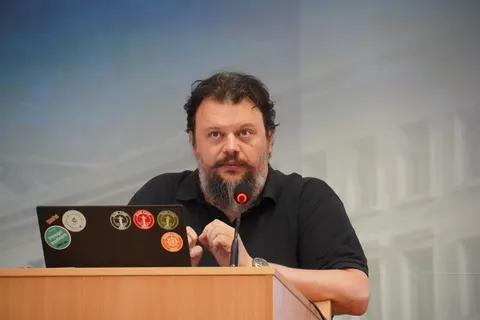 02
“Let Humanity Have Its Fill of Playing with Technology”
How did we lose the ability to wait, and why does it matter that we get it back? Will we learn to be bored well when technology supposedly frees up our time? What will the last book written by a human say? Violeta Radkova impressed me with her debut novel I legloto ni e zelenina (And Our Bed Is Green). She is a translator and editor, and her book rests on her great-grandmother's memories, written down in a grocer's ledger, while she wrote much of it on her phone. Caught up in the present, we talk about the future and the past, the fast and the slow. About books and meaning.
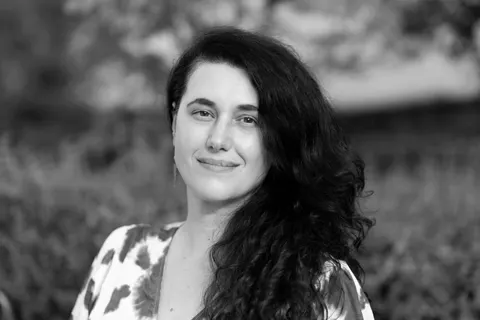 03
“We Need Something Very Powerful to Reboot the World. Let’s Hope It Isn’t War”
Can the world order change without a war? What could be the event that does it today? How can we curb the power of the corporations that, in the age of technology, have turned out to be stronger than states?
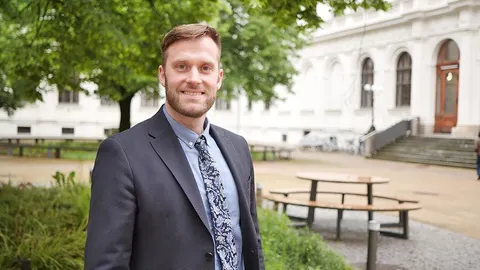 04
“We Live in a World of Copying, of the Shallow, of the Fast”
At 21, he stepped in front of the camera of Po sveta i u nas, the flagship evening news of Bulgarian National Television. Seventeen years later he walked away and crossed over… into the world of technology, because that is where he sees the change he wants to help bring about, and the future his three kids will live in. Spas Kyosev is one of the most recognizable faces on Bulgarian television and the youngest anchor of the main news in the history of BNT, and for years he drove the BNT Taxi, an award-winning, thoughtful show that gave everyone a say on the big issues of the day; there is so much to talk about—technology and journalism, television and reading, news and commentary—so hop into the Digital Stories taxi too: it’s free, and it always will be!
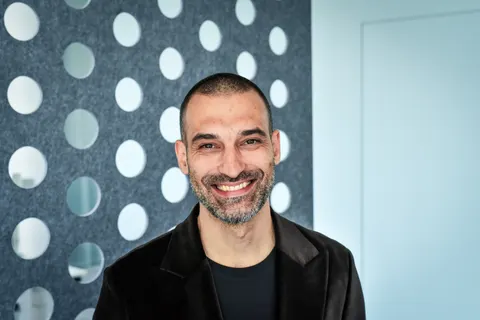 05
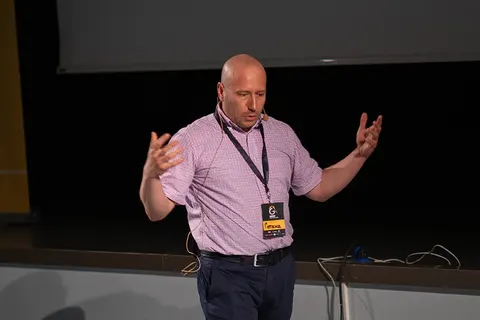
“AI Is No Better a Programmer Than the Ones You Already Have!”
“However we integrate AI, in the end every line of code has to be read by a human.” “It is sheer madness to believe that general AI can be achieved with large language models.” “The world as we knew it is dead, and it isn’t coming back.” Ivan Vankov (Gatakka) can always be counted on for an original, unorthodox, provocative and thought-provoking take on technology, as the lines that follow will show.
 06
“There’s Really No Point in Owning a Car”
Does the future finally belong to electric cars? What will mobility look like tomorrow? Will we still own cars of our own? And how far away is the moment when people will no longer need to drive? For Denitsa Daverova, “yesterday” is cinema. She gave it two decades, and her father wrote the screenplay for the legendary film of that name. Today and tomorrow, though, belong to technology. Since childhood she has had a passion that is rare among girls: cars. Then came electric vehicles. In 2018 she rode in an electric car for the first time and quickly decided that this was the future, both for mobility and for herself. She left the film sets and founded Travel by Electric, a platform that gathers all the information drivers need in one place.
 07
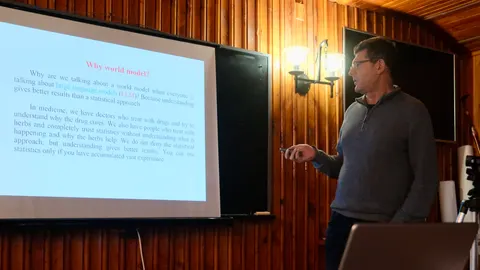
“In Building True AI, We Get Only One Shot”
Everyone is talking about artificial general intelligence, the enormous next step that will confront us as a species with colossal and unpredictable challenges, and one of the first scientific conferences on the subject was organized in Blagoevgrad by Dimitar Dobrev, an AI and mathematical logic researcher who teaches at Sofia University. Before we let the genie out of the bottle, he says, we should at least decide what we want from it. We talk about intelligence as a force, our naivety about the future, control, regulation, open source, and one simple but frightening question: if we don't know what future we want, how do we expect to get it?
 08
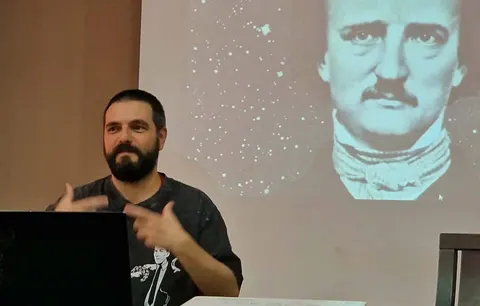
How Ratatouille Gave Birth to Bunk Romero
Bunk Romero is a genuine phenomenon: a six-book series that blends the best of crime fiction and science fiction with an authentic sense of humor. Its author, Emil Minchev, is known for the werewolf detective series, but also as the translator of Gone with the Wind, The Hound of the Baskervilles and The Great Gatsby. We sat down to talk about books and the future, about science fiction and fantasy.
 09
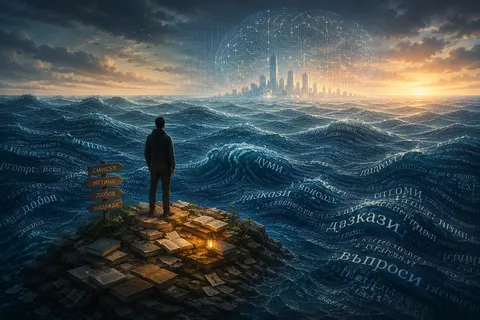
“AI Is Testing What Kind of People We Really Are”
This is a conversation about words: about language and the new path it will take with the astonishing progress of artificial intelligence, progress that came through language itself. Nikolay Tellalov is a favorite guest of Digital Stories. Five years ago he and I did the site's very first experiment, an interview in short stories, and this time we talk about everything that has happened since, with technology, with words and with all of us.
 10
“We’re Already Generating a Tremendous Amount of Chaff”
Can we stop the cognitive decline that comes with the enormous progress of artificial intelligence, and how? Can the pendulum of cognitive decline, of over-trusting technology, of a broken public conversation swing back, and how? We pit the optimistic and the pessimistic views against each other on the biggest question this site exists for. Prof. Julita Vasileva is a world-renowned researcher in computer science and in our interaction with technology. We met five years ago to talk about the filter bubble and about the way we interact and get informed online. Today she is researching an equally important and even hotter topic: can we turn the techniques of online manipulation against their creators?
 11
Look Up at the Cosmos! What Comes Next?
For the first time in 54 years, humans reached the Moon and even flew around it, yet the news slipped past in a feed full of daily worries, when it deserves to be center stage. Molecular biologist Svetoslav Aleksandrov has spent 20 years explaining the exploration of the Universe on his site KOSMOS BG, one of the most important corners of the Bulgarian web. We board the rocket to talk about the future of people, technology and space, and about humanity's next great goal out there.
 12
How Should Children Meet AI?
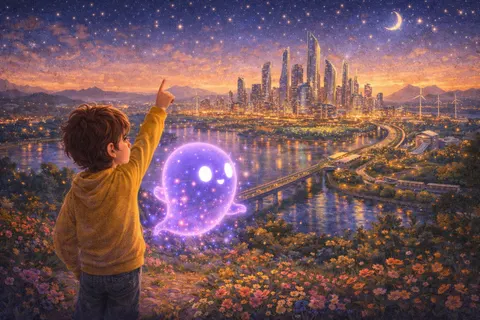
When is the right moment to introduce children to artificial intelligence, and what is the best way to do it? I admit I am still looking for my own answer, which is why I sat down for today's interview, to keep searching for it together with my guest. Nikolay Tsonev chose to walk away from a successful IT career abroad to bring the international programming school Logiscool to Bulgaria. The system, which helps children aged 6 to 18 get their hands on computers, is already present on five continents. But… now that AI writes code better than we do, does it still make sense to learn programming, and why? It definitely does, and here's why.
 13
How Do We Peek into the “Thoughts” of Artificial Intelligence?
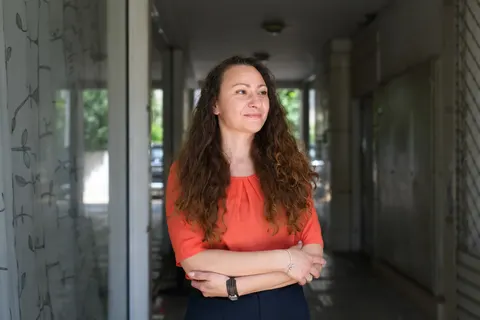
“Work, professional life, the drive to achieve corporate success and positions—this has become the mass culture of our society worldwide. To this day, many people find the meaning of their lives this way. From now on, we will have to change that. We will have to search for meaning.” We find ourselves in a time when the chatbot is not just an assistant but also a “therapist.” Before we even know it well enough, before we have laid down the ethical frameworks. We are already seeing the first challenges this brings, and the real problems are still on their way. Donika Borimechkova is a psychologist and psychotherapist with more than 15 years of experience. This time we decided to invite artificial intelligence itself to a therapy session. Because, as Donika says, many of her clients already get advice from it before they meet her. We never found a method or an approach that would let us run such an experiment, so we decided to discuss the subject, lay the foundations and then invite each of you to give us ideas on how to continue. Here is how this conversation begins.
 14
“A Complex and Difficult Year Lies Ahead”
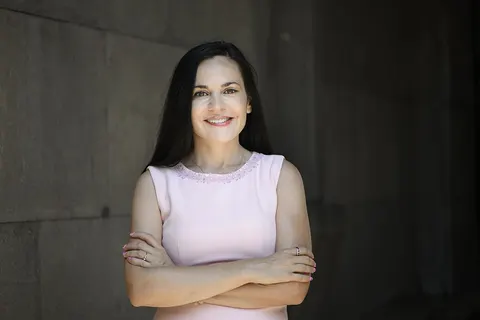
No, there's no astrology here, just pure science. How many scientists do you know who can predict the future with 85 percent accuracy? I know just one, and the verdict isn't only mine, but ChatGPT's too, from a particularly telling experiment. Assoc. Prof. Mariana Todorova returns for what has become a traditional Digital Stories interview at the start of each year. The futurologist always gives us important things to think about, so there's no need for a long introduction. Let's peek into the future together!
 15
Petko Dinev, the Man Who Gives NASA Its Eyes
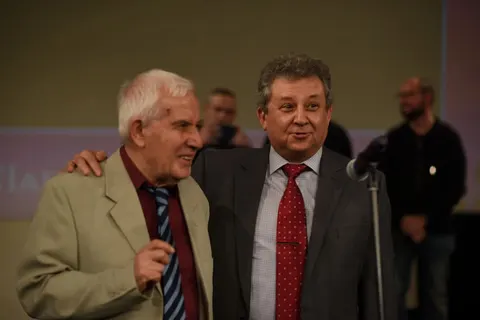
A Bulgarian and his team build the cameras that helped NASA turn its gaze to the Moon, and then to Mars. His designs are used by all the biggest aviation companies, and besides having already “set foot” on our satellite, they fly aboard thousands of satellites in orbit. In the 1990s Petko Dinev left for Florida, where he started working at NASA. He then founded his own company, which stands out worldwide for its expertise in building industrial cameras. His path began in Kazanlak—he is Bulgaria’s first gold medalist in physics and a student of the legendary Teodosiy Teodosiev, known as Teo. Our guest is also among the main characters of the new documentary Sotsialno silnite (The Socially Strong), which gives the floor to the gold medalists of Teo’s school. How does a person end up at NASA by chance? How does a scientist build a company that becomes the world benchmark in its industry? How can we change the fact that today half the students at the high school he graduated from fail to scrape even a pass on the math matura? How do we make science fashionable and give technology a chance? How do we, as human beings, catch up with its enormous growth? We have huge questions to discuss with this exceptional guest. “Yes, we live in interesting times. Maybe even too interesting. I don’t think we’ve reached the limits of technology. I think we’re still in the overture…”
 16
“If It’s Beautiful, Does It Matter That AI Wrote It?”
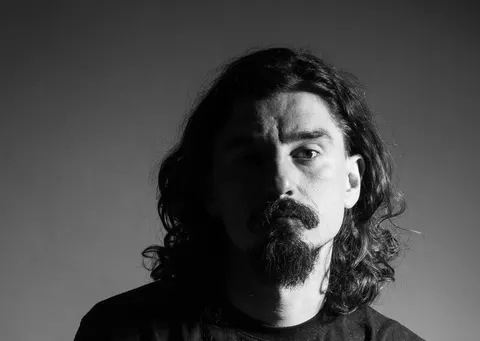
Is there room for poetry in the age of TikTok and artificial intelligence? How do we return this art to the pedestal it deserves? Can today’s poets be influencers, and should they? Is the time when artificial intelligence can no longer be separated from poetry frightening, or a dream come true? Apollo ex machina is the name of Bulgaria’s first competition for poetry created with the help of artificial intelligence, and now is the moment to join in! The venture’s special name was coined by today’s guest. Besides sitting on the competition jury, he runs the publishing house Scribens, which will publish the best poems from it in a collection. Georgi Gavrilov is a poet and… a physicist. He founded Scribens to give young Bulgarian authors a chance to reach their readers.
 17
“Engineers Will Always Be in Demand. But Our Skills Have to Change”
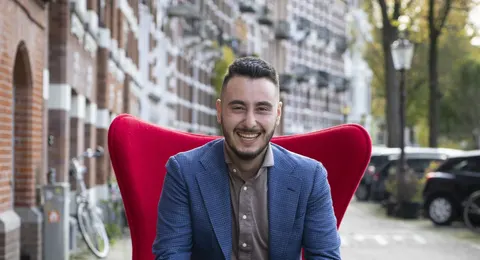
Work in the software world has already changed fundamentally with the arrival of artificial intelligence. On November 29, at the conf.ai workshop, Djemal Ahmedov will harness AI agents and make them work as an entire software team. Before that, we talk about the chaotic present and uncertain future of software in the age of advanced AI, and about whether there will always be a human in the loop.
 18
“We Can No Longer Think Only About Endless Growth!”
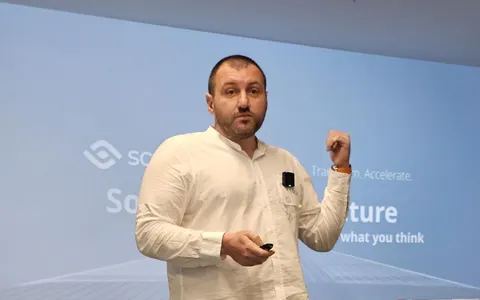
“Right now we don't have the conditions for AI to develop dramatically,” says Krasimir Kostadinov, chief technology officer of Scalefocus, who argues that the future of IT has aspects even more important than artificial intelligence. After his provocative talk at the 9th DEV.BG All in One conference, we continued the conversation about the Bulgarian dimensions of the IT future. Is it worth entering IT in Bulgaria today, and which qualities matter in the dynamic times we live in?
 19
“Bulgarians Are Getting Smarter”
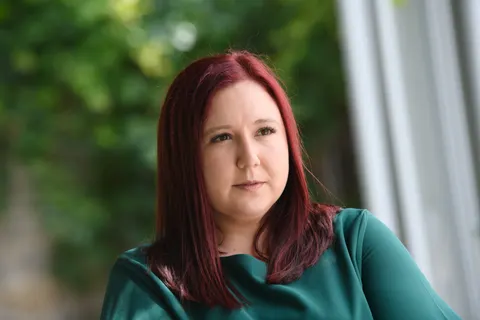
How is it that over the past 30 years Bulgarians… have been getting smarter, according to the only organization that provably measures this? Are programmers the largest group among those who pass the Mensa tests? Does intelligence still matter when technology handles more and more mental tasks, and why, in the days of the AI revolution, is it more important than ever to develop our minds?
 20
“Sadly, Football Is Becoming More and More of a Reality Show”
If you love sport, I recommend this conversation. It will make you think in some very unexpected directions. “Walking encyclopedia” is a cliché that is no exaggeration for a handful of Bulgarians, and in my view today's guest is one of them. Teodor Borisov is a sports journalist who travels the planet in search of powerful football stories that are still being born in these technological times. A historian and author of books on Bulgarian history and sport, he writes questions for many of the most popular TV quiz shows, a path that began when he won Minuta e mnogo (A Minute Is a Lot) three times. There is nothing from the past of Bulgarian (and not only Bulgarian) sport you can ask him about that he doesn't know. Today, though, something different will happen. I will ask him about the future. About the magic of sport and King Football. About the commercialization and oversaturation that come with technology and can drive away even the most loyal fans. About the crisis of authority.