TrumpScript, or Coding in Song: 10 Wacky Programming Languages
Computer code that reads like a cooking recipe? Programs built out of colors or sounds? Here are 10 of the strangest programming languages, inspired by Shakespeare, Terry Pratchett and even Donald Trump.
 02
Peter Thiel: The Conservative Visionary
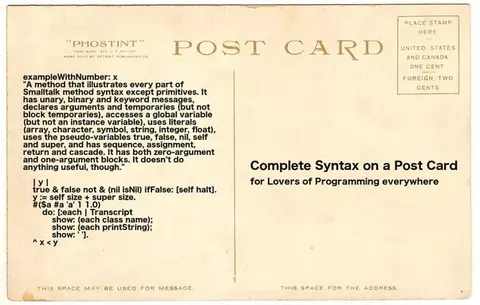
Facebook, SpaceX, Airbnb, LinkedIn, PayPal, Ethereum. The revolution of OpenAI and ChatGPT, the rise of Donald Trump and his ubiquitous (until recently) ally Elon Musk. Is there really one person who ties all these phenomena together? More than that: it is no exaggeration to say that if it weren't for today's hero, hardly any of them would have come true… Peter Thiel has earned the name of a prophet, a guru. The great visionary of the tech age. And yet he holds deeply controversial views that somehow stay out of the big media noise. But that is typical of the German-born entrepreneur. Some see him as the éminence grise of Silicon Valley, others as a sage who can show anyone the road to great success in the technological era. A multibillionaire, he says competition is a deceptive good and monopolies are the solution of the future. He created a large-scale program to help people who choose to abandon their education in order to start their own business, which in turn paves the way for the next generation of tech leaders. All this and much more is Mr. Thiel. It is time he stepped into the spotlight, because he is certainly one of the people who have already changed the lives of each of us. More than that: ever more is expected to depend on him in the turbulent technological times we live in.
 03
Dario Amodei: Is It Too Late for Humanity to Wake Up?
“Humanity is about to be handed almost unimaginable power, and it is deeply unclear whether our social, political, and technological systems possess the maturity to wield it.” So says perhaps the most talked-about tech leader of the moment, and he has good reason to. “He hates Western civilization,” wrote Musk. “A liar with a God complex,” snapped Under Secretary of War Emil Michael. “Leftwing nut jobs,” added Trump. All words from the past few weeks, aimed at today’s hero. Who is this fearsome enemy? You would hardly guess that it is a level-headed, mild-looking physicist from San Francisco who simply announced that he will not allow his company to be used for building autonomous weapons or for mass surveillance. Dario Amodei, the creator of the most advanced AI models, has finally landed where he deserves to be—in the spotlight. And not only because he stood up to the most powerful state on earth at the real risk of destroying his multibillion-dollar company. Not only because, in recent years, Anthropic’s models have pushed artificial intelligence to incredible heights. But also because he dared to peer into the future. The place we are all heading toward, where few dare to ask the truly important questions. Such as—how do we survive as a civilization in the age of super-advanced artificial intelligence?
 04
“The Epidemic of Ignorance Will Only Spread”
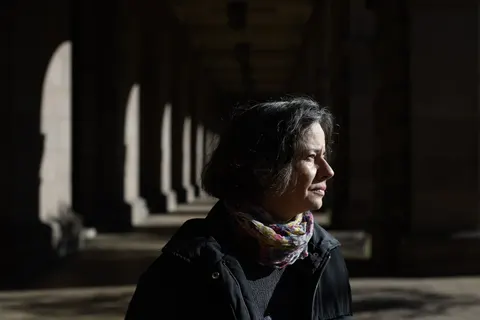
“Our inability to strike up a meaningful dialogue has left hundreds of thousands of people socially isolated. Some fall ill and die simply because they lack real human contact. I believe artificial intelligence will deepen this trend, because it will fool people into thinking they are talking to a friend, to someone they have lost, or to someone who refuses to hear them. And so we find ourselves in a world where we can supposedly talk to each other. But behind this apparent palette of viewpoints, of words, of word salad, including self-absorbed academic speeches, sit frightened, disillusioned people, impoverished intellectually and emotionally. To me, that is the great horror of our time.” Our conversation with the writer Silvia Tomova began with poetry and went on to education, history, the epidemic of ignorance and the long-overdue need for a social awakening. Against this backdrop, technology remained a constant companion, changing each of these subjects from the ground up. A journalist and special education specialist by training, she publishes essays, short stories and novels. The winner of numerous awards and the author of five novels and three short story collections, Silvia often peers into the past as well as into the big questions of today. She is not afraid to break out of clichés and to challenge the mainstream, both in literature and in public life. And so we meet for an important conversation that has come at just the right time.
 05
Facebook → Instagram → TikTok… What Comes Next?
Social networks keep evolving as technology advances, generations change and countless other forces come into play. So what comes next? What will the social networks that rule after today's giants fade look like, what kind of content will they offer, and how will they win us over? Social networks have become the greatest technological and social phenomenon of our time, and they still promise more than a few surprises…
 06
How the Algorithm Learned to Recognize Our Faces
Facial recognition systems have become so refined that they are practically infallible. How did we arrive at this technological breakthrough, and why does hardly anyone talk about it? What ethical questions does it raise, and why should each of us learn more about it?