Facebook, SpaceX, Airbnb, LinkedIn, PayPal, Ethereum. The revolution of OpenAI and ChatGPT, the rise of Donald Trump and his ubiquitous ally Elon Musk.
Is there really one person who ties all these phenomena together? More than that—it is no exaggeration to say that if it weren't for today's hero, hardly any of them would have come true…
Peter Thiel has earned the name of a prophet, a guru. The great visionary of the tech age. And yet he holds deeply controversial views that somehow stay out of the big media noise. But that is typical of the German-born entrepreneur. Some see him as the éminence grise of Silicon Valley, others as a sage who can show anyone the road to great success in the technological era.
A multibillionaire, he says competition is a deceptive good and monopolies are the solution of the future. He created a large-scale program to help people who choose to abandon their education in order to start their own business, which in turn paves the way for the next generation of tech leaders.
All this and much more is Mr. Thiel. It is time he stepped into the spotlight, because he is certainly one of the people who have already changed the lives of each of us. More than that—ever more is expected to depend on him in the turbulent technological times we live in.
Till Eulenspiegel
Peter Andreas Thiel was born in October 1967 in Frankfurt am Main. His father, an engineer in the chemical industry, changed jobs often, and the whole family traveled with him. So while still very young, Peter became a cosmopolitan: when he was one year old, his family left their native Germany, moved around Namibia and South Africa, and finally settled in Cleveland.
From boyhood, the future hugely successful entrepreneur loved two things: chess and science fiction. Two fields that, he would later say, share a common goal—predicting the future. Chess gives you strategic thinking, science fiction gives you vision. The combination taught him something no classroom is capable of: to think in systems, not in rules.
Thiel didn't just read Isaac Asimov, Tolkien and Robert Heinlein; he reread them like a manifesto. Cities of the future, people grown together with machines, algorithms predicting human behavior—these were the themes that excited him. And he would not forget them as an adult, turning them from fantasies into reality. For all of us.
A Friend Behind the Lines
Peter was a teenager when his family settled in California. There, in the heart of the tech gold rush, he would shape his views of the future. His own future first. Although a good student, he felt he didn't like what he was getting. That education pushed him toward uniformity, toward producing people with the same knowledge and skills, rather than what seemed logical to him—giving you the best according to whatever you have a talent for.
He had no wish to go on to university, but his parents talked him into it, and before long he was admitted to Stanford.
The boy also progressed quickly at chess. He entered and won a number of tournaments, until at some point he simply decided this wasn't what interested him. For his degree he chose not mathematics, which seemed to come so easily to him, but philosophy.
Yes, that abstract discipline that promises no career at all and offers doubt instead. But that was exactly what Thiel was looking for: the unshakable within the uncertain.
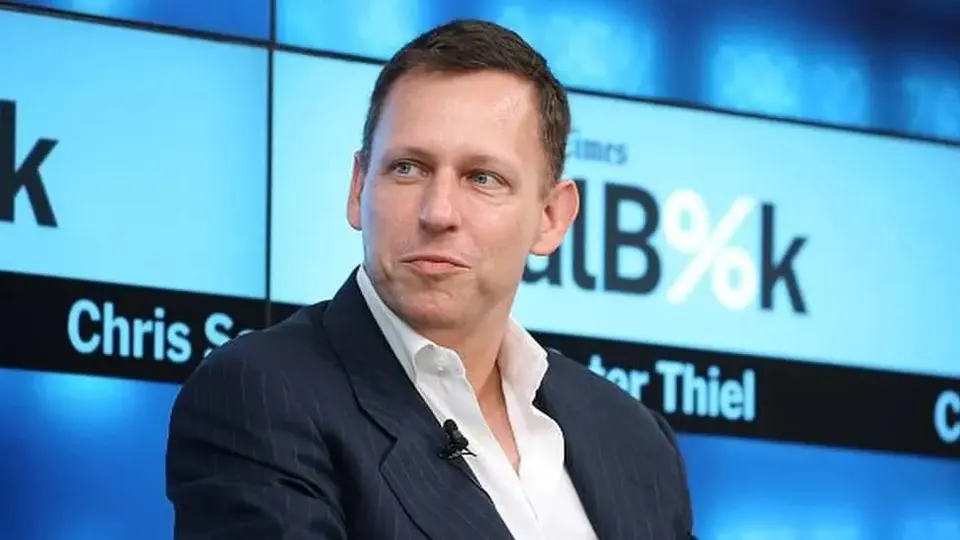
Amid lectures on Plato and Popper he built his own coordinate system, one that would guide his next steps. Not technology versus the humanities, not left versus right. But mainstream versus courage, consensus versus counterargument. The dividing axis for him was knowledge—what is real and what is an imitation of social agreement. “All truly valuable knowledge begins where agreement ends,” the entrepreneur would write years later.
Silicon Philosophers
Surprisingly, he decided to go on to a second degree—law. He says those were the three most boring years of his life, but far from wasted. Back then, with fellow students, he founded The Stanford Review, a conservative student magazine that clashed openly with the university's leadership.
In it he developed many of the ideas that have today returned to strong positions across the ocean. No wonder: as mentioned, the former law student is among the people who contributed directly to the fact that Donald Trump and JD Vance now set the rules in the White House. In his magazine Thiel attacked multiculturalism, feminism and minority rights.
After graduating, he quickly went through several dull corporate jobs, just long enough to realize that this was definitely not his calling. It was then that his personal philosophy was joined by an idea of exactly how to turn it into reality.
“Every moment in the future should be better than any moment in the past,” the billionaire says.
Cut to a classic scene from a hacker movie. A handful of brilliant, slightly antisocial men shut in an office drink cola, stay up all night, write computer code, argue about philosophy and… create a product that will rearrange the global economy.
The scene, however, is real. This is exactly how PayPal was born—the venture that showed that in the online era banks are no longer the only option for transferring money. And it did something even more important: it gave wings to Peter Thiel and his partner Elon Musk for the next big ventures that truly launched them into the sky (unlike Musk, in the case of today's hero only metaphorically).
Money in the Pocket
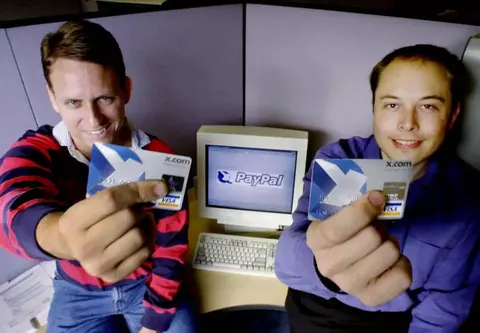
Thiel's first business project was Confinity—software for encrypted communication and payments using the primeval mobile devices of the late last century. At the same time, a rival company called X.com was working on a similar venture. “X”—that's right, the name would return a quarter of a century later, but back then it was financial software, headed by an ambitious South African named… Elon Musk.
Who would win this battle? The story never reached that denouement, because the two teams decided it was better to join forces. So in 2000 the two companies merged under the name PayPal. After long arguments, Peter Thiel took the helm, persuading the others that he knew best how to turn their joint venture into a successful business.
He turned out to be right. The first mass online payment system became a phenomenon, quickly piling up users, and Thiel, Musk and company decided it was time for more important things.
PayPal was bought by eBay in 2002 for $1.5 billion. Our hero woke up a millionaire. Many would have been tempted to enjoy what they had achieved, but not the ambitious philosopher-lawyer. He sensed that technology had advanced enormously and would very soon change our lives in every area. And to fulfill his big goals—a technological revolution the way he wanted it—one company was not enough.
Capo di Tutti Capi
The team from that time is often called, jokingly (or not?), “the PayPal Mafia,” and our hero is its Godfather.
With that much money, others would have bought an island, a yacht, a football club (what about you?), while Thiel bought… the ability to act on his own. He took on an unexpected mission: not to create, but to support and advise (perhaps even steer and manipulate?) the ventures that went on to shape today's world.
In 2003 he founded Palantir, a company he is still associated with. Its core business is processing large volumes of data, going back to the days when those volumes were far more modest. Long before today's rise of artificial intelligence, Palantir showed how information can be processed and used effectively in all sorts of fields. It is worth mentioning that besides the biggest American companies in every industry, its clients over the years have included the sacred acronyms of the CIA and the FBI.
His main activity after PayPal, however, was to create, help and steer—to invest in all kinds of ventures that, in his view, promised to change our lives.
- Thiel was reading the business plan of a 19-year-old Harvard student—at first glance just a program for chatting with classmates and friends. Or not exactly? Who could have guessed that his decision to see something more in it would change all our lives in the years that followed?
Spider-Man
Thiel judged the idea brilliant. As he would later explain, it wasn't a platform but an infrastructure of identity. That insight led him to invest the first $500,000 in a project called Facebook. It became the most legendary early bet in the history of technology.
“What does this platform mean for identity? How will social structures change when people have a digital face?” Thiel wondered. And he realized that Facebook would not be just a network for students, but a matrix of visibility—a world in which people exist through sharing.
And they don't just “share photos.” They construct themselves.
His investment was not only financial. Thiel became Mark Zuckerberg's mentor, strategist and defender.
While Wall Street pressed Facebook to monetize aggressively, his advice was: “Ignore the noise. Build something so necessary that the money will follow on its own.”
His investment brought a 200-fold return in just eight years! In 2012 Thiel sold his shares and, as a result, became a billionaire for the first time. Today his fortune is estimated at $15 billion.
The rest of the (public) story you know. The social network turned into social media, and how we communicate on it now shapes a large part of our daily lives as well as the outcome of the biggest social, public and political questions.
Poor, poor Thiel, if only he had missed that particular business plan…
Rich Man, Poor Man
Over time he stepped back from running Facebook (officially leaving the board in 2022 to help Donald Trump's election campaign), but he has never disowned his investment. For him the social network is like fire: “It can warm. It can burn. But it depends on whose hands it's in.”
Continuing down that road, Thiel was among the first investors, mentors, teachers and leaders of companies such as LinkedIn, SpaceX, Airbnb and YouTube.
Wondering why you didn't know earlier, so you too could invest wherever the philosopher puts his money?
Alas, quite a lot of people have already figured it out. That is why over the past two decades Thiel has become the oracle that a huge share of tech investors follow. He senses success in advance, and it always arrives right where the Godfather of the PayPal Mafia expects it.
Including with one of his latest “offspring.” Thiel was the first to back the venture that started the journey of the trendiest digital star, the symbol of the AI revolution, Sam Altman.
He Who Learns…
…shall earn, right? “Study, sweetheart, so you won't have to work!” as Bulgarian mothers like to say. Not according to Mr. Thiel, who created the large-scale Thiel Fellowship to support young people who have dropped out of university to pursue their own projects. He pays them… not to study?!
Exactly, because he believes a university education will only blunt their ideas and ambition. In a world where young people are encouraged to “follow their dreams” with a diploma in hand, since 2011 Thiel has been giving them $100,000 each not to go to university.
The requirements are simple: be under 23. And have an idea that could change the world. (Oh, why am I not younger…)
Of course, this venture is quite controversial and has met the expected criticism from the academic world. Educational institutions accuse him of irresponsibility, elitism, even of “corrupting the youth.” But for Thiel it is a restoration of reality. Academia, in his view, is a trap of conformity: “Universities no longer create thinking individuals. They produce people raised in fear.”
Among the well-known fellows who chose to quit university with the fund's support is Ethereum creator Vitalik Buterin. The list also includes Dylan Field, who founded Figma (and later agreed to sell it to Adobe for $20 billion); Laura Deming, who set up an anti-aging fund at 17 (what made her think about that, I wonder?); and Austin Russell, now a billionaire and the creator of lidar technology for autonomous cars.
Eins, Zwei, Drei, Blah
To this day he keeps his German citizenship alongside his American one, and since 2017 he has officially been a New Zealander, too. He describes himself as a Christian. “Christianity, the main religion of the Western world, is always on the side of the victim. I believe it is true, but I don't feel some overwhelming need to convince others of it.”
The businessman doesn't hide that he is gay, but if you meet him, don't bring up the subject. A small tech blog was the first to make that mistake, in 2007. The visionary, however, launched a series of lawsuits, which he won, and that put an end to the outlet. It later emerged that he had waged a large-scale (and underhanded) campaign, financing numerous lawsuits against the site, including one in the name of the wrestler Hulk Hogan.
In 2017 Thiel married the financial expert Matt Danzeisen, and the two have recently become young dads of two children. For many years they were in an open relationship, while Thiel was also seeing the influencer Jeff Thomas, who died suddenly in 2023.
Absolute Zero
Thiel is a fan of cryptocurrencies, and a large part of his current wealth is owed precisely to them. Many see this as the explanation for the strong interest in the subject shown by the new-old American president. Some time ago it led the philosopher to attack Warren Buffett in a rather unphilosophical way, saying that “the number one enemy of bitcoin is the sociopathic grandpa from Omaha.”
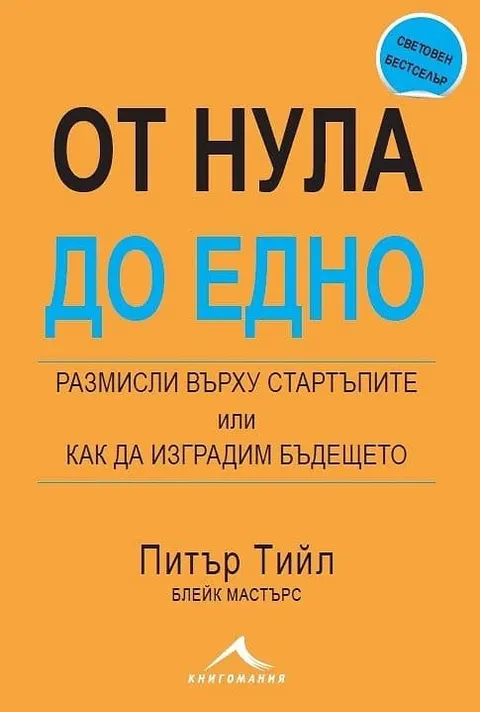
In 2014 his book Zero to One came out and quickly became a worldwide bestseller. It is not just a handbook for entrepreneurs; it has been called “a philosophical address to the future builders of civilizations.”
“Zero to one” is the creation of something entirely new. After that, everything is a matter of routine, with no creativity at all. “One to n” is merely copying, scaling, repeating.
“In a world full of delivery apps, one more app isn't innovation, it's competition by inertia. The best companies avoid competition. They create monopolies because they solve a problem no one else has recognized,” Thiel says.
But how can… a man with conservative views call into question one of the main tenets we are used to associating with that position—the free market? While economic orthodoxy demonizes monopoly, Thiel rehabilitates it. Though for him it isn't the corporate mastodon that smothers the market. It is the monopoly of the idea, of uniqueness, of the unrepeatable.
Apple has a monopoly on aesthetics and experience. Google on search. Thiel asks:
“Do you want to be the best… or the only one? The second is often the first step toward the first.”
A Technocratic Nation
This undoubtedly sounds wonderful, very motivating, visionary—but have recent years shown the entrepreneur to be right? Or do the monopolies of the big tech companies make them look ever more all-powerful, uncontrolled…, let's say it plainly—a threat to both democracy and social peace?
Thiel has no problem with that. He often describes modern Western society as too agreeable. Everyone believes in the same science, the same ethics, the same democracy. That, in his view, is “stagnation disguised as progress.” Within this frame, competition turns out to be a way of not thinking, of simply racing along an already beaten path. “True innovators don't compete. They just change the game.”
One can't deny that he does exactly that. Quite a few authorities stress Peter Thiel's decisive role in the fact that today's American president is named Donald Trump. More than that, he is believed to be the one who proposed Vice President JD Vance and introduced him to his future boss. And although in recent months another tech leader who ended up in government work has been in the spotlight, Thiel's role in the most important decisions of the new American administration is probably even greater.
Antisocial Poetry
His support for Trump goes back a long way, and it has paid off for him. I wouldn't advise you to play poker against him; experience shows his bets always come out winners.
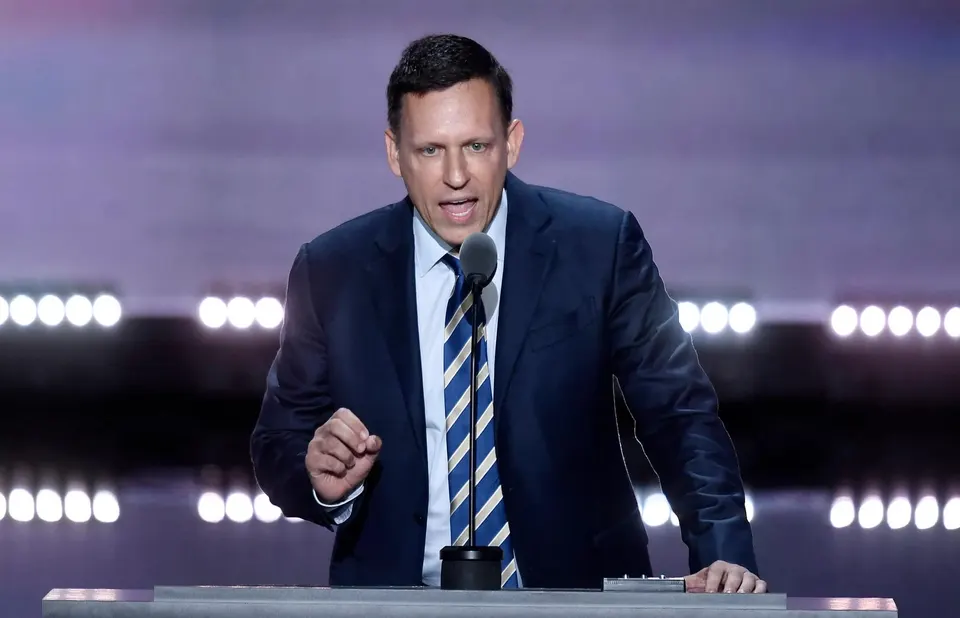
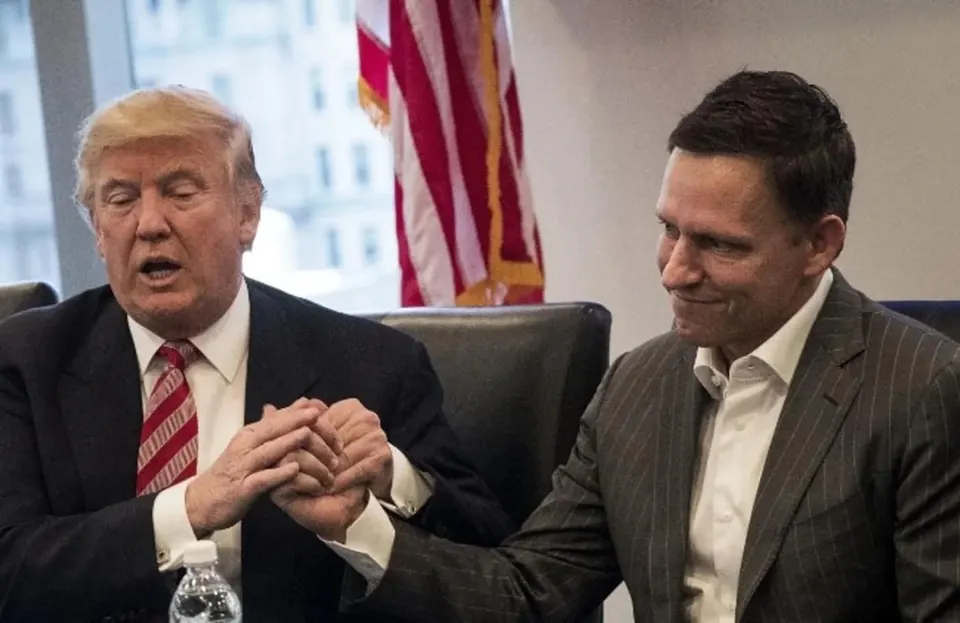
In 2016 Thiel surprised much of the world when he took the stage at the Republican National Convention to back Trump, in times very different from today's, when Silicon Valley made no secret of its deeply skeptical opinion of the future president. “If the elite is rotten, tearing it down may be a form of healing,” the philosopher said.
In 1995 Thiel and David O. Sacks published the book The Diversity Myth, which criticized political correctness and multiculturalism in higher education.
“The Straussian Moment,” an essay Thiel wrote in 2004, is considered a foundational text of his political thought. In it he writes that the September 11 attacks upset “the entire political and military framework of the nineteenth and twentieth centuries,” and that a “reexamination of the foundations of modern politics” is therefore needed.
Thiel believes neither in the status quo nor in the wisdom of the people. In his view, decisions should be made by elites capable of creating new worlds, as happens in the tech sector.
If we add to this his serious investments in ventures aimed at drastically extending human life and even achieving immortality… one can only marvel that it is not he but the “gentle retiree” Bill Gates whom conspiracy theories so stubbornly link with the most frightening future.
War and Peace
“What important truth do very few people agree with you on?” They say this is the most important question Peter Thiel asks at job interviews. As in everything else, here he is looking for the most unorthodox, original, strange answer possible. In case it isn't clear by now, he definitely has a thing for thinking outside the box.
“I believe technology can give us a chance at a much longer and more fulfilling life—and refusing to pursue that possibility is sheer cowardice,” Thiel says. And also: “Death is a problem that can and must be solved.” He has turned this conviction into funding for ventures such as Unity Biotechnology, an anti-aging company, the Methuselah Foundation for life extension, and the Cryonics Institute. More than that, he has said that after his death he too wants his body frozen.
He even gives money to a company researching how young people's blood could be used to slow aging. Brrr.
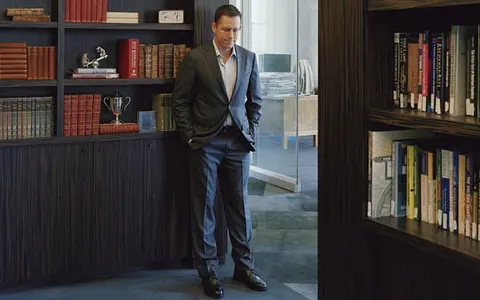
“A great business is not just a bet on the future, but a bet on the future you want to create,” Thiel writes. And besides writing, he is one of the leaders who never stop reading. His love of science fiction is far from gone, and every year he shares his book recommendations. At the risk of surprising you after everything said so far about his worldview, among his favorite authors is Ayn Rand, with Atlas Shrugged.
He also recommends Ray Kurzweil and… Anna Karenina. Of the classic novel, he says it illustrates the IT business well: “Tolstoy opens with the observation that ‘All happy families are alike; each unhappy family is unhappy in its own way.’ Business is the opposite. All happy companies are different: each one earns a monopoly by solving a unique problem. All failed companies are the same: they failed to escape competition.”
The Future in the Past
Besides his love of books, his love of chess hasn't faded over the years either. Until 2003 he competed semi-professionally, and in 2016 he was symbolically invited to make the first move in the world championship match between Sergey Karjakin and Magnus Carlsen.
Coming back to Kurzweil, Thiel also believes we live in a decisive time, with very serious changes on the horizon driven by technological progress. “The fate of the world may depend on how we make sense of this decade,” he adds, and few would argue with him. The thing is, though, that he is among the people on whom that future directly depends.
He stayed silent during the recent exchange of online blows between Musk and Trump. A year earlier, however, he had warned that “Musk's support for Trump is incredibly dangerous, because in politics 80% agreement isn't enough—you need 100%.” A prophecy?!
An interesting, unconventional figure—I hope you now know him well enough to agree. And let us hope that his next actions will show more humanity, compassion, empathy. One thing is beyond doubt: from now on, even more decisions on which all our futures depend will rest on Peter Thiel's shoulders. His story leaves us no choice but to be convinced he is capable of dizzying breakthroughs and unthinkable ideas.
Besides, he is undoubtedly right that it is more often worth asking ourselves:
“What if we really can do more than we believe we can?”