“Our inability to strike up a meaningful dialogue has left hundreds of thousands of people socially isolated. Some fall ill and die simply because they lack real human contact. I believe artificial intelligence will deepen this trend, because it will fool people into thinking they are talking to a friend, to someone they have lost, or to someone who refuses to hear them. And so we find ourselves in a world where we can supposedly talk to each other. But behind this apparent palette of viewpoints, of words, of word salad, including self-absorbed academic speeches, sit frightened, disillusioned people, impoverished intellectually and emotionally. To me, that is the great horror of our time.”
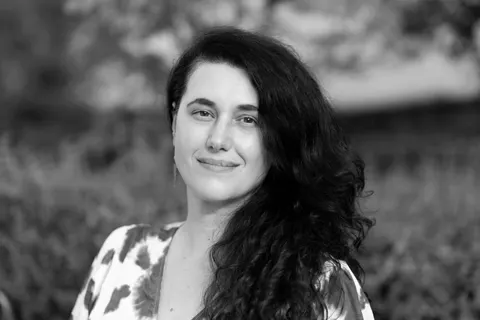
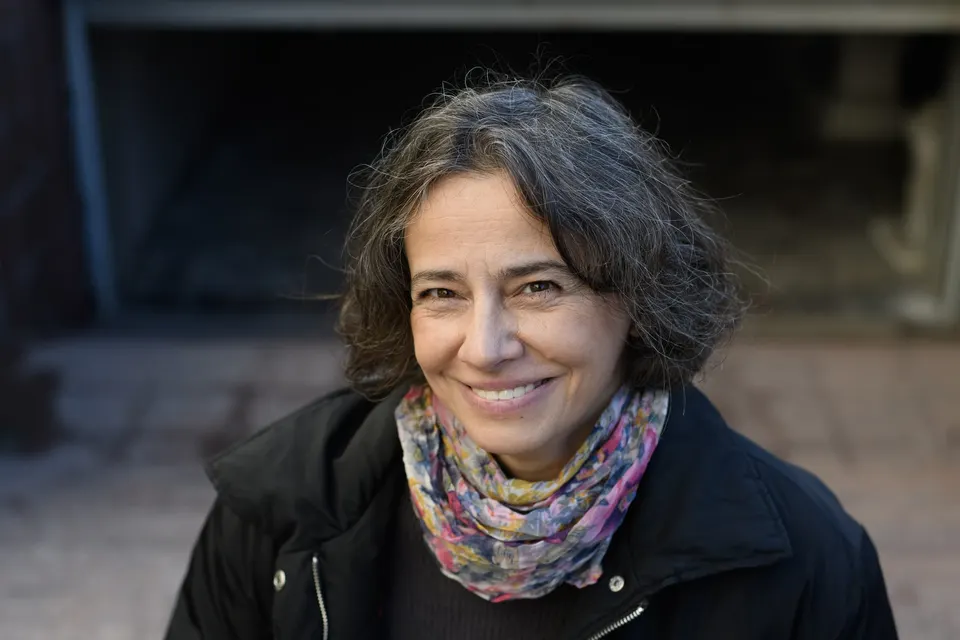
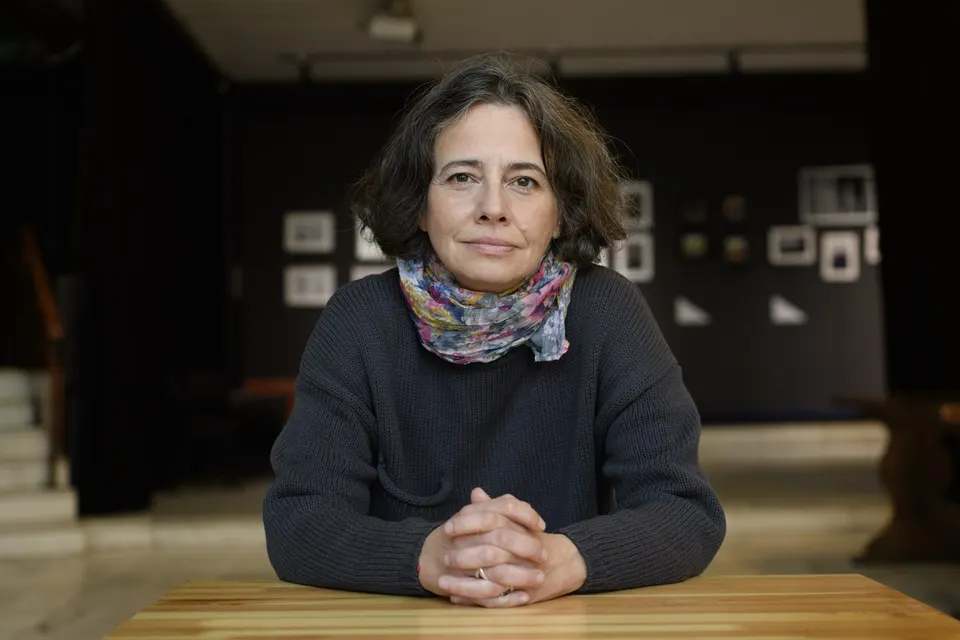
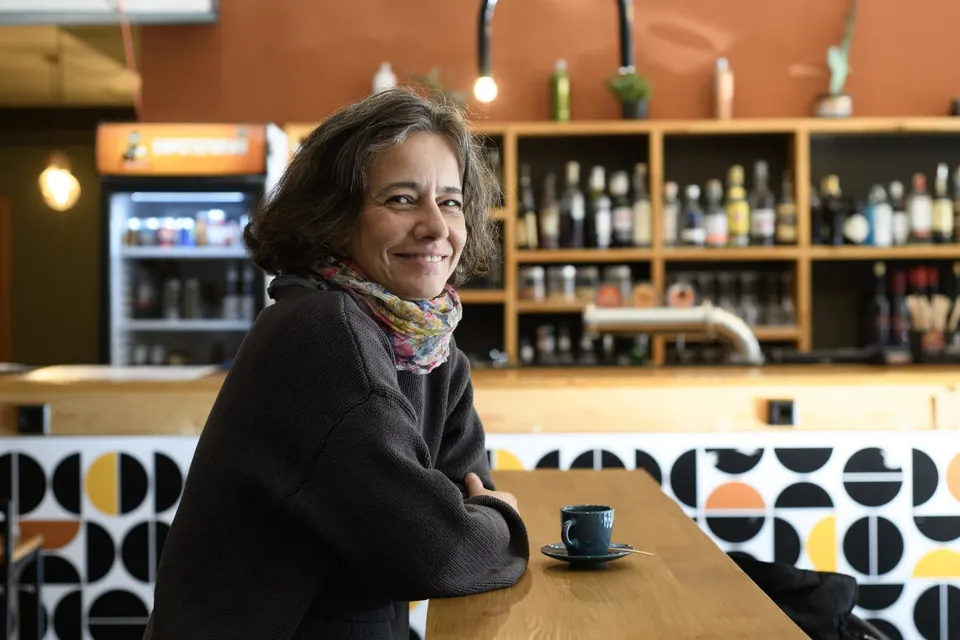
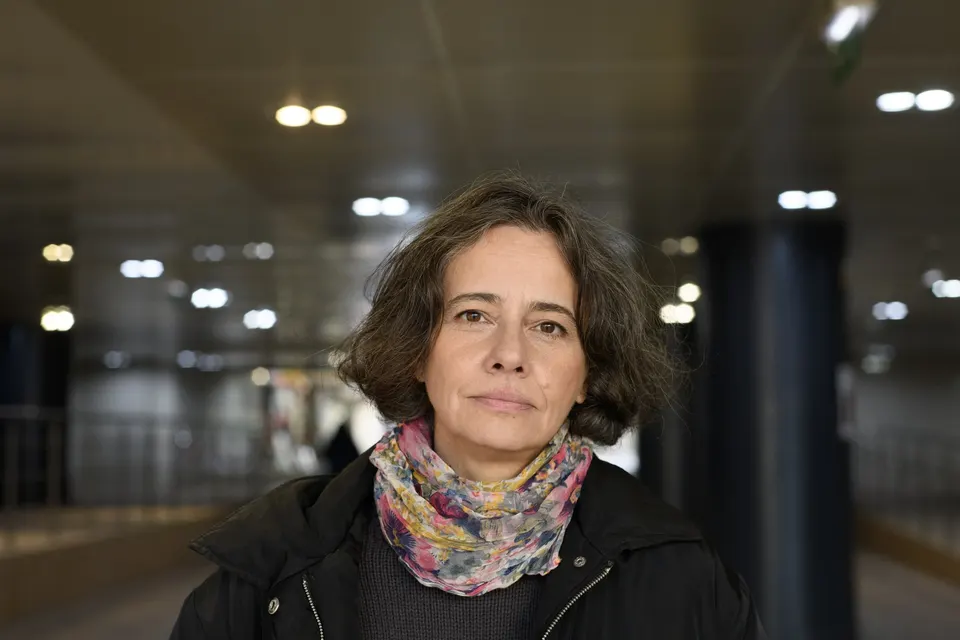
Our conversation with the writer Silvia Tomova began with poetry and went on to education, history, the epidemic of ignorance and the long-overdue need for a social awakening. Against this backdrop, technology remained a constant companion, changing each of these subjects from the ground up.
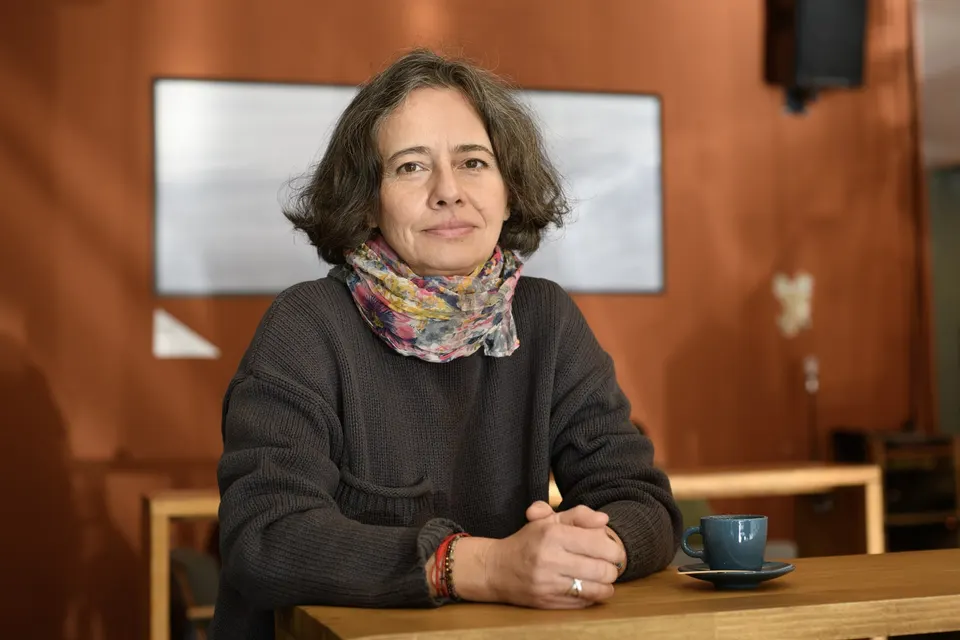
A journalist and special education specialist by training, she publishes essays, short stories and novels. The winner of numerous awards and the author of five novels and three short story collections, Silvia often peers into the past as well as into the big questions of today. She is not afraid to break out of clichés and to challenge the mainstream, both in literature and in public life.
And so we meet for an important conversation that has come at just the right time.
– You wrote online that entering a competition with generated poetry is a sign of ego and infantilism. I had long meant to invite you for an interview, and in the end it was precisely your opinion, so different from mine, that provoked me. As I see it, I had to carry out this literary experiment, because I see no other way to test impartially how well AI writes poetry. Other than giving it to a jury that doesn't know where it came from. And since it has now happened at two competitions, I think we are talking about important conclusions that everyone keeps sidestepping.
– I think we'll see more and more cases like this. There are already literary competitions around the world won by works from people who relied entirely on artificial intelligence. I recently heard about one such short story contest. The author who used the new technology is a professor, and after the competition ended he told the jury that the story was generated by AI, but that to get it he had asked it 36 questions.
In other words, it depends on how much literary culture the person “playing” with AI has and how familiar they are with the context. Because every literary competition takes place in some context. And a lot depends on the author's personality… What are their own aesthetic standards? If they have no interest in literature and have never written before, what they pick from the generated text won't be high or good literature. If the person has refined literary taste and good editing skills, they could combine something of their own with what AI produces and end up with a more or less acceptable story. But
the question here is not whether this will happen, but whether it already has and how our literary juries have reacted.
Not even what sort of people have allowed themselves to do it, because it isn't legally punishable. I think there are ethical categories here whose boundaries must not be crossed. First, it's a lie. I'm entering with someone else's work, because what's generated has been taken from somewhere; AI didn't come up with it on its own. Second, it undermines and compromises the competition itself. The efforts of those we assume are taking part honestly become meaningless. So when it comes to people, you have to tread very carefully.
The first thing a person learns in this world is not to lie.
– I agree, and that's exactly why both I and the other participant came forward right after the top 10 were chosen. And in this case we're talking about fully generated verses that I didn't change in any way. Yet they still beat more than 100 participants in total. The question of criteria is another matter entirely, and I have no wish whatsoever to discredit the jury, especially since two juries in a row chose these poems. But next year, who would admit to using the algorithms? Not only is it not a crime, it's now clear that it can't be proven: we're unable to tell when a text is generated rather than written by a human.
– Every competition, not just a literary one, is an arena of vanity.
Tomorrow this drama will be forgotten, just as all the laureates of literary competitions are forgotten. I understand that you and, probably, people who think like you
want to draw attention to the mischief artificial intelligence can cause, but I'm not sure society is prepared enough to take part in such a debate.
It's like talking about literary competitions in general. University lecturers will say, “Who are you to speak up? We have high standards.” We will say, “Who are you to impose standards on us that have nothing to do with reality?”
What you'd get is more of a chaotic pseudo-debate, noise in the air, and it won't lead us anywhere. Truly nowhere. I think the questions concerning artificial intelligence should rather be raised at scientific discussions, forums and in laboratories, where they'll meet the necessary understanding from specialists in various fields.
But you're right that artificial intelligence poses interdisciplinary challenges. It needs careful thought, of an ethical and even, in some sense, religious, faith-based nature; it deserves to be discussed from every angle, but not at the level of the street and the town square.
– The alternative simply means pretending nothing is happening… That's exactly my cause; that's why this site exists. I've given the floor on AI to a priest, to an Islamic cleric and to many people from the arts. I think I'm giving such a debate a chance, but it needs to be taken to a completely different level to have real meaning.
– It needs to be taken to those in power, keeping in mind that AI, besides being a technical breakthrough, is and will be above all a business.
– Or to society? It seems to me that power does nothing unless it's pressured. How should this debate happen? You say scientific conferences, but I think the changes are already too big to be settled there. Science has an essential and important place. But it isn't enough.
– On the contrary, especially where high technology is concerned. The United States, and every country really, will depend on it more and more… A certain Musk was brought onto Trump's team, for example.
I categorically disagree that power acts when society puts pressure on it.
I observe exactly the opposite. People try to adapt to power in order to get some benefit, but they take no interest in power unless provoked. Power sets the agenda. Society follows its leader like a herd. And that's true not only of our society but in general.
If Trump hadn't won the U.S. election, we'd have been talking about peace in Ukraine when hell freezes over, never. Besides, how can we be sure that tomorrow unscrupulous people in power won't use artificial intelligence against people's interests?
I don't know how a website can spark such a high-level debate, but I'm sure those in power must not be left out. On the contrary, they must be provoked.
If, for example, someone plays around with AI and creates a fake problem, how will the authorities react? They'll take that person to court, won't they? Besides, somewhere deep inside, more intuitively than anything, I believe these things need to be regulated.
To be honest, literature interests me very little here. Because if someone is going to lie, they can lie without artificial intelligence. What interests me more is the impact it could have on social processes, what data this machine will be fed so that it doesn't create a social cataclysm and we don't end up in a dystopia.
At the same time, I'm hopeful that AI offers ways to extend and improve the quality of life of sick people. We shouldn't reject everything a priori. But, like everything made by human beings, it should be used… however naive it may sound, with a pure heart.
– And with enough thought. I often write about each of these subjects, also because it seems to me an unprecedented tool for manipulation. Technologies like this have already swept in uncontrolled once, with social networks, which run on an earlier level of AI and created huge rifts and broke down dialogue. I think all our political problems now stem from them too, simply because that's how the algorithm works. It very easily turns us against each other. It breaks down dialogue, it creates a fluid truth.
– Absolutely, I couldn't agree more. If ordinary social networks, which people join of their own free will, can do something like that, I simply don't want to think where artificial intelligence might lead us. “Freedom is slavery.” Horrifying.
– And meanwhile we have the next very serious problem: not being able to tell what is what. For me, poetry is very telling, because it's non-obvious, metaphorical. It seeks deeper connections, what lies beyond the text, even beyond the human.
– I think the opposite. Because poetry is metaphorical and unexpected, linguistic experiment is more acceptable there, so it can slip through. In a short story it's easier to catch something illogical or something that doesn't fit, say, the context gets lost, or a character doesn't ring true in every scene.
To be honest, I've asked artificial intelligence about something related to literature only once. I asked it to write the first sentence of a historical novel according to parameters I set. And it wrote such a boring sentence that, I confess, I wouldn't read that novel even if AI wrote the whole thing. So I rather think it's easier for AI to slip through in poetry; it will find it harder to write a short story.
And in prose, I think, talent shows in the soul of a text. In whether and how much it speaks to its time. Could AI achieve that? Besides, a computer has no soul… there are things you sense on another level, not only intuitively and not only with the heart, as Saint-Exupéry says. Literature has a connection with the sky, with faith or the lack of it… with things fundamental to human beings…
– Well, all we can do is ask the questions, and that's why I take on the role of agent provocateur, testing it in practice.
– But what serious question about our times could AI raise, given that it isn't alive?
– It impresses me with unconventional ideas too; sometimes I use it for that. If I ask it for 10 first sentences of a novel and give it a bit more context, I'm sure one of them will be better than anything I could come up with.
– By your standards; by others' it might not be. A book can be read by 100 people and get 100 different opinions, until it reaches the university, where the professors will bring out the big axe and explain to us what's good and what isn't… That last bit is irony. And whether it survives historically, of course, because something that's good today may be declared a total failure by tomorrow's political system, a politically correct piece of writing by an author who toed the line, like more than a few of those who surround us today and never leave the television screens.
– Isn't the point that we should write for the sake of meaning? For what comes from within us, and not to win competitions?
– Exactly. Literary competitions, of which there are at least 50 or 60 in Bulgaria, are a stage for showing off, just like social networks.
It's precisely social networks that did something else I find very dangerous. They completely wiped out self-criticism.
If a person isn't self-critical and has no awareness of how they look in others' eyes, nothing good awaits us. We can't all be wonderful, all be great. “Easy there, Mango, tone it down a little…”
– How can we change that, so this conversation becomes more meaningful?
– That's like asking me how to make the conversation about politics on social networks more meaningful. It will never happen. And politics, at least here, is not a field for even minimally intelligent debate; lies rule, and stupidity puffs out its chest and parades proudly… unfortunately.
– But we can no longer take it outside social networks; that's where everything happens.
– I still have a sense of hierarchy in this society, and I respect those who deal with artificial intelligence seriously, that is, scientifically, whatever their field.
I'll repeat myself, but I believe this should happen at a public forum that brings together specialists selected by some criterion.
Not all of us are competent to speak out. I don't feel competent about literature, even though I write. I can say whether I like something or not. I can write down my own view, but I'm not a philologist. We need a serious debate.
– All right, but if there's such a scientific debate, won't it stay locked up there? How can it then reach society?
– On the contrary, applied science bears directly on our lives. Since AI has entered medicine, it's already part of our world.
The other day I finished the trilogy of a Nobel laureate, Jon Fosse, a Norwegian. That book cut right through me… Magnificent! Exceptional literature; I hadn't read anything so powerful, so crushing, in a long time.
And I read a little about the man: he doesn't watch television, doesn't listen to the radio, doesn't appear at discussions. He has completely isolated himself from the world and wrestles with his demons. He's an alcoholic and writes brilliant literature. Without using anything. Above him there is only God. And anyone who puts AI above the human being is in fact fighting against God. AI is nothing more than yet another technology with which one can create both good and evil.
I have no confidence when it comes to poetry, but I could sit down and “bang out” 10 poems. So what?
I believe what humanity needs right now is to sober up.
And what about this epidemic of loneliness that even scientific forums are talking about? We need to realize what's causing it. Social media, our alienation from one another as human beings. As you say, our inability to strike up a meaningful dialogue has left hundreds of thousands of people socially isolated.
Some are literally dying. They fall ill and die simply because there's no real human contact.
I believe artificial intelligence will deepen this trend, because it will fool people into thinking they are talking to a friend, to someone they have lost, or to someone who refuses to hear them. And so we find ourselves in a world where we can seemingly talk to each other. But behind this apparent palette of viewpoints, of words, of word salad, including self-absorbed academic speeches, sit frightened, disillusioned people, impoverished intellectually and emotionally.
To me, that is the great horror of our time.
And I see it every day in my work with children. I see people in despair because society isn't what they imagined it would be. This problem often surfaces when people start raising their children. That's when the shock of what surrounds us hits. Parents realize they're alone, and no AI can overcome the fragmentation of society or the lack of empathy.
– Me too. My kids are small for now, but the thought of them facing these problems terrifies me.
– The system can't spoil them if the family has laid a fundamental foundation.
– What does that fundamental foundation depend on?
– Young people, parents of preschool children, have already been warped by the system, which instills in them artificial criteria for success.
What is success? Having the coolest car instead of reading three books? Or getting your daughter silicone breasts?
I'm not saying everyone is like that, but on the whole the criteria for success are distorted. The neoliberal system has totally warped education, from preschool pedagogy to higher education.
This morning I heard an interview with a university professor who explained that the level of students in higher education is catastrophic and measures must be taken, without seeing any further than her own university department.
The level of education falls apart as early as primary school. I don't blame the teachers, and I'll explain why. First, today's parents don't have enough time to talk to their children. And, sadly, the children grow up lonely, without building a bond with their parents. Without their parents setting clear limits on what's allowed and what isn't. Without being brought up in the rules of social behavior. If a child is left alone, they're not encouraged to read, let alone to acquire culture and manners…
The first thing a parent does is give the child a mobile phone. That slows down their emotional, mental and even physical development.
Children play very little. Parents, too, are afraid of mistakes. Yet mistakes are of fundamental importance, because by learning from them children grow intellectually. To some of the parents I meet as a speech therapist, I say, “Leave the child be. Let them try, let them see what works and what doesn't, so they can correct themselves. Set them a good example.”
In the old days, when children couldn't be with their parents, they were with their grandparents. Now the grandparents also work two or three jobs to help out. At the same time, teachers have no authority whatsoever in society. A father thinks that if a teacher reprimands his child, it's absolutely unacceptable. He goes off to have it out with the teacher, even if the reprimand was justified.
There are also parents for whom knowledge isn't a value in itself; it's just some step toward the car, toward social prestige.
Being knowledgeable isn't prestigious.
If you open a newspaper or a website, you'll see for yourself that the good pens, the good writers, are gone. If you turn on the radio, you won't hear a good orator, a polemicist… How many of our politicians can string three sentences together?
– How could they stay… I couldn't have had two children if I'd had to earn my living working in the media. But again, I think we come back to social networks, where the media dropped out of the fight because they found themselves on equal footing with everyone else.
– There are many factors, including their corporate and political dependence.
Language is growing poorer. Parents come into my office whose active vocabulary is 200 to 300 words. How do they expect their children to develop fully if they themselves make no effort to improve? I say this with enormous pain, because
the epidemic of ignorance will spread.
– I keep pulling toward my own topics, but I think technology is to blame for this too, or more precisely the way we embrace it. Because it narrows your contact with your fellow human beings, and when you have no reverence for knowledge, no media that act as some kind of guarantor, no standard set by authors who win you over, who write like Dimitri Ivanov, the Bulgarian essayist and columnist…
– That's true; I have nothing to add.
– I think the bigger problem is that all of this will deepen, helped along by the arrival of artificial intelligence. While at the same time the skills of sifting and judging, so that we can spot the mistakes AI is bound to make, are becoming ever more valuable.
– Exactly. Everything has to be tested, in practice, in the real world. In philosophy and the higher humanities we can talk about abstract things, but unfortunately, while we're talking, children, pupils and students are sinking intellectually.
Where is the mistake? Somewhere the link between all these bodies responsible for the upbringing, education and behavior of young people has been broken. Why? I'm not competent to answer that question fully. I can only speak from my own vantage point.
The system is wrong. Or rather, it doesn't serve people.
But if you dare say that something isn't quite right here, you're immediately branded an enemy, which is also a failing of society; labels are stuck on you right away. You get attached to political parties or movements you may not even know exist. That's how it was with Trump: they said he was a fascist, a Nazi. That's utter nonsense; it isn't intelligent. And it's a disgrace that people who claim to be America's intellectual elite used those words. The same thing happens in Bulgaria.
So people who know how to speak, who understand, at some point lose heart and retreat into their own homes, into their own narrow circles of friends.
We live without even touching each other.
If we can't agree on where to put a table at home, figuratively speaking, or what to do with it, how will we ever agree on artificial intelligence?
Take the legislation on children with special educational needs: it contains provisions that simply don't work. We can't agree even on something like that.
– We can't even agree on our constitution, which is the foundation, let alone everything built on top of it. What might this awakening look like? Have we perhaps passed the tipping point beyond which it's no longer possible?
– History has shown how. Awakening, unfortunately, sometimes comes through social cataclysms; I hope it doesn't happen to us. I recently read an interview with the futurologist Assoc. Prof. Mariana Todorova, who said that if AI decides humanity is dangerous to the planet, it could destroy us.
I believe we should all live, in some way, with a sense of a higher judgment.
With the sense that life doesn't begin and end with us; then, somehow, we'd know our limits.
But unfortunately, elites sometimes push things to the point where there's no way out except a radical social change, as happened after the French Revolution, after the October Revolution, after the Second World War. And for us, after the First World War too, when our attitude toward the world changed completely. Because ever since then we've always been on the losing side. Some historians say that this is why we suffer from satellite syndrome and have no elite that dares to think independently.
– Alek Popov once told me that the death of Ivan Vazov, the patriarch of Bulgarian literature, was that bifurcation point from which we split in two, irreversibly for now.
– If we hadn't lost the First World War, it would have been completely different. With all due respect to the patriarch of literature, social currents, aspirations and attitudes are determined by higher forces. Writers can support you spiritually, as when the Treaty of Neuilly, the 1919 peace that stripped Bulgaria of territory, was signed and our desperate compatriots gathered under Vazov's balcony. But he couldn't fully help them…
It's very hard also because our so-called intellectual elite is divided, if we can even speak of one, rather than of mere parroting. Unfortunately, I believe salvation lies neither in dialogue nor in Bulgarian society as it is today, and I don't need to live another 50 years to be convinced of it. I don't say it with pain, but as a statement of fact.
For 35 years, since the end of communism, this society has proven incapable of a healthy discussion that respects opinions different from the official, politically correct discourse.
– Even more years than that… History is a big subject, to which I devoted a series of Digital Stories. But on the other big subject we touched on, children and technology, in a few days I'm starting a series of important viewpoints. Thank you from the bottom of my heart for this fascinating conversation!