What does responsibility look like when you have more than a billion users, for some of whom the next conversation may be a matter of life and death? How can the business model of a modern communications giant leave users' personal data untouched? What should we expect from online communication in the years ahead?
Viber today is the universal way people talk to each other in Bulgaria. Every second, Bulgarians send 400 messages through it.
At the same time, the company's leading office for the region is in Bulgaria, and that is thanks to today's guest.
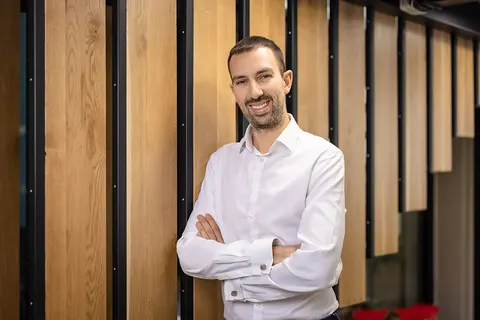
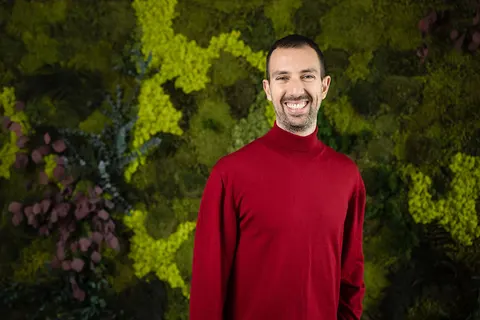
Atanas Raykov has worked in the world of communications for 15 years and has seen just about everything. His personal story runs through an unexpected encounter, which we will get to in a moment. For a long time he was Viber's general manager for Europe, the Middle East and North Africa, and he recently took on the role of senior director of growth in the countries that matter most to the company.
– How did Viber end up in Bulgaria? I read that you were the first employee here.
– That's right. Our office for Central and Eastern Europe is in Sofia because I was the first employee and I got to choose where it would be based. I had left my previous company, and during a personal trip around the world I happened to meet Viber's founders. It turned out that our interests and our views matched, my experience fit their needs, and we liked each other.
They offered me the chance to build a business unit for the countries in our region. They said it could be based wherever I wanted—London, Budapest, Athens, Belgrade. But of course I preferred to come back to Bulgaria, and that is how we put Sofia on the global map of our tech group. Of course, we are not the first Israeli or Japanese tech company with employees in Bulgaria, but offices of this kind, with such a large number of customers, rarely open here, especially for companies aimed at end consumers.
– What is the Bulgarian office responsible for right now?
– Most of the employees are responsible for 15 countries in Eastern and Central Europe. But beyond being a regional office,
almost all of the more senior team members, about a third of the people, also have global functions.
I have colleagues who work on our global fintech strategy, on deals and sales to businesses across a much wider region. Others are responsible for Western European and global projects. All of our employees in Sofia are Bulgarian, many of them returned from abroad, and now we have a pretty broad scope of action.
– There is hardly a Bulgarian who doesn't know what Viber is. What is it like to hold a management position at a company like that? What is different from what we might imagine?
– Maybe people wouldn't expect it, since Viber is a company with a huge number of users and a huge geographic reach, but our whole team isn't that big. There are fewer than 500 of us. And even in a position like mine, where you travel to almost all the locations, you get the chance to know almost everyone in the company. To know who is who and what they do. Before this I worked at a large Bulgarian telecom, and that wasn't the case there, even though the company was entirely Bulgarian.
We are like a family and we have very fast connections. There are no barriers to reaching anyone at Viber anywhere in the world. That is true of much larger global tech companies too: there are no barriers, people are accessible. Anyone can write to you and you can write to anyone. The most important thing is to move the business forward, to take care of the users, to make quick decisions. And the formalities that get in the way of that simply get removed.
– I wouldn't have guessed there are so few of you, given the scale of the service. So how many users do you have?
– We have over 1.3 billion registered users.
– How do you actually manage?
– Exponential technologies, as it is fashionable to say. The things that made Viber successful are cloud technologies and the modernization of smartphones and mobile networks. That perfect combination made it possible to create a service like this, with its core features completely free for customers.
– What are your responsibilities in your new post?
– From Sofia I manage all our local offices around the world, the people who work on growing our user base. We can't directly cover
all of the more than 180 countries where we are used.
We have a few dozen key markets that matter most to us, and I am responsible for our activities there—all of our marketing, PR, strategic partnerships, business development. From the Philippines, Vietnam, Myanmar and Japan, through Russia and Ukraine, to the UK, Spain and the States.
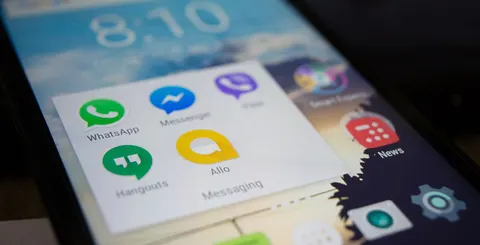
– What do you think sets Viber apart from other messengers?
– One thing has to do with Viber's own history. We often joke that
users came for the free service and stayed for the quality.
Creating a free calling service 10 or 12 years ago was much harder than it is now, because phones, internet speeds and mobile internet were all far behind. But throughout that time we have always had an extremely strong focus on quality. I can boast that
in recent years our service has practically never gone down.
Viber is always available; we have no central incidents with the infrastructure or with our servers. We are talking about a scale of hundreds of millions of customers. At every single minute there is certainly someone for whom it is vital to be able to connect, to send that information or make that call to the other side, and we guarantee that. We are very proud that, unlike many of our competitors, our reliability and call-quality metrics are at the very top of every ranking.
In the beginning, Viber was practically the only service that allowed free calls on mobile devices. Before us there was Skype, but it didn't work on smartphones.
The second thing that sets us apart, and that we really try to communicate very actively, is our principled positions.
– What do they include?
– We are not part of a global company like
Facebook, whose core business model is advertising and changing user behavior.
We do not collect data from users' communications in any way; our business model isn't based on that. We have no interest whatsoever in what our users write to each other, what they exchange, what they talk about. Because our business model isn't directly tied to that information, we can afford to protect them and to have a long-term commitment to them.
Our parent company is Japanese, large and respected. It is focused more on fintech and business solutions, not so much on advertising. In that respect, few services like ours are in the same position. We
care deeply about our independence and about guaranteeing the inviolability of data, of privacy.
We also have very clear ownership and accountability, which sets us apart from companies like Telegram, where nobody knows exactly who is behind it or to whom it answers.
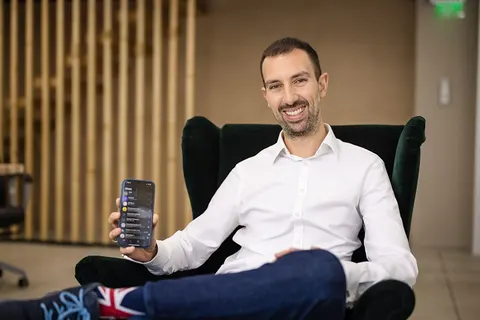
– As technology advanced, the Bulgarian word for a conversation over the internet kept changing. There was mIRC, ICQ, Skype, and then came the age of Viber. Why is it so widespread here? In Western Europe, as far as I can tell, WhatsApp is more popular…
– There is a combination of factors, but the biggest is the one I mentioned: we were the first to meet users' need to talk for free on mobile phones. Here that need was greater because of the structure of the market—people carried two or three phones, different SIM cards, minutes from this operator and that one. Another factor is the large emigration, the people who are based in Western Europe seasonally or permanently.
Whereas the average Briton in 2012, for example, had plenty of minutes, a liberalized market, big bundles of minutes. On the other hand, for people in those Western markets, text messages were the more valuable thing, and they never became a very popular service in Eastern Europe, partly because of the alphabet and the different way of writing. So WhatsApp solved the texting problem, and we solved the calling one.
Of course, at some point most of our features converged; everyone adopted the other side's good ideas.
– You mentioned the business model. Lately we have really gotten used to accepting as the default solution what you described with Facebook: selling data, one way or another. We are their product. What is the alternative?
– Most of our revenue comes from two directions. One is the services we offer to telecoms: the ability for a user with the app and topped-up credit to call any phone number in the world. We also offer services where telecoms send their traffic to us. If a telecom wants to route a call to a distant, expensive destination, we carry the call over the internet and we split the revenue.
The other thing, and our biggest source of revenue worldwide right now, is our business messaging and chatbot services. We charge businesses so they can send messages over our network. When banks, courier companies and online stores have their users' phone numbers, they can use them to send a message instead of a text. That has a number of advantages: it is more secure, it has a nicer interface, it is delivered faster, it carries more information, photos, video. This service is extremely successful and is gaining more and more popularity. Again, it works on the basis that the business uses its own user base, while we don't sell any part of the information. We don't sell Nivea or Pampers profiles of mothers, for example.
– You mentioned that the apps are becoming quite uniform, they borrow each other's best ideas, and technically it is easier to build services like these. What do you think will distinguish them from one another? What will make the difference?
– Many of the reasons users choose us are things that will be gradually improved—there will be some sustained innovation—but that isn't really what determines people's choice.
The most important thing is trust in the service, and that trust can take many different forms:
how confident people can be that their data is securely protected, how sure they are that there won't be a technical problem. These things seem to be among the more boring ones, but for many users they are actually vital.
We have reached a stage in the industry's development where there is no “killer feature,” no big innovation that will turn the whole industry 180 degrees overnight.
Otherwise, I think what will be telling in the future is how each of the leading services manages to integrate additional mini features or apps. The world is heading in that direction. That is, instead of having 100 apps on your phone for small functions, you would want them integrated into the apps with richer capabilities and interfaces, where you spend more time. They can be completely mundane things, like getting a horoscope or a weather forecast. Some of these get integrated into the operating system, but not all, and then mobile apps become a very natural home for them.
Payments are a very similar thing. We don't see ourselves becoming a bank, but soon we will be a powerful interface for payments, because the transaction itself is often preceded by some kind of communication. If, say, you are messaging with the handyman about your renovation, you will be able to transfer him the money right away. That is something users would adopt immediately, and we are already running tests in quite a few places around the world.
– And do you think getting information will go down this path too, as more and more people flee social networks, which for now are the main source?
– Yes, that is definitely the other area. It is already happening. We have a number of good examples, including in Bulgaria, and around the world we work with global organizations like the BBC and The Washington Post. Chat apps can be used to create more than just broadcast services, where the algorithm is that a million people subscribe and all receive the same sequence of messages. Rather, I think the future belongs to chatbot services that adapt to customers' behavior, to their choices, and
can build a much better, personalized service that is at the same time completely clear and honest.
For now, our services work chronologically. We don't have a feed that is some black box run by artificial intelligence. An algorithm tuned to certain priorities of the parent company, which chooses what shows up on top. This gives both the sender and the recipient much more control: they know what they are subscribing to and that they will receive it.

– Do you believe that relatively soon we might have something like that—a transparent algorithm that picks our news in a personalized way, but without the hidden part?
– I think the part about a transparent algorithm, or even about simplifying it, is a matter of compromise. We shouldn't have any illusions:
a large share of users actually prefer not to think. Not to make any effort.
We live in a world where users prefer to leave more and more decisions to algorithms like these. Yes, it is convenient, but it creates very serious threats. We don't believe in that philosophy, because of what social networks have shown. Yes, most research shows it wasn't done deliberately; hardly anyone said to themselves, “We want to divide society, so we're creating a social network.”
Rather, the problem was a side effect of the fact that the algorithm serves up the content that generates the most clicks, the highest engagement.
That is usually “more of the same.” More, and more radical, of the things you already believe.
Serving alternative or divergent points of view usually demands more thinking, more time, a bit of discomfort. But it is the only way to build bridges between different parts of society. That is why we prefer that people be able to subscribe and decide where they get information from and what kind, but that we not manipulate how much they see from each of those sources.
– Do you have favorite stories that have happened through Viber?
– There are many; users constantly share interesting things with us. My own personal favorite is connected with my biography. I was born prematurely and spent quite a long time in an incubator. There was no Viber back then, but I still imagine what it was like for my mother—and there was no COVID either.
A year and a half ago, a story appeared in many places, but first in Bulgaria, about babies who are born and end up in incubators. Because of COVID measures in various countries, their parents couldn't see them, and so the only way turned out to be a video call over Viber. Which is very touching! It is certainly not the same as holding your baby, but it still made a lot of people calmer, made mothers and fathers happier, being able at least to see them, to know they are fine, that they are sleeping, that they are moving.
Everyone on the team was moved, and that is something that gives us extra motivation and strength to work on what we do. Video calls have developed a lot over the past four or five years, and we also added group calls for more users. Five years ago this solution would have been much harder to make happen.
We've also had marriage proposals over Viber. There is the story of a woman from Serbia with multiple sclerosis. She had great difficulty moving her hands, but she communicated with friends over Viber and used a simple feature called Doodle, for drawing very basic pictures. And she sent them to her loved ones while she was in the hospital. Afterward she even showed them in an exhibition.
– It occurs to me that I, too, first saw my little son over Viber, a year and a half ago.
– We had a lot of people who were grateful that this possibility existed and that we make it happen.
At the same time, we are the kind of service people now take for granted, which is good. We live in times when it is easy to talk remotely and to exchange things without limits.
At the same time, precisely because these things are taken for granted, people ask themselves less and less what is behind them, how this industry works, which is, after all, a business. That is why I often advise people I know, when they see something free, to stop and think. Someone is paying that bill. If it isn't you at the moment, or at least not visibly, you need to think very carefully about who is paying and how. As with Facebook. And there are services whose business model is even more hidden, and it is completely unclear what happens to your data, to your privacy.
So we try to talk about these topics more often, because we know how much effort it costs us and what compromises we make.
Many services would be easier to build if we opened up the chats and read everything people do and write to each other;
it would be incredibly easy to serve ultra-targeted ads, to block every spam message, to offer contextually useful features or content. But that would mean increasing the risk for millions of users for whom the security of their communication is not a “feature” but a vital need.
My hope is that this starts somewhere, and that these topics get discussed more with the more awake part of society. And as long as there are bridges between it and everyone else, there is a chance for society itself to move forward together.