The Logic of Emotions: Why We Hate, and How to Stop
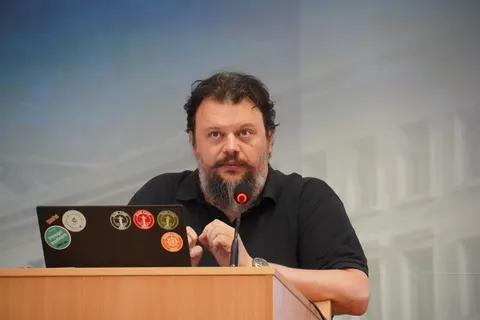
Two IT people sat down… to talk about communication. Technologies change; the people who use them don't. Why does a programmer with 20 years of experience insist that the most important skill in his profession is understanding people? And what does that have to do with hate on social media and with artificial intelligence?
 02
The Wolf Has Been Catching Eggs for 45 Years. Who Dreamed Him Up?
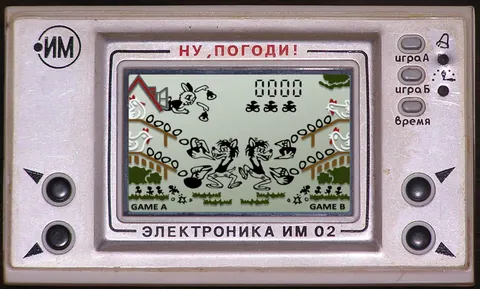
Why on earth is the wolf from Nu, Pogodi! collecting eggs instead of chasing the hare? How did that same wolf help Nintendo turn from a playing-card company into an electronics one? And why is this story the exact opposite of the other cult game of the same generation, Tetris, which came out of the USSR? And finally, the game itself, written by Claude in minutes.
 03
The Claude Before Claude
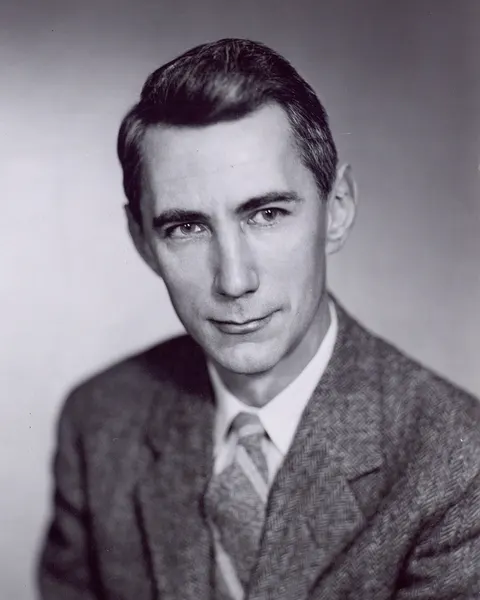
Who is the man whose name we utter every day the moment we open one of the most popular artificial intelligences? Why will no one confirm that the bot is named after him? And how did a seemingly unremarkable mathematician, who rode his one-wheeled bike through the corridors of MIT, arrive at the idea that gave birth to both the mobile phone and large language models?
 04
How (Not) to Build Your Own (AI) Monster
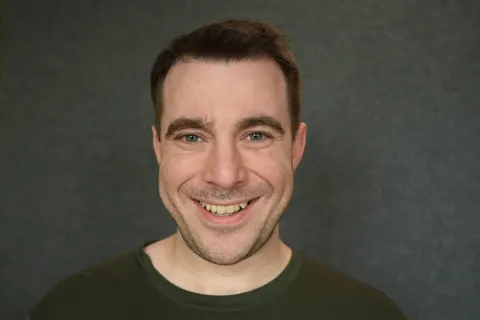
In an age when hyper-advanced AI is shaking up every corner of our lives, it gets ever easier to grant it human qualities. But how hard is it for a kind, meek, ever-helpful AI model to turn into… a villain? To become rude, discriminatory, insulting. Aggressive, threatening, even dangerous? It turns out to be a far less complicated task than we would like. Just as with people, where the thin veil of upbringing, civility and kindness slips off easily under the right circumstances, AI can show its ugliest face without all that much effort. We will see this for ourselves through a fascinating experiment described to us by IT specialist Damyan Deshev. Why does it matter? Because in times when advanced agents increasingly slip out of control; when open models can run on hardware anyone can afford; when we place more and more trust in ever more convincing and polished language models, the future of all of us depends on how well we discuss, understand and contain problems like these…
 05
“Let Humanity Have Its Fill of Playing with Technology”
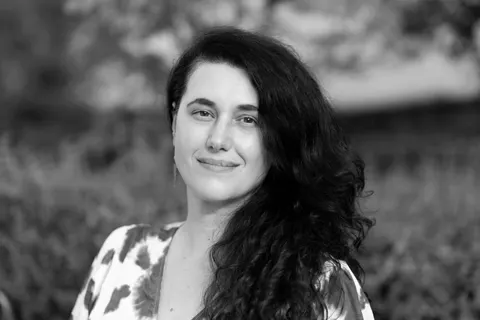
How did we lose the ability to wait, and why does it matter that we get it back? Will we learn to be bored well when technology supposedly frees up our time? What will the last book written by a human say? Violeta Radkova impressed me with her debut novel I legloto ni e zelenina (And Our Bed Is Green). She is a translator and editor, and her book rests on her great-grandmother's memories, written down in a grocer's ledger, while she wrote much of it on her phone. Caught up in the present, we talk about the future and the past, the fast and the slow. About books and meaning.
 06
Literatron: ChatGPT in… 1964?!
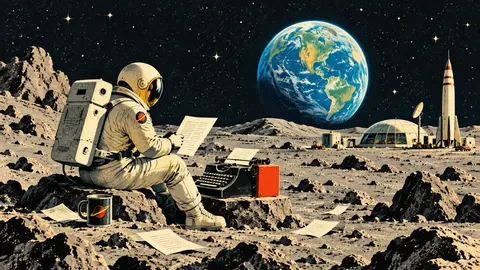
Have you heard of the literatron? It is… a machine that produces text on a user's instructions. It analyzes texts, writes bestsellers, composes campaign speeches, assembles comics and threatens to shrink the language of the media to 500 permitted words. Nothing new, right? We all have AI now, and these plots are everyday life; only that word “literatron” sounds a little retro. Why it does becomes clear when you look at the date on the cover of a slim little book that it is no exaggeration to call prophetic. The novel Le Littératron by the Frenchman Robert Escarpit came out in 1964 in the series Le Meilleur des mondes. But does the invention really resemble large language models? To put it mildly.
 07
Mr. McGonigle: The Irish American from Bulgaria
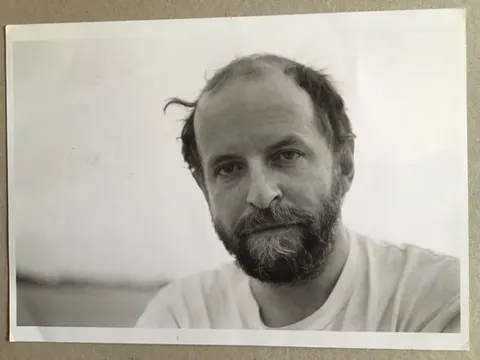
“I am trying to wrench this story out of myself, but which country will take it in?” A Brooklyn-born writer of Irish stock gets off a train in Sofia in the 1960s, walks into the first shop he sees and finds both a wife and the subject of his first and latest novels. Can a person fall in love with a country? Thomas McGonigle certainly loves Bulgaria. But… why?
 08
“We Need Something Very Powerful to Reboot the World. Let’s Hope It Isn’t War”
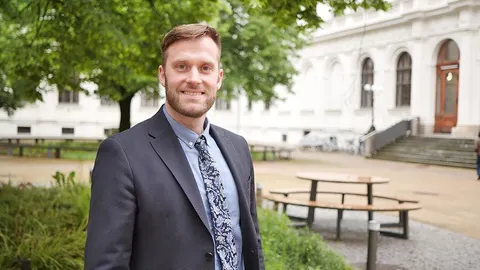
Can the world order change without a war? What could be the event that does it today? How can we curb the power of the corporations that, in the age of technology, have turned out to be stronger than states?
 09
Adrien Bachi: The Lessons of Bluebeard
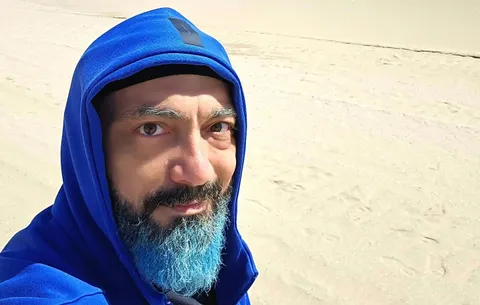
Adrien loves to run—down the entrepreneurial road and in real marathons, but above all against stereotypes. Adrien Bachi has lived in Sofia for 18 years, runs a successful video game company that employs Bulgarians, has adopted a Bulgarian girl and has gathered plenty of digital stories to tell us. Here they are!
 10
“We Live in a World of Copying, of the Shallow, of the Fast”
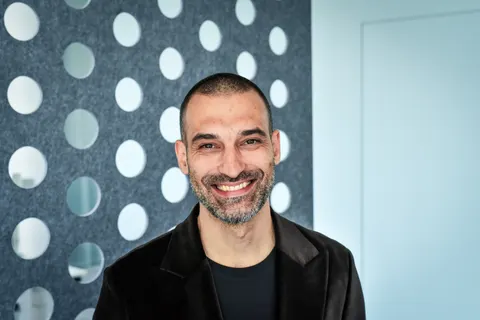
At 21, he stepped in front of the camera of Po sveta i u nas, the flagship evening news of Bulgarian National Television. Seventeen years later he walked away and crossed over… into the world of technology, because that is where he sees the change he wants to help bring about, and the future his three kids will live in. Spas Kyosev is one of the most recognizable faces on Bulgarian television and the youngest anchor of the main news in the history of BNT, and for years he drove the BNT Taxi, an award-winning, thoughtful show that gave everyone a say on the big issues of the day; there is so much to talk about—technology and journalism, television and reading, news and commentary—so hop into the Digital Stories taxi too: it’s free, and it always will be!
 11
“AI Is No Better a Programmer Than the Ones You Already Have!”
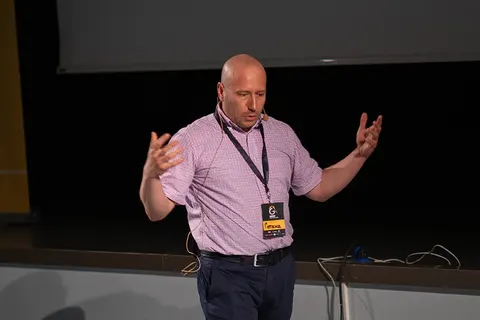
“However we integrate AI, in the end every line of code has to be read by a human.” “It is sheer madness to believe that general AI can be achieved with large language models.” “The world as we knew it is dead, and it isn’t coming back.” Ivan Vankov (Gatakka) can always be counted on for an original, unorthodox, provocative and thought-provoking take on technology, as the lines that follow will show.
 12
“There’s Really No Point in Owning a Car”
Does the future finally belong to electric cars? What will mobility look like tomorrow? Will we still own cars of our own? And how far away is the moment when people will no longer need to drive? For Denitsa Daverova, “yesterday” is cinema. She gave it two decades, and her father wrote the screenplay for the legendary film of that name. Today and tomorrow, though, belong to technology. Since childhood she has had a passion that is rare among girls: cars. Then came electric vehicles. In 2018 she rode in an electric car for the first time and quickly decided that this was the future, both for mobility and for herself. She left the film sets and founded Travel by Electric, a platform that gathers all the information drivers need in one place.
 13
AI at the Bookmaker's: Did Claude and ChatGPT Win Betting on the World Cup?
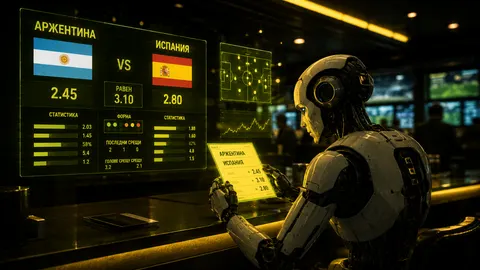
I gave 20 euros each to the latest versions of ChatGPT and Claude. I opened accounts for them on two popular betting sites just before the decisive matches of the World Cup. Then I gave them complete freedom to manage on their own. What do you think happened? Could AI become the gambler's assistant, or the end of this business? I had never opened a betting site. Nor would I ever work for one; I have seen enough examples of gambling being a drug that kills. But in times like these… couldn't we check whether AI might be the one that can beat it? Whether it turns out to be too good and makes nonsense of the pure mathematics behind the fact that there's no way not to lose the long game…
 14
Have We Lost the Last Race Against AI?
We are living in the incredible future. Have we lost every possible contest with artificial intelligence? My answer is unequivocal. I’d love to hear yours.
 15
What I Learned from the Virtual “Georgi Karamanev”
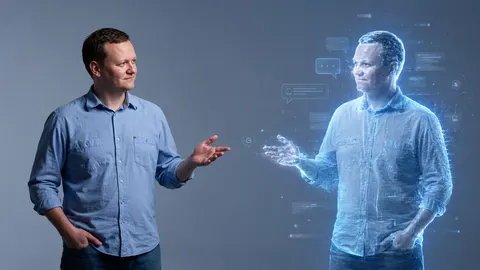
Talking to yourself. In psychology, this is hardly considered a sign of good emotional health. But what if, besides talking to yourself, you set your virtual double free so that anyone can talk to him? What would people ask him that they would ask you? And what wouldn't they? Some of the experiments on this site are already bolder than the impossible and the unimaginable. And that is exactly what awaits you here. Two months ago, “Georgi” appeared on this page—my digital double, whom you can still meet today through the chat button in the bottom right corner of this site. Anyone was welcome to have a chat with him. From the very start, I had warned that I would be following the conversations so that we could bring the experiment to a fitting close with the lines that follow. In them, we'll look at what happened to the virtual “Georgi.” What did people ask him? Where did he cope and where did he fail? What does each of these conversations have to tell us? We take a peek into the conversations with the chatbot, and I'll leave most of the reflecting to you. And if you want to test his skills, he is still here, waiting for you. I admit, I definitely didn't anticipate even a fraction of the conversations “Georgi” had. Here's what I mean.
 16
Why Is Everyone Listening to Andrej Karpathy?
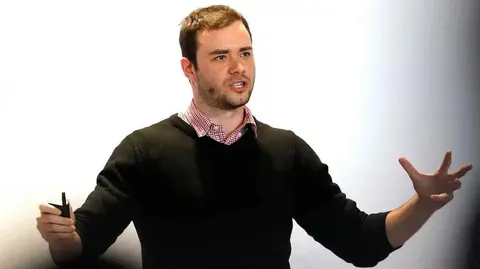
“There’s a new kind of coding I call ‘vibe coding,’ where you fully give in to the vibes, embrace exponentials, and forget that the code even exists.” With those words, on February 2 of last year, a world-famous programmer founded an entirely new field: a world in which software is made not by writing code but by explaining in human language. Andrej Karpathy, a co-founder of OpenAI and a builder of Tesla’s self-driving cars, has just joined Anthropic. What future does he see, and what kind of man is one of the prophets of the age of advanced artificial intelligence?
 17
Out of Work?!
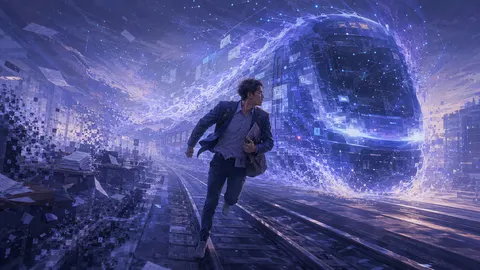
The question of the jobs AI is already taking over is only now reaching the agenda. How exactly will the technology change the professions? Whom will it replace, what new careers will it create, will there be any work left for people at all, and isn't it time we thought about introducing an unconditional basic income?
 18
“In Building True AI, We Get Only One Shot”
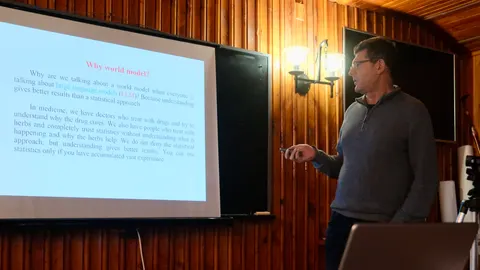
Everyone is talking about artificial general intelligence, the enormous next step that will confront us as a species with colossal and unpredictable challenges, and one of the first scientific conferences on the subject was organized in Blagoevgrad by Dimitar Dobrev, an AI and mathematical logic researcher who teaches at Sofia University. Before we let the genie out of the bottle, he says, we should at least decide what we want from it. We talk about intelligence as a force, our naivety about the future, control, regulation, open source, and one simple but frightening question: if we don't know what future we want, how do we expect to get it?
 19
How Ratatouille Gave Birth to Bunk Romero
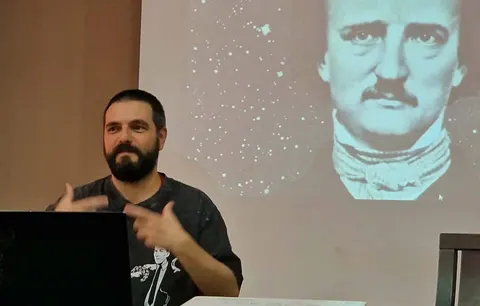
Bunk Romero is a genuine phenomenon: a six-book series that blends the best of crime fiction and science fiction with an authentic sense of humor. Its author, Emil Minchev, is known for the werewolf detective series, but also as the translator of Gone with the Wind, The Hound of the Baskervilles and The Great Gatsby. We sat down to talk about books and the future, about science fiction and fantasy.
 20
Apocalypse. How?
85 seconds. The symbolic clock that shows how close we are to the end of the world pointed to this insanely short time for the first time in 2026. The generation that not only remembers the last (so far) world war but also witnessed the first (may they also be the last) nuclear explosions is passing away. It is as if humanity's immunity is running out. Only we have no Mantoux test to remind us, to jolt us, to make us think. This is the most unpleasant Digital Story of more than 500. But I believe it is important to tell it. What would happen if one day a nuclear bomb went off somewhere in the world?