While you're scrolling… what makes you stop? Have you ever thought about it? I'd say it's most likely one of three things:
- Something that struck you as interesting.
- Something you liked.
- Something that made you furious.
The first is logical and doesn't concern us here. But the other two raise a particularly interesting question, and a fairly important one. We surf a sea of information and… the social networks surround us with exactly the kind we like. Or, failing that, the kind that makes us angry. And not only the social networks. The same goes for every other website, even for the online media.
The “filter bubble” is the great danger of convenience. Like an office chair that's too soft: you never have to strain, and then you wonder where your crooked spine came from.
Without underestimating a crooked spine, a crooked spine in the metaphorical sense is even nastier.

The Bubble Swells and Swells
You log into Facebook and the posts you want to see are waiting for you. That's how the algorithm works, and it's wonderful that it knows what you expect of it—which friends interest you most, which photos you'll like. Which news you want to read… Or is that going a bit too far? No, it isn't.
You don't have time to read the news—who does? You trust the outlet that picks the most interesting stories for you. And quite rightly: technology helps you stay informed without wasting time on nonsense. Many of the most modern information platforms offer personalized newsletters—you get articles chosen by the algorithm based on your previous searches, interests and likes. Terribly convenient: you can spare yourself a lot of scrolling and get exactly the things the algorithm knows you'll find interesting. You don't have time for more.
Personalization is a good thing. The bartender remembers your favorite cocktail (ah, once upon a time there were bartenders). The computer knows which piece of news matters to you and shows it to you.
The result: of the vast sea of information, only what has passed through the strainer remains. So instead of taking advantage of the diversity of the web, you limit yourself to what the algorithm thinks is important to you. If you're irritated by every text that mentions the rival team, a singer you don't like, an unpleasant politician… that's it. You won't even hear of them. They'll vanish like a disgraced North Korean from an old photo with Kim Jong Un. At least for a while. Later they'll come back in one form or another, but only if the algorithm judges that you engage with them. If you love picking fights with opponents, it will dig up the most extreme points of view to provoke you into barging in with your elbows out.
In that light, convenience doesn't sound quite so tempting anymore, does it?
Fly, Little Balloon
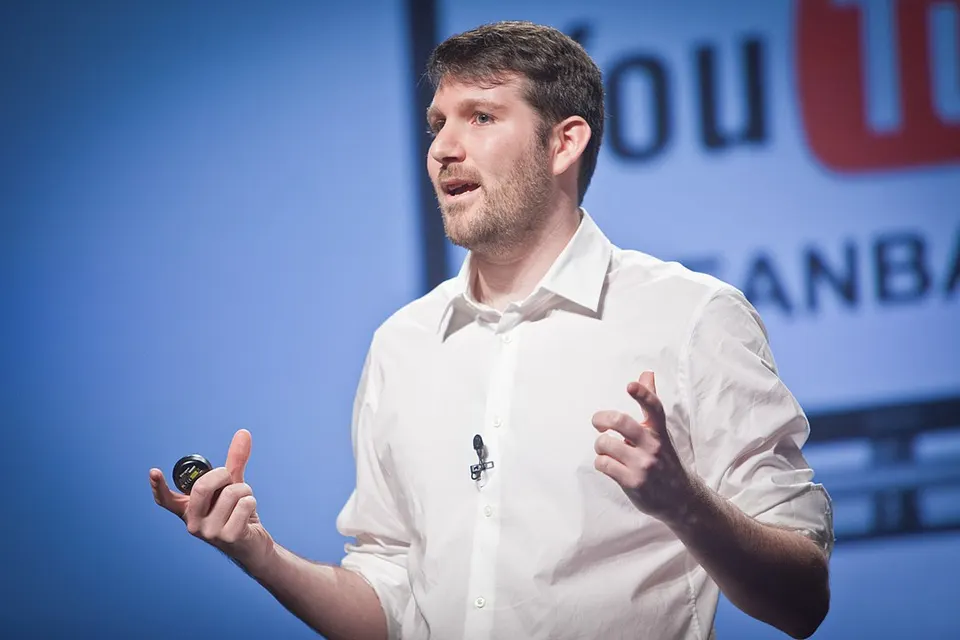
“Filter bubble” is the name given to this phenomenon by Eli Pariser, an American scholar, entrepreneur and advocate of a free internet. He formulated the problem long before it actually came to life in its present dimensions—his theory became popular through his book of the same name, published exactly a decade ago, in 2011.
Back then we could hardly have imagined it was possible; social networks were still in their dawn and hadn't swallowed up such a large share of our communication. Algorithms for personalized content seemed a distant future, the way Musk's ideas about chips in the brain sound to us today.
The theory in a nutshell: in their attempt to select the information most interesting to us, the algorithms of social networks, search engines and news sites accumulate an enormous amount of data about us and process it. Based on what we read, how we react, what we like and whom we block, the algorithms try to serve us as well as they possibly can by giving us more of our favorite content.
“We're used to thinking of the internet as an enormous library, with services like Google providing a convenient map. But that's no longer the case,” Pariser says. “Sites from Google and Facebook to the New York Times are increasingly personalized. Based on your web history, they filter information to show you what they think you want to see. And that is different from what everyone would want to see. Or from what you need to see. Your filter bubble is this unique, personalized universe of information created just for you by this array of personalizing filters. It's invisible, and it's becoming more and more difficult to escape…”
Don Balloon
You can see examples of this every day. Read a few news items about a particular football club, and very soon the results of its every next match will start popping up on your phone. Comment on two or three posts by a friend, and soon everything they write will show up in your feed.
This is how online we surround ourselves with people who think like us. We are supposedly saturated with information, yet we limit it ourselves without realizing it. Google, for instance, filters our searches supposedly to help us, and in doing so it gives incomplete and one-sided results.
Try an experiment. Search for some touchy topic from your own profile, then repeat the search from an incognito browser window and ask someone close to you to show you their results. The differences will be quite serious, especially if you search in one of the more widely spoken languages.
Is Facebook a social pressure valve, as the old cliché goes about sport? Does it bring you together with the like-minded, let you understand your opponent's opinion, or does it box in those who think differently?
“What is a newspaper? A paper with news on it. They tell you what happened. Or rather they tell you what to think happened. And the best of them simply confirm what you already think happened.” The quote comes from the fantasy author Joe Abercrombie, but to my mind it paints a very accurate picture of our attitude toward information on the internet today.
Mmm, Not Us
Convenient, yes. But extremely limiting. Because it comes combined with the fact that we have no time to read; we're used to getting our information at speed, to skimming. And so at some point, out of the wonderful pluralism and abundance of opinions that exist online, we find ourselves in the bubble. And then we wonder how it is that everyone around us supports one party, yet when elections come it collects a negligible percentage of the vote.
This study is yet another piece of evidence. I think it's obvious enough even without it that in recent years we have been drifting apart, growing bitter, becoming more aggressive. Anyone can see it in Bulgaria too, and there is objective evidence that the “filter bubble” is at least partly to blame for the serious rift in American society in recent years.
Compared with 2016, three years later members of the Democratic and Republican parties were considerably more likely to regard their ideological rivals as stupid, immoral… and closed-minded toward any different opinion.
In other words, political supporters are turning from thinking people who debate the public agenda with arguments into the most unpleasant part of football ultras. It's now much harder to like, say, the ideas another party might have about a given field. And arguments boil down to “the good guys” and “the bad guys,” “us” and “them.”
Bubbles and Bumpkins
“What most algorithms on social media are trying to do is increase engagement, to work toward increasing the attention you give to the platform in question,” Pariser says. Posts, messages and memes are curated in the best possible way to grab attention. Either because you like them or because they irritate you.
In “psychology speak” there's a term for it: “dichotomous thinking,” seeing the world in black and white, without the nuances. And as the psychiatrist Prof. Joe Pierre puts it, “the evolutionary reason for this is that sometimes we have to make a decision quickly—do we like something or not. Our only chance is to neglect and simplify the problem.” That's exactly what life on the internet does—it makes us hurry, scroll, judge in a split second. And instinctively we back the decision that “our side” proposes, driven by a kind of herd instinct.
The past year has deepened the problem even further. Locked up at home, torn out of everyday communication, we easily turned into “Mangarovists,” followers of the COVID-skeptic doctor Atanas Mangarov, and “HQ-ers,” loyalists of the National Operational Headquarters that ran Bulgaria's pandemic response. With the argument that this was about something as important as life and health, we began cursing and moralizing more brazenly than ever. Precisely because it's about something so important, it would make sense to calm our emotions on such topics, not to sink our teeth into the extremes by default. To give the floor to arguments. The specialists contradict each other enough as it is, not to mention the politicians.

Second Opinions
Are you convinced there's a problem?
Well, the good thing here is that the first and most important step toward solving it is realizing that it exists. A few years ago, that same Eli Pariser became part of a group of scholars and entrepreneurs who formulated 14 principles for online projects that encourage healthy, meaningful internet communication. With mutual respect, pluralism and a search for objective measures, however out of fashion such measures may sound today.
They surveyed 20,000 users from more than 20 countries who use all the most popular social networks, search engines and messaging apps. Among the principles are things like “the ability to join the conversation freely,” “showing impartial information,” “algorithms with clear rules and open code for distributing information.” And “building bridges between different groups.”
Needless to say, that is definitely not the goal of today's most popular social networks. What's more—never mind those that have started deciding for themselves where the objective truth lies. Leviathans. Who can afford to take the floor away even from the president of the most powerful country in the world.
Go, Duck!
Pariser and his like-minded colleagues believe they can create an alternative—a social network based on these principles. One of their arguments that this is possible is good old Wikipedia, where, on the whole, the principles of discussion, accessibility, the search for objectivity and free access still enjoy attention. But it really is good and old; its foundations go back to the days when the internet was a much emptier and airier space.
Still, one way to get today's big players to rein in the technologies that give birth to the “filter bubble” is precisely to show them displeasure. Zuckerberg and his colleagues are increasingly becoming the counterpart of Bulgarian politicians of recent years, who act only when they're under pressure and afraid someone will “take their bone away.” Otherwise it does sound rather unlikely these days that independent projects could go head-to-head with multibillion-dollar companies more powerful than the strongest states. The moment for that is long gone.
There are also search engines that claim not to use the “filter bubble,” such as DuckDuckGo. But they remain so niche that there's no need to go into detail.
In the Rhythm of the Algorithm
Possible solutions certainly exist. Recently, for example, Danish and Finnish scientists from various fields published an interesting paper on the subject. They propose an algorithm that could strike a balance—broadly speaking, part of the information is filtered according to personal interests, while the rest is selected on the basis of shared preferences and public positions.
Their algorithm processes every news item, assigning it numerical characteristics for where it sits on the political spectrum, how important it is to the public and how readable it is. It then makes sure the user receives a sufficiently balanced mix of all of this—as a side dish to their favorite news, plus a decent helping of viewpoints that differ from their own.
Sounds wonderful. Only I wonder whether we could make today's online colossi start redesigning anything “because that's how it ought to be.” Especially given that their growth and profits are currently higher than ever.
Another team, including the Bulgarian Prof. Julita Vasileva, proposed software back in 2014 that lets you control your filters yourself. We can easily guess why the idea never caught on—it certainly doesn't work in favor of the big players in this business.
Bubbles and Slivovitz
And speaking of scientists' opinions, I'd like to tell you about another curious idea of theirs from 2015. Engin Bozdag and Jeroen van den Hoven of Delft University of Technology in the Netherlands propose bursting the filter bubble with… cyberbalkanization! No, they don't mean teaching the algorithms to drink rakia and enjoy Mile Kitić, the Serbian folk-pop star, so that they become kinder and more tolerant. Although that might not be such a bad idea.
The two analyze in considerable detail how the filter bubble is a threat to democracy worldwide. According to the scientists, however, the key lies not in unification but in connecting small communities. Just as we have shown that we can live peacefully and with mutual respect in the Balkans. On a purely human level, until nationalism and outside forces get involved.
Their idea is that the internet has naturally fragmented into small groups of people with similar worldviews, to the point where most of them approach everyone else narrow-mindedly and with prejudice. But with the help of the algorithms the scientists propose, paths could be built between the groups, bringing shared and similar values to the fore, above political fanaticism.
Actually, I really liked the idea of cyberbalkanizing myself, and I'll definitely reach out to the authors for an interview.
A View from Inside
As the aforementioned Prof. Julita Vasileva notes, when people gather in a group of the like-minded, they radicalize one another. “From the inside it seems that the whole world agrees with the group's point of view. That's where group dynamics come in. To stand out or build authority, a person has to express ever more ‘orthodox’ views, all the way to extremes. In this struggle for reputation, people voice ever more extreme ideas, and this leads to complete fragmentation, the splintering off of new subgroups, little ‘bubbles’ of dissidents. In the end nobody agrees with anybody, and universal hatred and division set in.”
These social processes are normal; they happen in the real world too. With religions, for example. “All religious communities, once they grow large enough, at some point swarm into sects and branches,” says Prof. Vasileva. “By then there are people looking for a way to rise in the hierarchy and build reputation, but they can't do it within the group's rules. The same processes can be seen in science, especially in computer science, which is growing very fast. Originally breakaways from mathematics and electrical engineering, there are now more than 1,000 subdisciplines with different forums and methods that don't talk to one another…. In virtual space all processes speed up and can be observed within ten years or so. The bad thing is that when virtual groups, especially in politics, spill over into the real world, the social system can't adapt fast enough and it ‘freezes.’
Besides, bubbles make us lazy. It's easier not to think and to read things you agree with. Disagreement creates ‘cognitive dissonance.’ Which is uncomfortable, it pricks… and a person is forced to think in order to get rid of it by explaining it to themselves. That's how they learn new things and change their worldview,” Prof. Vasileva adds.
Divide and Rule
Either way, we know whose business it is to rescue the drowning: the drowning's own. I think we can still swim, and much of the solution to the problem is in our hands. Common sense is still there; all that's left is to recover the desire to look for it.
It doesn't take that long to read an article whose headline we don't like but which contains solid arguments. Let's give a chance to the authorities on the other side of the argument. Let's calm the mouse down a little, and avoid the deliberate rudeness that already claws at online communication as it is.
I think this is also one of the reasons younger users are far more active on the more “peace-loving” Instagram. And the even younger ones on TikTok.
In the end we are all human beings, and the similarities between us far outnumber the small difference of whether we support Levski or CSKA, Sofia's eternal football rivals, whether we're right or left. That doesn't mean we shouldn't have a position of our own. Just that we should look for the arguments and the dialogue without which positions become meaningless. After all, we all sometimes melt at a photo of a beautiful landscape, grin at a witty meme or can't resist tapping a little heart on a clip of an adorable kitten or baby. We are human first, and anything else after.
Eli Pariser shares on Instagram a message from an artificial intelligence telling him it has read and liked his book. “The world has become a very strange place,” Pariser comments laconically.