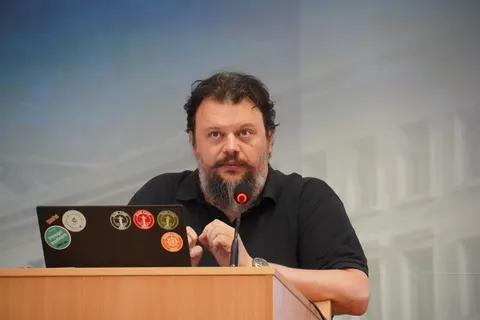
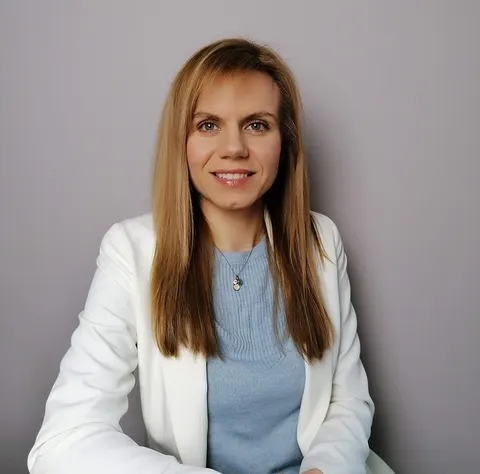
Velina Getova is a psychologist with extensive experience in information technology. She has worked in the sector for 10 years, in Bulgaria and in London, and has conducted more than 1,000 hours of individual and group counseling.
She has led small and large teams and has trained leaders in fast-growing companies. She is the founder of the startup Not Your Therapy, which provides psychological support in the workplace.
She studied social and organizational psychology at the London School of Economics and is a certified psychotherapist of the Bulgarian Institute for Neo-Reichian Analytical Psychotherapy.
“The most sought-after skill of the future, regardless of the role of different cultures, is not only the ability to learn, but also, at the same time, the ability to manage your inner state,” she says.
How do we overcome the difficulties that online communication creates? Which character traits give away a good programmer? When is it time to draw a firm line and slow things down at work, before burnout arrives?
– What psychological qualities does a person need to succeed in information technology?
– There is one thing I see that unites everyone in the industry, including me, even though I don’t write code and I’m not a designer either. It’s the love of learning, the drive to solve problems. We all carry that curiosity, but here the urge to solve problems, the interest in new things, is sharpened. There is a constant desire to learn, and I think that is what makes people in the industry successful. Those who grow, who read, who have a natural inquisitiveness and interest, move forward. We can’t always be on the crest of the wave, but certainly, if we want to be successful in this industry in the long run, the love of knowledge, learning and growth is what unites all the success stories.

– But that is a double-edged sword; in a way it very easily turns against you. You keep moving forward and at some point you can’t stop, you’re interested in the next new thing, the next problem. You can’t draw the line.
– Exactly. Like everything else, this has its shadow, two sides of the same coin. Yes, it’s a quality that can help us grow and be good at our profession, but on the other side stands the shadow: it can be addictive, we may fail to set boundaries, and it becomes part of our identity.
– And perhaps the problem is becoming more serious in some way, because for more than a year and a half most of us have been working from home. And we like it, we feel more productive. I talk to quite a lot of people, and nobody works less just because they’re at home.
– Yes, that’s true. That’s why it’s good to remind ourselves that today we work in an environment where the work simply never ends. Our brain and our biology assume that we should have a clear end to the day, the way prehistoric people did: they went out of the cave, picked berries, chased animals, then came back, and everything that had been out there was over. It was the same with our grandparents, who farmed and kept animals. In the field you know you have to plow half a decare, about an eighth of an acre, that day. And by sunset that half decare is plowed, you can see it, touch it, tell yourself: there, that’s what I did today, done. Whereas for engineers and people in this field in general, that half decare can’t be seen. Sometimes it becomes visible after 4–5 months, but by then it’s something else entirely. The work doesn’t end, it keeps coming and you keep going. In the field, even if you wanted to, you couldn’t, because it’s already dark.
The human brain doesn’t know that the work never ends. And this is where
the responsibility falls on us—to tell ourselves that at some point we’re done.
If we wait for it to come from outside, it simply won’t happen. There are always bugs, the client will always write that they want something new. And this turns into a trap especially easily once our field is already at home. Then only we can set the boundaries.
– Sometimes the choice to work without rest is conscious and deliberate. Can it be that it doesn’t cause you problems?
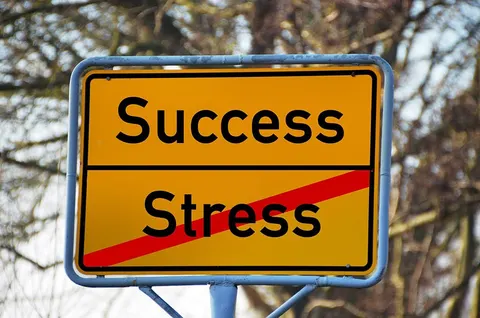
– Actually, the problem isn’t long hours. If I go back again, our great-grandparents worked very, very hard in the fields. The problem, as Tony Schwartz says, is not so much the stress itself as the presence of rhythmic recovery. The equation of life is stress and rest; that balance is at the heart of everything.
If you find that balance, you can work even 12 hours a day, as long as you compensate with quality rest. You can sleep 6 hours and that can be enough, if you get full recovery within them, at least 2 hours of deep sleep. Time with the kids after work, if it recharges you and you’re not thinking about work, is also rest. If in the micro-moments a person manages to secure quality recovery for the mind and body, then they can absolutely live with long, intense work.
That is the healthy way: not to shield ourselves from stress, but to be able to recover effectively.
– What are the signs that we’ve crossed that line? That we’re beyond the level of stress we can compensate for?
– If we notice that in the evening, when we’ve finished for the day, we keep thinking about work. It happens to everyone from time to time, of course, but if it becomes a pattern, if we can’t “switch off,” then we have a problem. Even though I closed the laptop long ago, at 1 a.m. I’m still thinking about work. In the morning I open my eyes, the kids come in, and the first thing that comes to mind is to open the chat with my colleagues and see what needs fixing.
This happens much more often now because of working online. Because
even when you’re in the bathroom, you’re aware that you can go at any moment
and open the laptop.
The other indicator is sleep. When it starts to suffer—and not just its duration, I’m mainly talking about the quality of sleep—the line has been crossed. A lot of people ignore this, because they think that not sleeping is fashionable these days.
– And very soon it starts to show in our everyday life.
– Yes, we start to become irritable, both our mood and our behavior change. If a person manages to maintain good relationships, feels well, energized, has a positive outlook, manages to work hard, there’s no problem. But if we feel we’re becoming negative, that the work we used to like now annoys us, that we feel aversion toward our colleagues, cynicism, that every little thing starts to irritate us—then something is seriously wrong.
Another signal that is very clearly visible concerns memory. Even when we have cases of more serious mental health problems, we always examine memory first. For example, poor concentration: I can’t last long in a meeting without getting totally distracted, I start forgetting little things. We set off somewhere with the kids, and the car keys are still upstairs. It starts happening just like that, you feel your memory beginning to fail you. Then we’re talking about chronic levels of stress.
Physical aches that we somehow attribute to nerves are also a sign. What does “nerves” mean? Your stomach tightens, some people get dizzy, your back and neck hurt. These are not natural things.
No, it is not normal to have headaches or stomachaches and to have gone without sleep 2–3 times
a week. Having something hurt every day and needing to take painkillers is not okay. Something isn’t right. And I say this because many of us are used to neglecting these symptoms. They carry on like that for months, years, and then “suddenly” they burn out and wonder how it happened.
– It seems younger people are more prone to this kind of problem?
– Yes, between 20 and 30 is the first maturation, when a person wants to prove themselves to the world, and that happens through their career. In our civilization we more often start families after 30; until then the only focus is professional fulfillment, possibly supplemented by a circle of friends. Young people also don’t yet have developed skills for boundaries, for balance. That’s also when our strength feels inexhaustible. We have more energy and think we can give it away endlessly. Especially people for whom work comes first, who love what they do.
Or in a job you’ve held for many years and that has become part of you. I had a client who had reached complete professional burnout. She had risen through one company, from junior QA to director. Her whole career had been at one firm, she identified strongly with her role, and then it becomes very, very hard to switch off.
– Is that the moment to seek help? Or is there a way to get out of this cycle by changing jobs, setting some boundaries?
– By then it’s already too late. That’s why I talk about this topic a lot and run training campaigns. It’s good to become aware earlier, so things don’t reach such critical cases. To start rethinking your relationship with work earlier, to take up self-assessment. Not all of us have to go to a psychotherapist. It’s very useful to have mentors we can rely on. In such periods it’s good to learn from someone with more experience in a given field.
There are many things that need to be done, but they also depend on company culture. If a young person who hasn’t yet firmly built their values lands in a highly competitive culture, with managers who have high expectations and are themselves role models of workaholism, they can very easily slip.
On an individual level, it’s important for young people to grow and educate themselves, but to take their mental health seriously. Today many of them are interested in fitness, nutrition, sports, which is wonderful.
It’s time they took the same interest in their mental and emotional fitness.
“What am I doing in that direction?” “Do I have the ability to say no?” “Do I manage to relax?” “Do I manage to recharge?” “Can I stand up for my boundaries?” These are skills, which is why I call it fitness. It’s not a state—am I sick or am I healthy—but skills that help us stay in good shape.
– Communication certainly matters too, and today it is almost entirely online. It’s very depressing when everyone turns off their camera and you’re talking to some pink background. Perhaps it’s worth investing in communicating more fully, as much as possible, even online?
– Companies’ values and cultures will change. I’m amazed myself, and I’m watching to see what will happen. I had some clients, I recently did a webinar for them. We all know what a webinar is today:
the presenter talks, the other 50 people have their cameras off and are multitasking.
Before that I had tried making it a condition in my groups for people to turn their cameras on at least for a while, but then I resigned myself to the fact that it wasn’t going to happen. And at this company 47 out of 50 people had their cameras on, and the other three apologized and explained why they weren’t turning theirs on. The platform we were using for the call even struggled under the load, but it was extremely effective. Afterward I asked the manager, and she explained that they’re a somewhat more traditional company, they had never worked online and had decided it this way from the very start.
Everyone in that webinar participated actively. There were a lot of intelligent questions. That’s the way we can connect. Truly, it’s good to make our digital communication as close to live contact as we can. Not 100 percent of the time, because we really do get tired, there’s saturation, but for the important things.
Besides that, I think that
something more important, and a counter to individualism and selfishness, is empathy.
Listening to the other person, being present.

– Are there other ways to work in this direction?
– There are many solutions. Tim Ferriss has a technique: you switch off everything on your phone when you’re in a conversation. That way you can be fully present.
Also: let’s ask each other about things that really matter to us. Online, when we talk to colleagues, it’s usually: “How are you?” “All good!” “How was the weekend?” “Really cool!” Let’s ask each other deeper questions. What’s really going on, what was the hardest thing for you this week, what was the most interesting, what has surprised you lately?
Let’s not stay on the surface, let’s not settle for minimal contact,
but connect with people on an empathetic level and share. Share quality content, not just “the weather’s nice, everything’s fine.”
I hadn’t had a morning meeting in a long time; today I went out and had forgotten what it’s like to be outside at 9:30 a.m. That freshness of the air gave me a surge of energy. I looked up, and there was even sunshine. I went to the meeting with so much energy, such adrenaline bubbling inside me… and it was just a work coffee. That happened to me today. Do you see how different that is from “yes, I had a few meetings, they’re going well”?
– I really like that you talk about empathy. In this sector people are scattered across many countries, teams change, and empathy is much harder to achieve. It’s difficult to make deeper contact, the way you can in more traditional fields, where you work with a colleague for 20 years and remember what his daughter liked in kindergarten, and today you’re discussing his granddaughter. And here we also have different cultures…
– Then it becomes interesting in a different way; we bring curiosity into it too.
The fact that we don’t know people gives us the chance to learn many new things about them.
It’s hard, especially if you have no context about others, about their culture. But it’s something people always love to talk about. However clichéd it may be, such questions even help a person feel accepted, especially if they’re a minority in the group.

– Why does the stereotype exist that programmers are boring, nerdy, uncommunicative people?
– Who thinks programmers are boring?
– In a sense, I do. With many of them it’s hard to find a common topic outside work; communication has its peculiarities. In conversation they have a harder time expressing emotions. Very often discussions are binary, and the nuances get lost.
– I find it hard to put a label on it. I’d say everyone is different in how they communicate. But if we find it hard to communicate with someone, or we find it boring, or frightening, that says more about us. So it’s right to think about what exactly bothers us in that communication. When someone says “programmers are boring,” it says much more about their own notions than about programmers themselves.
There’s a certain understanding that they don’t express as many emotions. Yes, maybe, but that doesn’t mean they don’t experience them. Some people probably do find it boring to talk to them if they genuinely don’t show their emotions; it’s hard to catch them. But that still doesn’t mean they’re boring. They’re not as expressive, which doesn’t mean they’re less spiritual inside or that they don’t have a rich emotional world. So the question should be: “If we think programmers are more closed off and boring, what in us provokes us to think so?” Are we ourselves worried about being boring? Very often we dislike in others what we fear being ourselves. And the reverse: we like what we perhaps have.
– Do you know people who have been programmers for decades and still deal only with the technical side of the job? Why is this relatively rare? It’s expected that if you work as a programmer, at some point the next step in your growth is managing people.
– I know such people, I’ve had such clients too; the path is personal. In most companies there is the cultural and organizational element that there are more places for people to grow, and at some point, somewhat forcibly, they have to advance in that direction. But I see that companies are now more comfortable opening up space for technical experts who will go very deep into a subject and become architects. They may not lead teams, but they will go so deep into a technology that they can influence the organization through their knowledge.
It also matters what stage the company is at. Over the past 10 years many young product companies and startups have launched in Bulgaria. At a stage like that, when they’re growing, people have to grow along with them.
The sector itself, however, is very much bubbling right now.
It keeps growing and evolving. There are now larger companies too, with long-standing products that need to be maintained or deepened. At this stage a different kind of person is needed as well. Kim Scott gives the example of rock stars and superstars. At some point, when the company is at a more settled stage of development, it doesn’t need so many superstars, people who want to race upward and become managers. Or if the company reaches 100–120 people and makes millions with that capacity—we see that model too. Among those 100 people there aren’t 20 management positions to fight over. At such a stage it’s good for the company to have more rock stars. These are engineers who are very good at their role, know 2–3 technologies very well, and are ready to learn new ones if necessary. They will keep developing the product, but they don’t hanker after hierarchical advancement.

– Evidently the software world is far more colorful than I imagine it. And yet many people take this more traditional path and at some point move from the technical side to leadership. What matters most at that point, as a change, as a way of thinking, as a mindset?
– The first thing, for sure, is that it should be their personal choice, a direction in which they want to grow. Whether it’s something that will truly bring them joy. Whether working with people, managing the project, assigning and delegating tasks, solving problems will energize them.
I had a client who really wanted it, dreamed of it, found it interesting, but when he started doing it, he felt exhausted all day. It turned out that it was precisely the leadership tasks that wore him out. So it’s one thing to find it interesting, to want it, and another to see that these activities aren’t against your nature. Here we certainly have to give character its due, and mentality, even our personality traits. If the leadership function drains you, if you’re forcing yourself, things won’t work out. However hard you try to learn empathy and communication skills, if it will cost you dearly, there’s no point.
The next important step is for the person to make room for this identity. To accept that their job now is to take care of people and, through them, achieve a good product, rather than to create it personally as a programmer.
A team lead I’ve recently started working with has problems with time management. He knows it would be much faster and easier to do something himself, but his role is different now… Yes, I see you’re smiling, we all recognize ourselves here.
No, my role isn’t to write a wonderful product, but to create an environment in the team where the others will write a wonderful product
and for that to bring me the same satisfaction.
– Besides, programmers are in a way people who are used to learning things with clear rules, while here soft skills are expected to be somewhat innate, something you develop intuitively rather than by written rules.
– That’s true.
Some of the most successful team leads I’ve seen are precisely the quiet ones,
not the ones who are constantly speaking up. When they kindle it in themselves, they are very good listeners.
Programmers are people with this problem-solving orientation. If they also master empathy, they can become extraordinarily perceptive about others; some of them are even therapists at heart. Because they can listen, and also break a problem down into steps very well and apply their analytical thinking.
When we often deal with truly abstract situations, as interpersonal issues are, it’s very important to see objectively what the problem is and what pattern it fits. That’s why programmers in general have a natural aptitude, qualities that will serve them well in a team lead role. Perhaps not in the way we imagine—a person who is very talkative and presents brilliantly. We don’t really need that in the IT sector. What we need is someone who creates space for people to do their work well and to trust the team.
– We all sit behind screens for endless hours. When is it time to realize we need to get up from that computer, at least for a while?
– If I realize it’s time, then I’m already late. If you realize your eyes hurt, your back has stiffened, you haven’t eaten, you’re getting tired, it’s too late, and you most likely should have stopped an hour ago.
Let’s not wait to “realize,” for the body to show us, but proactively keep track of things. It has to come from us.
We can look at it from the outside, as an engineering problem. How do I arrange my breaks, the pause for water, for the bathroom, for food, so that I’m comfortable?
I love talking about a technique called “daydreaming.” I close all computers and devices, take off my glasses. I sit and look ahead. I simply do nothing. Even for one minute. We need to plan these pauses into our daily routine, so we don’t wait for the symptoms.