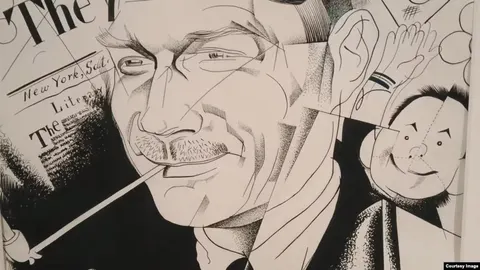
Yevgeny Zamyatin: The Forgotten Prophet
Yevgeny Zamyatin’s We is a brilliant novel because it offers a glimpse of a future in which technology has defeated humanity, locked people in its mathematical grip and turned them into numbers, into tools. We often mention Orwell and Aldous Huxley, and rightly so, but this writer inspired them both. His only novel is a dystopia no less thought-provoking than theirs, because it looks not so much at a possible totalitarianism as in a direction that is even more relevant today.
 02
EI + AI: Shoulder to Shoulder, Neuron to Neuron
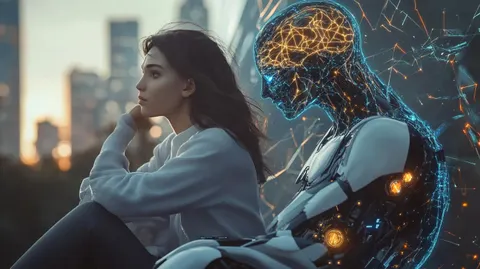
While we pelt each other with clichés and argue online about whether artificial intelligence will enslave us, leave us jobless or vanish under the weight of enormous expectations, I, for one, am sure it will do none of the things on that list—and a little of all three. AI is here, and we still haven't decided how to greet it: in the economy, in our lives, in the way we see the world and ourselves. The only sensible approach from now on is to learn to work together.
 03
“We Don’t Appreciate That We Live in the Best Moment in History”
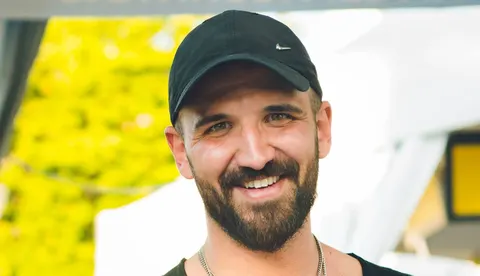
“People don’t appreciate that we live in the best moment in human history. We have advanced medicine, transport, communications… everything, everything you can think of. To have the chance to travel the whole world without restrictions and not take it is a crime against evolution. Because it won’t last forever. Covid, wars, regimes, diseases… Right now we are in a perfect situation, where the biggest problem is that Windows computers freeze for 8 hours and your flight gets pushed to the next day.” We’ll talk about the joy of writing and the need for hardship in life. We’ll travel around the world, through literature, through the big issues of the day. With a man who truly loves to travel like nothing else—he has lived on 4 continents and visited more than 40 countries. Abo. He chose a name that sounds like an AI’s. He trained in criminology, teaching and psychology, and today he is a writer—the author of two books, an editor, a translator and a journalist. But how come, and why, is he called Abo? And why does a subject of King Charles III, after so much travel, choose to come back to Bulgaria, which he considers a balanced, happy, cozy place?