“People don’t appreciate that we live in the best moment in human history. We have advanced medicine, transport, communications… everything, everything you can think of. To have the chance to travel the whole world without restrictions and not take it is a crime against evolution. Because it won’t last forever. Covid, wars, regimes, diseases… Right now we are in a perfect situation, where the biggest problem is that Windows computers freeze for 8 hours and your flight gets pushed to the next day.”
We’ll talk about the joy of writing and the need for hardship in life. We’ll travel around the world, through literature, through the big issues of the day. With a man who truly loves to travel like nothing else—he has lived on 4 continents and visited more than 40 countries.
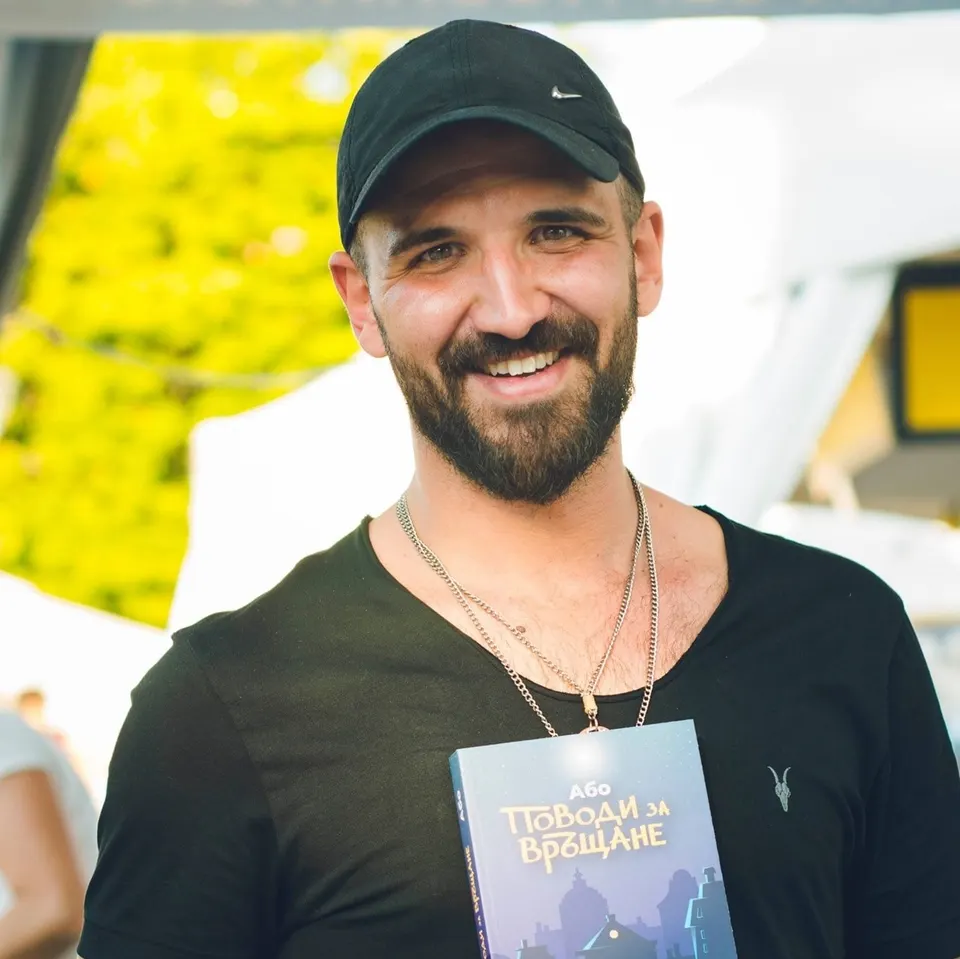
Abo. He chose a name that sounds like an AI’s. He trained in criminology, teaching and psychology, and today he is a writer—the author of two books, an editor, a translator and a journalist.
But how come, and why, is he called Abo? And why does a subject of King Charles III, after so much travel, choose to come back to Bulgaria, which he considers a balanced, happy, cozy place?
– You already have two books, you’re well known as a translator, journalist, editor, but… why are you Abo?
– Everybody knows me as Abo, and the answer that matters more to me is that I don’t need some grandiose name. The name that stands behind a piece of work doesn’t matter. If the work itself is good, it will be appreciated, whether it was written by Orwell or by Pesho Genchev.
– But people treat it differently. Take gamebooks, for example. The authors there had pen names, but they still had a first and a last name. So did Elin Pelin, by the way, one of Bulgaria’s best-loved classic writers. Then again, this way you come first in any alphabetical list.
– That’s true, it was simply the most logical approach for me. Last year there was an open letter from translators demanding a minimum fee. I signed it too, and when it was sent to the relevant institutions, out of more than 300 people I was first on the list. But that’s more of a coincidence.
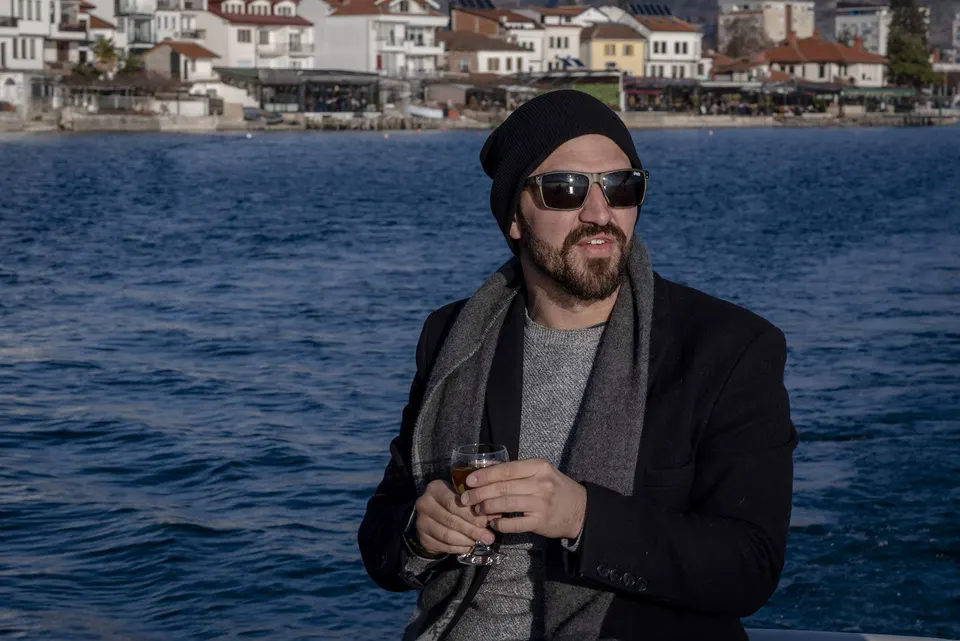
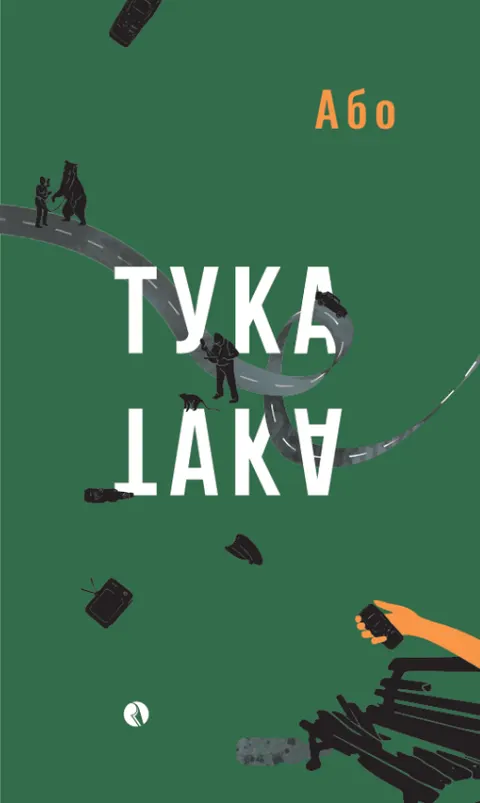
– But doesn’t it have downsides? To be honest, I was prejudiced going in, reading a novel by an author with the name of a haiku poet. But I really did like it.
– You probably were prejudiced, but you invited me to talk. So something convinced you. That’s a yardstick for me too. If you go in with a prejudice but afterwards find a reason to invite me for a conversation, then something in the work itself, in what I said, in what I did, was good enough. And that gives me an extra degree of satisfaction.
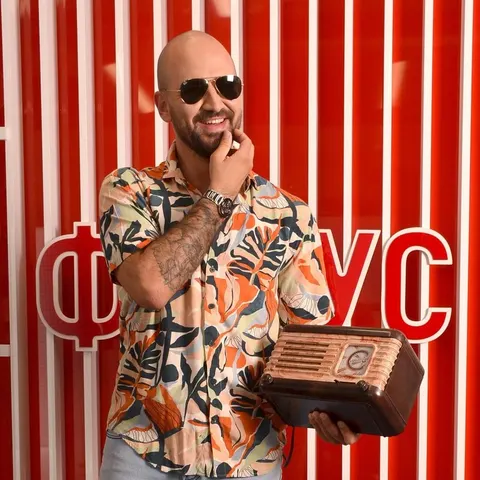
I don’t hide behind the name; I openly show myself, both my face and my personality. Until very recently I hosted a show on Radio Focus, where the voice announcing the show also said, “Listen to ‘One Sunday on the Highway with Abo.’” My goal isn’t to hide behind this name at all. On the contrary, I just think it describes me more fully than my real one.
– Why aren’t you hosting the show anymore?
– The radio cut its program schedule for lack of money.
– I didn’t know, I’m sorry. That’s really unpleasant. Led by Iva Doychinova, you were making a genuinely different kind of media, where I was often a guest and enjoyed it. Sadly, it’s a fairly typical turn of events for the media here. Why does this happen, when you were such an unconventional outlet?
– That was built into the idea: we were people with some media presence but no experience as hosts. It worked very well. Why does it happen?
– It’s a sore subject for me. I was a journalist for 15 years and at some point I had to save myself, and that’s how I became a programmer. Why can’t we find some model that lets the media survive without being politically dependent or relying on gambling money?
– The market is very small, we have few consumers, there are only 6 million of us left. Second, people no longer get their information from the media. The radio loses money; there’s no way it isn’t subsidized by some other business. I suppose the situation is similar in television, not to mention newspapers and magazines.
I have nothing to do with journalism. It was a flirtation with radio that I enjoyed very much. But I can’t pass judgment.
– I agree. Let’s move on to travel, to your subjects. Sorry for the banal question, but it matters—what made you come back to Bulgaria?
– Comfort. And it has nothing to do with some inability to adapt.
I adapted perfectly everywhere I’ve lived.
I didn’t go there to pick strawberries; I was a full member of society, I’m a subject of King Charles III. I had highly qualified jobs and everything, but the atmosphere, the mentality, just didn’t suit me.
I don’t know if you can imagine it, but after my first months living in England, I felt withdrawal from physical contact with people. Here, when we meet friends, we hug, we shake hands, there’s some kind of contact. There, it doesn’t exist. I never imagined something like that would strike me.
But if you start there and go through all their other typical traits—of mentality, of entertainment, of art, of media, even of drinking… They weren’t for me. I have a warmer character. In Spain I’m great, they’re even a bit too much for me.
I’ve lived in other places too, but here everything seems most balanced to me. Despite what we were just saying about the media, which of course spreads to everything.
The paradox is that society here works very well as a whole.
Everyone thinks we’re individualists and that each person just looks out for himself, as long as the neighbor’s goat dies too, as the old Bulgarian saying about neighbor Vute goes. But that’s not quite how it is. Think how many years we’ve gone without a stable government, and yet this country functions. And not badly! The economy is rising. When my girlfriend goes for a manicure, she has to book 4 weeks ahead because the salons are full. That’s a luxury product, not a basic necessity. For people to consume that much of it, there must be some standard of living after all.
I know the other extreme exists too. But in my opinion, life here is very well balanced.
– I think so too. We don’t realize right now how calm it is here. In terms of crime, jobs and so many other things. Even the chances of survival. Everyone has a village, a place to fall back on. Why don’t we appreciate the good things? Why do we keep grumbling about how bad we have it?
– I think it’s a human trait. People always grumble. Go to the countries we consider highly developed—Britain, the United States, Switzerland, Norway, Sweden. People grumble there too. Everyone grumbles, because they want things to be a little better.
I don’t think I’m that much of a grumbler in the public sense. But there really are things we should appreciate. Bulgaria has the highest percentage of people living in homes they own. Crime is relatively low, especially violent crime. Our air is clean. The population is well distributed across the country.
Resources could be distributed better, but there will always be some problem.
Why do we complain? Because we’re used to it.
That’s the narrative running through the media we talked about. People don’t always have the time and energy to make sense of everything around them, so they just go along with the general narrative. They don’t sit down and analyze too much.
– Besides, it’s purely human not to appreciate what you have. You have to lose it to appreciate it.
– I absolutely agree. The same happens in the West, in England, in the States. But not in Peru, for example. Those may be the happiest people I’ve ever seen. They’re far more hedonistic, they enjoy what they have. I think that’s the other problem.
We are an ambitious people.
We have access to a lot of information. If you look at the whole global picture, not just the European Union, we’re definitely in the top half. But we have eyes for the West and for the things we consider better. We want to catch up with them.
– Has there been a moment when you regretted coming back?
– Not once.
There’s a nice story a friend told me. An acquaintance of his came back from Germany after living there for a while. For roughly the same reasons as mine—not out of nostalgia, but because he believed that, practically speaking, he’d live best here. But he started getting disappointed by one, two, three, four things, one after another. Not that things don’t disappoint me—I spent time in a Sofia hospital and went mad with rage. But he started getting disappointed by various factors, and one day, as he and my friend were walking down the street, after it had rained, he stepped on a loose paving stone and it splashed him. At that moment he said to himself, “No, I can’t take it anymore.”
He bought a ticket and left for Dortmund the very next day.
I haven’t reached moments like that so far. I go mad when I deal with bureaucracy, with hospitals, with KAT, the traffic police. But that doesn’t make me want to go back; rather, I want to do something to improve the processes.
– There’s no ideal world. But what do you do to improve them?
– It depends on the situation and the specific case. Sometimes I might alert an institution, sometimes I fix something myself if it’s within my power. Sometimes I team up with some group. That was one of the things we tried to achieve with Radio Focus—to offer quality content. I think we managed it on my show. Not digging through tabloid trash, but talking about better art, better science. Personally, I count that as an attempt at a contribution.
– Me too, my site is an attempt at that kind of contribution as well. But let’s travel a little, I know it’s your weakness. We talk a lot about how the world is becoming universal, yet here you are talking about differences between the north and the south that remain in people’s mentality. As someone who has traveled a lot—do you think the world is becoming more and more boring and uniform?
– Absolutely not. There are some common features—for example, everywhere you can add the people you meet on Facebook. And eat a Big Mac. But for someone to tell me that here, Peru and China are the same—absurd.
Besides, something people don’t appreciate is that we live in the best moment in human history. We have advanced medicine, transport, communications… everything, everything you can think of.
To have this chance to travel the whole world without restrictions and not take it is a crime against evolution.
I really don’t understand how it’s possible… Because it won’t last forever. Covid, wars, regimes, diseases… Right now we are in a perfect situation, where the biggest problem is that Windows computers freeze for 8 hours and your flight gets pushed to the next day.
I can’t understand this apathy toward travel! For me it’s unthinkable.
– Well, I can try to explain it to you, as someone who doesn’t like to travel—there are people like that too. Even though my wife is a tour guide and we have such different attitudes. For example, I don’t see much point in traveling around Europe; the differences seem too small to be worth it.
– A person may not like to travel, but I assume that at least on an analytical level you realize what the benefits of travel are.
You’re right, when we talk about travel, Europe seems like one whole to me too, a homogeneous dot. I don’t picture it as a place you travel to.
– On the other hand, you can travel to some village in the Rhodopes, the mountains in southern Bulgaria, and it can be more meaningful and different.
– Travel is an inner process. It has nothing to do with a change of scenery.
Some people go around the world—I know people like that—from one five-star hotel to another and shut themselves inside. Programmers like you, splashing in the jacuzzi, drinking Bloody Marys, then they come back and tell everyone they’ve been to the Bahamas. Fine, but that isn’t travel. Travel is what you’re describing. You can be in a Rhodope village, you can be at Machu Picchu, you can be somewhere in the mountains of China or on the shore of a Pacific island. But it’s an inner process.
– And which places do you dream of reaching but haven’t managed to yet?
– New Zealand, Brazil, Buenos Aires in Argentina specifically, and Myanmar. Maybe you’ll ask me why? And I’ll tell you I have no idea. These places have drawn me since I was very little. I even make a deliberate effort not to read too much about them; I don’t want to spoil that instinctive attraction. I haven’t been to any of them yet, and I plan to correct that mistake in the near future.
– Technology also helps make this the best moment. But my big subject is how it changes us. How easily we delegate to it, how it makes us uniform. How we hand over to it things we shouldn’t. Writing, for example.
– I warmly recommend Orwell’s The Road to Wigan Pier, a book I had the great joy of translating. He talks about the mechanization of the early twentieth century, and back then the premise was the same—“machines will do the work for us.” But he starts asking legitimate questions: what is work and what isn’t? If I’m a farmer, digging potatoes is work for me. It’s laborious and tedious because I do it every day, and at that moment I might want to sit down and play the piano, say.
But if I’m a professional pianist slogging away at the keys for 8 hours a day, it might be very relaxing for me to go outside, do some gardening and have a little vegetable patch in the yard.
What is work and what is pleasure? And what is art?
Many more questions come up that he raises. For instance, why would a person be brave? There he talks about Aldous Huxley. Because in a world where machines and technology have eliminated danger, a person can’t show courage, since courage only makes sense in opposition to some threat.
The book is from 1936. I’ve got it in my head to make a tour for the 100th anniversary of its publication. The first part is a travelogue about how the miners of Wigan lived, the lower class. Wigan is still full of lower-class people, and that’s where my house in England is. I want to do a parallel reading: what is happening today?
I see it as evolution. It’s the natural course of things.
People have always wanted to make their tasks easier. That’s why we invented the wheel, that’s why we invented the lever and the pulley. And that’s why we invented AI. These are different manifestations of the same drive.
So it doesn’t scare me. I think we just need to adapt to it. There will always be room for self-expression, for art. There will always be room for rest and for work. I don’t think AI will take every single job and people will suddenly have nothing to do. I think it’s a natural process we need to adapt to.
– You mentioned you had a successful career in England. What was your profession?
– I got a bachelor’s degree in criminology, then I studied psychology, then psychotherapy and finally teaching.
– Why so many?
– Because I was procrastinating. I didn’t want to live like an adult, and I wanted to stay in school as long as possible.
– And now you write and translate…
– Yes, all things that have nothing to do with each other. When I was younger, people kept telling me I was very scattered.
These are supposedly different fields, but they aren’t so different. Psychology and criminology are very closely linked, and so are teaching and psychology. And
many of the things I learned as a criminologist were very useful to me later as a teacher, for keeping my class in check,
they’re always a pack of criminals.
People told me I was very scattered, but in my head I always knew I wanted to work with literature. I think I was just putting it off until I found the right place. And I found it.
Even though it all looked chaotic, I knew I needed all this experience to be good at literature. Whether as an author, an editor or a translator—it helps me enormously.
As an editor, for example: there was a very strong dialogue in one of the last books I edited, and I had to sit down with the author and discuss it in great depth, because I explained to her that, from a psychological point of view, the conversation couldn’t possibly go that way. We discussed it, we even acted it out, and it became quite clear that the conversation had to go significantly differently. And since the book came out, several readers have singled out that very dialogue as a strong point.
All these things help me, and I knew it even back then. That’s why I studied all these supposedly disparate and pointless disciplines.
– They’re not pointless, that’s clear, and combining disparate fields can be very valuable. I feel it in my own life, combining things from writing, journalism and literature with programming, which at first glance are completely different directions.
– Without being a programmer, I imagine that if you have a good command of a human language, it should help a lot with programming, because after all, you work with languages. Yes, they’re synthetic, but you still have rules, syntax, and I’m absolutely willing to believe that a good feel for language helps a lot in being a good programmer.
– Exactly. Imagination too, and the approach to structuring a text… In a way we’re translators as well—we translate into “computer language” what people want to be able to do.
But can literature help us accept today’s technology a bit more sensibly? Orwell tried to make predictions, so did Huxley, Yevgeny Zamyatin, then came a huge line of generations of science fiction writers… Whereas now very few authors do it.
– When they were writing, technology was in its infancy. Airplanes, calculating machines, motorcars were only just being built. I think it was a tremendous thrill for them to imagine where these technologies were heading. Just as all of us are now swooning over this AI and how far it will go. Because it’s a landmark step forward in technology.
But most of the steps we’ve taken have been so gradual and so small… Going from black-and-white to color television doesn’t exactly tickle your imagination about what might come next.
I also think we’re now flooded with information about technology, which doesn’t leave much room for imagination. I think that’s why they don’t write.
But if you look at contemporary literature, people are starting to turn back—toward the spiritual, toward esotericism, which personally makes me very angry. Toward religion, toward all kinds of superstitions. They go to yoga. I’ve been to yoga three times in my life—not that I don’t practice, I stretch around here at home. But I find it very funny how people go there in search of themselves, of inner peace, of the rejection of the material. And next to me they do yoga with a Rolex on their wrist. I think these two things are very incompatible.
Yes, people today aren’t as interested in technology as Orwell, Isaac Asimov and Karel Čapek were. They’re more interested in how to bring back all those withered skills.
– I think, though, that our imagination has withered a bit too. Here we have AI, a powerful new tool, and people en masse are either scared, or enthusiastic, or they ignore it. And few think about how we could use it, for example, to create new forms of art.
– I’m rather indifferent to the whole business. ChatGPT appeared as a big fad, but it didn’t reach me. How we might use it to create art isn’t something that would excite me either. I’ve dabbled in various arts—I’ve played guitar, I’ve drawn, I’ve done sports. But I’ve never distinguished between the tools. Give me two pairs of skis from different eras and it won’t make a difference. Give me two guitars, two different pencils, and again I won’t notice a difference.
That is, the tool I use to achieve something has never been especially interesting to me. And maybe that’s why I’m a bit indifferent to AI.
– But if the tool doesn’t matter, soon you might have two texts in front of you—one you wrote, and one that was generated—and not be able to tell them apart.
– Now we’re no longer talking about the tool but about the author. It’s possible, because after all the human brain is a slightly more complex computer. The same functions you have run in here too; that’s exactly how the human brain works. And probably, without much effort, this AI can be refined enough to perform such tasks.
It probably won’t go through all the hesitations the human brain goes through. So what?
– Then why bother writing, if it can do it too?
– That’s the question Orwell asks. Why bother digging potatoes when someone else can do it? Why bother playing the piano when there are already player pianos with rolls, where you load the music you want and it just plays by itself, even presses its own keys?
For personal pleasure. And this is where the sense of contribution, of value to society, will have to adapt, to be redefined.
Because right now I may feel satisfied in some way that my work makes me useful to society. And soon that work may no longer be needed.
It’s like the sheepskin-coat makers of the old days. There’s one coat maker in the village who makes sheepskin coats for all the villagers. And at some point the Chinese factory arrives, supplies the whole country, and our coat maker is out of work. That doesn’t mean he’s worthless as a person; he finds himself another role.
And if at some point writing drops off the charts as something a person can do, we’ll have to adapt.
– You have degrees in many professions; surely AI won’t do one of them.
– Education makes absolutely no difference, especially formal education. I work in something I never studied for. As an editor, I’ve noticed that translators who come to me with a formal degree are usually weaker than the self-taught ones.
So you just have to burn for what you do. Forget education.
I think my life jacket is that I have many interests. Lots of things make me curious; I try to learn more about them and practice them. If I have to stop writing, I’ll go on doing something else.
By the way, the first thing likely to drop out in the coming months, not even years, is translation. There are platforms that already translate decently—not as well as I do, yet. But give it a year, give it two.
I adore translating, but I’ve resigned myself to the fact that it will be something that disappears quite quickly.
– I think there will be some kind of post-editing role for a long time yet, because current algorithms, at least, can’t work perfectly even in principle. But you said you’d keep writing for personal pleasure. I, on the other hand, would keep going even more for personal displeasure, for the pain and difficulty. We delegate easily, we hand off tasks, so that everything gets easier. But life and everything that makes us human is a form of stress. Learning new information is stress. Doing sports is stress. Writing is stress.
– I think a person’s life passes in the sense of solving problems. That’s all there is.
When people ask me what the meaning of life is, that’s it. People want to solve problems.
I think that’s also a large part of the origin of today’s political correctness, which I can’t stand either. But if you look at the people who are its loudest heralds, they’re usually people who don’t really have any problems. They don’t go to the well to draw water, they don’t light candles in the evening, their gas lamp doesn’t run out, they don’t have the plague. But they have an inner need, teenagers even more so, to solve some problem in order to feel significant. If you solve a problem, you have value in society.
And since they have no real problems, they start creating some. Grammar is to blame, pronouns are. And don’t get me wrong, I would put myself at the far end of the left—for equal rights, for gay marriage, for feminism, for all of that, but not in the way it’s presented in its extreme, radical form.
You said that writing, and in fact every activity, has to contain a dose of pain, a dose of Sisyphus. And that’s why we’ve kept chewing on this Sisyphus for millennia, absolutely unchanged—you have to go through some suffering, overcome it, find the next one. You can see it in people’s ambition too. When you achieve what you want, you don’t tell yourself you’re done and you’ll lie down; you set yourself the next goal, and the next, and the next, and the next.
Camus says, “one must imagine Sisyphus happy,” because it’s true.
I agree with you. Writing isn’t only for pleasure; no art, no activity is only for pleasure, it’s also for the pain…