While we pelt each other with clichés and argue online about whether artificial intelligence will enslave us, leave us jobless or vanish under the weight of enormous expectations… I, for one, am sure it will do none of the things on that list. But it will do a little of all three.
The puns about how much we fear EI—natural intelligence—and how it's high time artificial intelligence (AI) took over, or the other way around, stopped being particularly witty a long time ago.
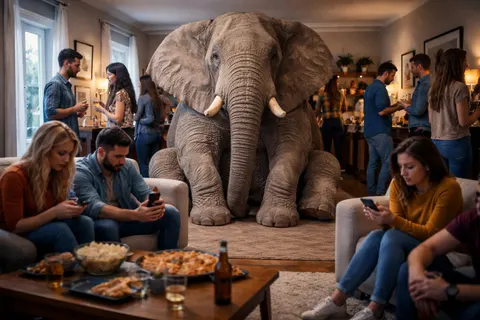
With the arrival of ChatGPT, the technology has spent two years at the center of public attention, everyday conversation and clichés. It is clear by now that it is here… and we still haven't decided how to greet it. In the economy, in our lives, in the way we look at the world. And at ourselves. At our daily routines, at our work. At art. At everything that makes us human. And that can make us better and happier humans.
I asked 750 visitors to Digital Stories in a survey what they thought about the touchiest topics around artificial intelligence—supposedly chewed over, yet never quite talked through. And while the answers scattered across the funnel of extremes, a few stood out. One above all: that fundamental changes are coming to far too many areas of our lives.
The only sensible approach from now on is to learn to work together. To keep developing AI technologies fully, but also wisely. By discussing, by looking for every important aspect across the different fields of knowledge.
Us or Them?
Even as they created previously unthinkable conditions for equality, technologies also turned into machines of division. From technological divides, through social ones, all the way to everyday ones. Filter bubbles, squabbles over the news of the day that escalate into social upheaval. I won't even get started on the rifts in Bulgarian society, however telling they are of exactly this phenomenon.
Meanwhile, a much bigger paradigm is pushing its way to the front. Where do we fit this famous artificial intelligence? Will we cast it forever in the role of a slave, or deny it, waiting for the winter of this kind of technology to arrive in the natural course of events? Will we hand it entire professions, or ban it? Will we fear it, or worship it?
The paradigm resembles the one in the last 89,738,793 Bulgarian parliaments—the country has lately been going from one snap election to the next. We don't trust each other, we don't like each other (and sometimes we secretly do, but we mustn't). We complement each other, we split up. In fact, in so many ways we aren't all that different. But we're afraid to admit it. We postpone, we don't know how to proceed, so we roll the dice again and again…
Partners by Necessity
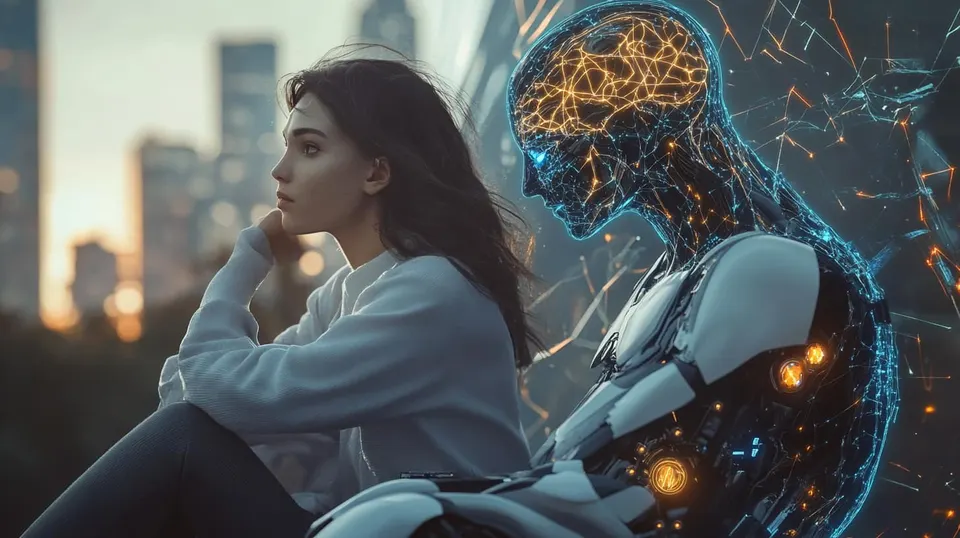
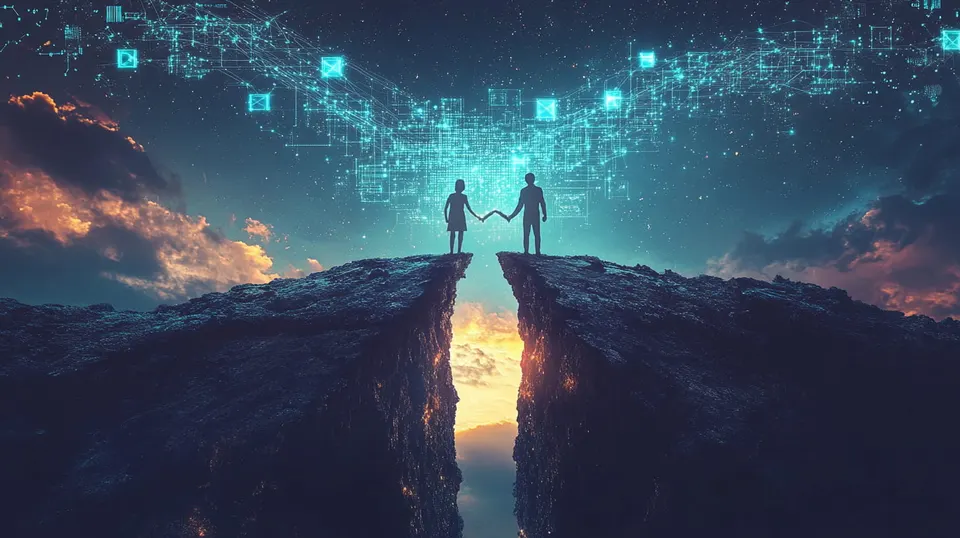
Our only chance of surviving the age of advanced AI is if we are “us,” not “them,” Musk once said. If we aren't “us,” if we don't become part of the technology, sooner or later “they” will subjugate us, conquer us, render us pointless. They will turn out to be the next step in evolution.
Then again, “We” sounds ominous because of the half-forgotten but especially powerful today dystopia by Yevgeny Zamyatin of the same name.
Not long ago Linus Torvalds said that 90 percent of today's AI hype is marketing, and only 10 percent is about real applications. Facebook may keep rolling out new applications of the technology, but its chief AI scientist, Yann LeCun, one of the fathers of the field, never tires of repeating that today's AI is no smarter than a cat. That all the noise around the subject is artificial, made up.
And at the same time, the Nobel Prizes in physics and chemistry went to research directly tied to artificial intelligence. Maybe not all scientists are convinced the hype is overblown?
CrITical Thinking
For four years now I've been collecting all sorts of perspectives; there are more than 400 Digital Stories, coming from the most varied directions possible. And each new one convinces me that AI is the next big technological step. One that has come to surprise us. To challenge us. To give us new opportunities, new challenges. The only thing we know about them is that they will hardly resemble the forecasts. They will hardly live up to the forecasts. They will hardly go to the extremes of the clichés.
Still (may the AI-resurrected Confucius not be reading this), I don't believe it's a curse to live in interesting times.
At the start of the millennium we suddenly found ourselves connected in a network we were learning how to use, held back by its technological limits too. It took hours to download a photo, but chatting within seconds with a new friend on the other side of the world was an unearthly thrill.
We got used to it. And before we knew it, it turned out we had the whole world in our pocket. That even when nearly everyone on the planet had to shut themselves in at home because of a new virus, we could practically live online.
Then… it turned out we were in such a hurry that in this crazy technological world we have no time to stop and think. That there's no need to remember… and even if there were, we no longer remember. That we can't read long texts. That communicating online locked us inside the cells of bubbles. That the way we form ourselves as people, the way we get our information, has changed from the ground up…
We, the Collaborators
And just when “things got boring,” the enormous noise of artificial intelligence arrived. It quickly became a synonym for large language models—just one of the many directions in which technology stands ready to move us forward.
ChatGPT showed how far we'd come; then the models kept chasing each other and evolving, showing ever more astonishing successes… garnished, of course, with disappointments. With their inability to beat hallucinations, but also with the slow and undeniable steps by which they kept moving forward and upward.
Sometimes the conclusions are hidden in personal stories, because those not even ChatGPT can make up.
So it is with my own story—I keep moving forward without being able to guess how strange the next step will be. When I decided I would become a programmer after 12 years in journalism, the decision was final. I soon realized it wasn't, because far too many important things are happening in the world of technology that need to be told, discussed and thought through.
That is how the Digital Stories site was born—to gather stories and guests, to tell the story of the world of technology.
Then it turned out that wasn't enough. Because our development as a species, the progress of technology, lies far beyond stereotypes and extremes. And each of us has to look for the next, different step.
Nothing fits into our past experience.
Hit Me, I Love You
So I began running experiments of a sort, inventing topics and trials, while never letting go of my anchor point: telling the stories.
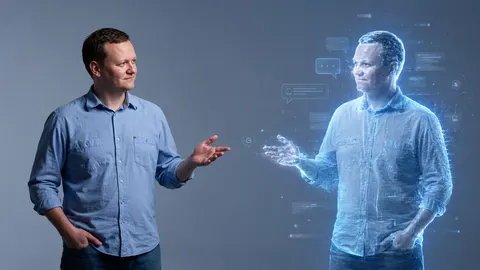
You may remember that I created an entirely generated social media profile. Pretty Eco Elena reached 85,000 people without a single one of them suspecting that something was off. Then 1,800 visitors took part in the next telling experiment—they tried to solve a test by guessing whether short texts and images of all kinds were created or generated. The results… showed unambiguously that we are no longer able to tell.
Out of 30 points, none of the participants came even close to the maximum, and 15 was the equivalent of pure guessing—yet the average score turned out to be… 16 points. My visitors proved unable to tell the generated from the created, regardless of the content—whether it was rap or classical paintings.
Collapse
Then I wondered… maybe the bar has simply dropped? Maybe most of us can't tell generated poetry from poetry written by a human because we don't devote the necessary hours to Baudelaire and Goethe?
It turned out that wasn't the case.
I submitted AI-generated poems to a leading Bulgarian poetry competition. To check whether perhaps we ordinary readers can't tell the difference, but the specialists can…
Then news broke that in another poetry contest one of the authors had admitted to submitting AI-generated poems. Then the results came out from the competition I had entered, and it turned out my generated poems had also made the top 10.
Give and Take
If one respected jury of leading Bulgarian specialists had unknowingly picked generated poems among the best, that could have been a coincidence, luck, an exception. Two out of two, though… that takes things in a different direction.
And what are we humans to do? As I mentioned, quite a few visitors took part in the survey on how Bulgarians feel about artificial intelligence. Apart from the view that we are far from the limits of this kind of technology, only two other statements drew serious broad agreement. That sweeping social and economic changes are coming. And that we don't talk about the topic deeply enough, professionally enough, beyond the clichés.
“Just make the task harder. The poem has to be in stanzas and rhyme,” a writer I like very much suggested in a comment, with an idea of how poetry competitions could carry on.
So It Is Written
But why should we force people to write in a particular way? What would we be competing in then—poetic imagination and craft, or squeezing into templates, so contrary to the freedom that poetry is a synonym for? And if today the algorithm isn't that good at rhymes and stanzas (it is—I checked recently), tomorrow it will be at our level there too.
I won't forget the emotional words of a student at a discussion at the Faculty of Journalism of Sofia University a year ago: we keep losing one battle after another—computers beat us at chess, at every game since, even the ones whose rules they don't know. And now they write all kinds of texts and create images that are not only indistinguishable from ours, but sometimes close to our finest masterpieces. “How long will we keep retreating and retreating, instead of thinking about how to move forward?”
I've heard it so many times—the big models can't handle Bulgarian. Well, now they're exceptionally good at it. Poetry written by a robot is worthless… But what if you don't know it's a robot? And one more important shift: there are now quite a few comments saying the poems of the two “electronic authors” are actually very good.
Check with a Pawn
I'm sure many politicians won't remember it, and we forget it all too easily while bickering online. Still, you know what is written over the National Assembly, Bulgaria's parliament (at least on its original building): “Unity makes strength.” Our relationship with artificial intelligence can no longer run through a simple “them” or “us.”
We have to be together, because that is where both progress and evolution are leading us. And yet with each side keeping its clear role. The road there runs through finding the important questions, and then the answers. The kind I've been trying to collect on the Digital Stories site for four years, but which, alas, I don't see nearly enough of elsewhere in society.
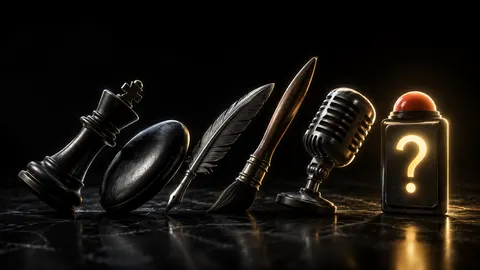
Twenty-seven years have passed since a computer defeated the reigning world chess champion, Garry Kasparov. Then the algorithms became unbeatable at the task. And yet chess is still here, more alive than ever. You can see it for yourself in front of the National Theater in Sofia, where people gather to play outdoors, and the next time a Bulgarian player starts doing well at a major world tournament.
And… Tetris? Computers are better than us, and we keep finding the next step by which to grow and compete with ourselves.
Even in art. The camera didn't kill painting; it gave us a new form in which to create. Video didn't kill the radio star, as an ancient pop hit misleadingly claims. Algorithms let the Beatles make their last song together.
Cola, Beer, Cola, Beer
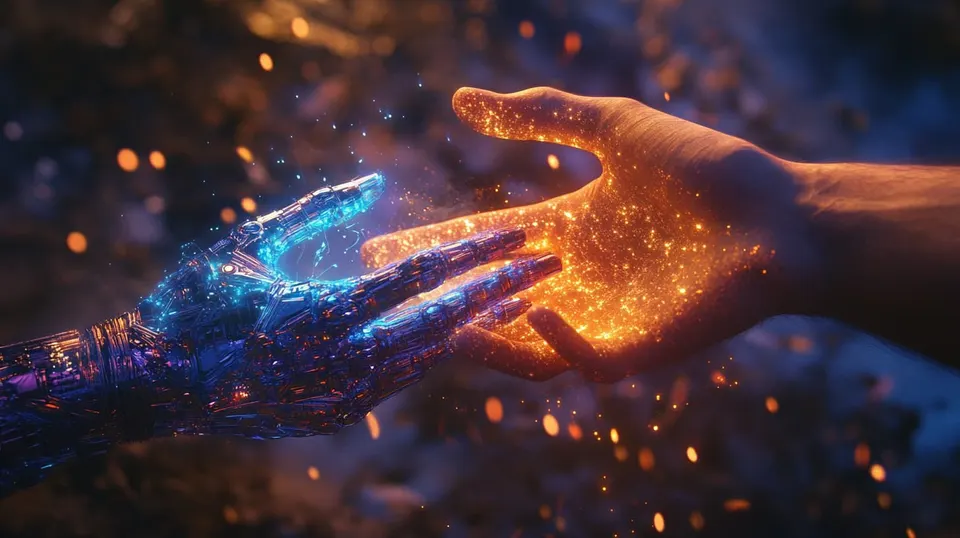
Can't artificial intelligence simply be the next tool we learn to use, shoulder to shoulder with it, to create the next forms? The next genres and works that move us…
Not only can it be, it must be. But the road there runs through the fight against stereotypes and through the important conversation. Through the irreplaceable role of the people who will get to know it, experiment with it and find forms of interaction that simply wouldn't have occurred to us until now.
And if my musings strike you as too general (which at least proves they weren't written by an algorithm—though by now it would be hard for me to guarantee that I write every letter by hand), I'll close with the example from a recent Digital Story.
Made for Each Other
“In December I turn 63. I've seen a lot and lived through a lot. Instead of shrinking, the problems keep piling up. I've had two strokes, a malignant tumor and more. In those hard moments there was always one person by my side who got me back on my feet again and again, and even gave me wings. That person is my wife, Toni. A few days ago I spontaneously put my feelings for her into a few lines. Since I'm neither a musician nor a singer, I used artificial intelligence to turn them into a song,” Chavdar Mihaylov wrote to me. We met and talked, and he told me the unusual and instructive story of his life.
“One evening, after two beers and three shots of rakia, the Balkan fruit brandy, I was thinking about my two strokes, the malignant tumor and my upcoming hip surgery. That's when some thoughts came to me that didn't rhyme all that well but looked like a poem. I can't stop thinking about you. Your eyes shine like stars. Your whisper in the night is like a melody… I'm crazy about you…
Maybe there comes a moment when we get used to each other, love starts to fade and everyday life sets in. But then situations arise when you see that this person is by your side. That's when you understand that this is the right person, and somehow you have to say to them: ‘Thank you.’ To show that you see them.
The next day I read about Suno and tried it right away. This artificial intelligence can turn my text into a song by adding a melody and a voice. I was happy it gave me that chance, because I can't play any instrument and I sing off-key. Finding the right melody with the right voice wasn't that easy, but after a week and 35 suggestions from Suno, I finally got a song I like,” Chavdar says.
Isn't that exactly what art is? Something that creates stories. That moves us, that gives meaning, that reveals what truly matters. That makes us cry and melts us. That gives us wings. Why shouldn't one of those wings come from artificial intelligence?
This piece is part of the new issue of Dolce Far Niente magazine