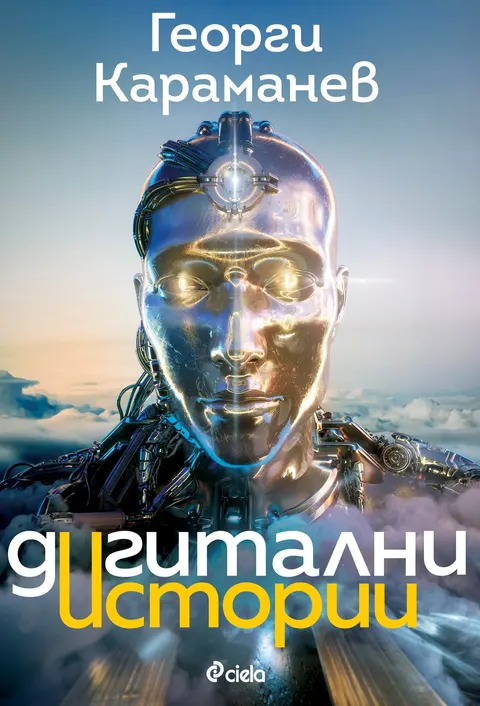
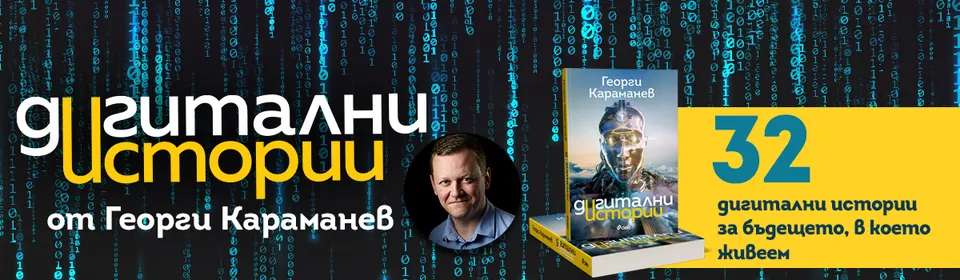
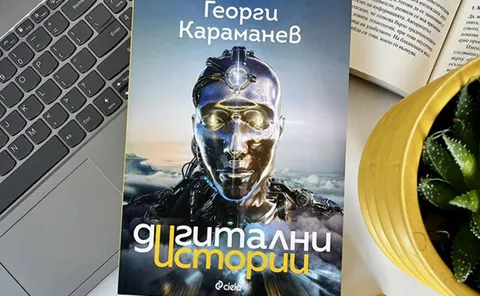
The book Digital Stories brings together 8 big questions of our time and 32 stories in search of their answers.
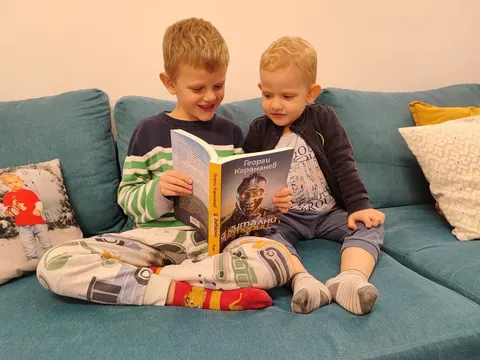
Perhaps you have already drawn back the curtain of the cover? Then I would be absolutely delighted to read your thoughts here.
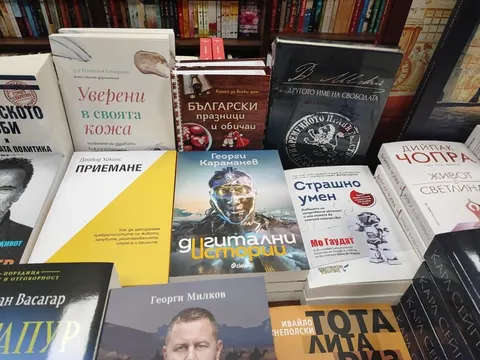
If you haven't leafed through the book yet, here is what to expect from Digital Stories in print!

Once upon a time…
Digital Stories have been appearing on this site every Tuesday and Friday for two and a half years now. Pieces about where technology is taking us, stories of the people who built today's technological world, who paint the future, or who are simply…
worth telling as stories.
That is exactly how the Digital Stories collection was born. At the suggestion of its managing editor, Miroslav Aleksandrov, the book, published by Ciela, brings together 32 stories—4 for each of the 8 big questions. Two pieces on technological progress and two extraordinary stories.
- Technology is changing our lives so fast that we have no time to ask ourselves: what comes next?
- Where is the human left in a world of ones and zeros?
- Where will the rise of artificial intelligence lead us?
- How are new media and new forms of communication changing the way we think and perceive the world?
- Can we achieve immortality with the help of computers… or, the other way around, meet our end as a species?
Here are the book's 8 themes:
1. Where have we ended up?
To make it clear who I am and how I paint my point of view, I begin… with my own story. And then we wade into deep waters.
We owe to technology the chance to talk to each other when there is no other way. Almost all of us today communicate far more online than offline, with all the consequences that follow.
Then, with all its unexpected and astonishing skills, His Majesty ChatGPT was born—the platform that showed us how far we have come in artificial intelligence. But what exactly is it, and what are the important things it has shown us? What kind of man is its “father,” Sam Altman, on whose decisions the future of this kind of technology depends?
Another big theme looms here too. We are already living in a future where algorithms can literally read minds. But doesn't that also mean… the end of freedom?
2. Who is on the other side?
“When something is free, you are the product,” says a sage of the digital age, arriving with his vital message.
How did social networks lead us into a world of divisions? Of warring factions that sometimes look more like football ultras. Of groups that find it harder and harder to talk to each other.
How do we carry on when an ever fiercer battle is being fought for the attention of each of us?
The internet appeared as an unexpected chance to talk to each other without anyone standing in the middle. To discuss the things that truly matter to us. To share important personal news with those closest to us, to build platforms through which we can talk. And then… a lot of things went wrong.
But is there a recipe for starting to talk again? Why is it so important to step out of the filter bubble? And why do the data we leave behind online… turn us into ideal victims of manipulation?
Georgi Karamanev on social networks: The giants already know everything about us, and we are becoming ever easier to manipulate – Radio Focus
3. Will computers create?
When I started this site, the idea of algorithms generating meaningful text sounded like science fiction.
Today artificial intelligence creates in all kinds of fields, and the verb is no exaggeration at all. But who, in that case, is the author? Where do the limits of this kind of technology lie?
One more big question: who are the people on whom the technological tomorrow depends? We will peek into the incredible stories of generations of tech leaders—from Bill Gates to Sam Bankman-Fried, from Linus Torvalds to Vitalik Buterin.
Today's world offers a huge chance for ideas to be born that will paint the future. We will take flight with the dizzying story of two brothers, which begins with the question of how to get a tin of white cheese to the West and ends with… a revolution in the way goods are delivered around the world.
Curse or blessing, the fact is that we live in incredible times!
A guest on the show “100% Awake” on Bulgarian National Television's BNT1
4. Where did the truth go?
You are what you read!
The Digital Stories site came into being with a big question: what will the next sources of information, fit for our times, look like? Media in their familiar form are irreversibly losing the race for our attention, locked in an unequal battle with every other inhabitant of the feed. Meanwhile, alternative information authorities keep emerging to show that there is another way.
What will the news media of the future look like? Is the final battle for truth approaching, one on which what awaits each of us may depend?
Algorithms versus journalists. Vloggers versus essayists. Influencers versus facts. Where do the threads of the way we get our information today meet, and where do they part?
The Evening Show of Slavi Trifonov, one of Bulgaria's best-known TV hosts, October 16, 2023
5. Are we ready for the moment when technology comes to resemble us?
If it quacks like a duck and can't be told apart from a duck, then… it's a duck? Is that how it goes with creation, the most important human skill? If an algorithm can't be distinguished from a human, if it behaves like a human…
There is not a single art that hasn't been thrown into enormous doubt by the progress of generative technology.
Will the algorithm write better than a human? Will it even make sense for humans to keep going down that path?
Everything suggests that a time is coming when it will be harder and harder to tell what algorithms create from what humans create, the real from the illusory. What could our landmarks be? And won't this forever change relationships, even… within the family?
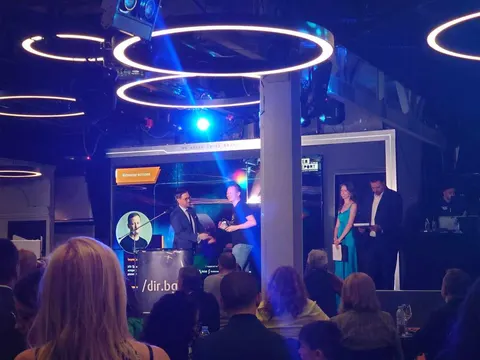
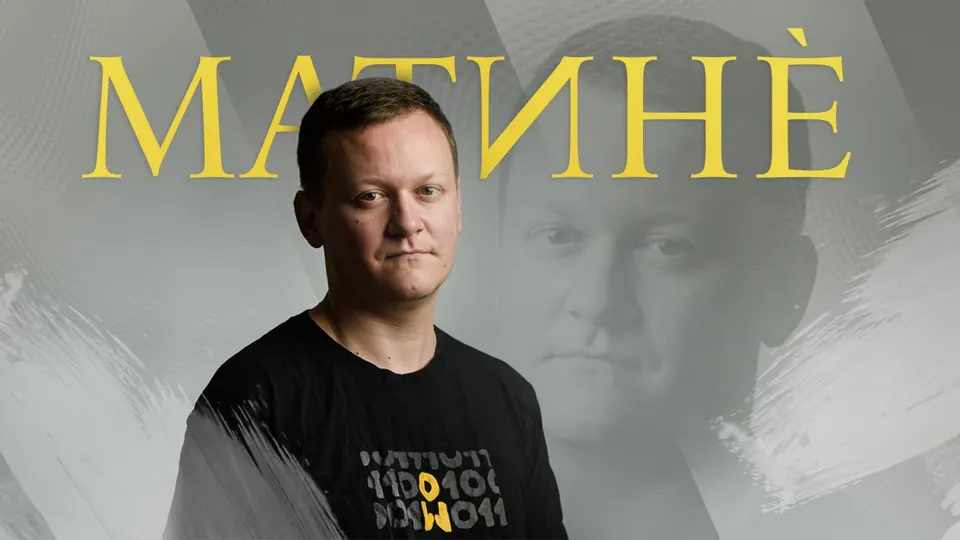 We need brand-new mechanisms to answer the questions of the future – a guest on Dir.bg's “Matinee”
Where is the magic of art and creativity born, and are we ready for the moment when artificial intelligence overtakes us?
We are not. And it is time we were.
“The final battle for freedom is coming!” – an interview for Actualno.com
6. What's simmering in the pot of next technologies?
With the arrival of ChatGPT, all eyes fixed on generative models, while at the same time many other technological fields have reached a decisive moment. Fields that carry the potential to change society and our everyday lives.
Robotics, combined with artificial intelligence, is advancing to create new paradigms.
And also to make its way ever further into our daily lives, as well as into countless other areas.
The buzz around blockchain has died down, while the field still hides many solutions.
What other fields have been left in the shadows? Is the moment approaching when each of us will be able to connect to the network directly, without needing a computer?
“The complex world of technology in plain language” – a guest on “Radio Café” on Radio Sofia, Bulgarian National Radio's station for the capital.
7. Will the AI of the future believe… or will it want to be God?
From the dynamics of technology we move on to the ephemeral, abstract world of philosophical ideas. While we marvel at how successfully algorithms can paint… might it turn out that they have moved on to the level of far loftier ideas?
If artificial intelligence keeps advancing, if Moore's Law doesn't stop holding and computing power keeps growing exponentially, along with what computers can actually do… isn't it time to prepare for something bigger?
Big enough to change the course of development of any civilization…
32 Digital Stories seek answers to the big questions our future depends on – the book's presentation on Offnews
8. Where are we headed?
When the next technological breakthrough is only a matter of time, while wars remain an inevitable phenomenon and the nuclear threat is still with us, the moment has come for sobering questions. For checking how well the people of the past did with their predictions. We will give the floor to Ivan Popov, a writer known to few, who foretold the future of the hackers of human souls.
“The real future is not the one we strive toward but the one we fight against,” wrote the physicist and futurologist. “So it will arrive not necessarily in the most developed parts of the world, but wherever people fail to cut off the tentacles it sends out.”
We will end once again with what makes us human. With the stories that give us meaning. With the people who paint tomorrow, and those who ought to. And we will turn our gaze to the stars as well, half-forgotten with their wise light against the glow of our screens…
Happy reading!
Which digital story would you like to read next?
Georgi Karamanev – between journalism and programming – a guest on 12+3 on Bulgarian National Radio's Horizont channel
You will find additional links to the book's themes here.