Can you think of a story that deserves to be told?
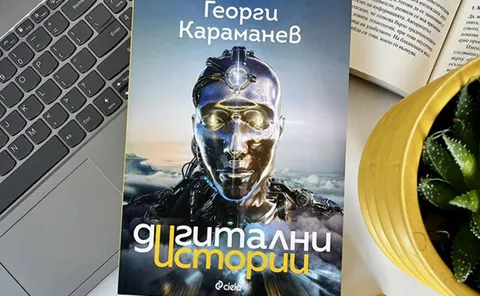
Let me know, and if your idea becomes a piece here, you'll get a personal gift—a signed copy of the book Digital Stories or a branded T-shirt.
Digital Stories turns three today!
In a moment we'll talk about what has been achieved so far, and you'll find out which pieces on the site have been read the most. But first, here is my challenge to you:
Your Digital Story
- Introduce me to a person or people whose story is so powerful and intriguing that it has to be told. Whether or not you know them, whether or not they're in Bulgaria, whether or not it's you yourself.
- Suggest a guest who has something to say about the digital world, artificial intelligence, and everything connected to the changes technology brings us.
- Mention an interesting project or point me toward a technological angle worth thinking about that hasn't been covered here yet.
- Or give me an idea for an experiment that's worth doing.
All you need to do is write here:
Thank you if you filled in the form above!
And thank you for being here—every visitor matters!
In three years:
- 316 digital stories were published.
- The site was opened more than 600,000 times by more than 410,000 visitors.
- It gathered more than 9,500 followers on Facebook;
- 5,800 on LinkedIn.
- 900 people signed up for the mailing list.
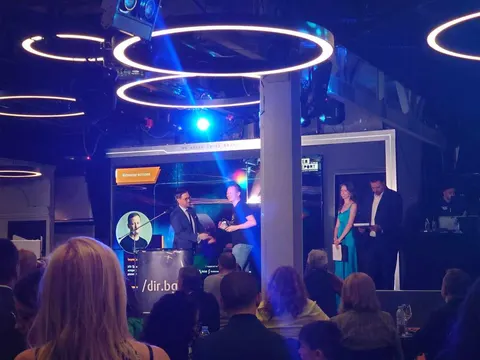
- It earned prestigious awards.
- It continued as a book.
- Digital Stories also appeared as an audio series on Storytel!
So which pieces were read the most over these three years? Here are a few rankings.
Top 3 Most-Read Interviews
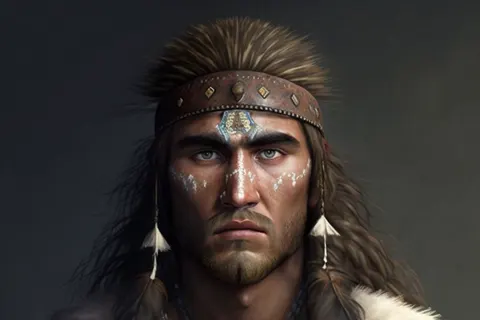
1. Where Do Bulgarians Come From? And Why Are We Still Fighting About It 1,500 Years Later?
An interview about history is the most-read piece on a technology site… And it doesn't even give a clear-cut answer to the question it asks?! Yes, technology is definitely a different story!
Alexander Moshev isn't afraid to provoke on matters of the past, while sticking to the rules of science.
The past divides us the way only politics and sport can. Why? Can that change?
2. “How Do You Spell It?” “Idunno”
You think topics like definite articles and spelling can't get anyone excited? Well, quite the opposite!
How do people write in the digital world? Which mistakes are searched for most often? Is it time to drop the pointless rule of the full definite article, the extra “-ът” ending Bulgarian grammar demands on masculine nouns acting as subjects?
Why is it important to take care of language, of the words we load with meaning?
“How Do You Spell It?” is a cult website for every Bulgarian online who cares about writing correctly. We meet its creator, Pavlina Varbanova.
Read the interview here and its sequel here.
3. Rumen the Cat: Teh Internetz Exsists to Giv Peepul Akses to Moar Kittehs
“The onli thing I cud do was eet, sleap and go to the toilit. with thees skils I had no uther choise of profeshun exept to becum an inflooenser.”
This favorite guest of Digital Stories rarely gives interviews. We can safely say that if it weren't for our digital present, he wouldn't have given even one. And that would have been a loss for the reader, because his thoughts are sincere, colorful and delivered in a rather distinctive way.
In an unforgettable read, we host a true star and a meaningful influencer. Rumen the Cat!
Top 3 Most-Read Stories
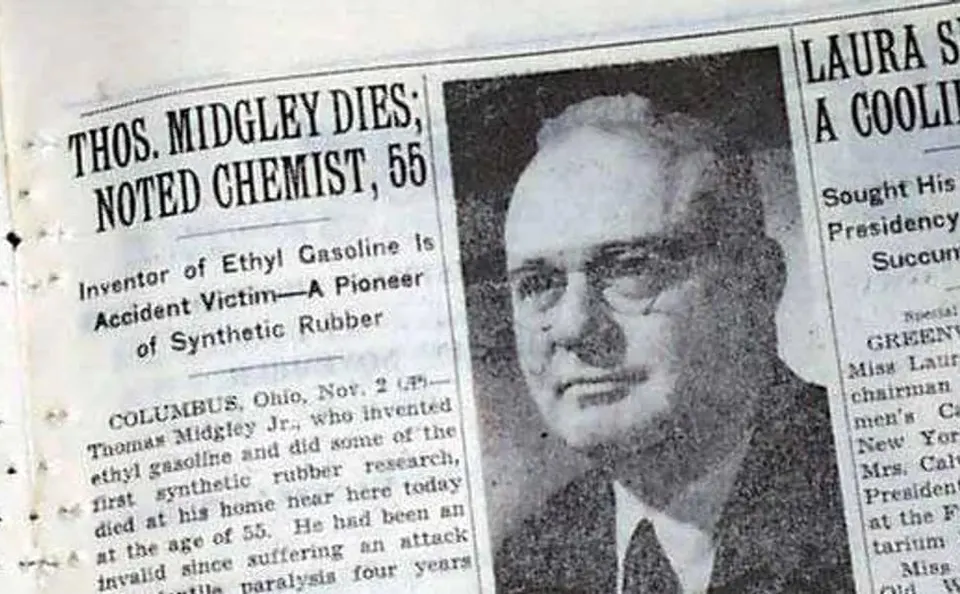
1. The Genius Who Poisoned the World Twice
You surely know what the road to hell is paved with. If you have any doubts, ask Thomas Midgley Jr.
For years this inventor rode a wave of fame, revered as a genius, while in the meantime… he created not one but two technologies that later turned out to have cost human lives. The damage they did affects the entire planet and will still be with us for generations to come.
2. “The Problem Is That We Became Godlike in Our Own Heads”
“Suddenly it became clear just how far apart people had actually drifted.”
Why did empathy fall victim to our entrapment in social media? How do we get it back? Why have selfishness and the drive for self-sufficiency become the main obstacle to our happiness?
Ani Vladimirova is a psychologist with long and varied experience and an always interesting point of view. We meet to talk about the big challenges facing the “little” person. About the imperceptible changes technology has brought us. About how it made us feel godlike, even though we are still the same fragile, vulnerable creatures. About the instincts that will one day make us value information again.
3. 2022, 60 Years Earlier: What Did the Science Fiction Writers Get Right?
- Science fiction writers on both sides of the Iron Curtain make their predictions about what the world will look like in 2022. What did they get right, and where did they go wrong?
In 1962 the first issue of the cult Bulgarian popular-science magazine Kosmos came out, and in it was the piece “A Window to the Future,” which gathered the predictions of “Soviet science fiction writers” about what was coming decades later. A little later Isaac Asimov, the creator of modern science fiction, also collected his predictions in a remarkable essay.
Which expectations were the most surprising?
Top 3 Most-Read Technology Pieces
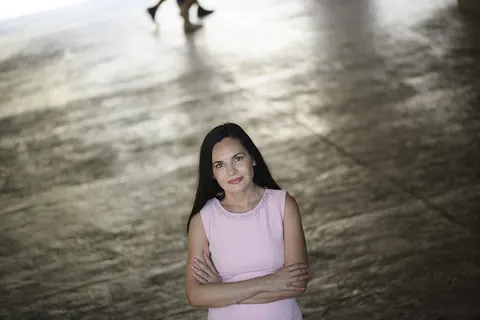
1. “Within 5 Years AI Will Change Every Area of Our Lives”
“Within just 5 years, technologies based on artificial intelligence will enter every field. They will be around us from our birth to our death.”
Will AI-driven technologies really penetrate every human sphere so soon? What will our lives look like then? Are we too late in trying to introduce ethical rules for this kind of development? Is the age of artificial general intelligence coming?
Assoc. Prof. Mariana Todorova is a futurologist at the Institute of Philosophy and Sociology of the Bulgarian Academy of Sciences (BAS).
Read it here and its sequel, a year later, here.
2. AI-lia Built a Cell: How the Algorithm Painted Beloved Bulgarian Songs
Artificial intelligence already creates images that are hard to tell apart from photographic realism, and that can change even history.
But what about creativity? Have the models learned to “paint” originally, impressively, without obvious blunders? To take things into account even when the description is abstract, poetic, loaded with meaning?
Let's reflect together through a short but instructive experiment. How will ChatGPT handle the task of illustrating the lyrics of beloved Bulgarian songs—among them the old folk song “Ilia Built a Cell”?
3. 5 Professions on Their Way Out and 5 Arriving with the Future
Technology is drastically changing the needs of society, needs that have to be met by the everyday work of its individuals. Today, faster and more imperceptibly than ever, professions disappear and new ones appear. With every caveat that forecasting in such a dynamic field is nearly impossible, we'll try to sum it up.
Which five professions will soon disappear? Which five will be most in demand in the near future? What do 5 professions look like that we can only imagine might exist?
3 Award-Winning Digital Stories
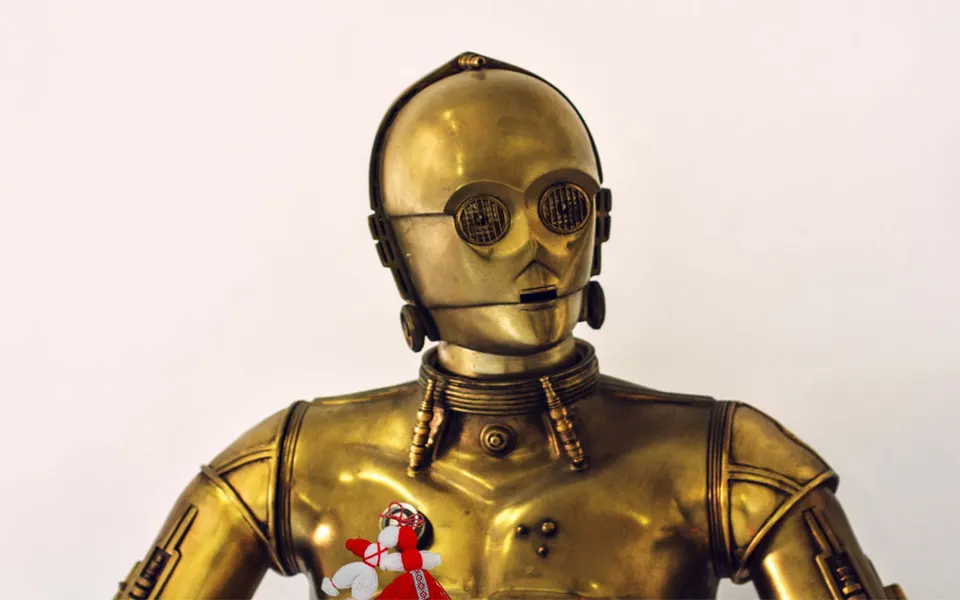
1. But! The Blame
The piece the site started with, and many of its ideas, for better or worse, are everyday reality today.
Zdravko wants to become a journalist; Zhelyazko is an artificial intelligence. Who does the future belong to?
2. Isus: The Programmer Who Came from the Ghetto
I have the pleasure of introducing Isus Kostov! To his colleagues he's simply “Jesus,” and to me he's a powerful example of how a person can overcome their surroundings, prejudice, even themselves, to achieve what they dream of. However distant, even impossible, it may seem.
“The most valuable thing programming has given me is undoubtedly freedom,” Isus says. “It gave me the chance to get out of the difficult situation I was in and build a life in which I'm independent and can help my family.”
His next goal is to inspire more kids to chase their dreams. Not to give up, crushed by their surroundings and circumstances.
3. What Do Google and Facebook Know About You? And Why Does It Matter?
“If something is free, you're the product.” “You're not the internet giants' customer, you're their product,” says Jaron Lanier, a researcher who knows very well what hides behind the facade of today's information society.
How have the data of billions of users become one of the most valuable commodities? What do the biggest players “know” about each of us? Why is it so important to always keep in mind the traces we leave behind?