These days we keep less and less of our important information with us—our files, photos, documents, archives. The physical storage media are gone—floppies, discs, flash drives; the size of your hard drive no longer matters, everything important is in the cloud now. It's so convenient! No risk of losing anything, access from anywhere. The companies take care of security, and it's all so reassuring…
The companies?! Yes, today we rely on data in the cloud, using space that is almost always handed to us by one of the online giants. If we don't get carried away, it's even free, generous enough, fast, secure. But is that really down to how much they care about us?
Our data, as we've discussed before, is the most expensive resource in the online world today. And by handing it over to the cloud, we turn ourselves into even more conveniently and reliably manipulable units. What's more, at any moment whoever runs the cloud can change the rules, and suddenly we could lose our entire archive.
The Great Schemer
To be left without all our children's photos, to lose documents vital to our work… suddenly, in one fell swoop.
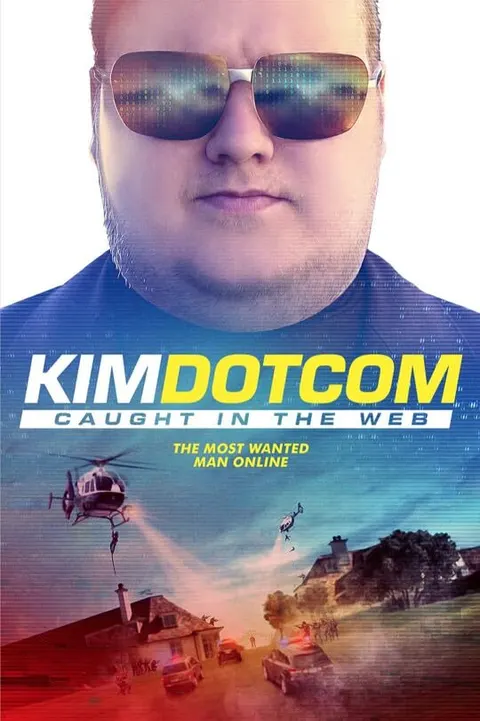
Kim Dotcom is not a website, nor is he the next heir to the North Korean dynasty or to the Kardashian clan. But yes, that is also the name of his website. And his life is a roller coaster—first a hacker, then a mega-successful entrepreneur. Then comes a period as a multimillionaire and another one… as a criminal doing everything in his power to escape American justice. And somewhere in between comes his role as a defender of freedom online.
It's time for one of today's most colorful and least-known digital stories, as unexpected and instructive, as vivid and dynamic as its protagonist.

John Doe Dot Com
I turned my name into a domain—karamanev.me. But I have to admit it's far, far more original to do the reverse, as our hero did, born with the rather dull name Kim Schmitz.
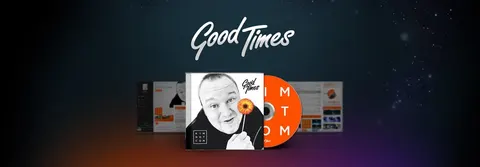
The author of an album that reached the top 8 in New Zealand, and of films. Founder of an internet party and father of six. A hacker and a bon vivant, an unrivaled whirlwind, a tech genius who has a great deal of important things to tell us.
Looking at the cheerful big family on his Instagram profile, hardly anyone would guess that today Kim is in the thick of a ten-year battle for justice against the American authorities, one in which he seems to be on the side of right. Nor would you have guessed it from the beginning of this story.
He was born in 1974 to a German father and a Finnish mother. At 16 he committed his first cybercrimes, and at 20 came his “debut” arrest—for selling stolen phone card numbers. Somehow naturally, as computers went mainstream, Kim moved on to that kind of fraud—and kept at it for a whole decade. In 2003 he was convicted in Germany of embezzling funds online and spent five months in prison before walking away with a 20-month suspended sentence.

When the Internet Was Young
He became famous in the '90s after boasting to the German media that he had hacked the websites of NASA, the Pentagon and Citibank. He went by the name Kimble—the hero of a 1960s TV series, later brought to the big screen by Harrison Ford. It turned out NASA had no idea he had hacked them, and the journalists had fallen for his bragging without knowing how to verify the claims. But… is there such a thing as bad publicity?
Then he bought and sold companies, and his fortune grew. At one point he had to go live in Thailand, fearing a judicial investigation. Even so, he was briefly arrested there too, introducing himself to the authorities as “His Royal Highness King Kimble the First, Ruler of the Kimpire.” Could he have been inspired by the kompir—the potato from the Bulgarian town of Samokov, so famous in Thailand?
He stepped into the spotlight in 2001 with his company Kimvestor, which sold ultra-luxury goods. During the Formula 1 race in Monaco, the principality's monarch at the time, Prince Rainier, was a guest at a party on his 73-meter yacht.
A documentary about the illegal Gumball 3000 rally shows Herr Schmitz driving a Mercedes at 240 kilometers per hour and having a blast while the police pull over one of his rivals. He's also into video games and for a long time held first place in the Call of Duty: Modern Warfare 3 rankings among more than 15 million players online!
The Good, the Bad and Kim
I did say there would be dramatic twists here, didn't I? It's only 2005, and our massive hero turns into a superstar and a multimillionaire! At the dawn of cloud technology, he and some friends created the hosting service Megaupload. Six or seven years would pass before the big players caught on to how important file sharing in the cloud was. Our Kim, meanwhile, sensed that computers and networks were now fast and refined enough to let you keep your information on secure remote servers without worrying about it.
Well, with one caveat in this case: other users had access to the files too, and a monthly chart of the most downloaded files was published… And, as you can guess, the top spots went to the biggest box-office blockbusters of the moment, something Hollywood would never forgive Kim for.
By then he was a superstar and began flaunting his wealthy lifestyle in every way possible. It was in 2005 that Kim Schmitz departed for good, and, even on paper, Kim Dotcom was born (albeit weighing around 130 kilograms). Neatly laundered and dried of his criminal past (as we'd put it in our parts of the world), he became a beloved tech guru and a frequent guest on the most-watched TV shows.
Megaupload quickly became a mega-sensation—it was the first service of its kind, one that would pave the way for others, while the rules of the game were still being written. The interest was enormous: at the peak of its popularity the platform reached 180 million registered users and 50 million visits every day. A full 4 percent of all internet traffic in the world was tied to the site of this larger-than-life character at the epicenter of the venture, which made him world-famous!
Herr Flick
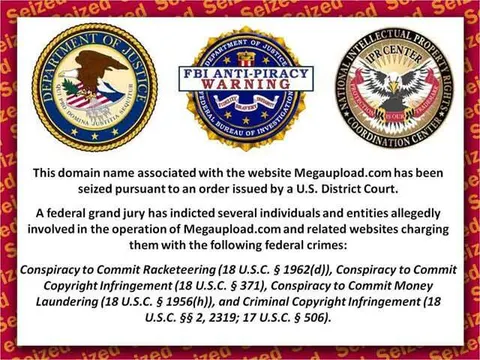
2012 didn't turn out to be fatal for the world, despite the predictions of the Maya and their fans. But it did for MegaUpload. One of the most successful sites suddenly found itself in the crosshairs of the American authorities.
One sunny day, every user of the file cloud who tried to access their files was greeted by a friendly notice saying the American authorities had ordered access to the page blocked. Everyone who had decided to upload their family photos or favorite music there lost access to them for good. Because Dotcom and his empire of media superstars had become a target of the authorities.
Those were the romantic days of the internet, when the authorities, at least in the US, could still afford something like that, for better or worse. Those days slipped away almost unnoticed, at the moment it turned out that the mammoths could decide whether the sitting American president had the right to speak. Since then, the most dramatic scene involving the tech giants has been Musk walking into Twitter headquarters carrying a sink.
At Home with the Dotcoms
Far more dramatic was the scene of the commandos who turned up at Kim Dotcom's mansion in New Zealand. An idyllic country unaccustomed to such scenes—years later its prime minister himself would have to publicly apologize to our hero for the unjustifiably rough arrest, after which he ended up in prison.
“Helicopters, rifles, special forces, vicious dogs and 72 cops terrorized a family that's no threat to anyone,” Herr Dotcom later sang in a music video devoted to the episode. “We were shocked by the unusual arrest for unintentional internet copyright infringement brought by the US, which isn't even a crime in New Zealand,” he recalls.
Whether Kim landed on the faraway island because he anticipated such a turn of events, we can only guess. Still, a certain hint in that direction may be the fact that three of his closest co-creators of MegaUpload also happened, by some coincidence, to be in New Zealand at the fateful moment for the company.
Kim says he chose the place for the peace and the clean air he wanted for his children. He settled on the island in 2009; before that his main home was in Hong Kong. To this day he holds German and Finnish passports and says he is more American than the American authorities who have hounded him. According to wagging tongues, each of those places was chosen because it was far from Western justice.

Stop, Thief! Cries the Thief
Think Bulgarian justice is slow? Well, from 2012 to the present day, New Zealand's still hasn't managed to decide whether to extradite our hero to stand trial in the US. The heirs of the Maori clearly aren't in a hurry.
Only months ago, 11 years after the large-scale operation, two of Kim's colleagues struck a deal with the prosecution. They pleaded guilty, agreeing to serve out token sentences in the idyllic country without the risk of being sent back to their native America. The fourth defendant died of a fatal illness. And Kim keeps fighting the justice system.
Not that he's wasting his time in the meantime. He created Mega—as the name suggests, a service similar to Megaupload (with the flashy domain me.ga, no less), which he launched with a spectacular show featuring equally spectacular dancers. He shot songs and music videos giving his own version of how the case unfolded and of his innocence.
He tried further businesses, such as his own cryptocurrency trading platform, which raised very serious funding before declaring bankruptcy.
He founded an internet party, which won 1.42 percent of the vote in New Zealand's 2014 parliamentary elections. Alas, even though around that time he earned the prime minister's official apology, it did nothing for his electoral rise, and four years later his share of the vote had sunk far behind the decimal point.
And yet today he never stops flaunting his wealth and his life. The idyll he has built, now with six children. And although he split with Mona, the mother of children number two through five, he found love again in yet another future mother—and all six kids were conceived through IVF.

Kim Jong Com
“I'm not a pirate, I'm an innovator,” our hero likes to repeat. And those words raise another question for me, about tech leaders. Is it right that so much of our future today depends on people who reached the top of the tech food chain not only because of their skills and morals? Like Kim… or Musk, or Sam Altman—the list is long.
The charges brought by the US authorities certainly didn't paint him as the most exemplary citizen. Besides copyright infringement, the list included financial fraud, racketeering and money laundering. You can ask Assange or Snowden—once those institutions decide to make you look blacker than the devil, they know how to do it. And yet… evidently the evidence isn't quite as convincing as it ought to be, given that Kim still enjoys his freedom.
He is adamant that he didn't break the rules and that this was simply the natural evolution of communication on the internet. “Megaupload was created as a service that lets you send large files, because email had limits, and it still does to this day. The popularity and the initial growth were tied to that. The company wasn't created with the idea of becoming some kind of pirate paradise. If the American government says we are a mega-conspiracy, a mafia that built a criminal network of pirates, they are completely wrong. Their goal was to shut the project down under Hollywood's influence and then figure it out as they went along. By trying to hack the legal system.”
“I'm not evil, you know? I'm a good person. Everyone who knows me likes me… The prosecutors need to sit down at the table, come to their senses and settle this. Because I'm not going to give up. I'll fight to the end. And there's no chance they'll win, because I know I'm innocent.”

Megagame
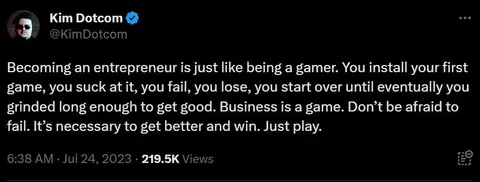
Besides not shying away from showing off the luxury he lives in, Kim says that today he is a champion of a free internet and of how data is stored. Because we place far too much trust in the biggest companies without being sure how they will use it.
And it's true—we upload our files wherever and however we happen to, we build archives without bothering about what will happen to them. It's convenient to be comfortable. You can ask Kim, too, and not only given his rich life experience, from hacker to billionaire to criminal.
And since we now live in a world of information and big data, this way we supply an enormous volume of information, which is also the most valuable resource for ever more advanced artificial intelligence. From there, one of the usual big questions is whether this makes us easier to manipulate in all sorts of ways.
“There's a danger that the internet will be colonized by a handful of companies or governments. When that happens, the free flow of data will stop and innovation will be stifled. We must not stop fighting against that!”
The Dotcom Bubble
“After tech companies censored the sitting president of the United States, it's a sign that the biggest ones are increasingly getting involved in politics too,” says Kim Il Sung's namesake. “It's natural to ask what they want to get out of it—they're not doing it out of the goodness of their hearts, but with some purpose.”
His optimism that the situation will change for the better thanks to technologies like blockchain is intriguing. “There's no way a single project can change the way we communicate. It has to be a network for the people, by the people, open source, decentralized, and I think that's the future. In my view, the tech giants are making a big mistake by underestimating the power of open source and people's willingness to switch to something else.”
Could he be right?
Meanwhile, our data in the cloud sits somewhere, on a physical server that has backup copies, but… could something happen to it without our noticing? That is the subject of the next digital story, as big as Kim and very important…