Remember when we used to collect all sorts of things: stamps, napkins, postcards, photos… even memories?
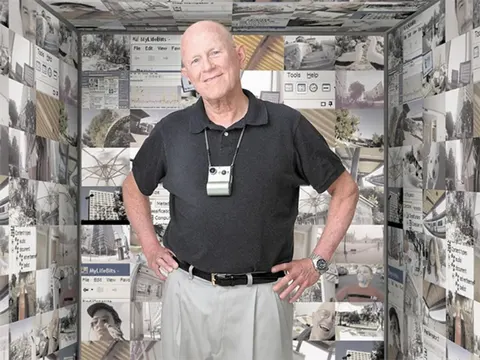
The year is 2000. One of the great scientists of his time begins an unusual experiment. Day and night he will wear a camera around his neck that records every moment of his daily life. The idea is to miss nothing! His life will be captured and duly documented, so he can go back to any moment of it, and why not… one day relive it virtually?
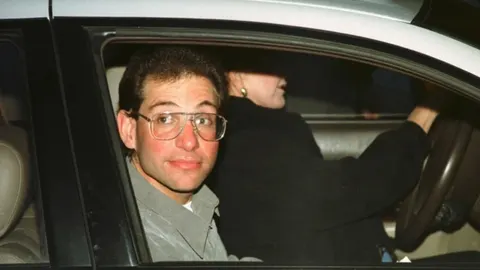
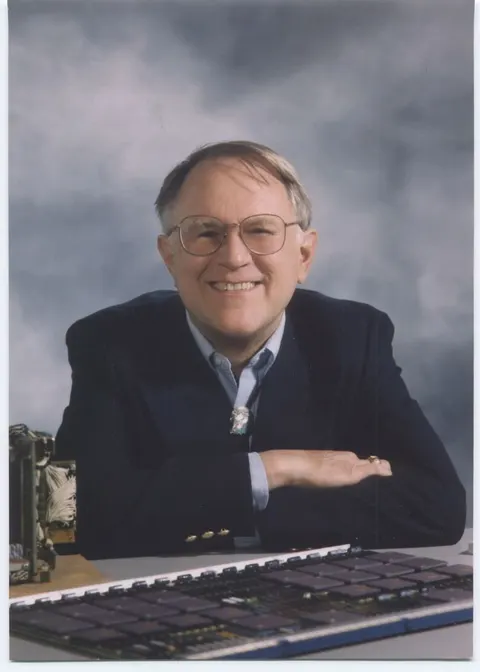
Gordon Bell is a world-famous computer scientist, and one of the most prestigious awards in computing bears his name. But the experiment he undertook—recording every second of his life—gives us far more today than his scientific research. One way or another, it shows where we are all headed.
His idea sounds like a joke… because it has already become everyday practice. Yes, we leave a huge trail online of every minute we live. And it doesn't impress us, doesn't please us, doesn't even make us ask what the consequences might be.
Do you dream of remembering every important moment of your life? The first kiss, your newborn's first smile, that unforgettable meeting that showed you how to change your life?
Today it is easier than ever. And at the same time harder, more challenging, even… more dangerous.
There's a Log-ic to It
“Lifelogging”—“recording one's life.” The good old biography, but with a new, technological dimension. There was one famous lifelogger before we all turned into lifeloggers, and his name is Gordon Bell.
The turn of the century was a time of great enthusiasm for new technology. Suddenly we found ourselves connected in a worldwide network, and it would gradually spread to every one of us.
By then Gordon had already built up vast experience in the world of computers.
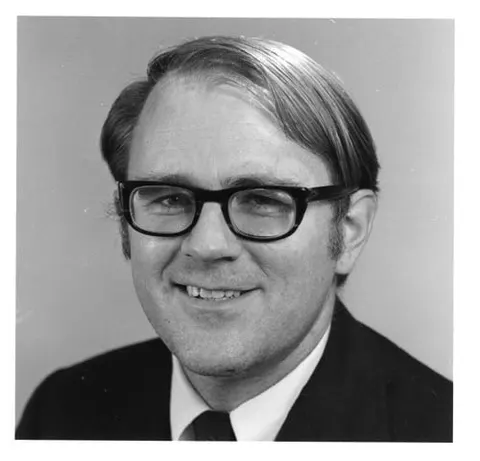
Born in 1934, he had traveled the whole road from the house-sized computers with their primitive skills. His father owned an electronics store, and that was the field Gordon fell for as a child. He went on to study electrical engineering at MIT, and then the road took him to Australia for further training. That was when two exciting encounters happened, and both turned into love. With his future wife, Gwen, and… with software. In 1957, when the field was still considered exotic and people argued over whether it would survive at all, he became fired up by the idea not so much of building machinery as of finding ways to control it.
Over the following decades he became a leading scientist in countless areas of computing. In 1972 he wrote “Bell's Law of Computer Classes,” which defined the natural life cycle of computer systems. Even then he predicted that every 10 years a new generation of technological solutions would appear and change the world drastically.
Then… it began happening before all our eyes. In a 1992 interview, Mr. Bell confidently declared that “in 25 years computers will be just like telephones! And they will be communicating all the time!”
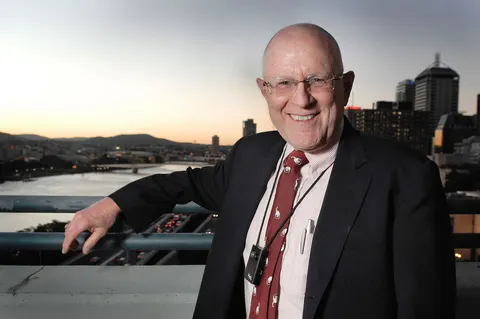
The Life and Sufferings of Sinful Gordon
Evidently the namesake of ALF and Sting had a feel not only for technology but for business too, because in 1995 he joined Microsoft, then in full swing of its global domination.
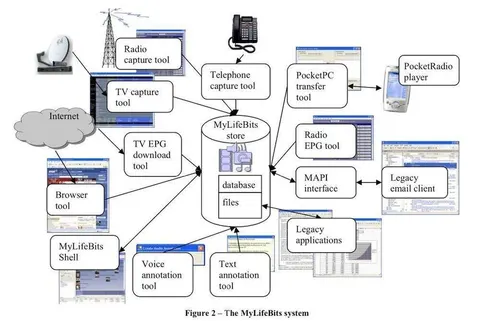
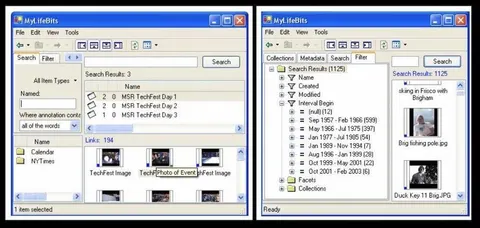
And so we reach the turn of the century, which finds Gordon as a leading researcher for the undisputed giant of the day. He has turned to technologies for remote communication—as he puts it himself, “being somewhere without being there.” It is in this role that the scientist launches the MyLifeBits project—“bits of my life.” The lab he heads studies how information technology makes communication easier. The first primitive possibilities of digital photography have only just appeared.
Gordon loves his work so much that he decides the experiment will not be run with volunteers—he will play the lab mouse himself.
And so a digital camera ends up around his neck, programmed to take a picture every 30 seconds. But that is far from all—the scientist wants to gather as many “traces” of his life as he can. Gradually he scans all his articles, lectures, presentations, notes. He saves the films he has watched, the books he has read. He starts recording every phone call. Then he adds his health metrics—data on his pulse at every moment, his temperature.
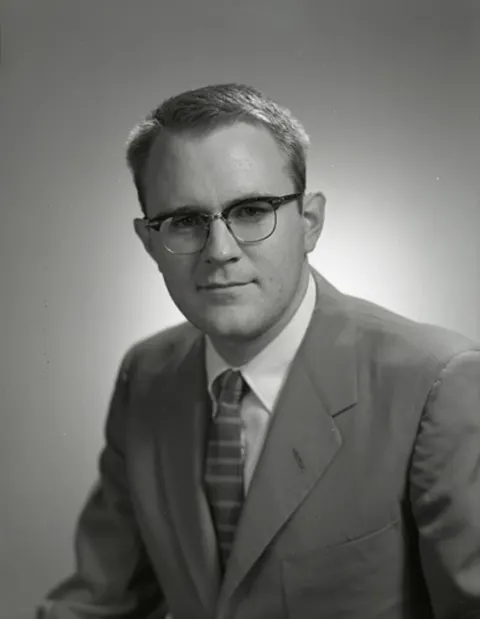
Digitize This
Big deal, you'll say. Today, a quarter of a century later, almost everyone does it. You can log into your Google account and recall where you were a year ago and what you were doing. The search engine keeps a history of your communication and your everyday searches, from the very first day you opened it. Each of us piles up thousands of photos we almost never have time to look at. So what's so interesting about the lifelogger?
An experiment that turns out to be prophetic, and conclusions that apply with full force to us, today's ordinary lifeloggers who have landed in the age of artificial intelligence.
Gordon was inspired by the work of Vannevar Bush, a renowned scientist and Roosevelt's adviser during the Second World War. In 1945 Bush predicted the creation of a machine called the “memex”—a blend of the words “memory” and “index.” He imagined it as a kind of desk that would scan, find connections and then retrieve information from an enormous volume of all sorts of data. He described a fair number of technical details too—it would use a camera and microfilm.
In his manifesto “As We May Think,” Bush put forward the idea that we would use technology to extend the capabilities of our own brains. On that point he certainly turned out to be right, unlike on microfilm…
The Vampire Diaries
Attempts at lifelogging were not long in coming. Robert Shields decided to describe everything that happened to him in 5-minute intervals. He did it for a quarter of a century—from 1972 to 1997! The result? The longest diary in history, at 37 million words. Robert was clearly a writer, not a reader.
Gordon Bell decides to look for a somewhat more modern solution. To put all the information about his life into a single system that would let him reproduce any moment gone by…
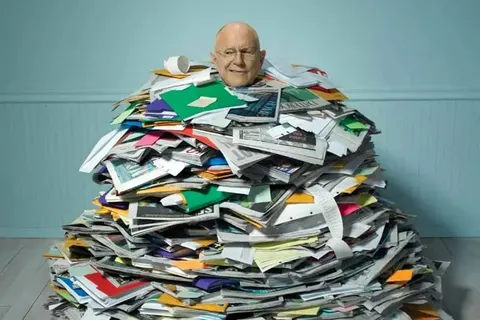
Bell decides he will become the first person with no need for paper and will digitize everything important to him. (Was that perhaps yet another prophecy of sorts?) At first, most of the work falls to his assistant, Vicki, who takes on “the great scanning.” Notebooks full of jottings, electricity and heating bills. His archive begins with a photo of his mother shortly after she was born in 1900.
Soon two more researchers join the recording—his colleagues from the Microsoft lab. They help him build software to make it easier to collect and classify the records.
Little by little the data becomes useful. Once, after speaking with his doctor, Gordon can't remember all the advice he has been given, so he listens to the conversation again. When a friend of his dies, he buries himself in their 20 years of correspondence to prepare a eulogy.
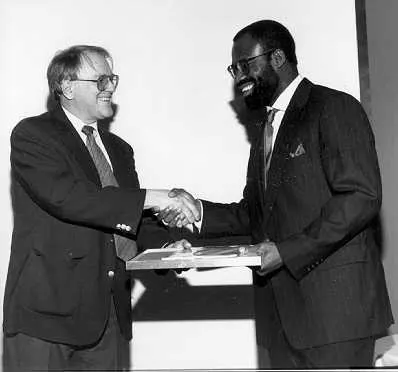
A Moment Like Eternity
“At the start the experiment made me very smug,” Gordon recalls. “I became a sort of family librarian, because I could settle arguments about when someone's birthday was or when a bill had come in. My main idea was that nothing should be kept on paper. Paper is awful, because you can't search it automatically.”
The venture, alas, does not please his wife at all. “We'd be talking and every now and then she'd ask, ‘You're not recording this, are you?’ And I'd laugh and admit that I was recording everything. And she'd start shouting, ‘Delete it! Delete it!’” Only Bell doesn't like deleting anything—that is the core of his experiment's philosophy.
Forgetting certainly makes us human. It is the very function that saves our brains from overload. Filtering information makes us creative and creates the magic of everyday life. But doesn't it also deprive us of many possibilities?
At first he is frightened by the lack of enough storage. In just a month he has collected 1 gigabyte of data, and he calculates that logging the life of a 72-year-old would take between 1 and 3 terabytes—almost impossible figures at the time. It's enough to say how fast things change: 1 gigabyte of storage cost $10 million in 1956, and half a century later, $1. But there is a flip side too—every new generation of technology demands ever more storage…
Where Bell Has Been
In 2009 Gordon and his colleagues published the book Total Recall, recounting the entire experiment. It makes clear that, besides preserving memories, the idea of lifelogging is to help people discover useful patterns and so improve their lives. Bell, who had undergone two heart bypass operations in the meantime, analyzes the data to find links between his diet, his exercise and his angina symptoms. He says this helped him avoid the need for a third operation.
From here comes the idea that we are only beginning to see more and more software that helps us extract patterns from the chaos of ever-growing data. Well, so far this has hardly proved an accurate forecast, though perhaps progress in that direction will come soon, with the help of artificial intelligence.
In the book Bell predicts that by 2020 people will be recording everything they see and hear. Here at least, in my view, he proves no less right than with his forecast about mobile phones decades earlier…
Call That a Life, to Write It Down
“No one ever returns anywhere,” wrote the Bulgarian poet Ivan Peychev. And indeed, every attempt to preserve the past in full is doomed to fail. Melancholy and nostalgia are pleasant feelings, and there are moments we want to recall. But even the most convincing multimedia attempt to record them is doomed to remain incomplete. If only because of the context in which they are reborn.
Ask Gordon. The project officially lasted 7 years, during which he recorded everything. But today, when asked about those times, he says that “lifelogging didn't turn out to be something that added value to my life.”
In his view, the reason is that the technology of the time was not yet mature enough for such a challenge. The price of computer storage is now so low, we're seeing huge progress in artificial intelligence, and breakthroughs in battery development are on the way. So very soon it will be possible to have true lifelogging—storing terabytes of data about every moment…
Gordon doesn't say how this would differ from his experience with the photos. Well, I think I can give you a hint. The moment from the past will become ever more realistically reproducible. We will be able to return to something that looks more and more like reality. Everyone will have their own ever more complete “time shelter”… but will they have the time and the desire to step into it? Experience so far points rather to a negative answer. The price of melancholy will simply be a little lower. The physical price, at least, not the emotional one…
Pics or It Didn't Happen
“Meanwhile we already have a real memex—it's the smartphone,” says Bell. And while his experiment did capture the direction in which we would record more and more data about our daily lives and physical condition, he admits he never suspected we would gradually arrive at oversharing this kind of data through social networks. That “lifelogging” would be replaced by “lifeblogging”—telling everyone about everything in our lives right away, rather than keeping it for ourselves, or at least for a limited number of people.
One of the great paradoxes of modern technology is that we surround ourselves with ever more data and leave ever more behind us, while we remember less and less.
Artificial intelligence has long been here; we see some of the fruits of its labor every day the moment we open our favorite social network. Because it is the algorithms that steered us into the groove of personalized content and bubbles.
And what will happen when they become even more perfect and get even more of our “lifelogged” data? They will know us better than our best friend. They will be ever more successful at recommending things to us, making things easier for us, entertaining us…
And manipulating us.
And also—reproducing us, with everything that follows from that. Even after we're gone.
Life on Tape
But let's return to our friend Gordon, who is now of venerable age. He says his wish was to start recording every moment of his life, knowing that soon we would all be doing it.
But he also believes the idea was far more characteristic of his generation. He remembers how as a boy he started collecting razor blades… And later he collected all sorts of things. The idea of collecting, Gordon says, is so remote to the generations that came after. “Back then we thought we would collect memories that we would pass down from generation to generation, passing on as many of them as we wished. I imagined it as a kind of immortality…”
Maybe there's a logic to it? Hardly anyone would have the time to “watch” their grandfather's whole life, or even a week of it. But if we have all our days stored, we can pick out the best when the time comes to hand them on to those who follow.
As long as we don't hurry too much. Lately we're always in a hurry…
Can It Be Forgotten, Gordon?
Of course, all our lifelogging today can be useful in many different ways. The benefits of devices tracking our pulse and other health metrics are obvious. And if we know how we spend our time, won't that help us be more successful? There are plenty of popular solutions along those lines… as long, of course, as we don't turn them into yet another cause of digital stress.
Today Gordon hopes we are nearing the end of the era of oversharing, that people will begin to realize they are leaving a lasting digital footprint, with all the problems it will bring them. At the same time, we will come to value more the data we hold about ourselves. “I tell people they should never, ever delete anything at all. Whether from their memories or their records,” says the scientist. “Even if it's painful, you can use it as a pointer to something else.”
“People say, ‘Oh, what you're doing is revolutionary!’” he recounted at the start of the experiment. “I answer them, ‘No, no, it's evolutionary. Because the same thing is happening to you. It's happening now, while we talk…’”