Youyang Gu would get up early, and while he drank his coffee, he would run the program he had written on his laptop. An hour later he had generated data on how many people would fall ill with Covid and how many would die, country by country, and separately for every American state.
His forecasts turned out to be more accurate than those of the hyper-specialized, billion-dollar scientific units created precisely to carry out this kind of task. He had no idea about viruses or epidemiology, but… he was good enough at math, and he built a model that worked and was later recognized.
The way he handled forecasting quickly turned Youyang Gu into a star. He appeared in all the major world media—from CNN and Bloomberg to the Wall Street Journal. Meet the 27-year-old whiz who showed, in plain sight, why the future really does belong to artificial intelligence and machine learning.
2 + 2 = COVID
Where is the pandemic headed? Will there be more sick people tomorrow, should we lock ourselves at home, or just carry on with our lives unchanged… The past year truly turned our priorities upside down. On the one hand, it showed that science is surprisingly helpless before the challenges of a tiny virus that, on top of everything, isn't nearly as deadly as it could be. On the other, it helped us lose our focus, only to refocus afterward on what really makes sense, what we really need and what works.
To a great extent, this happened with math as well. We all study it at school, some with success, some with cheat sheets. And last spring, math suddenly turned out to be quite important at a moment when medicine couldn't cope on its own. But what kind of math? On Bulgarian soil… we heard plenty of supposedly math-based forecasts of how the infection rate would develop, without anyone explaining, even in passing, the logic behind them. Accordingly, the forecasts proved as unconvincing and contradictory as the measures taken by the authorities in charge of fighting the disease.
There were even celebrity mathematicians who later turned out to be… neither mathematicians nor celebrities. And yet, right then, as never before, math could save lives by helping politicians and doctors manage the situation—analyzing trends and giving well-grounded forecasts, with a sufficiently high degree of probability, of how the pandemic would unfold.
That is exactly what our hero today managed to achieve at the critical moment.
Alone Against a Sea of COVID
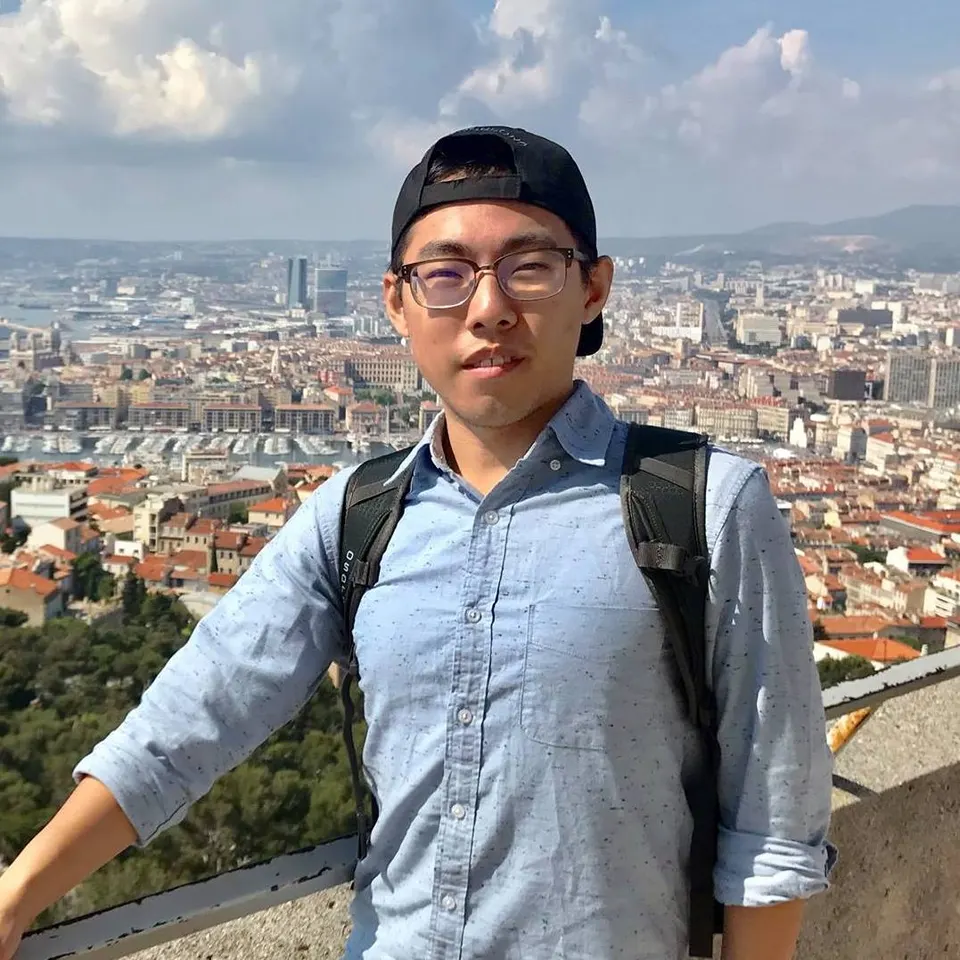
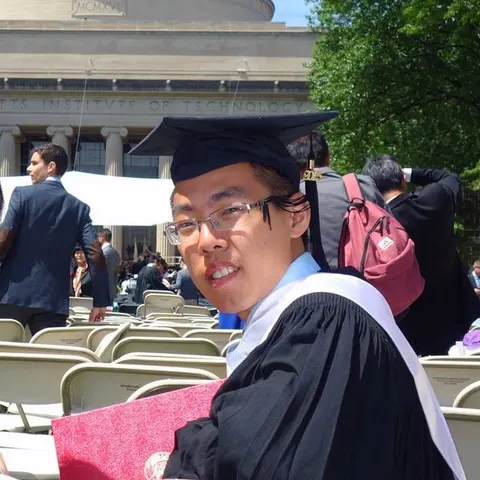
Youyang Gu graduated with honors from master's programs in electrical engineering and computer science, and before that earned his bachelor's degree in mathematics, at MIT. He specialized in machine learning, which he used to forecast stock indices and the results of sports competitions.
“A person showing unbiased conclusions. A realist,” reads his bio on Twitter, where he most often likes to share his opinions.
At the beginning of last March, like all of us, he is… confused. The news is swallowed up by the coronavirus, and suddenly we find ourselves in the new abnormal. And as a man of precise forecasts, he is particularly struck by the fact that the numbers are flying around without any logic. While some scientists “on TV” tell him, in serious tones and with ironclad arguments, that the U.S. will have 60,000 deaths by summer, others claim there will be… 2 million. We are talking about human lives, after all.
Youyang has quite a lot of free time; back then he is still living with his parents in Santa Clara. He decides to try to contribute on the basis of what he knows how to do. In his view, machine learning can provide many important answers in any field, because it knows how to “read” information and trends. Without caring about professional knowledge, personal opinion or subjective impressions of a given topic.

Epidemiologist for a Day
“I decided to try to make the most precise model possible,” the programmer recalls. “No ‘what ifs.’ My idea was to recreate a model of what is most likely to happen. And nothing more.”
And that is precisely the great strength of neural networks—our main association whenever we start talking about artificial intelligence. In just a week, Youyang Gu builds the model he will work with. He registers the website covid19-projections.com and starts publishing the generated forecasts of deaths in each of the American states, some smaller regions and 71 countries for which there is enough data. He doesn't need supercomputers; in just an hour his laptop takes in the new data and returns its forecasts.
A month later he already has millions of visits, and many world media outlets follow his forecasts. And Carl Bergstrom, a professor of biology at the University of Washington, exclaims: “I'm a machine learning skeptic. But in this case it isn't the usual charlatanism that often hides behind those words. The model makes impressively accurate forecasts.”
“His model was the only one that looked clean from the very beginning,” says Jeremy Howard, a well-known data scientist at the University of San Francisco. “The other models turned out over time to be untenable, because Youyang was the only researcher who really saw the data and ‘read’ it correctly.”
Yann LeCun himself, Facebook's chief AI scientist, says Youyang's model is “the most precise at predicting Covid deaths.”
And the young scientist, at the start, simply googles “epidemiology.” That's how the adventure begins.
Supermodel
He may not understand anything about medicine, but he does have experience as a data scientist in the world of finance. Where you also don't need to know what a company does, follow its market position or its marketing decisions. You can rely solely on numbers and trends. “If you can't build a working statistical model, in the world of finance you'll be out of a job in a second,” he says.
We must point out that very often the numbers coming out of his model don't match the real figures. Sometimes, of course, they happen to be surprisingly precise. What matters, though, is that according to the specialists' assessment from today's vantage point, his model managed to capture the trend.
That's why Youyang Gu decides to make the simplest model possible. And we've mentioned the word “model” so many times by now that it's time to explain what lies behind it. Since algorithms have neither the pretension nor the capacity to recreate the real world with all its details, conditions and interconnections, they are left with one option. To simplify and simplify, to seek abstraction, so as to single out the factors that influence a given phenomenon and their interconnections. In this way, any problem can be reduced to the simplest possible mathematical model, on the basis of which it can be analyzed.
According to Youyang, this is the secret of his model's success. While his colleagues at the big American scientific units building their own infection-forecasting models settle on countless factors, he looks for the minimum that really matters.
Quite a SEIR
In Bulgarian, the word сеир (seir, a spectacle—usually someone else's misfortune watched with relish) comes from the Turkish verb seyretmek, meaning “to admire, to watch attentively.” Quite different from the main meaning, isn't it? Well, the same goes here. Because Youyang settles on a classic model used to forecast the course of infectious diseases—SEIR—and supplements it with the capabilities of machine learning.
The abbreviation stands for Susceptible, Exposed, Infectious, Recovered. Yes, over the past year we've all, more or less, taken a few lessons from first-year medical school. It's easy to guess that this is about the pattern of how many individuals in a given population could catch a given disease, to what extent they are exposed to it, how many of them fall ill and how many recover… or pass away because of it.
Youyang builds a simple model along these lines, which a few months later he “opens up” to anyone who wants to look at it or try it themselves, on his GitHub profile here.
The model takes a certain number of variable parameters—from the best estimate of the reproduction number, that is, how many other people each new patient can infect, to how the measures against the disease might have an effect. The simulator calculates the likely number of new infections and, on that basis, estimates what the death toll will be.
Trust, but Verify
Youyang decides to build on SEIR with a neural network that monitors the results. The job of this type of software is precisely to analyze trends and judge how likely it is for something to happen, by looking for repetitions. That's how it learns to translate between languages, already recognizes faces with remarkable success and even creates impressively convincing video fakes.
Based on his core model, he runs the neural network again and again to evaluate the simulation.
In this case, its task is to generate thousands of different combinations of these parameters and compare them with the real values for each individual unit—country or state. That way it judges which parameters generate the most accurate death forecasts, comparing the model's data with the actual figures coming in from Johns Hopkins University's statistics. It balances the factors and evaluates the most significant ones. In this way it isolates exactly the combination of parameters that has proven most effective, and uses it.
Ask Not the Wise, but the Once-Sick
What has proven to work is not necessarily what the axioms dictate. This is how the neural network helps us not to follow rules blindly, but simply to look for the real patterns.
On May 3, 2020, Youyang appears on CNN's evening lineup and announces his model's forecasts. According to him, U.S. deaths from the disease will reach 70,000 on May 5, 80,000 on the 11th, 90,000 on the 18th and 100,000 on the 27th.
Alas, grim as it is to count extinguished lives, the model does pretty well.
Then, on October 6, he forecasts 231,000 deaths in the U.S. by November 1. The figure turns out to be 230,995.
Sometimes, though, he gets it wrong. In May 2020 he expects 180,000 deaths by early August, and the number turns out to be considerably lower—around 155,000. Every inaccuracy, however, makes him look at his model again and improve it. At that point he had fixed a fatality rate of about 1 percent as a constant in the simulator, but more testing and better knowledge of the disease had clearly brought it down, so he adds it as an additional variable to be derived from the data.
“I'm not saying I was perfect this year. I was wrong quite a few times. But I think it's worth learning to use science as a method for seeking the truth, not as the truth in itself,” says Youyang.

Gu can do it!
In the first months of spring, his forecasts are truly astonishingly accurate, unlike those of the other teams. Gradually, they improve their approach quite significantly, in practice moving closer to what Youyang Gu had thought to do.
A few months later he is invited to join a special group of mathematicians, machine learning specialists and other scientists to help the World Health Organization plan its actions.
His model makes the list of the best on many sites analyzing the subject. And just then… our hero decides to abandon it, because by now plenty of other, even better solutions have appeared. Tracking infection trends is no longer so crucial, because the teams have learned from one another and the models have come to resemble each other.
So he turns to the next challenge—estimating the number of people actually infected compared with those reported by official statistics. And after that, tracking the path of the vaccines. When he starts the work, he calls the project “Path to Herd Immunity,” and at the beginning of 2021 he renames it “Path to Normality.” He decides that a fairly objective indicator is when all coronavirus-related restrictions will be lifted in the U.S. When the vaccines will kick in and return us to the everyday life that so many had missed so badly.

Path to Normality
Very quickly, as early as December 2020, his model begins to state clearly and specifically: this will happen in the summer of 2021. And the forecast never changes, right up to the present moment, when it's already clear he is completely right. In many states, masks are no longer even mandatory for the vaccinated and for those who have recovered.
The table he publishes is interesting: it compares the forecasts of his new algorithm with the words of Dr. Anthony Fauci, America's favorite Covid pop star and head of the epidemiologists who shape government policy. Namely:
Date Youyang's forecast Dr. Fauci's forecast
12.2020 Summer 2021 End of 2021 (10.12)
01.2021 Summer 2021 Fall 2021
02.2020 Summer 2021 In 2022 (16.02); By Christmas (18.12)
03.2020 Summer 2021 September 2021 (10.03); Fall (04.03)
And so, for the second time, the young man's forecasts go up against serious authorities. Against huge scientific units with incredible resources. And for the second time he turns out to be more accurate than they are.
Catch the Virus
“I learned quite a lot this year,” Youyang sums up today. “It was a period that seriously opened our eyes.” It's worth reading some of the conclusions he drew during this turbulent time.
First of all—never underestimate the basics. “Simplicity is often underrated in scientific circles, and my model showed that sometimes it's especially important. My whole approach was to start with only the most basic indicators and add more only when I was convinced they were needed. Many people believe that by feeding more data into a model, it becomes better, ‘smarter.’ In a real situation like the pandemic, where there's so much noise in the data, it's important to keep things as simple as possible.”
He also counts as an advantage the fact that he had no previous experience in the field. It freed him from preconceived expectations and allowed him to judge the influence of the various factors more impartially. “My goal was simply to follow the data that define Covid in order to learn more about Covid,” he adds.
Plain and Simple
“Over the past months I've seen how anyone can tweak the data to match what they want or believe. That's why it's so important to have hypotheses that can be tested.”
What's the lesson? That math is an abstract science in which the specific application and the nuances matter less than analyzing the data correctly. That math can save lives… Frankly, I suspect many of us don't love it. But many years later, I wish I had tried harder with the equations in ninth grade.
“The most common question I get is how I managed to do it without any experience in modeling infectious diseases,” says Youyang. “And that's my advice to others, and to young people in particular: you don't need decades of experience to be able to think critically and adapt to new information. In fact, being an outsider and offering a fresh perspective is very often an advantage. In the digital age, when information is everywhere, don't let a lack of knowledge in a specific field discourage you from pursuing your goals. Don't be afraid to ask questions and challenge the status quo—true innovation always comes from unconventional approaches and unconventional people…”
More on the mathematical side of Youyang Gu's model can be found here (in ipynb format).
Sources:
https://covid19-projections.com/
https://covid19-projections.com/model-details/
https://www.magzter.com/stories/Business/Bloomberg-Businessweek/Youyang-Gu-Covids-Data-Superstar
https://ourworldindata.org/covid-models
https://cdc.gov/coronavirus/2019-ncov/covid-data/forecasting-us.html