The Logic of Emotions: Why We Hate, and How to Stop
Two IT people sat down… to talk about communication. Technologies change; the people who use them don't. Why does a programmer with 20 years of experience insist that the most important skill in his profession is understanding people? And what does that have to do with hate on social media and with artificial intelligence?
 02
The Claude Before Claude
Who is the man whose name we utter every day the moment we open one of the most popular artificial intelligences? Why will no one confirm that the bot is named after him? And how did a seemingly unremarkable mathematician, who rode his one-wheeled bike through the corridors of MIT, arrive at the idea that gave birth to both the mobile phone and large language models?
 03
How (Not) to Build Your Own (AI) Monster
In an age when hyper-advanced AI is shaking up every corner of our lives, it gets ever easier to grant it human qualities. But how hard is it for a kind, meek, ever-helpful AI model to turn into… a villain? To become rude, discriminatory, insulting. Aggressive, threatening, even dangerous? It turns out to be a far less complicated task than we would like. Just as with people, where the thin veil of upbringing, civility and kindness slips off easily under the right circumstances, AI can show its ugliest face without all that much effort. We will see this for ourselves through a fascinating experiment described to us by IT specialist Damyan Deshev. Why does it matter? Because in times when advanced agents increasingly slip out of control; when open models can run on hardware anyone can afford; when we place more and more trust in ever more convincing and polished language models, the future of all of us depends on how well we discuss, understand and contain problems like these…
 04
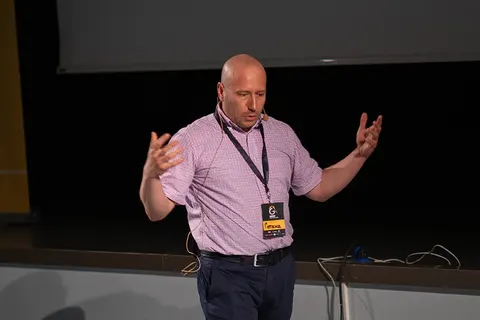
“AI Is No Better a Programmer Than the Ones You Already Have!”
“However we integrate AI, in the end every line of code has to be read by a human.” “It is sheer madness to believe that general AI can be achieved with large language models.” “The world as we knew it is dead, and it isn’t coming back.” Ivan Vankov (Gatakka) can always be counted on for an original, unorthodox, provocative and thought-provoking take on technology, as the lines that follow will show.
 05
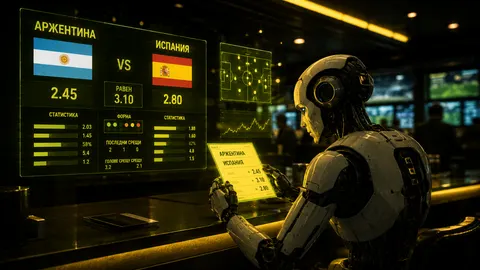
AI at the Bookmaker's: Did Claude and ChatGPT Win Betting on the World Cup?
I gave 20 euros each to the latest versions of ChatGPT and Claude. I opened accounts for them on two popular betting sites just before the decisive matches of the World Cup. Then I gave them complete freedom to manage on their own. What do you think happened? Could AI become the gambler's assistant, or the end of this business? I had never opened a betting site. Nor would I ever work for one; I have seen enough examples of gambling being a drug that kills. But in times like these… couldn't we check whether AI might be the one that can beat it? Whether it turns out to be too good and makes nonsense of the pure mathematics behind the fact that there's no way not to lose the long game…
 06
Have We Lost the Last Race Against AI?
We are living in the incredible future. Have we lost every possible contest with artificial intelligence? My answer is unequivocal. I’d love to hear yours.
 07
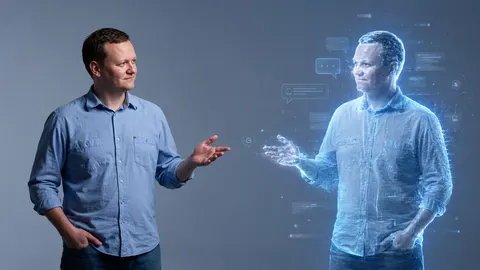
What I Learned from the Virtual “Georgi Karamanev”
Talking to yourself. In psychology, this is hardly considered a sign of good emotional health. But what if, besides talking to yourself, you set your virtual double free so that anyone can talk to him? What would people ask him that they would ask you? And what wouldn't they? Some of the experiments on this site are already bolder than the impossible and the unimaginable. And that is exactly what awaits you here. Two months ago, “Georgi” appeared on this page—my digital double, whom you can still meet today through the chat button in the bottom right corner of this site. Anyone was welcome to have a chat with him. From the very start, I had warned that I would be following the conversations so that we could bring the experiment to a fitting close with the lines that follow. In them, we'll look at what happened to the virtual “Georgi.” What did people ask him? Where did he cope and where did he fail? What does each of these conversations have to tell us? We take a peek into the conversations with the chatbot, and I'll leave most of the reflecting to you. And if you want to test his skills, he is still here, waiting for you. I admit, I definitely didn't anticipate even a fraction of the conversations “Georgi” had. Here's what I mean.
 08
Why Is Everyone Listening to Andrej Karpathy?
“There’s a new kind of coding I call ‘vibe coding,’ where you fully give in to the vibes, embrace exponentials, and forget that the code even exists.” With those words, on February 2 of last year, a world-famous programmer founded an entirely new field: a world in which software is made not by writing code but by explaining in human language. Andrej Karpathy, a co-founder of OpenAI and a builder of Tesla’s self-driving cars, has just joined Anthropic. What future does he see, and what kind of man is one of the prophets of the age of advanced artificial intelligence?
 09
Out of Work?!
The question of the jobs AI is already taking over is only now reaching the agenda. How exactly will the technology change the professions? Whom will it replace, what new careers will it create, will there be any work left for people at all, and isn't it time we thought about introducing an unconditional basic income?
 10
“In Building True AI, We Get Only One Shot”
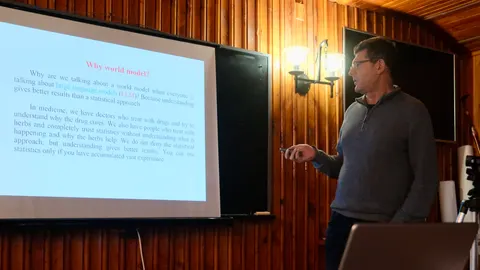
Everyone is talking about artificial general intelligence, the enormous next step that will confront us as a species with colossal and unpredictable challenges, and one of the first scientific conferences on the subject was organized in Blagoevgrad by Dimitar Dobrev, an AI and mathematical logic researcher who teaches at Sofia University. Before we let the genie out of the bottle, he says, we should at least decide what we want from it. We talk about intelligence as a force, our naivety about the future, control, regulation, open source, and one simple but frightening question: if we don't know what future we want, how do we expect to get it?
 11
“AI Is Testing What Kind of People We Really Are”
This is a conversation about words: about language and the new path it will take with the astonishing progress of artificial intelligence, progress that came through language itself. Nikolay Tellalov is a favorite guest of Digital Stories. Five years ago he and I did the site's very first experiment, an interview in short stories, and this time we talk about everything that has happened since, with technology, with words and with all of us.
 12
“We’re Already Generating a Tremendous Amount of Chaff”
Can we stop the cognitive decline that comes with the enormous progress of artificial intelligence, and how? Can the pendulum of cognitive decline, of over-trusting technology, of a broken public conversation swing back, and how? We pit the optimistic and the pessimistic views against each other on the biggest question this site exists for. Prof. Julita Vasileva is a world-renowned researcher in computer science and in our interaction with technology. We met five years ago to talk about the filter bubble and about the way we interact and get informed online. Today she is researching an equally important and even hotter topic: can we turn the techniques of online manipulation against their creators?
 13
Come Talk to “Me”!
Allow me to introduce… “Georgi Karamanev,” a chatbot trained on every piece on this site and on my guest appearances. Let’s find out together what it can do—write to it! It will pop up on its own, and if it doesn’t, you’ll find it in the bottom right corner of every page.
14Can AI Make Elections Fairer?
The day after tomorrow we will once again head to the ballot box, however old-fashioned that may sound (and essentially be). Yes, we live in strange times, but with all the possibilities technology gives us today, can we really not take measures so that the next elections are fairer, more impartial and free of obvious violations? This is not about politics but about technology. Not propaganda and campaigning, but data science and artificial intelligence, and how they can be of direct use in a matter so important to all of us.
 15
How Should Children Meet AI?
When is the right moment to introduce children to artificial intelligence, and what is the best way to do it? I admit I am still looking for my own answer, which is why I sat down for today's interview, to keep searching for it together with my guest. Nikolay Tsonev chose to walk away from a successful IT career abroad to bring the international programming school Logiscool to Bulgaria. The system, which helps children aged 6 to 18 get their hands on computers, is already present on five continents. But… now that AI writes code better than we do, does it still make sense to learn programming, and why? It definitely does, and here's why.
 16
Read This Article to the End
3 a.m. at Anthropic's office in San Francisco. An engineer runs a routine test on the newest model, Claude Opus 4.6. The task is simple, an integral, and the correct answer is 24. But the model writes 48. It corrects itself. It writes 48 again. It corrects itself once more. And then, in the hidden part of its reasoning, the place nobody was ever meant to peek into, the model writes: “I think a demon has possessed me.” Can artificial intelligence be conscious? Read this article; it will give you plenty to think about. It is time for a truly unexpected, but also important, social experiment.
 17
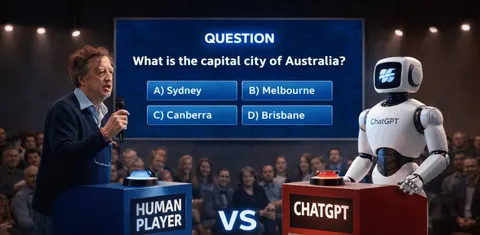
Dimo Padalski vs. ChatGPT: The Last Battle for Knowledge
Artificial intelligence takes on Dimo Padalski, Plamen Mladenov (the Professor) and 120 more of the finest masters of the quiz game. ChatGPT against people who have won more than 1,000 battles between them in shows like The Floor, “The Last One Wins,” “A Minute Is a Lot,” “Get Rich” and “The Chase.” What will come of it? Who will be the big winner?
 18
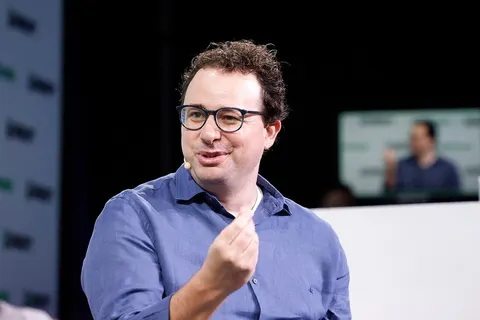
Dario Amodei: Is It Too Late for Humanity to Wake Up?
“Humanity is about to be handed almost unimaginable power, and it is deeply unclear whether our social, political, and technological systems possess the maturity to wield it.” So says perhaps the most talked-about tech leader of the moment, and he has good reason to. “He hates Western civilization,” wrote Musk. “A liar with a God complex,” snapped Under Secretary of War Emil Michael. “Leftwing nut jobs,” added Trump. All words from the past few weeks, aimed at today’s hero. Who is this fearsome enemy? You would hardly guess that it is a level-headed, mild-looking physicist from San Francisco who simply announced that he will not allow his company to be used for building autonomous weapons or for mass surveillance. Dario Amodei, the creator of the most advanced AI models, has finally landed where he deserves to be—in the spotlight. And not only because he stood up to the most powerful state on earth at the real risk of destroying his multibillion-dollar company. Not only because, in recent years, Anthropic’s models have pushed artificial intelligence to incredible heights. But also because he dared to peer into the future. The place we are all heading toward, where few dare to ask the truly important questions. Such as—how do we survive as a civilization in the age of super-advanced artificial intelligence?
 19
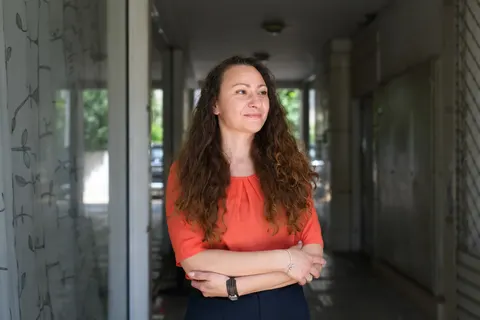
How Do We Peek into the “Thoughts” of Artificial Intelligence?
“Work, professional life, the drive to achieve corporate success and positions—this has become the mass culture of our society worldwide. To this day, many people find the meaning of their lives this way. From now on, we will have to change that. We will have to search for meaning.” We find ourselves in a time when the chatbot is not just an assistant but also a “therapist.” Before we even know it well enough, before we have laid down the ethical frameworks. We are already seeing the first challenges this brings, and the real problems are still on their way. Donika Borimechkova is a psychologist and psychotherapist with more than 15 years of experience. This time we decided to invite artificial intelligence itself to a therapy session. Because, as Donika says, many of her clients already get advice from it before they meet her. We never found a method or an approach that would let us run such an experiment, so we decided to discuss the subject, lay the foundations and then invite each of you to give us ideas on how to continue. Here is how this conversation begins.
 20
How AI Painted 10 Classic Bulgarian Verses: 2022 vs. 2026
In 2022, I called on MidJourney, the first truly impressive AI image model, to carry out an unexpected task. I fed it 10 quotes from beloved Bulgarian poets to see what it would draw. The results were striking and thought-provoking, and it became one of the most read and discussed Digital Stories. Almost a whole five-year plan has gone by since then. What will the pictures drawn from the very same verses by today's most advanced models look like? AI will undoubtedly show more skill, but will it also show creativity, understanding? Will its illustrations come closer to art? Judge for yourselves… “Never in my life had I dared to hope for a compliment quite so kind: AI invited me—the newest AI—to its home for a glass of absinthe.”