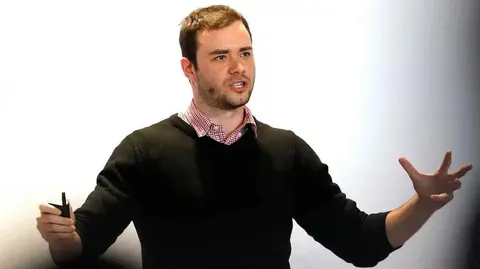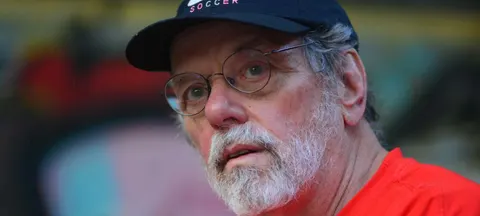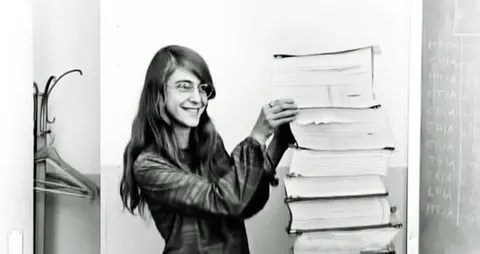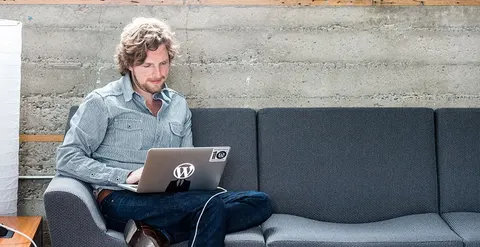
In 2003, 19-year-old Matt Mullenweg found out firsthand that necessity is the mother of invention. He was using a free blogging platform and needed a little help, but there was no one to give it. The result, born on April 1 and no joke at all, was WordPress, the open-source platform thanks to which anyone today can build a good-looking site with minimal effort and carve out their own little corner of the web.
According to the statistics, WordPress today carries on its shoulders… a third of the world's websites! (Digital Stories is one of them.) But what does jazz have to do with any of it? This story from two decades ago is as meaningful as it is full of colorful details. It's time I told you about Matt and his brainchild, which grew up to become a giant loved by millions.

What a Wonderful World
Very few things in the internet's past have been as positive, or done it as much good, as the birth of WordPress. For the first time, an open-source platform appeared around which an enormous community came together. Thanks to that, it is easier than ever today to have a well-made site without being a programmer or a designer, and without needing serious experience.
It's very hard to grasp what a third of today's internet actually means. Different sources will give you different figures, but it comes to roughly 450 million web pages! Just picture them lined up side by side. Both their number and their share keep growing: WordPress adds about 2 percent to its “share” of the web every year, and according to some sources it has already passed 40 percent!
The platform is constantly evolving and improving, and the ecosystem grows by the hour. Today the project's core codebase holds 423,759 lines of code, and since the programmers work on a volunteer basis, the hours put into it so far add up to 112 years of work.
And all of this, like most of the projects that changed our lives in the digital age, started completely by accident, out of one kid's curiosity.

Hit the Road Jack
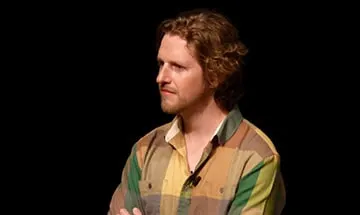
Matthew Charles Mullenweg, born on January 11, 1984, is an unusual bird. Programming became his main calling, but he is anything but the typical image of someone buried in computers. He's into cooking, photography, writing and good music. At school he specialized in saxophone, and his university studies were in… political science.
His father was a software specialist, but for many years the boy had no interest whatsoever in the field. It only caught his attention as he was nearing 20, and even then because of the venture that would later make him world-famous.
In 2003, 19-year-old Matt was a freshman at the University of Houston. He decided to start a blog and chose a not-so-popular platform called b2/cafelog. Matt wanted to show his fellow students the photos he had taken on a trip to Washington. The blog was called Photomatt.net, and later it became simply Ma.tt (the site is still alive today here).
To give you a sense of scale, at the time only 2,000 blogs had been built with b2/cafelog. The platform was far from perfect, so Matt needed a few small, specific improvements to be able to upload his photos. He tried to get in touch with the people who had created the project… And today all of us who use WordPress are enormously lucky that he hit a brick wall.

On The Sunny Side of the Street
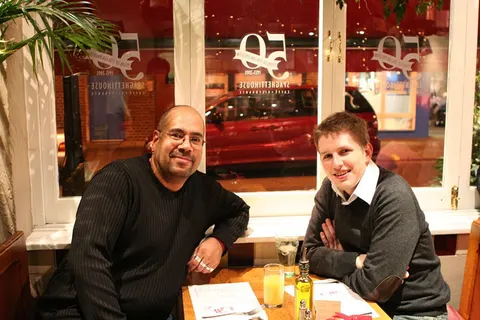
The platform's creator had simply vanished, so Matt decided to ask for advice on one of the popular programming forums of the day. “The Blogging Software Dilemma,” the young man titled his post, and explained: “The software I use on my blog hasn't been updated in months, and the main developer has disappeared. I can't find him anywhere, but I hope he's okay.” Days passed, and only one comment appeared below. A certain Mike Little wrote: “If you're serious about forking b2, I would be interested in contributing.”
Matt didn't think twice. He brought Mike on board, and the two started their own venture based on b2. They split it off as an unnamed fork—from the English word for the eating utensil, which in “software speak” refers to a version of a given program (most often open-source) that “breaks off” and goes its own way.
Symbolic or not, the fork was officially created on April Fools' Day itself, and that date became WordPress's birthday.
The pilot version, numbered 0.7, was ready as early as May of that year. Matt and Mike's project, which let the young man build the blog he wanted, worked. And although it didn't even have a name yet, the two were already fired up about it and decided to keep going, to build a complete blogging system. Gradually more people got in touch, and Matt and Mike were spurred on even further. The snowflake turned into an avalanche, and within a few years WordPress became synonymous with a platform that lets you easily create a site, whether you want an online store, a personal blog or a promotional page.
Fly Me to the Moon
People keep choosing WordPress to this day because in its basic form you don't even need to know how to program. The system is easy, intuitive and time-tested. And if you can program even a little, you can develop your project further without limits. Of course, there are no perfect solutions, and WordPress isn't always the best choice. But the belief that it's only suitable for modest projects is definitely a myth: BBC America, Bloomberg Professional, TechCrunch and The New Yorker use it to this day.
The project's godmother was Matt's friend Christine Tremoulet, a copywriter who had come up with the names of quite a few successful brands. He asked her for advice, and two days later the brand that now rules the internet suddenly came to her. Christine checked online, saw that there was no site by that name yet, and called her friend, saying a single word over the phone: WordPress.
Christine also helped with the early promotion on social media. Like everyone else on the project, she refused to take money for her help, because that is the whole idea behind open-source projects. To this day WP holds fast to its four freedoms: anyone can use the platform for any purpose; study how it works and change it to do whatever they wish; pass it on; and give others versions of the platform they have modified themselves.
Summertime
Matt and Mike became an ironclad duo. Not even the fact that they worked from opposite sides of the Atlantic could stop them. Mike turned out to be a British programmer with 20 years of experience, who successfully balanced the youthful enthusiasm of Matt the student. It was the seasoned software engineer who insisted that they first think about a good, stable and scalable architecture for the new application, and only then turn to the details. Matt was self-taught and inexperienced in the field, but ready to learn and full of ideas.
And what happened to the creator of b2/cafelog, whom Matt had searched for so persistently? Michel Valdrighi saw the duo's project and decided to join them. It turned out he had created the venture—WP's “dad”—two years earlier, because he didn't like the way the other popular blogging platforms worked. He saw a lot of good ideas in Matt and Mike's innovations, and the three carried on together. Their project found fertile ground just as open-source programming was starting to become seriously fashionable.
Stairway to the Stars
In the very first months of this story, many other creators of similar projects joined Matt and Mike, abandoning their own because they saw a solid foundation in this one. Around that time the site WordPress.org appeared, and its homepage stated it clearly: “WordPress is a semantic personal publishing platform with a focus on aesthetics, web standards, and usability.”
At first the project served only end users, people who wanted a site without writing a single line of code. But then it became clear that the venture would be even more useful if it allowed any programmer to extend it with their own skills.
That possibility arrived with version 1.2 in May 2004, at the suggestion of Ryan Boren. He was also the author of the first plugin—small pieces of code that anyone can add to extend the basic capabilities of their WordPress site.
Somewhere around here things started moving at breakneck speed: from April to May, downloads of the platform jumped from 8,000 to 19,000. By 2011 there were already a million sites around the world built on the platform.
More and more developers joined in, the community of WordPress enthusiasts across the planet grew, and large-scale gatherings began to be organized.

When the Saints Go Marching in
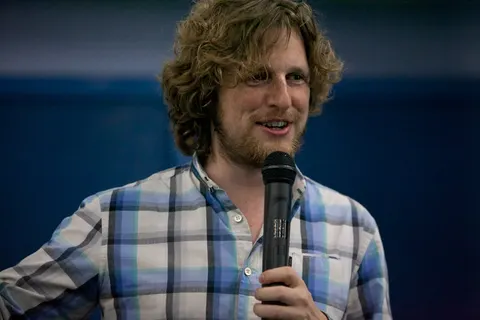
Matt Mullenweg himself still works tirelessly to make the platform better. He takes part in many events that bring the WordPress community together, and he has even been to Bulgaria.
But if you think that, as the creator of an open-source platform, he never achieved financial success… it's only fair to point out that he later founded the software company Automattic, which today has almost 2,000 employees. Long before other companies were forced to switch to remote work, he built it in as the model. And with a minimum of pointless meetings, in favor of fuller and more direct communication.
Today his fortune is estimated at $400 million. His entrepreneurial spirit doesn't get in the way of working for the common good; somehow the two complement each other. His first business was washing windows, and at school he assembled computers.
In fact, shortly after WordPress launched, he dropped out of university. He received job offers from Google, Yahoo and many others, but chose CNET because they promised him more free time and no strict supervision. Then, at 21, he decided to retire as an employee and start his own company. One working in the same field, simply building on the foundations laid by the free and universally accessible WordPress.
Its biggest success is the site wordpress.com, which lets people create more personalized sites through paid services. Matt's decision to build in this direction was received rather controversially by the community, but it didn't seriously dent his reputation as the platform's creator.
Hello Dolly!
And so at last we come to the jazz. What on earth does it have to do with a platform for websites?
A stylish choice by the creators, well known to WP fans, is that every new version of the platform is named after a jazz musician the developers love. The first official version, from January 2004, bears the name of Miles Davis, and the latest, from May 2022, is named after Arturo O'Farrill. With each new release, the creators of WordPress also put out a short playlist of their favorite performances by the chosen jazzman.
One of the plugins Matt created later is called Hello Dolly, after his favorite song. “This is not just a plugin, it symbolizes the hope and enthusiasm of an entire generation summed up in two words sung most famously by Louis Armstrong,” Matt writes. Once activated, every time the admin panel loads, it displays a few random words from the lyrics of the popular jazz tune.
The plugin is symbolic because it pays tribute to the musician while also telling how the WordPress story began. It passes on the message that still unites the community today and keeps drawing people from all over the world: that the internet should be free and that everyone has the right to a place of their own in it.

I Got Rhythm
“Actually, a common trait of successful people is that they are voracious readers,” Matt says.
“Technology bridges the gap between what a person can imagine and what they can do. As a result, it creates a level playing field like nothing ever before in human history.”
He still writes on his blog. Like many of the pioneers, he is quite critical of the path the web has taken: of the monopolies, the business built on our data, the hidden fine print lying in wait for us there. At the end of last year he responded to a long article whose headline asked, “Can Matt Save the Internet?”
“Any headline that ends in a question mark can be answered with ‘no.’ I can't save the internet, but you know who can? A movement. A community of like-minded people, united by a shared philosophy, working together to build the tools of freedom. Being able to see how technology works and to change it is a human right. It is as much a right as freedom of speech or religion. And my plan is to dedicate the rest of my life to fighting for it.”
“Technology is best when it brings people together,” says Matt Mullenweg. His most successful project is a wonderful example of how sometimes that really can happen.
Coming Friday on Digital Stories: an interview with a Bulgarian who wrote part of the code that sits in the core of WordPress today. Now, with his agency, he looks after sites with 1,000,000,000 visits a month! What do things look like from the other side?