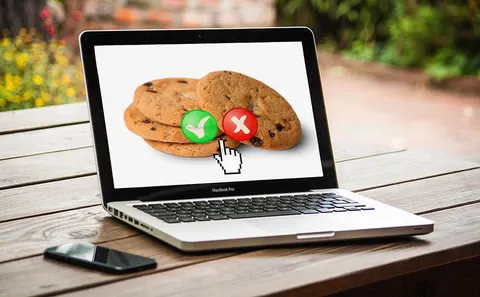
This Site Uses Cookies… So How Should We Answer?
We see the question in the headline every single day. But how should we answer it? Which cookies should we accept and which not? Does our decision matter, and can we change it? And what are these notorious cookies anyway? GDPR. We've all heard of it, and I'm convinced it must be an abbreviation of some Latin curse; if it isn't, it deserves to be adopted into Latin in the language's next release. While every tiny website is forced by law to obey the infamous regulation to the letter, the pages of the giant companies where we spend hours every day show it to us once and that's that. How did we get here? Is it worth reading the questions every site asks us about cookies? Are there more sensible solutions?
 02
“The Problem Is People, Not the Law”
Is our data really protected online? What rules should we follow to avoid unpleasant surprises? How can we be sure we aren't infringing anyone's copyright, and what should we do if someone infringes ours? And who will own the rights to the “works” of artificial intelligence? The law takes up an enormous amount of room in the online world too. We rarely think about it, yet the field is extremely important. Hristina Bogia holds a doctorate in law and specialized in all the important questions that technology raises for legal science. A few years ago, disillusioned with the system, she decided to change careers and moved into the software industry. Together, we'll look for answers to all of these questions. We'll head for the places where technology, the law and the rights of each of us intersect. We'll go over plenty of everyday advice that can help any user. And, last but not least, we'll get the perspective of a thoughtful young person with a distinctive view on a topic that is always current in Bulgaria: a court system that doesn't work.
 03
“Machines Remain Naturally Unintelligent”
How did underestimating the ethical side of artificial intelligence lead to enormous problems that have shaken the foundations of our civilization? What AI regulations is the EU preparing, and could they slow the boom in the field? How did the web move through its successive stages, and what should we expect from Web 3.0? Vladimir Petkov (Kaladan) has worked in IT for a quarter of a century, watching the past and present of information technology up close while waiting for the future. His experience lies in data and innovation, and for six years he and his friend Elenko Elenkov have been making the cult podcast Govori Internet (The Internet Speaks), now a whole platform of podcasts as varied in subject as they are consistent in quality.
 04
“We Humans Remain Creatures for Whom Owning Things Matters”
When and how will we divide up ownership of the stars? Are we, as a civilization, doomed to be driven by an endless desire to possess? Why is artificial intelligence a powerful tool and, at the same time, a fantasy destined never to become reality? Is it time to bring algorithms into humanity's eternal battle for justice? Prof. Stoyan Stavru, DSc, can immerse himself in subjects we usually find dull, fill them with meaning, explain them in an accessible and engaging way, and find an unexpected angle on topics that matter to all of us. “Challenge the law!” the legal scholar urges on his dedicated website. A graduate in law and psychology, he has a special relationship with technology and many unexpected roles: a certified mountain guide, a teacher of the Japanese martial arts jodo and aikido, host of the podcast Vox Nihili, where you can hear “whispers from the future,” and editor-in-chief of the expert legal system Lexebra.
 05
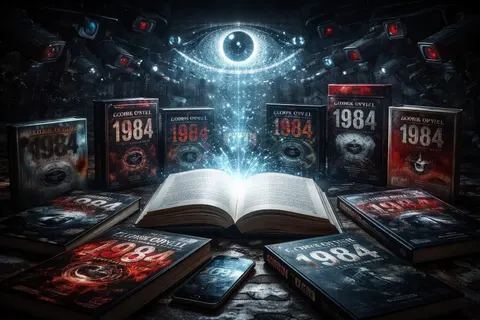
*1984* in 2026: Was Orwell Right?
Eleven editions since 2021. That is how many new versions of one of the most discussed books of our time have appeared in Bulgarian alone over the past five years, ever since the 70th anniversary of George Orwell's death “opened” the publishing rights. Are we really living in Big Brother's world, or did Orwell turn out less accurate in his judgments than we think? Let's discuss this big and important question, because it also says a lot about the future.
 06
How Much Does Truth Still Matter to Us?
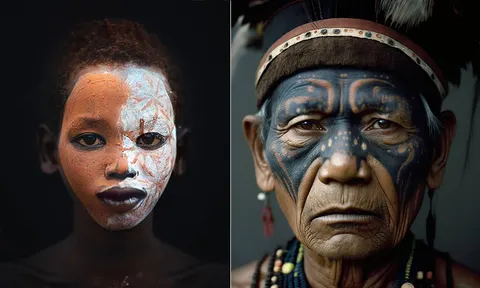
“How did we let the social contract slip away? Just like that, quietly…” We can no longer tell texts and images generated by artificial intelligence from those created by humans. That is the big takeaway from the Digital Stories experiment, in which nearly 2,000 people took part. We meet Nadya Shabani, a human rights lawyer and director of the Bulgarian Center for Not-for-Profit Law (BCNL), and Radina Banova-Stoeva, a human rights lawyer and legal consultant at the center, to ask how we will tell the truth from now on, whether attempts to regulate AI are doomed, and why the decisions we make about it today matter so much for the future of our civilization.
 07
“Online, a Little Paranoia Is Healthy”
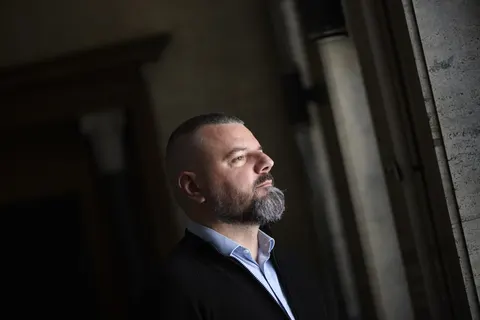
Can artificial intelligence put an end to the eternal game of cops and robbers? Is complete security online even possible, and is it true that our part of the world breeds remarkably good hackers? Petar Kirkov, the Bulgarian sheriff in today’s online Western, has spent more than 20 years in cybersecurity and is now the national coordinator in the field.
 08
The Internet Connects Us, the Internet Divides Us
Conceived and built as the apotheosis of the free human spirit, the internet is turning into a veritable factory of inequality—by many different measures and in completely unexpected directions. Some rifts are quietly becoming chasms capable of causing enormous problems for all of humanity. Is it too late to “turn” the machine around?
 09
Svetlin Nakov: Today, the Fight for Freedom Is Fought in the Digital World
Svetlin Nakov, the founder of SoftUni, can talk about today's (and tomorrow's) computer world for hours. Engagingly and knowledgeably, with a sense of humor and real insight. Here is what he has to tell us.