“How did we let the social contract slip away? Just like that, quietly…”
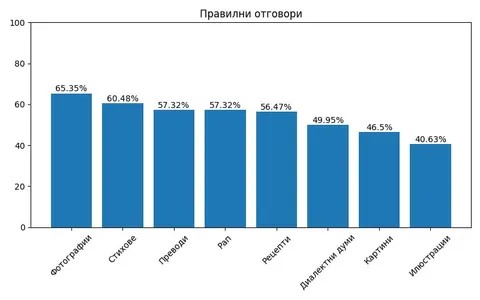
We can no longer tell texts and images generated by artificial intelligence from those created by humans. That is the big takeaway from the experiment run by Digital Stories, in which more than 1,800 people took part.
The test was inspired by the website chovek.ai, created by the Bulgarian Center for Not-for-Profit Law (BCNL). But why would… lawyers and human rights advocates get so excited about such a topical subject? As we are about to learn, they have a very important perspective on the changes technology is bringing us.
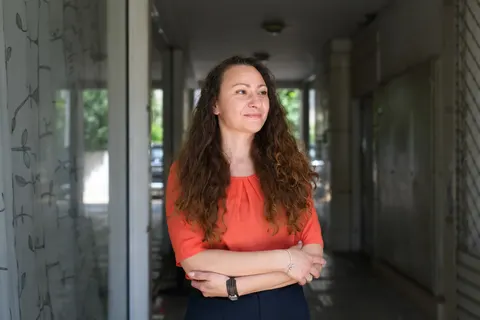
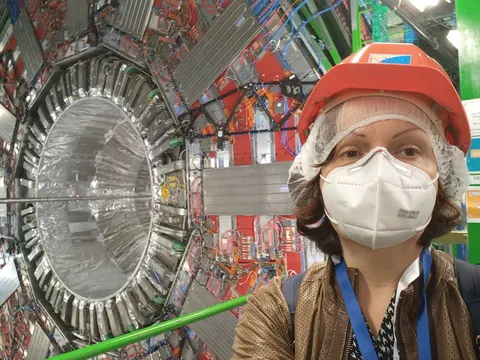
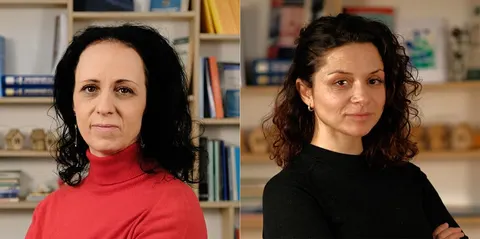
We meet Nadya Shabani, a human rights lawyer and director of BCNL, and Radina Banova-Stoeva, a human rights lawyer and legal consultant at the center.
How will we be able to tell the truth from now on?
Why is it important to talk about human rights in the context of the big questions technology confronts us with today? Are attempts to regulate artificial intelligence doomed? How do we settle the big question of ethics in this field?
Why do the decisions we make today about artificial intelligence matter so much for the future of our civilization?
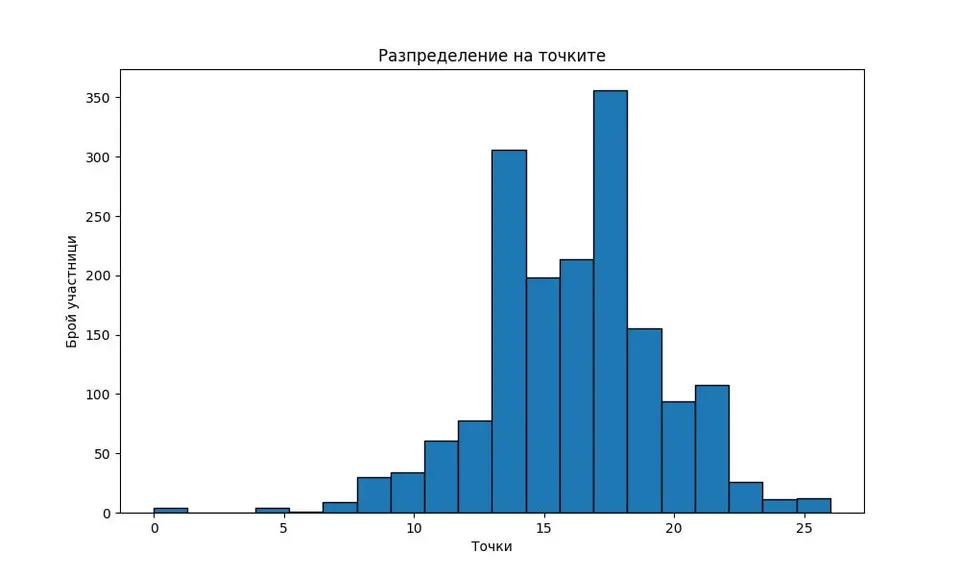
– The results of the Digital Stories experiment are in, and it is a continuation of yours, where you see immediately whether you guessed right—human or artificial intelligence as the author. What made you head in this direction? Isn't it rather far from human rights work?
– Nadya: Back in 2020 we held our first seminar on AI and human rights. At the time these ideas still sounded extremely strange. We looked like disheveled human rights activists getting worked up over science fiction plots.
Even then—and we always have—we believed that a society has to modernize. Technology helps in that process of modernization, it supports the fight against inequality, it gives some people who would otherwise be deprived of it better access to knowledge and information. But our nature as human rights advocates made us start thinking about where the point lies at which someone might get hurt by the advance of these technologies. And once we started having that conversation, we saw there was no way to be specific.
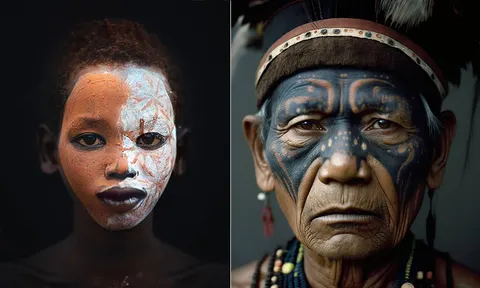
We came up with the chovek.ai campaign together with our colleagues from Fine Acts, the global social impact studio. They suggested we go through the lens of art—a field in which everyone thinks they're an expert—so that people could see how they might be fooled.
For us the most important conclusion remained that
where there is text, where there are facts and judgments, we humans are far less prepared to recognize what is true.
We run campaigns like this to provoke thinking. And when we see someone stop to think and take the conversation further, we are genuinely happy. Your experiment went to the next level and built on it, and that helped us think about other things too. What kind of preparation will help us understand—what specific knowledge will allow people to tell the true from the generated?
– Alas, for the moment it seems we don't have such a solution. People wrote to me that it's easy: we just introduce a fourth law of robotics. The robot always has to say it's a robot; whatever is generated has to be labeled. That can't work—it's already very easy to run such a model on an ordinary computer. Maybe there simply is no mechanism and we have to give up the idea that we can tell the truth?
– Radina: It's similar to the case of clicking on cookies. To protect people from having information collected about their behavior, we introduced an obligation to inform users which cookies are active and which providers receive the collected information. But nobody goes in to read what they're agreeing to; they pick the quick option, “accept all.” I'm the only person I know who goes in and methodically clicks on everything: “No, no, no.”
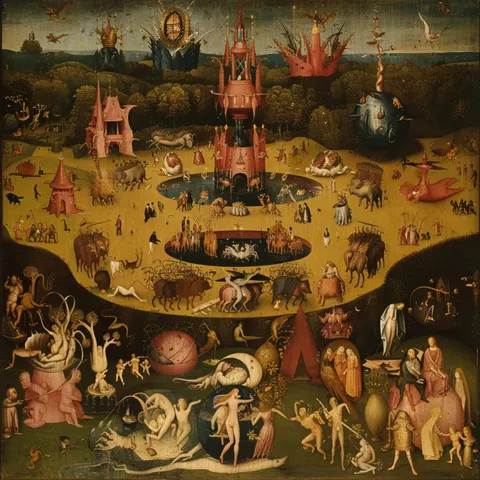
– True, and deliberately so, so that refusing isn't easy. In my view GDPR really is an example of a regulation that doesn't work—I explain why here. But to get back to artificial intelligence, a lot of people wrote to me: fine, we saw the experiment with the “pretty” Elena, but so what if she's artificial—why should it matter?
– Nadya: In that case, nothing, really; we liked her and that's that… But there are situations where it can matter enormously. Look, European elections are coming up. Imagine this: a political party announces some program, and an artificial intelligence generates an analysis that at first glance seems very well grounded but speculatively combines the trends. And in doing so it nudges voters toward certain thoughts, plants specific suggestions.
If the author is a researcher, if they have signed their name and make false claims, they can later be held accountable, including in court.
Radina: The issue here is that
it is often impossible to establish who is behind it—whom can you hold accountable?
If we take ChatGPT, their Terms of Use state clearly whose responsibility it is. My hypothesis is that nobody reads those Terms of Use either and everyone agrees in a hurry, and they say explicitly: “The responsibility is yours!” You go in and use it at your own risk. From there on, you're on your own. This raises the question of the impossibility of seeking accountability—regardless of whether or not it can be established against whom—because the person has expressly given their consent.
Nadya: We are lucky that every generation lives through great technological progress. But artificial intelligence is very different from all other technologies that give you an advantage, save time, process data that would otherwise take enormous numbers of man-hours. AI “makes” decisions on its own, but without bearing the responsibility. I imagine that very soon an artificial intelligence that gives medical consultations will be very popular. It will be trained on very rich data, it will have the experience of millions of doctors, it will know a huge number of cases. But is that enough for you to believe it and let it treat you?
– This problem—precisely the one of responsibility—shows up in so many directions. Translators, for instance. The algorithm sometimes translates indistinguishably from a human, but who is responsible if the translated instructions for a medicine say something dangerous?
– That's the first thing—responsibility, because the law cannot devise a framework in which we are never harmed. It devises a framework in which, if someone is harmed, they can seek redress.
In this case one of the colossal problems is “sorry, if something goes wrong, that's on you.”
That way we enter some kind of Darwinism! Whoever survives, survives.
Whoever doesn't—tough luck. For us, as human rights advocates, that's a big problem. Obviously we don't want to stop progress; we just want to make better sense of it, with all the affected parties taking part in the process, so that we don't repeat the mistakes we've already suffered from.
I don't want to blame the tech companies that are developing it. Our quarrel isn't with the technology. It may be with the community developing it—sometimes there are ethical standards there, but they can't guarantee us all the important answers.
– That's exactly why, because of challenges of this kind that all of us, people from every field, need to talk about, this site exists.
– Radina: And it's wonderful to meet another person, community or organization that shares this understanding: presenting important topics in a way that is accessible and understandable to everyone, with an element of challenge, so as to open a space for dialogue.
As for ethical standards, however many agreements on trustworthy AI get signed, they are and always will be aspirational.
On the one hand, we always come back to responsibility, and it can guarantee human rights only if we can place something that is not physical into a literal, physical context. Or as the European institutions phrase the principle for regulating AI: “Everything that is prohibited offline is also prohibited online.”
The other big problem concerns the individual. AI can help, for example, in the case of Bruce Willis, who has a serious illness, and these technologies make it possible for his image to lead “a life of its own.” But cases of political figures, activists or other public personalities whose lives are ruined by a deepfake video show the big problems AI technologies can create. Both of these scenarios, however, concern individual fates. If we're talking about the big processes,
we have to answer the question: how much does truth matter to us?
Because the political process, democracy and civic participation rest on truth. If we're fine with waking up every new day in an environment we don't recognize, then there's no problem…
Nadya: For some processes truth is essential, and when we make a change there, we can't simply rely on people's critical thinking to seek it out on their own. That discredits the whole process and the responsibility.
Social inequalities are also important. I think we need to consider them with an eye to the applications of artificial intelligence as well. First there is the training data the algorithms learn from. In my view there should be standards and certification in this area—which data can be used for which applications. Otherwise it becomes a big mess, and inequalities are automatically generated from it.
There are two factors that will determine who gets to use it with an advantage, and that will open a huge gap.
The young and people with money will automatically find themselves in a stronger position.
– But then Bill Gates said AI is a revolution precisely because more people will have access to healthcare and education. Suddenly all across Africa there will be something like a doctor, on an affordable laptop.
– Is that the problem, though?
It reminds me a bit of the argument: we go to the Third World, we take their oil and natural resources, we give them money
to build their street and their school, and we give the government money. But there's no democracy there. That's not our concern; we take our oil, we leave, and après nous le déluge.
We've seen social networks. They gave some people in those countries a huge opportunity to make their voices heard, but they also led to a lot of abuse. It's not that simple.
This isn't just a commercial product, a technology; it's a new situation in which we will live and work.
– I think so too. And this time we can see it coming, unlike the transition to social media. In the early 2000s we didn't imagine the battle would be over the truth and that we journalists would lose it so ingloriously in the feed. But how do we convince people again that this matters to them—who writes it and why, why truth matters?
– I don't blame people. I think that
social networks, like AI, are a problem that requires a public consensus, one that has to be part of the social contract.
We need to force something to change, because leaving everything to personal self-criticism is no solution.
During COVID I was startled to see how people I know were driven by social networks to extremes, to obvious lies. I can't say they're stupid or uncritical. I think the processing that happens in and through social networks is a method that is not only propagandistic and manipulative but downright fraudulent. The law regulates fraud as well; it's just that here we haven't regulated it yet. At first I got angry with various people for sharing this or that. But now I believe that
just as many people fall victim to con artists, they are victims of what happens on social networks, of the manipulation.
– Except that we can no longer regulate what's happening, because it's in the hands of companies that are bigger and stronger than states, than unions of states.
– That's the problem! How did we let the social contract slip away? Just like that, quietly…
That question worries me too. There have to be conversations, consensus, but are the people who make the decisions really taking part in that conversation? I think we have to find a way to make them join in.
By nature, as activists, we have to be positive, to believe in goodness, in people. But I think we'll live through human tragedies again, and only then will we learn our lessons.
Radina: If we turn to regulation as a potential solution, we can look first at GDPR—an example of very late regulation of major problems that we noticed only after the fact. Regulation after the fact isn't impossible; whether it will serve its purpose is another question. We'll see the notorious AI Act—what exactly its official content will be, which we may find out this April, what will happen, what the final result will be.
When we started working on the subject of AI, we too traveled a long way to get to where we are today. At the beginning I was also horrified at times about what would happen… But the deeper I get into the subject, the more I realize that AI is a tool, not an independent intelligence. Thinking about it through the metaphors and analogies on which AI terminology is built, it's natural to end up afraid: AI is built on “neural networks,” it “hallucinates,” it is an “intelligence.” If we let it come closer and get to know it, we can gain control over it, as with every previous technological revolution.
I don't know whether I have faith in people, but I do have faith in what people like us, and like you, are doing.

– Where is it important for us to restore and preserve the truth?
– Nadya: In politics, in democratic processes. I think the administration of justice is also a sensitive area. Yes, it would be good to have various automated systems to assist the courts, but judgment remains paramount there. The subjective element, tied solely and exclusively to the specific situation, even if it resembles a million others.
– But maybe that's precisely where algorithms can be more objective than we are?
– Radina: I think it's logical to move toward regulation that says where the line is. For anything that concerns a human fate—and the administration of justice is the strongest example—artificial intelligence cannot be allowed to make final decisions. There has to be human judgment at the end.
Nadya: For me these are the areas where conscience matters most, rather than knowledge. In the administration of justice, that's the judge's conscience.
But it applies beyond the courts. Let's imagine two parents using some app that gives advice on raising a child. Can we trust it completely? I don't think so. Everyone gives advice, but you decide what's best for your child.
A human child grows through relationships and attachment, not through the best knowledge.
That's why, wherever conscience and personality lead, with all the uniqueness of each human being, it's important to protect what is human. Everything else is secondary.
– And art? Can we hand it over to the algorithms?
– I've wondered a lot about that question too, and I've even changed my mind. Right now I'm of the view that using AI should be prohibited. In art, what is it that gives us satisfaction? Not just beauty, whether it's language, an image or something else, but also
the sense that another human being is sending us a message.
I love nature too, but the feeling when I see a beautiful natural landscape is completely different from that of a work of art, something created by another person who is sending me their message.
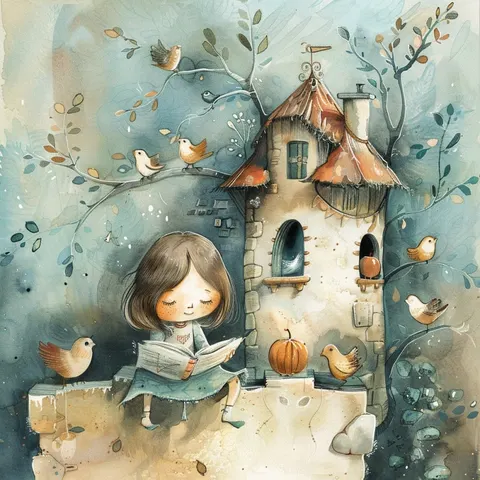
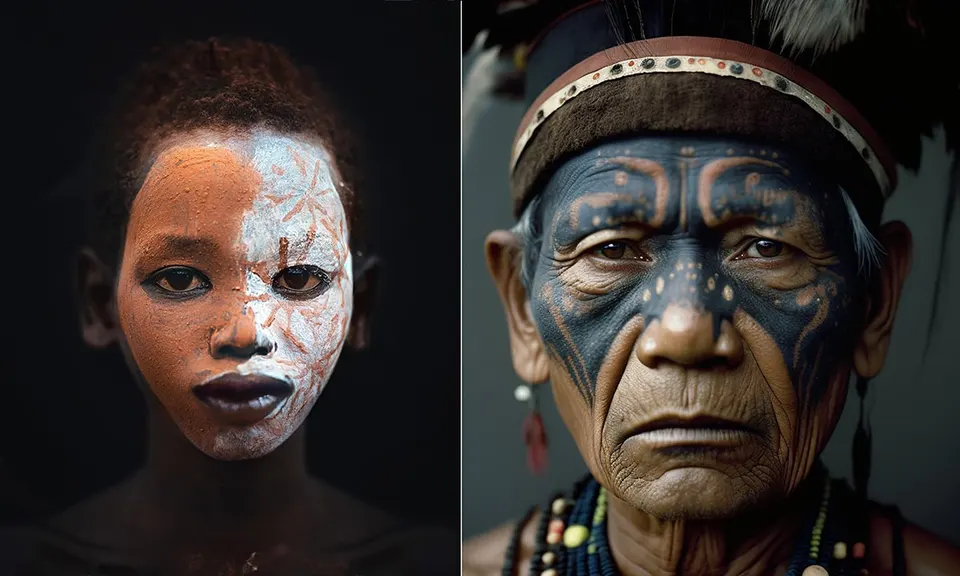
– It seems, however, that it can already be indistinguishable. New technologies are also changing our memory—history, for example. And again we come back to the truth. How do we validate it today?
– I think we're creative enough.
Since humans invented artificial intelligence, they will surely figure out how to regulate it too.
The question is how, regardless of how much money is made from such technologies, to stick to the rules. To put the rules before the money.
Radina: I think we can rely on a basic human need: the need for security. You can't feel secure under stress. And a major source of stress is not knowing, the uncertainty about what will happen tomorrow, about what's true. Here I also find some comfort: people will be motivated to look for ways to check information, and the need to build the skill of looking critically at information, the skills of seeking out sources and verifying what looks like a “fact” on the screen, will naturally develop.
– Lots of people on Facebook function quite calmly without knowing.
– That's how it looks, doesn't it?! But it's important to point out that at some point in the day people leave Facebook, step into the real world, communicate with other human beings—there's always some kind of flow. And Facebook does, after all, let individuals express their opinions—their truth about things. But if the entire flow of information is generated by something you can't check, where you can't understand how it produced this particular text, then you'll get real insecurity. What kind of personalities will grow up in such an environment? How will human relationships change? If all basic labor is taken over by artificial intelligence, many people will be left without creative activity, which is what work is. How will they have to find new meaning?
I don't think we should move to the level of whether each potential development is good or bad. Judging the past through those categories is also unnecessary and ineffective. It's far more essential to answer the question of how to manage the possible consequences that the mass adoption of AI would have.
And what can we do today for people themselves? Help them learn new skills. And we can start with very simple examples: “Look for at least three sources to confirm whether this is a fact. Talk it over with someone, make at least one comparison with information from elsewhere, and only then share it.” Small steps like these won't solve the problem, but they'll certainly help. And if we go back to the topic of responsibility, as human rights advocates it's important for us to say that
the first line of defense of human rights is always the person themselves.
– That's true. And I too think the most important thing is not to give up on the conversation, on thinking things over, on making sense of them… Let's just hope it's not too late. Thank you for this conversation!