LivePerson… A live person? No, this one isn't alive—and that's exactly what makes it interesting. It's the name of an American company with a fascinating software project that relies on a serious team in Bulgaria.
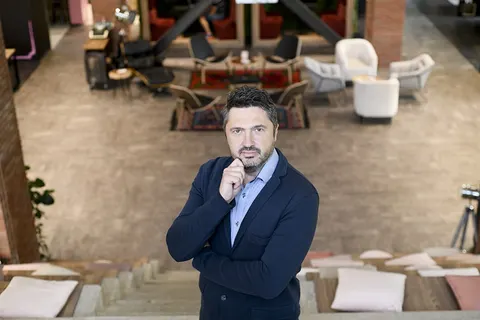
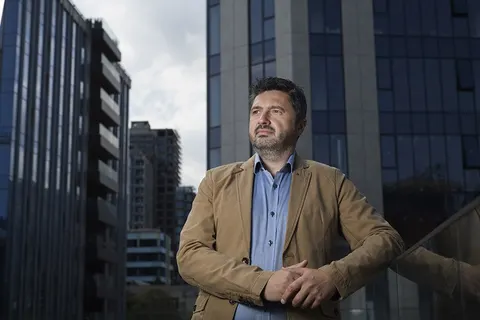
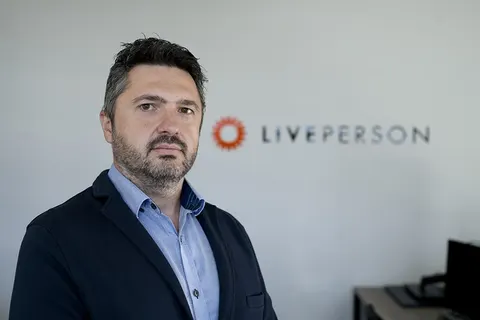
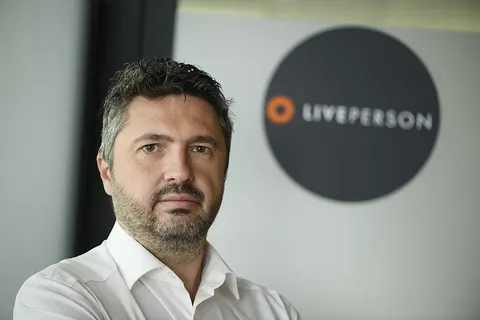
Alexander Raychev is the general manager of LivePerson Bulgaria and has many years of experience in various roles in IT.
From that vantage point, it's interesting to hear where he thinks we stand today with the much-talked-about artificial intelligence. How long will the algorithm remain distinguishable from a “live person”? Beyond all the hype, what are the optimistic and pessimistic scenarios for the development of this kind of technology?
– Let's set the official definitions aside. What is artificial intelligence to you personally?
– If we step outside the technological definitions, the key word becomes “изкуство” (izkustvo, art)—the root of the Bulgarian word for “artificial.” Let's say that creators, innovators and people with a long-term vision are the ones who bring benefits to society.
It's the same with artificial intelligence: it creates, it makes, it redraws the boundaries of the impossible. That's what any intelligence is when it can manipulate its environment to create more comfort and convenience.
– Lately it seems we've overdone this topic, even though the conversation is fairly superficial. We're split between overenthusiasm and total skepticism. Where does the sensible line run?
– It's hard to define; it reflects individual views. We have ardent supporters and skeptics. In my opinion, though,
Pandora's box is open and enthusiasm will prevail,
because developers now hold a serious set of models that will change the world in the coming years.
Overenthusiasm lies in the expectation of limitless development of this technology. It underestimates the potential risks.
On the other hand, total skepticism is often tied to fears that artificial intelligence will turn into autonomous and unpredictable beings that pose dangers to people.
The most sensible position, I think, is a balanced, informed one. It involves critical thinking and an assessment of AI's potential, recognition of its benefits and possibilities, but also awareness of the risks.
A sensible approach includes regulation and ethical standards, as well as open dialogue and cooperation
between scientists, technology experts, legislators, philosophers and representatives of society.
– Every technology goes through a natural development cycle. Is it possible that we've overestimated the effect and will end up in a kind of winter?
– Since we're in the middle of a hot summer, let's clarify what winter would mean for a technology: a period in which it seriously slows its life cycle or stops developing. That can be driven by regulatory, economic or technological factors. In my view, artificial intelligence is such a hot topic that winter isn't on the agenda at all, despite calls to cool down and rein in the new models.
The genie is out of the bottle!
– Then perhaps we should turn our attention to the dangers. When could artificial intelligence become a problem for all of us?
– The most important thing is to manage it properly—to set reasonable expectations and steer the algorithms toward solving human problems.
The automation of work processes may lead to unemployment, which could cause social upheaval. But we've been through many technological revolutions so far, and they've brought more than one innovation we still use today.
This is part of human evolution. Formally speaking, the “artificial intelligence” challenge is no different from the changes that brought us fire and the wheel, printing and electricity, the development of pharmaceuticals and nuclear energy. Today we take them for granted, but imagine the euphoria when they were first introduced on a mass scale.
It's good for access to technology to be fairly distributed, so that social inequalities don't deepen.
The unlawful use of personal data and threats to security would also be a problem. It is crucial that the important decisions about the future of the human race be made by humans themselves, which is why control must remain with society.
– Who do you think will decide which direction we take?
– All of us—from the politicians who will adopt regulatory measures, through the scientists who will help develop the technologies, to the businesses that will introduce them and society itself, which will set the priorities.
Naturally,
all of this will be put through the centrifuge of economic interests and corporate business models,
and they will set the trend. Competition will also give direction, because if you don't keep up with the trends, you'll have to rethink your ideas of a sustainable business.
But above all, society has to rely on being informed and on education.
– What are the strengths and weaknesses of artificial intelligence as things stand now?
– Speed and efficiency in processing large volumes of data, precision and focus, great potential for automation. On the other side, let's say, are the lack of intuition and abstract thinking, and the dependence on a large database.
– What are the biggest changes artificial intelligence will bring to various fields in the short term?
– We'll see exponential growth of AI technologies in every sphere. This will lead to changes in school curricula and in medicine.
New developments have yet to surprise us with treatments for rare diseases and for ones we've been fighting for decades.
Improvements in the quality and way of life will carry over into longer average life expectancy.
Decoding our DNA and the origin of the Universe, future forms of life and the much-desired immortality may be among the longer-term pursuits that humanity will try to unravel with the help of AI.
In the short term, we're already seeing automation in manufacturing and logistics, optimization of processes and supply chains. Changes in consumer behavior, research into needs, personalization…
– Against the backdrop of everything you're saying, the position of the project you work on is interesting too. It's called “LivePerson.” When does the technology start to become indistinguishable from a real person?
– LivePerson is a company with almost 30 years of history, a pioneer in developing chatbot solutions. It is currently a leader in AI chatbots and voicebots that communicate with people like a real human. We rely heavily on so-called personalization: what customers intend, what they need.
We're stepping out of the corporate website so that an almost real little person can come to life in people's phones.
Our algorithms take care of the individual experience and of solving the real problem.
From here on, we're developing more and more integrations with different platforms, and we'll see how bots designed around the customer's wishes perform. It's also important that when the conversation is handed over to a human operator, that person receives systematized, summarized information.
At LivePerson, we're responsible for the uninterrupted operation of more than 18,000 companies. We handle over 1 billion user interactions every month! We have clients who have reached more than 90 percent automated processes, which adds to their flexibility and to better customer care.
On top of that, the Bulgarian part of the team is taking on more and more responsibility and growing at lightning speed—in 6 months we've reached about 60 people. We're establishing ourselves as a core unit in development, and in support as well. We keep looking for specialists for all sorts of roles—a colorful palette of technologies and fields.
– And if the chatbot looks more and more like a real person… is it good to perceive technology in familiar, human dimensions, or does that limit it?
– We have to find the balance between human values and the possibilities. We have to put technology at the service of humanity, if only because… it's more efficient. Let's say an AI robot can be more useful where the environment is dangerous. Or when large data sets need to be analyzed quickly.
Virtual reality can rescue us from boring everyday life, fill us with emotions and experiences.
If we're talking about human dimensions, we have one very distinctive trait—rich historical values, a variety of emotions and feelings. For 2.5 million years, humans have been re-creating the world into what we have now, with inspiring innovation and creativity.
– The conversation about AI's progress often shifts to “which professions it will replace.” Could it be the other way around—that it will let us be more effective?
– Of course! An interesting example comes from sports. For years, the big clubs have used AI technologies to analyze athletes' reactions, behavior and physical characteristics in order to get the best out of them. Imagine you've found $1 billion to buy Mbappé and you put him in goal. Then his perfect speed and technical parameters will drop significantly.
Not a good move, but an obvious one. Many more decisions like it, however, may not be so clear. If you know that in 95 percent of cases a striker succeeds against a particular goalkeeper in the first 15 minutes of the game with his right foot, from a distance of 10 to 15 meters, at an air temperature of 25 degrees and low humidity… isn't it worth using that data?
Let's not talk about replacement but rather about assistance. The human factor will remain the foundation for AI's development in the long run.
– What motivated you to go into this particular field?
– I'm one of the optimists. I see the pace of technological development as incremental, not explosive. I see potential for applying artificial intelligence in every sector of the economy, though that requires work at the state level together with business to identify the needs and make use of expert human potential.
– Which technologies do you personally hope will soon become possible?
– I'd very much like to see, as soon as possible, the end of some diseases that are incurable so far. Through AI and the progress of quantum computers, I think we're approaching a period in which we'll find solutions to complex cases very quickly.
But I also hope for progress in every other field—from energy, through better urban environments and smart cities, to specialized services. Less bureaucracy and more thinking people.
– What will our future look like in the most pessimistic scenario, and what in the most optimistic one?
– I don't want to think about apocalyptic scenarios, because I don't believe they'll come true. I worry more about the interference of people, not algorithms, in human relationships and destinies.
We focus on the malicious power of machines, while at the same time wars are being fought over resources and influence, and in a world of plenty people are dying of hunger and curable diseases.
Where exactly is the system bugged—in technology, or in human hatred, greed and lust for greatness? Machines, at least for now, have none of the three…