How has technology changed pregnancy and childbirth? What has it made easier, and how, paradoxically, has it created problems elsewhere in the way we come into the world?
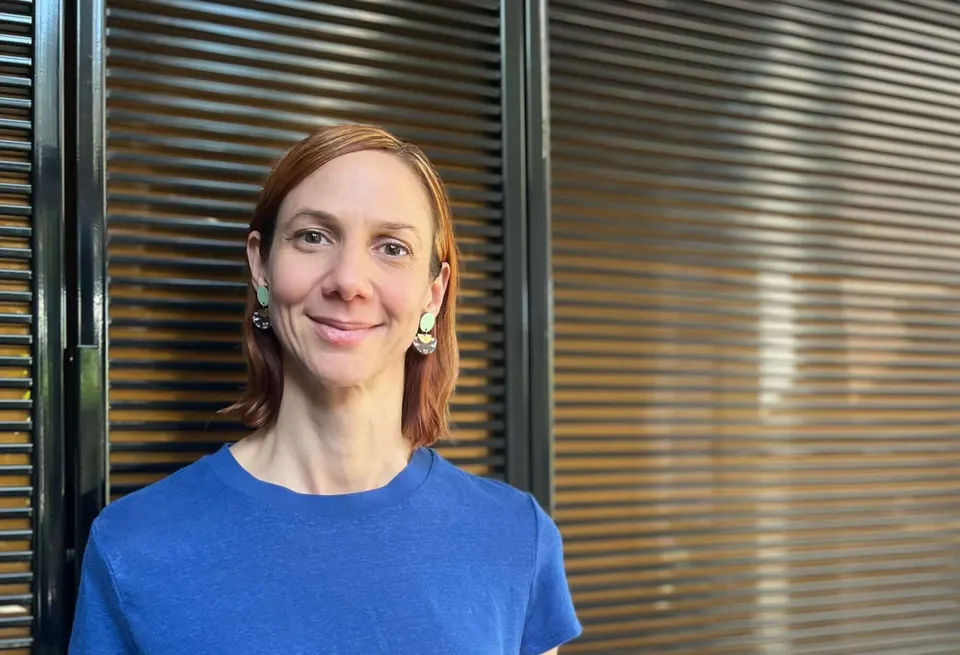
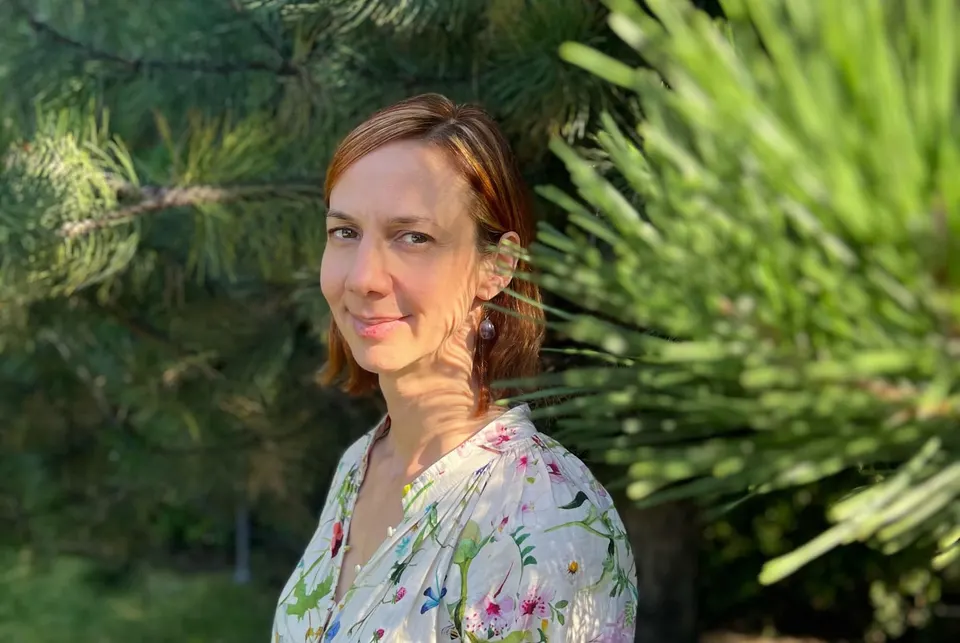
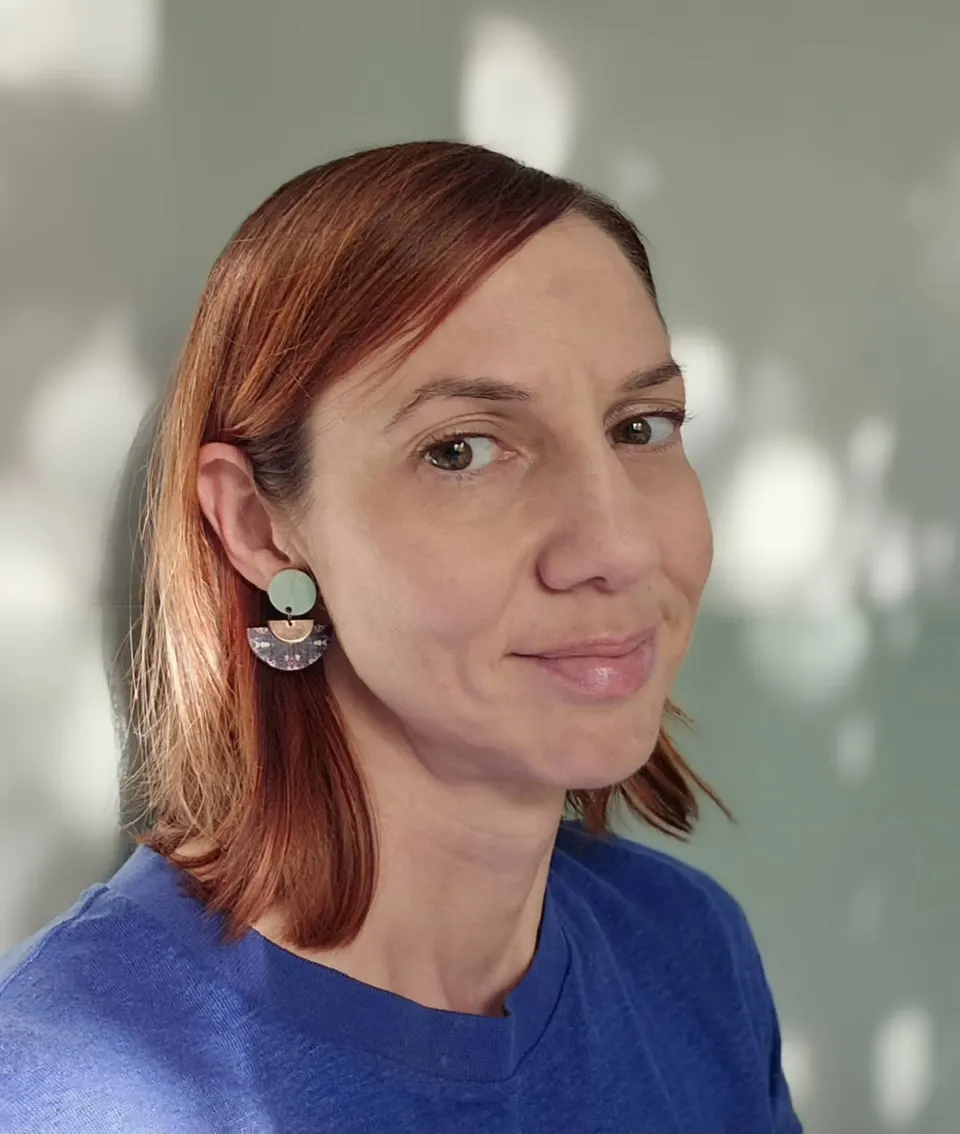
Zheni Markova got in touch with me because of the Digital Children series and suggested we talk about this side of the relationship between technology and parenthood. She lives in Germany, and although she spent many years working in marketing and software development, today she works mainly as a doula. Especially popular in the West, this is the calling of women who are not medical professionals but who help expectant mothers with information, advice, and practical and emotional support.
When can overtrusting technology become a problem in pregnancy and childbirth? Why is it worth returning to tradition in some respects and listening more to our bodies, not only to medical readings or other people’s advice? It is time for an important conversation, one that I believe can offer many useful ideas to people who are just preparing to become parents.
– How did you come to the profession of doula?
– As with many women who take this path, the decisive moment for me was the birth of my child. Before that I knew nothing about either childbirth or pregnancy.
All I had was fear, a terrible amount of it, like every woman.
But I went through a process of personal growth that made me change my perspective and start thinking. I began reading a lot; I needed to know how things work and why they happen the way they do. I was amazed at how nature had figured it all out, and that helped me a great deal to deal with my fears and feel much more confident.
So many women have given birth; it isn’t the horror it’s often made out to be.
In the end I had a really lovely, calm birth. But when I compared it with the experience of my friends, the difference was striking. Most of them had had various problems, and that made me wonder what I had done differently. I concluded that the preparation, understanding the process, and a new mindset had been what mattered. I decided I wanted to help other women have a good birth too. It is a hugely important moment in a woman’s life, and if it doesn’t go well, it can leave a serious trauma.
At first it was half a joke—I’ll take a doula course and see how it goes. But the deeper I dug into the subject, the more interesting it became, until finally I told myself: “If I’m going to do this, I have to focus on it 100 percent.” For a year now I’ve been doing it full time, and on top of that I started an online club for conscious pregnancy and birth, so I can help Bulgarian women as well. Sadly, I keep being reminded that the standard of maternity care back home is very far from optimal.
– In what way, for example?
– There is some tremendous madness, and what’s worse, women don’t even realize it; it’s accepted as a normal part of the process. For example,
hospitals most often practice the so-called “managed birth,” meaning that labor isn’t allowed to unfold as a natural physiological process but is steered with all kinds of interventions from beginning to end.
That has an enormous effect on the process. For instance, inducing labor has become very fashionable lately; it’s “the new C-section,” and it’s done for all sorts of reasons that in 90 percent of cases are completely unfounded. The baby hasn’t been born by the due date and the doctor says, “We have to get it out,” which is utter nonsense—if the baby is fine and being monitored, its heartbeat checked, there is no need to do it. The due date is just a guideline, not some hard deadline.
An induced labor can have bad consequences, because it is far more stressful for both the baby and the mother. For her, the contractions are much stronger, more frequent and more painful, which is why an epidural is usually given, and that in turn often leads to other consequences. For example, being immobilized because of an IV drip and continuous fetal monitoring, an oxytocin infusion, a poor sense of when to push, a drop in blood pressure. For the baby, an induced labor is much more stressful because of those more intense contractions. It literally can’t catch its breath, and this often leads to fetal distress or a drop in the heart rate, and then the situation ends in an emergency C-section or a forceps or vacuum delivery. That is just one example of an intervention that is used en masse without any need for it.
– I don’t know if it’s done often—my younger son “stayed in” almost 10 days past his due date, and the doctors said nothing about it.
– That’s great! It’s wonderful that you found a doctor like that, because, as I see in my practice every day, fewer and fewer are willing to wait. I worked with a woman who went in for a checkup the day before her due date and was told they would get the baby out. She said she didn’t want that, and yet the next day they sent her a text message saying they had scheduled her. This is becoming very widespread.
– Let’s say a few words about what a doula does. From what I know, her main role is to give advice, support the woman, be someone she can talk to about the questions that come up. And when the birth comes, to be there beside her. Frankly, I don’t understand the fashion for fathers being there at that moment, too.
– It depends; my husband did brilliantly, he had prepared. It’s partly a question of preparation and partly of how you feel about it—some say, “No, this isn’t for me, I’d rather stay out of it.” That’s okay too.
The doula’s role can be very varied, depending on what the woman needs. It includes work during pregnancy—preparing the woman for the birth itself, so she knows what to expect, what she can do to help herself in the process, for instance how to cope better with the pain. That can include preparing the partner too, if he wants to be present at the birth.
Help with making the important decisions that come up during pregnancy. If the doctor tells you, “We need to do this,” and you’re not sure, there’s someone to give you objective information on the subject, to help you ask the right questions so you can make a sounder decision with more confidence.
A doula’s job isn’t to make the decision for you, but to help you see the full picture.
During the birth itself she helps with all kinds of techniques and practices for coping with pain and for not losing confidence. If emergency interventions become necessary, there’s someone to explain what is going on, since doctors often don’t—whether because they lack the time or the will, or simply think their patients should listen and do as they’re told. There are studies showing that when a doula is present at a birth, the woman feels much calmer and more confident, and everything goes much more smoothly. A doula’s work can also extend into the postpartum period, with help in the first days of caring for the baby and early support with breastfeeding. And with questions about recovery after the birth.
Many people get confused about whether a doula is the same as a midwife. No, she is not a medical professional. Midwives usually work in hospitals; they deliver the babies or assist the doctors, depending on the system. The doula is there to support you with everything else, and for the purely human presence and attention that doctors usually don’t have time to give.
– I imagine that in an ideal system, medical professionals could take on much of that role.
– Yes, they could. In Germany, for example, the system is different; it uses the so-called midwife-led model of maternity care. Midwives are the ones who look after the woman during pregnancy, and they are there during the birth. A doctor steps in only if there is a complication or an emergency.
In my view that’s the much better option, but there’s a problem here too—there aren’t enough midwives, they’re poorly paid, overworked, and once again can’t give the attention that’s needed.
The profession of midwife goes back to ancient times, and that is exactly what midwives did: they cared for women in every way, emotionally too, in the preparation and during the birth itself. Sadly, these days the tradition has been lost, and that has created the conditions for the profession to return in the form of the doula.
– The reason for our conversation has to do with technology. You said that sometimes it plays a nasty trick on us: it makes the process easier, but somehow interrupts the natural course of events.
– There are all sorts of ways in which technology has changed how we give birth. Yes, in many respects it’s wonderful that we have it; it helps with early diagnosis and who knows what else. But really, the question is one of balance. The more we rely on technology, the further we drift from natural processes. We simply
forget to listen to our bodies, we forget to trust that the body actually knows how to give birth to a child.
The whole process becomes overmedicalized. Modern women rely on extremely detailed monitoring of their pregnancy, every kind of diagnostic, test and screening. Meanwhile, most of them don’t understand how the natural process unfolds, what the physiology of birth is, what hinders it, what helps it, what the basic principles are. They are very simple, but someone has to explain them to you.
And so a huge amount of personal responsibility gets handed over to the doctor.
“I expect that since I live in a modern society, the doctor and the technology know best, and I don’t need to do anything.” That leads to passive participation in the process and no desire to understand it, which in turn is the cause of today’s culture of fear around childbirth. But fear is fought with knowledge and confidence.
What you get is a paradox: we have all this technology, we have access to information like never before, and yet we are more and more frightened, more and more unsure of ourselves, to the point where we don’t know how to give birth to our own children.
Every day I talk to women who are terrified at the thought that they have a birth ahead of them. It shouldn’t be like this!
– The same thing happens afterward, with raising the children. If you decide to look for advice, you’ll find thousands of pieces of it, most of them contradictory, mutually exclusive. Still, what are the basics a woman should know, the foundation she should start from in order to reach that calm?
– She has to understand what is happening in her body. To know that there are a few key hormones that control everything, and what affects them. That birth is teamwork between the baby and the mother. It’s not just the mother lying down and someone pulling the baby out.
The basic principle of birth is that the baby drives the process and knows what to do. We simply mustn’t get in its way; we should try to help it. How? Broadly speaking, through movement, using gravity and relaxing the body. There are all kinds of techniques and practices for this, but it certainly doesn’t mean the woman lying on her back, lifting her legs and waiting for the baby to come out. That actually stops the process!
When we help the natural process, we tolerate the pain much better and the need for an epidural decreases. Yes, it has its place, but it’s also an intervention which, as I mentioned, has its consequences, and so it’s good to choose it consciously, not simply out of fear of pain. In the end, pain is partly subjective—the more you expect it, the more it will hurt.
Technology influences every step. For example, there are all sorts of apps—to help you track your cycle and get pregnant, to track your pregnancy and learn what’s happening with the baby at each stage, what to eat, how to exercise… And supposedly you should be better prepared and feel more capable, but that’s not quite how it turns out. Having access to this vast amount of information doesn’t mean you know how to consume it and apply it in practice to your particular case. Because every pregnancy and every birth is individual, and there are many variations of normal.
Things get lost in translation; people don’t know what to believe and they wander around lost.
Very often I hear: “I’d rather not read anything at all, because it stresses me out.” Or: “All I come across are horrifying birth stories that scare me.” And that’s true, nobody wants to hear horror stories. It’s about selecting information, knowing what to read, what to pay attention to, and above all how to apply it.
– And the purely human element matters somehow, too. Supermarkets have had self-checkout machines for ages, yet few people use them. It’s different when a person gives you the information; there’s a psychological aspect, and you can also ask follow-up questions.
But what might this return to a more human approach look like, and where should it start? With the system, with public debate, or with women?
– In my view, with women. The system works; it was built a certain way and it’s fine as it is. Without a reason, it won’t change. Women are the ones who need to realize what is best for them and for their baby, how far we’ve come today, and how what happens in hospitals on a mass scale often hinders the process.
Women need to realize that they have a say in the whole process. They are the ones who should be making the decisions, not handing their personal responsibility over to technology or to doctors.
– But that’s where the other extreme lurks, which I find no less frightening—the one that brought us anti-vaxxers and pseudoscience. Disregarding doctors.
– Again, it’s a question of balance. When women begin to understand and demand that certain changes happen in maternity care, that doesn’t mean all the hospitals will close and the doctors will vanish. The aim is to change the way we give birth. For example, to get rid of absurd practices like not letting a woman drink water during labor. It’s so outdated, there’s so much scientific evidence that it doesn’t help in any way, that it even does harm, and yet it’s still practiced.
That’s the kind of thing we’re talking about—finding the golden mean, not falling into extremes. So when a doctor tells you, “Do this,” you shouldn’t just follow blindly because an authority said so, but think critically about it, seek a second and third opinion if necessary, and make your decision based on that. Because in the end doctors aren’t gods—they make mistakes sometimes too. Not to mention that their interests often differ from yours.
– So your recipe for a calm pregnancy and birth is to take an interest and choose our information carefully.
– Exactly. That’s the start—from there we need to analyze that information critically and decide how to apply it to our particular case. In other words, to take personal responsibility for our birth, because if we let ourselves drift with the current, it only drags us down.
Let me give one more example. Lately I’ve noticed a sort of boom in measuring the baby while it’s still in the mother’s belly. In Bulgaria this is done at every checkup—in Germany it’s different; here, in a normal pregnancy, they look at the baby once a trimester and that’s it. Some people will say that’s very backward, but actually that isn’t necessarily so.
All this constant measuring leads to an excessive fixation on every detail. I keep reading in various groups: “At my last checkup they told me the baby is two weeks ahead. Should I worry?” And everyone falls into some insane state of stress. There’s no need!
Yes, there is a standard that serves as a guideline. But in many cases the baby grows a bit more slowly, then catches up, then slows down a bit again. It’s no drama! But nobody explains this. Besides, the measurements are imprecise—there’s a margin of error of plus or minus 15 percent, sometimes more. And women just worry, instead of this information helping them feel more confident.
– But during that time you’re stressed; something very out of the ordinary is happening to you…
– Exactly. A woman is very susceptible to all kinds of influences. So very often this excessive scrutiny actually does harm instead of helping. I remember when I was pregnant and asked my doctor how big the baby was, she told me: “Don’t even think about it!” First, the measurement isn’t very accurate. And second, even if the baby really is a bit bigger, that doesn’t mean you can’t give birth to it. In many places, once they say the baby is 4 kilograms, that’s it, it can’t come out, we’re doing a C-section. That’s often nonsense too.
Another example: many expectant mothers decide to buy a fetal Doppler, a little device that lets them listen to the baby’s heartbeat. And they think that having one at home will reassure them that everything is fine. It’s an illusion, because on the one hand the device isn’t as accurate as the ones in hospitals, and on the other, there’s no guarantee the woman knows what she’s hearing or how to interpret it.
And when the baby is born, the constant searching begins. “The baby sneezed—is that normal?” Often the mother spends more time searching and reading
forums or apps that tell her how to raise her child, instead of trying to get to know this child,
to understand the signals it sends her. To feel her maternal instinct. Because every mother knows! Every mother can sense her child, but she has to give herself a little time and peace to build that bond.
– And it’s no coincidence that postpartum depression appears, which still isn’t talked about enough in Bulgaria.
– Absolutely! For one thing, there are very serious hormonal changes, and on top of that the woman feels lost, she lacks support, she doesn’t know how to deal with the many things that come up. That circle of women—family and friends—within which birth and the recovery after it used to happen is gone. And so the knowledge we used to absorb unconsciously just by watching the people around us—how to breastfeed, how to look after a baby—is gone too.
Today we live in great isolation. Very often we have no family or loved ones nearby. After the birth, friends without children often drift away. Suddenly the woman finds herself alone all day with a child she doesn’t know what to do with.
Support during this period is key—whether purely practical, or simply asking: “How are you, how are you coping, can I help with anything?”
I very much hope this will gradually change. But it won’t happen by itself; it takes conscious effort…