Can algorithms be useful in everyday life? Is there a way to bring the world of technology together with the human, emotional one? How does a meeting of two IT people end up in… poetry?
We'll go looking for the algorithms of life in an unexpected and, I think, deeply meaningful conversation.
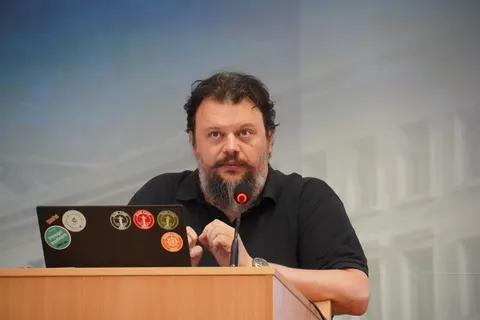
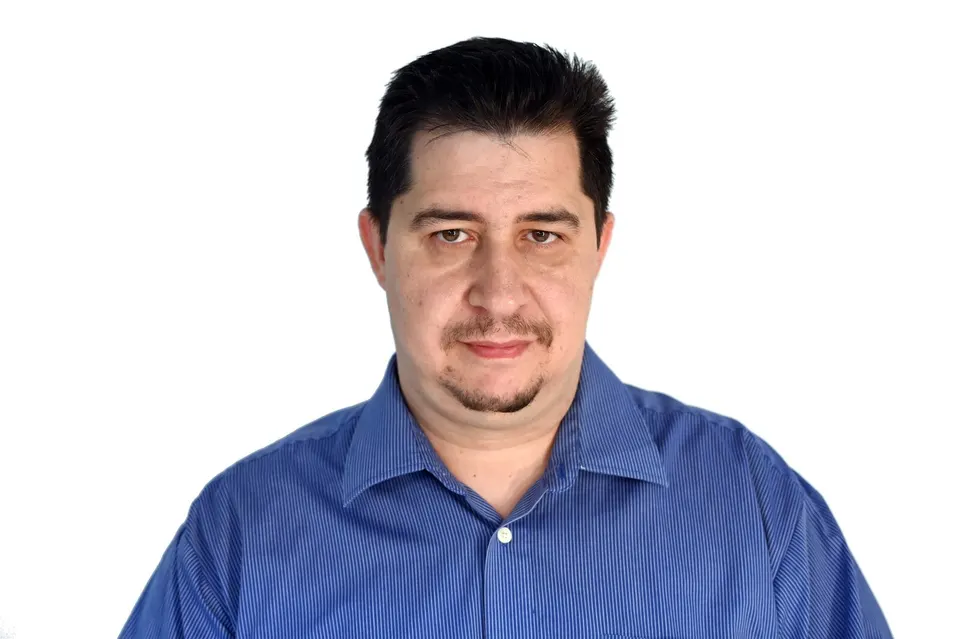
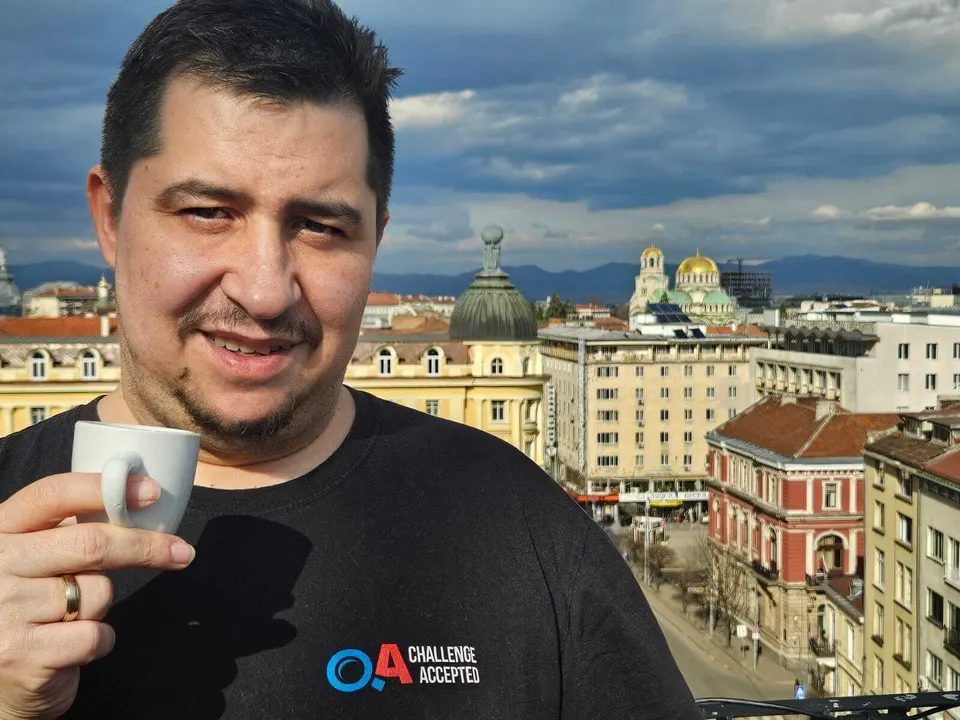
Petar Sabev is not only a software testing specialist with vast experience, but also a man with a broad, unconventional outlook. A traveler across the world and through life. “The Algorithm of Life in 10 and 1/2 Personal Stories” is the title of the talk with which, on August 22, 2024, he will open this year's DEV.BG All in One—the largest IT event in Bulgaria, which brings the community together every year for important conversations.
For the first time, Digital Stories will have a booth of its own! Come along—let's meet and talk. (If you don't have a ticket yet, here you can get one at 30 percent off for connoisseurs, with the code aio24-DI30.)
And now it's time for meaningful stories!
Two IT specialists got together to swap interesting tales. To talk about programs and people, about software and the software in our heads. About what makes us successful programmers and happy people…
– The algorithm of life is quite an ambitious title… what would such an algorithm look like?
– Well, in IT we use dozens of algorithms every day, yet we know very little about the word “algorithm” itself. It comes from the name of the Arab scholar al-Khwarizmi, and it's a term with which we
describe something complex through a sequence of elementary actions,
which whoever carries them out can perform in successive steps, without any further explanation… In that sense, if we accept that life is something truly complex, its algorithm ought to consist of simple steps. For instance, if we just repeat the actions “inhale-exhale” ad infinitum, that's already a simple algorithm of life. But, as the sages say, life isn't measured by the number of breaths we take, but by the moments that take our breath away, by the decisions that are remembered and stay on long after we're gone… So—it's the search for that kind of algorithm I'll try to talk about.
– Is it worth trying to look for it?
– Absolutely. It's always worth searching and reaching for our dreams. The question is whether we can follow a few simple truths of life, with a certain logic, that lead to concrete results. In life 2+2 doesn't always equal 4; there are plenty of unpredictable factors and accidents that can't be controlled. But I believe that with the right approach and strategy we can navigate life more successfully and reach our goals.
Success doesn't come overnight, but effort and persistence always pay off.
That's what I'll talk about, through the prism of my own experience.
– Art, philosophy, religion or Elon Musk—who can help us formulate the algorithms of life?
– There are different algorithms. For example, to get from point A to point B you might look for the shortest route, but it isn't necessarily the fastest, and the fastest isn't necessarily the cheapest. Some people need the most precise answer and are willing to invest a lot of time and resources to get it. Others prefer to walk a bit further—their path isn't optimal—but to get a reasonably satisfying answer right away, using minimal resources.
Different people, different algorithms, different goals and different efficiency.
That's why one person may draw inspiration from philosophy and art, for another the meaning of everything lies in religion, and a third idolizes Elon Musk. Think how many die-hard Tesla fans there are—on Twitter alone, sorry, X, there are about 200 million! At the same time, according to a recent New York Times survey, a large share of people don't buy a Tesla precisely because of what Musk did to Twitter, his odd statements and his support for conspiracy theories…
– While we're on the subject of authorities… do you have idols in your life, people you'd like to resemble?
– I draw inspiration from everyone around me—from my children, my wife, people close to me, friends, relatives, colleagues… and perhaps a few famous people at the bottom of the list.
I'm very careful about idolizing famous people—we usually know very little about them,
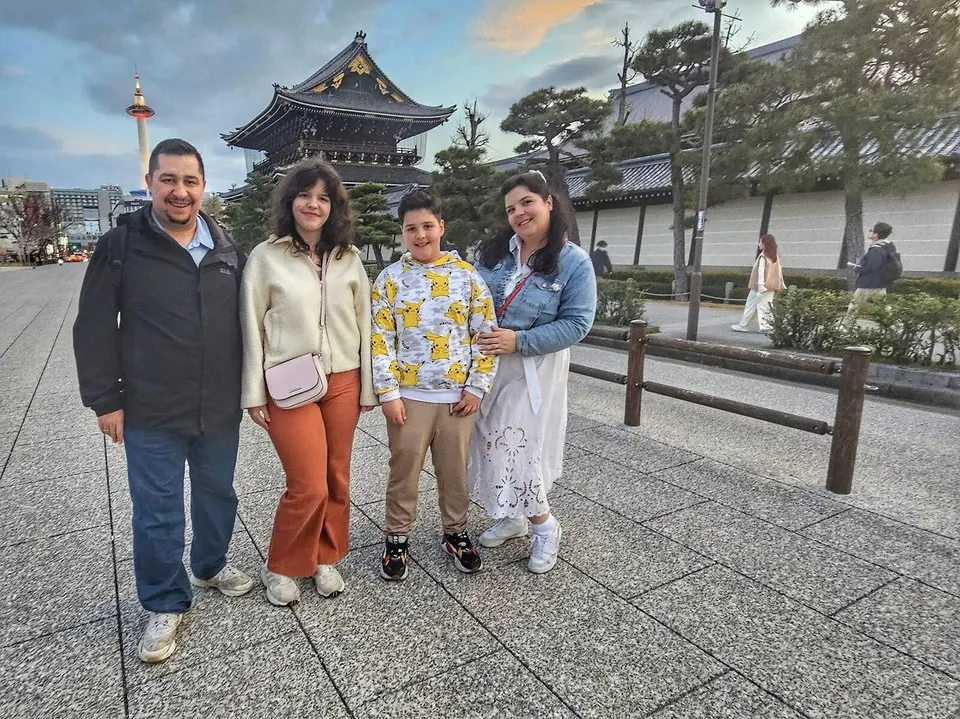
especially in the age of the huge PR teams those people hire. We all know John Lennon was a brilliant musician, but how many of us have heard that he regularly beat his first wife, Cynthia? Virginia Woolf may have been a brilliant writer, but she behaved appallingly toward working-class people. Even Mother Teresa, canonized as a saint, has in fact been accused of misusing millions and of treating the people lying in her hospitals terribly—people who, in her words, had to suffer as Christ had suffered. And it's somehow strange to fight AIDS and reject condoms at the same time, don't you think? Meanwhile, I was in Japan recently and was deeply struck by how happy a doorman at a shop entrance was simply to direct people, greet them and make them feel a little better…
– Maybe online communication has made it even harder to create authorities, because we can so quickly find a spoonful of tar to drop into anyone's barrel of honey… Do writing computer code and telling stories have anything in common?
– Yes, they share a few things. I have great respect for people who manage to say something important or interesting as concisely as possible. There are authors who, like Marcel Proust, Virginia Woolf or Gabriel García Márquez, “stretch the lokum”—as the Bulgarian idiom for rambling on has it—and can go on for hours without saying anything of substance. I prefer short, meaty, dynamic texts—George Orwell, Ernest Hemingway or Dan Brown, for instance. It's the same in programming: some people write clean, short, tight code, and others use strange, obscure data structures and lots of repetition. Fortunately, over time technology is helping make the latter fewer and fewer.
– And here we come back to the impossibility of universal algorithms; to my mind, some stories simply need slower, more leisurely telling… I have a site where I tell digital stories; you have vast experience in the world of technology and a knack for storytelling. Is there a story that shaped you as a person more than any other?
– Almost everything that happens to us shapes us as people, and in my talk I'll mention exactly ten and a half such stories… I want to save the most “formative” ones for then, but I'll drop a hint: when you sincerely dream of something and suddenly something else makes you say to yourself, “Hang on, is this what I actually want?”—that's precisely when a large part of your worldview changes. I got that “slap” from life before I even came of age, and I had enough time to realize exactly what I wanted…
– The world is small, and the IT world in Bulgaria is even smaller—you probably don't remember that I once sat an interview with you, and actually did fine.
– You see? And most people say my interviews are really tough.
– Sometimes you get lucky. And I hope I'm not giving too much away by saying I somehow managed to pull off a topological sort of a graph… Life is strange; look, today I'm the one asking the questions. Do you have an interesting story born during a job interview? In return, I'll tell you mine.
– The truth is, I've conducted more than 500 interviews and I've seen just about everything—a man who sat down between the two interviewers and said, “Wooow, what a nice little office we've set up here, eh?”;
a man who came to the interview with his mother, and she nudged him toward the room: “Go on, sweetie, good luck!”;
a man who came in person to ask what was wrong with his CV, because he'd sent it to more than 200 places and nobody had called him back—we sat down, talked, sorted the problem out, and he now works in IT…
But the most memorable interview was with a girl named Petya. It was the first interview of her life, for our internship program… She did moderately well, she was very nervous and fully aware of all that. At the end we asked her, “Why should we choose you?” Her answer was the most sincere I've heard: “I'm very nervous, but I really am better than I showed today. Give me a chance to show what I can do and you won't regret it.” And we gave it to her. We took her into the internship program. Back then I was a young, inexperienced “boss” and often played the big shot. Petya very often came to me and said: I didn't like what you did there, that made me feel bad… And in fact I learned more from her than she did from me… But that often happens if you listen and watch carefully. I'll end by saying that Petya is now a program manager at one of the leading IT companies. Now it's your turn!
– Interviews are among my favorite pastimes too, in more than one sense—here, on the DEV.BG podcast, and at work as well, on both sides of the “barricade.” That's where my recent funny story comes from. My colleagues and I were impressed by the CV of a candidate with a remarkable background; we join the online meeting… and on the other side is a young man who is visibly from Southeast Asia and has nothing to do with Bulgaria, even though he's presenting himself as Bulgarian. And for a full 30 minutes he stubbornly kept looking up the answer to every question online—from JavaScript to what his favorite Bulgarian word was…
What do you think—does the software world give birth to real friendships?
– Definitely. I recently read about yet another World of Warcraft wedding… But even outside gaming, work in the software world often demands collaboration and communication, which leads to strong bonds. Some of my strongest friendships were made through software development—some go back to my school years and the informatics competitions, even though those friends are now on the other side of the ocean; others are colleagues who became our kumove, the wedding sponsors and godparents who are family in all but blood…
The software world gives birth not just to friendships but to children, let me tell you.
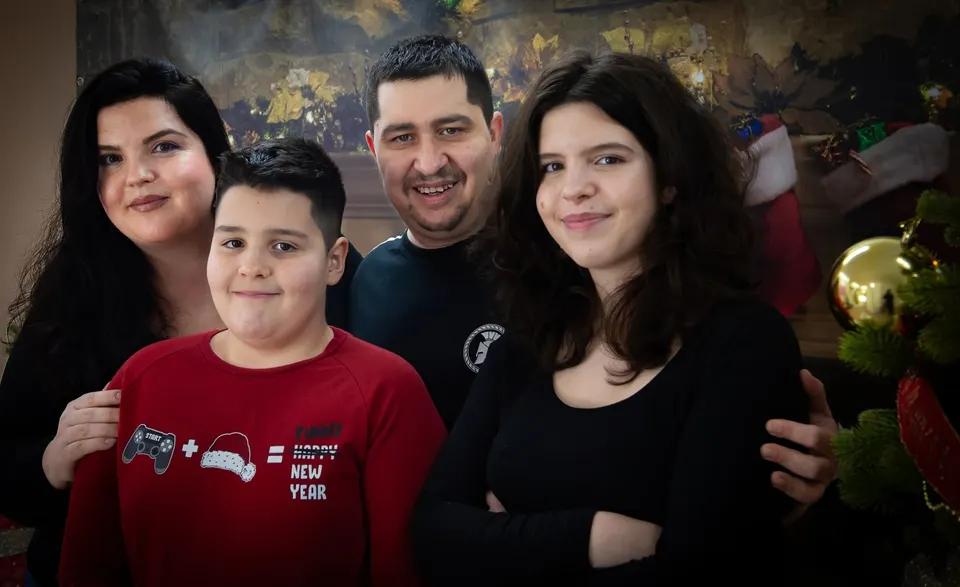
In one of the teams I built from scratch we were so close-knit and had such cool team-buildings that whole families with children came out of it in the end, and the kids still play together to this day. Even my son was conceived during a company team-building in Belogradchik, where we went with our partners…
– Is code written by happy programmers better?
– I sense the tease, but the truth is I only buy eggs from free-range hens! Perhaps I should say I'm not a big fan of paying three times as much for an organic tomato because it grew in a special greenhouse in Germany, while at our grandmothers' places almost everything is still “organic.” But I definitely taste the difference in free-range eggs. And software, like free-range eggs, is of higher quality, more reliable, more creative and more ethically made, because
happy programmers are more motivated, more productive and more attentive to detail.
Not that I haven't seen very good code written by an unhappy programmer… It's just that when you're unhappy and working too much, the chance of mistakes is usually higher.
– When does a person realize they're working too much?
– I catch myself easily now. I really love my job, and when I sense a lack of motivation and interest in it, or catch myself neglecting my personal life and health, I know I've “overworked”… But by the time I noticed that moment, I'd nearly reached burnout. Incidentally, I gave a not-too-bad talk on burnout at OpenFest a few years ago. TL;DR—one of the best ways to cope is variety and keeping a balance: between personal and professional life, between physical and mental load, between the left and right halves of the brain, and so on.
– IT people communicate online in rather strange and sometimes rude ways, as I also discussed with Boris Simandov, the cofounder of the biggest forum. Why do you think that is?
– On the one hand, there are lots of people who don't come from the IT world, where everything is short, clear and concrete… And so you get the lokum-stretching I mentioned. That irritates IT specialists—I even wrote a blog post on how to write a short email, for example. On the other hand, many IT people are used to working in an environment where communication is online, formal and technical. So the nonverbal cues that help us better understand other people's intentions and emotions are often missing. Over the years, many IT specialists become more withdrawn and less keen on dealing with people. Some simply find technical problems more interesting; others prefer to work quietly, comfortably and independently; a third group are used to tasks that demand focus and deep concentration and know that breaking off for social interaction leaves us unfocused. And there's a fourth group, hopeless techies who just don't want to burden “mere mortals” with their complex concepts and terminology. But in the right setting even these people loosen up; they're often wonderful professionals with terrific ideas.
– Sometimes my good programming ideas come to me while I'm writing prose. Have you had moments of unexpected inspiration like that?
– More than once. I remember a programming contest run by Personal Computer World magazine, where I had to cover the whole board with a knight's moves. Standard algorithms like recursion and so-called backtracking weren't optimal. For days I stared blankly at the chessboard, shuffling pieces and scraps of paper, and couldn't come up with a good solution. One evening we were visiting a family we're friends with, and I watched their little daughter carefully coloring in her book—first around the edge, along the outline, then the middle. It struck me at once that this optimization—going around the board from the edges toward the center—could be applied to my problem. I won the contest!
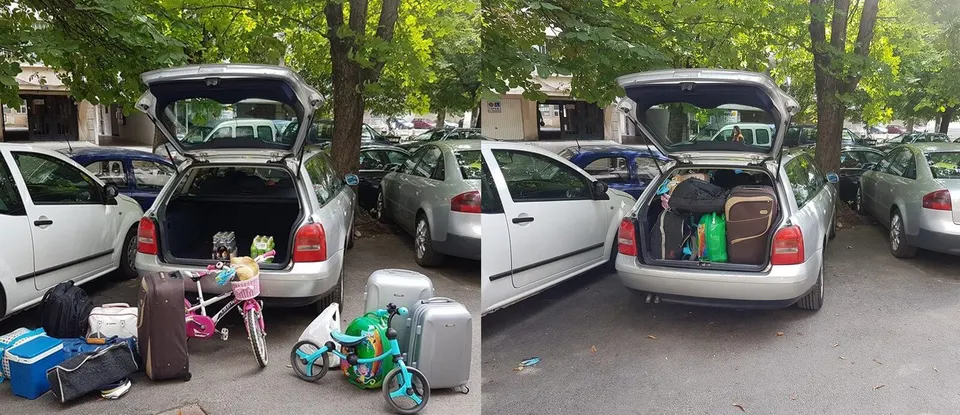
The reverse—algorithmic skills in real life—is something I use often, too. For instance, I'm very good at packing. I can fit four or five big bags of shopping into a medium-sized fridge… Acquaintances often come to me when they're planning trips, because I find interesting and financially optimal routes. For friends who wanted a week-long trip to Brussels, which with a direct flight would have cost them more than 800 leva (about $440) each, I managed to find flights plus trains and buses for under 200 leva in total—and they got Eindhoven, Antwerp, Paris and Beauvais into their itinerary as well!
– We're lucky to work in a field that is shaping the future. I think that often makes us slightly arrogant. Is there something to that?
– Maybe it's because we earn more than the national average, our skills are convertible anywhere and we're in demand. There's a nice little joke on the subject: Tinder is a service where pimply programmers look for pretty girls to meet. On LinkedIn it's the other way round… But the IT sector in Bulgaria has gone through a lot of changes. Many people from other fields decided they wanted to become IT specialists because the work pays well, without having either experience or real interest in the field. A few years later the quality of people in IT dropped in favor of quantity. And as a result of that process, things have begun to change drastically in the last year or two.
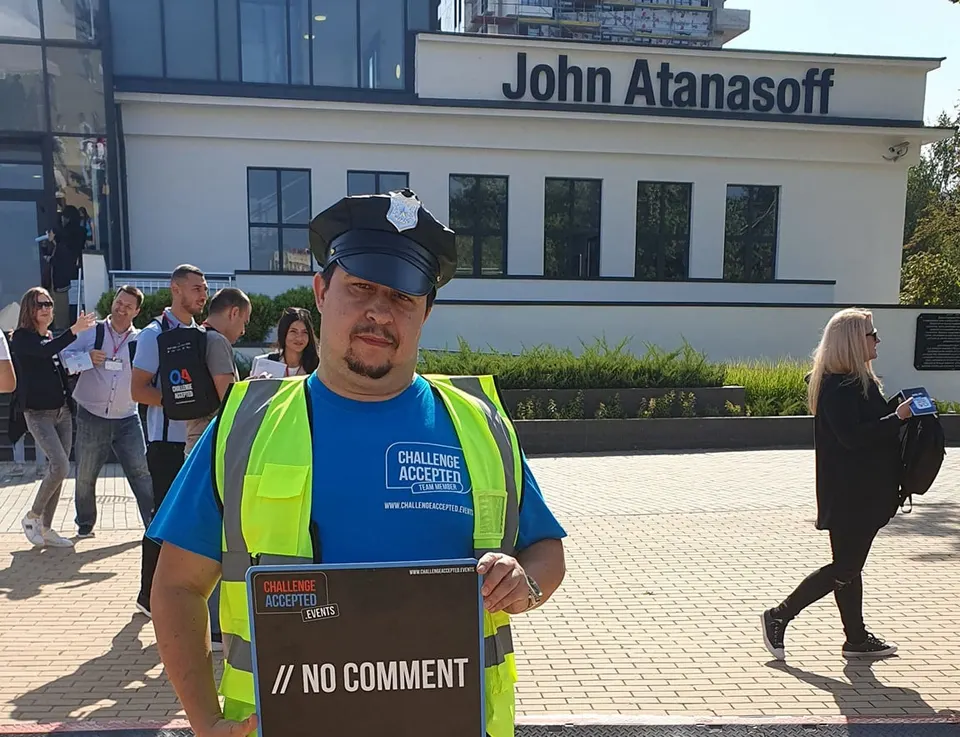
We face competition, mainly from other Eastern European countries, India, Pakistan and the Philippines, and there aren't that many of us. Years ago, at QA: Challenge Accepted, one of the conferences I organize, Emo Slavov talked about how hard it is for China to produce a ballpoint pen, because of the delicate work on the tiny ball at the tip—so the country that exports just about everything imports that tip from Europe. I've remembered Emo's words: we IT people in Bulgaria must be valuable and hard to replace, like the ball in a ballpoint pen!
– What are the most mistaken stereotypes about IT people you've heard?
– Oh, I remember my wife and I were talking once and she told me, “You know,
before I met you, I imagined all programmers in white, ironed shirts, with huge horn-rimmed prescription glasses
and unbrushed teeth!” It's true that for us programmers what you can do and actually do matters far more than how you look. I've been in the industry for over 20 years and have hardly ever seen a programmer in a suit and tie. We go around in T-shirts and jeans, rarely branded ones; we have nobody to show ourselves off to in a different light!
But the fact that we're stressed by deadlines and broken code, and sit motionless in front of monitors for seven or eight hours a day, or more, has unavoidable effects on our health… I'm really glad that more and more often colleagues talk about healthy living and fitness, watch what they eat and drink, look better and better, and have increasingly varied hobbies and side interests.
– And the most well-founded stereotypes?
– Sorry, a joke on the subject just came to mind… A programmer boasts: “I've got two girlfriends—a blonde and a brunette. I tell the brunette I'm with the blonde. I tell the blonde I'm with the brunette. And meanwhile I'm sitting here solving problems…”
Really, one of the most well-founded stereotypes is that IT people love solving problems. Some people see a problem, panic and try to run as far away as possible. With us it's exactly the opposite—
we don't just love solving problems, we love looking for the best, most innovative, optimal solution.
That's at the core of our work, and it's a quality that genuinely defines us.
– I completely agree! And ever since I moved into the industry “in my old age”, I've felt the same change in myself. We often create technologies without any idea how they'll develop—hardly anyone could have predicted how far social networks would go, for instance. Should we stop and think?
– Definitely. It's important to think about the potential consequences of the technologies we create… And I say this having just returned from Portugal with hugely delayed flights, thanks to the CrowdStrike software problem. It's also important to love what we do. I'm very proud of my daughter—she has a gift for languages, chemistry, biology, literature and programming, but in the end she decided on her own to enroll in a secondary school specializing in IT. After all,
when you do something you love, you never work a day in your life, right?
– What that you've created in the software world are you proudest of? And in the analog world?
– Actually, I'm proudest when I see some creation from the software world show up in the analog one and do useful things for society. Over the years I've worked on many interesting projects in different fields—finance, insurance, e-commerce, real estate and much more. A washing machine, for instance, that calculates its own heating, washing and drying cycles and runs at the cheapest electricity tariff, downloaded from the relevant power distribution company in Bulgaria.
Or you order a tracksuit online, the top and bottom, and one arrives from Thessaloniki and the other from Budapest, and you have no idea, picking it up the next day from the shop on Vitosha Boulevard, Sofia's main shopping street… Or, God forbid, you crash your car, and it automatically sends 112, the emergency number, information about the location of the crash, the condition of the car and even how many people are inside!
Right now, at Pliant, which was recently acquired by IBM, we're working on an automation and orchestration platform that other IT specialists use to make their own lives easier and build hundreds of products that make our everyday lives easier…
In the analog world I'm very proud of the conferences I co-organize, and of my efforts to train and inspire the new generation of specialists, especially after the pandemic, when I was teaching unemployed and blind people.
– Today, rushing along in our everyday convenience, we rarely have time to slow down. Is it worth doing?
– Slowing down drives me crazy, but I'll admit it: when I want to stop time, I go for a day to the village where I spent my childhood, Prostorno, in the Razgrad region of northeastern Bulgaria. Every time, I remember the long summer days of carefree idleness, even boredom, riding around on my bike… I know that 20 years from now the village will still be almost the same.
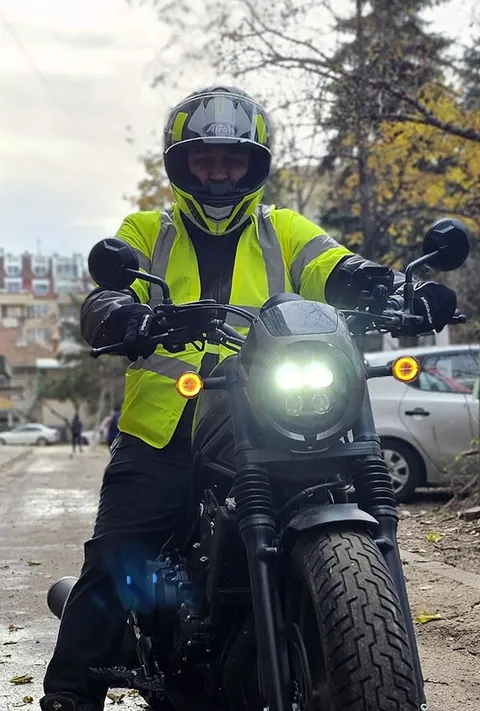
What recharges me, though, is change. Sometimes I just click away at a simple computer game, other times I clear my head on my motorbike or go for coffee with people close to me… even this interview is something different and pleasant for me! But travel literally swaps my battery for a new one.
– What do you dream of?
– Professionally, of a world where technology is used to improve the lives of all people. Personally, of a life that is more than “inhale-exhale”… I have a favorite poem by Petar Dinchev; I'll continue my answer with it, and that will be my way of thanking you for this interview:
I dream of simple joys alone.
By human kindness ringed around.
One love to charm me as its own.
Let goodness be my waking sound.
Let warmth inside my home remain,
let children's laughter leap and play.
And let there lie upon my name
no golden dust, no blackened clay.
To look all people in the eye.
To never bend my neck to wrong.
And may my life be generous
with tender colors and with song.
I do not want a feast unending.
I dream of simple joys alone.
– So do I… Thank you! After everything we've said here, I'll be especially curious to hear your 10 and 1/2 stories, which will open DEV.BG All in One. I'll be there too, at the Digital Stories booth, where technology and real life will once again meet in an unexpected way…