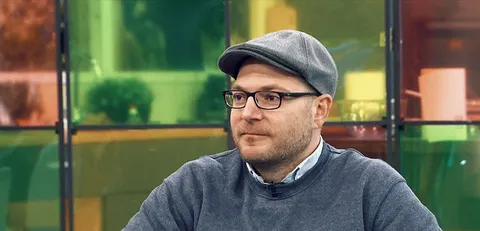
Twenty-two modern incubators and five ambulances, specially equipped to help premature babies. That is how big today's guest is. Thanks to him, premature babies in many regions of the country have a far better chance of surviving and avoiding complications.
He trains volunteers for situations the state could not handle on its own. He runs first aid courses for children and their parents alike.
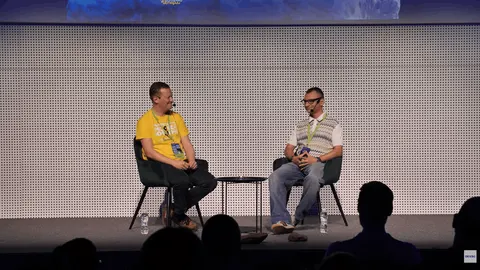
He isn't Santa Claus, but he also has a beard and he is also tired, and that is the mood in which I meet Lazar Radkov. Our conversation is for the DEV.BG podcast, where I have the good fortune to host some of the episodes. And this time, many of the words are worth reading.

Miracles can be the result of the work of any one of us. Anyone can change the world and the environment around them. And when people brought together by the desire to create find a little support and join forces, they can change their surroundings too. Is this the path that will lead us forward as a nation and pull us out of the role of the poorest and unhappiest?
If there is anyone who can convince us, it is Lazar Radkov.
– Today hundreds of thousands of people collect bottle caps because you managed to inspire them to do it, but how did it start? When did you decide that doing something professionally wasn't enough and that you needed something different too?
– It goes quite a long way back. I was into sports, into coaching. I have a sports club, and my colleagues still pay a large part of my bills. We help people with a more sedentary lifestyle improve their health, their fitness, the way they feel and look. We help them fight the things that hurt. Through that work I was invited to give lectures to schoolchildren and students. I have always had some inner need to give, to be useful with what I do, to help people, to make their lives a tiny bit better.
In 2013 things with the club were going well, but I felt I needed to do more, to contribute. I realized that I was living well, I was happy with my life and with the people around me. And when a person “gets on top of their expenses,” as a nice Bulgarian saying goes, when they pay their bills and have a roof over their head, they're warm, they have internet… On Maslow's pyramid they feel fine, their base is covered.
What's left is to try and do something for others too, for the environment, for the world.
So that we leave it a tiny bit better, more meaningful. It's important to take care of your own well-being and that of your loved ones, but if I'm doing well and living in a palace while all around me there's a swamp and a garbage dump, there's no way I can be happy.
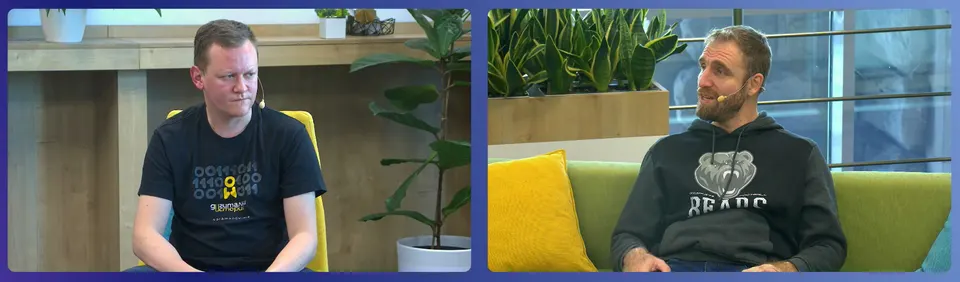
– But why did you turn to campaigns for collecting bottle caps in particular?
– This cause wasn't invented in Bulgaria, and I didn't invent it either. Seven or eight years before us there was a big cause called “Caps in Action”: a boy and a girl collected caps to buy wheelchairs.
A bottle cap is extremely small and simple, it takes up no space. You can easily slip it into your pocket and feel a little better that you're doing something good, however small.
But when many people do it, big things happen. In six years we have already recycled 1.3 million kilograms of plastic!
Probably more than a million Bulgarians take part. More than 95 percent of people don't make any particular effort. Whether you throw the cap into the trash can or put it in the little container makes no difference. You empty the trash can when it's full. The one with the caps you take to the square twice a year, or you leave it in your apartment building and someone takes it. It costs you nothing in time, energy or resources.
But when a person does something tiny, they feel they are doing good. As a friend of mine says, once you've kept the cap, you won't throw the bottle on the street. We feel good, we feel part of something bigger, we feel that we're helping.
More than 85 percent of people who took part in our surveys say that since they started collecting caps, they have also started sorting their waste. Nearly 90 percent notice more litter on the ground, it catches their eye, and every now and then they pick up a piece of trash and throw it away. So one tiny, meaningful thing leads you down a completely different path, more constructive and meaningful: the path of doing good.
– We all have the urge to be useful, but often it's persistence that we lack. What's your recipe for not giving up?
– If I give up, what would I do?
There have been many hard moments. I've talked about some of them; most only I know about. When something burns inside you, there's no way you can give up.
When someone asks me, “I want to start a cause, to help with something, can you point me in the right direction?” I answer, “Why should I point you anywhere, man? Don't you live in Bulgaria? Take a walk, look around, there are thousands of things that need improving, that need support, entire social groups, entire sectors.”
The IT sector is one of the few that work well, because there are almost no regulations.
– Still, how do you start? If I've never done it before, and the idea comes to me to help with something, to be useful, as it did for you, what's the next step?
– I'll tell you about some of the things we do, and then we'll see how you can contribute.
In 2017 we discovered that in many hospitals in smaller towns the incubators were 30 or 40 years old, so we pointed the “Caps for the Future” campaign in that direction. Even the Ministry of Health didn't have that data.
Then my colleagues and I realized that
we are all quite unprepared for any kind of extreme situation,
and during COVID that became obvious after just one week of lockdown.
We have no idea how to give first aid, what to do in earthquakes or disasters, how to avoid violent situations, how to protect ourselves and our loved ones. So I gathered colleagues and we started running trainings like that.
Last year I found out that nobody teaches this to children at school either. At the beginning of the year we launched a first aid training campaign. In the very first term we trained more than 4,000 children, and by New Year I plan for that to reach about 10,000. These are children in Plovdiv, Pazardzhik, Sofia, Stara Zagora and Pleven, and I'm looking for partners in other cities.
A year ago we launched the “Volunteer Clubs for the Future” initiative. We have them in more than 30 towns. The idea is to connect people who are active and constructive and want to meet others like them. They want to do something, but they feel alone.
In quite a few towns it worked out incredibly well: they ran tree-planting campaigns and clean-ups, they went into schools, they organized large-scale clean-ups. Along the way they ignite other people.
The stronger a person's energy, the more it draws others around them.
Another important area: in a big disaster, however well prepared the state is—we saw it in Turkey after the earthquake—there are never enough people, and there have to be trained volunteers for firefighting and emergency rescue, equipped and drilled, who can go out and help on the ground. We already have “Rescue Clubs for the Future” in eight towns. We hold drills and gather equipment.
One more thing we do entirely with our own money is free checkups in villages where there are no doctors. In many villages our volunteers from the clubs for the future, who are medical professionals, travel and do basic tests: we measure blood pressure and blood sugar, do ECGs, all of it in consultation with doctors.
– The list is quite long… I don't know how you find the time for all of it, but there are many paths. When you decide to do good, you can help in many ways: with money, with your time, with training.
– Yes. For example, we raised money and we're going to buy chainsaws. We need people with off-road vehicles, with garages where we can keep these things. We need funds; there are never enough, that's for sure.
Something that has started taking its first steps in our country in recent years is volunteering and civil society. The two are inseparable; one can't exist without the other. Civil society exists when people realize that for anything to change, it has to come from our own efforts. It won't come from the politicians, it won't come from outside, from God.
Yesterday I was in Varna, and a girl was telling me she was trying to gather volunteers. “Very few people, it's hard going.” You don't need many people, this isn't a banquet. You need a few, but motivated ones.
Every change is made not by the majority, but by a small, motivated, well-trained group of people.
With will, with brains, with skills, the people who want to change something somewhere do it. It doesn't matter in what field; you need small, well-coordinated, united groups of people. That's why I try to build units of 10 to 15 people who are like a family, so that when there's an alert, at least half of them go out and respond.
The moment a person enters the world of volunteering, they enter a different dimension. There, people go and do something not because they expect someone to pay them or thank them, not because they expect something in return, but because they know something needs to be done, that it's the right thing. They see that somewhere there's a need, a problem, a shortage, an injustice, and they go and help, giving their time, their energy, sometimes their nerves and their health. Yes, there are fewer such initiatives than in Western Europe, because it's much easier to give yourself to these things when you've made it economically than when you don't know whether you'll manage to pay your bills at the end of the month.
In volunteer circles you can see people giving themselves to something bigger than they are. Even if what they do is a drop in the ocean, they know it has to be done, snowflake by snowflake.
They throw millions, billions of snowflakes, but there is one that finally makes the avalanche.
Things happen through accumulation, through grinding away, through working with other people, and there's no other way, no shortcut.
– In a way, I've chosen my own form of volunteering through telling digital stories. Because I think that's what I do best: start conversations on important topics, make people think. I heard on another podcast that one of your favorite books is Stranger in a Strange Land. So I wondered: don't you often feel like a stranger in a strange land when you talk about these things?
– When a person tries to cultivate a wild wasteland, untilled ground, it's perfectly normal to be lonely at first. Of course, I'm not saying Bulgaria is a wasteland, it's just that we have underdeveloped sectors. In volunteering we only have organizations here and there; you can think of two or three. There are hundreds, but they operate at a local level. It's perfectly normal, when you do things that don't exist or are little known, to feel alone and misunderstood.
I won't lie to you that it doesn't gnaw at me, that it hasn't stung me over the years, but I think in the last year or two I've managed to accept it. Okay, I'm trying to do something that's poorly developed and not popular, but there's meaning in it. When I truly believe something is important and needed, I have an inner motivation; I simply know I have to do it. I won't develop the whole sector, I won't fix the state. But I will do something.
Besides, I love developing new things, building new environments. Back in the day, before I started writing articles on personal training, there were mostly gym trainers who were huge bruisers and gave everyone the same exercises. Competitive bodybuilding suits a very small percentage of people; most people need to feel their bodies, to be able to move well, to perform movements properly. The approach is completely different, both in the training and in the attitude.
I love doing things that aren't popular. The moment they start becoming popular, it gets overcrowded and I turn to something new. I love spending a lot of time alone, spending time in the forest. I live in Knyazhevo, a neighborhood at the foot of Vitosha in Sofia: ten minutes walking uphill or five or six running and I'm in the forest, clearing my head. I avoid thinking of myself as Michael, the man from Stranger in a Strange Land; he was a superman with superpowers. And nobody knows my flaws, my weak and dark sides and my fears better than I do.
– You say volunteering is largely tied to living standards. But isn't it more about national psychology? I've seen many people give their last few leva to a cause.
– That it's tied to living standards is a statistic. But it's also national psychology, a culture that we have to develop and change.
Culture doesn't change by itself, but as a result of the efforts of many people over a long period of time.
Our national psychology was built over centuries and millennia, and it won't change easily. Small changes happen within a decade. It's like a glacier, moving in one direction a few centimeters a year: the culture, the national psychology, the values.
There has to be a vector that keeps pushing, slowly, slowly. People think we'll vote for the right people and they'll come and fix everything… It won't happen. A friend of mine says politicians are the emanation, the quintessence of what we are as a society.
I believe very strongly that civic initiatives can have an enormous influence in changing the way people think. Of course, it happens over a long period; you just have to keep the fire going and hold the direction.
I believe very strongly that in a society there are three main centers of gravity: politics—there's no way around it, man is a political animal—and business, where the goods come from. When the third is missing, these two grow together, and you get monopolies, political umbrellas, corruption. But when the third center appears—civil society—it shifts the point of gravity between the other two and starts to balance them.
– Do you never tell yourself, “It's none of my business”?
– A coach I used to follow, Scott Sonnon, told this story: “When I saw something that wasn't okay, that was broken, that needed improving, as a younger man I would say to myself that somebody should do something. But if I say that, I see myself as ‘nobody.’ I am ‘somebody,’ you are ‘somebody.’ Everyone who sees an injustice is ‘somebody.’ I see this here and now and I can do something—not solve the problem, but do something that makes the situation at least a tiny bit better. Tell people about it, bring people in, and together improve this thing.”
Was anyone aware in 2017 that in dozens of towns the incubators were from the last century? We found out by chance, some volunteers with ideas, enthusiasts, and we started pushing. In 2017, one incubator; in 2018, two; in 2019, 19 incubators. And we replaced them! At the beginning of 2020 we set ourselves the goal that there should be no hospital in Bulgaria whose newest incubator was from the last century. That's now the case.
Then we discovered there were no pediatric ambulances: there were two in Sofia, donated by other causes. In 2019 we announced the campaign; I researched companies, requirements, equipment. In 2020 we donated the first one, and we've reached the fifth. Each of these ambulances serves several provinces, and together they now cover all of Bulgaria.
Now we're going to help several dozen towns in Bulgaria with equipment again. We bought the first off-road ambulance, then the second. We'll buy fire engines so the volunteer units can support the fire service.
I have a small business that pays my bills. I don't drive a Bentley, I don't live in a gated complex in a 300-square-meter apartment; I rent. In 2020 my car was even stolen, and I drive a friend's car; I need to get a new one.
I don't ask much of life for myself; I have the things I want. If I went for a massage a bit more often, I'd feel better. But the problem there isn't financial, it's purely organizational. It's something I've been trying to work on in recent years.
I can't escape my own irresponsibility toward myself.
I believe a person should help where their heart points them. If it's forced, the satisfaction won't be as strong. Let people look for a cause that truly resonates with them.
I learn a lot from the people around me, and I believe everyone can contribute to the people around them, to people in need, if they feel it inside. It has to be right here, in your heart, in your little soul. If you really feel a little flame, a little warmth, and you're wondering whether you can or can't… If you're wondering, do it. If you're wondering, you definitely can!
Watch the full conversation with Lazar Radkov here: