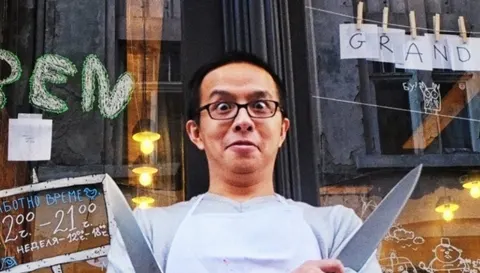
In this life you shouldn't, and can't, only take. If you don't give—in return or entirely for free—you have lived in vain, as the popular hit song goes. Even if we know it, it is worth reminding ourselves often. I hope this Digital Story reaches more people. I believe that if more Bulgarians recognize its lessons, we are all capable of reclaiming the conversation and helping our country flourish. Of fulfilling the great dream of the protagonist and narrator here—that our children will WANT to stay in Bulgaria.
Tenko Nikolov is not only one of Bulgaria's most successful tech entrepreneurs. Starting from scratch, he, SiteGround's founder Ivo Tsenov and their team built a global business—one of the leading technology companies in the world.
He is a visionary who believes in the power of a close-knit team, shared values and “a little healthy madness.” He turns the office into a favorite place for the people who work there, mistakes into lessons, and success into an opportunity to give back to the community. For him, profit stopped being an end in itself long ago; it is a means to do something meaningful—from supporting education and science to investing in “moonshots” that could change the world. Today we have the chance to hear him tell his story of luck, the courage to take risks and the power of setting an example.

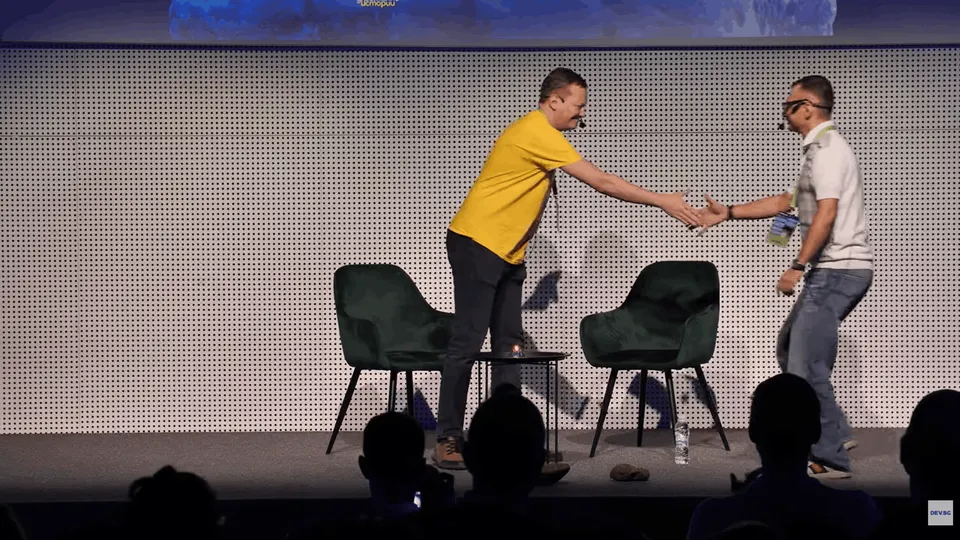
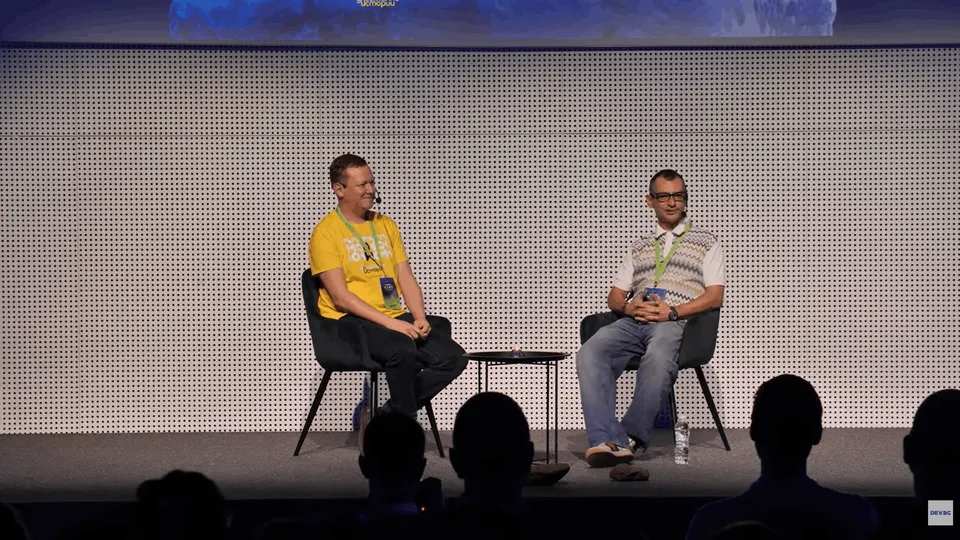
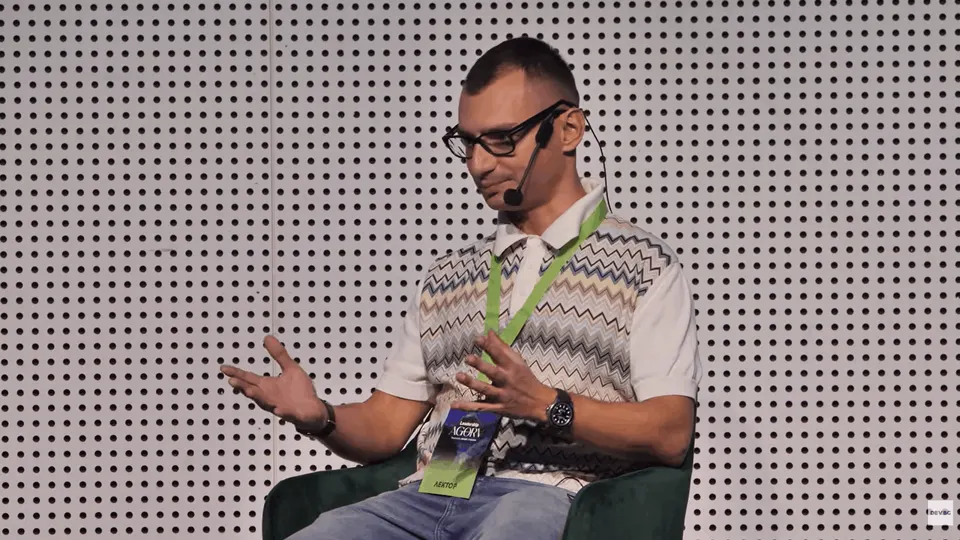
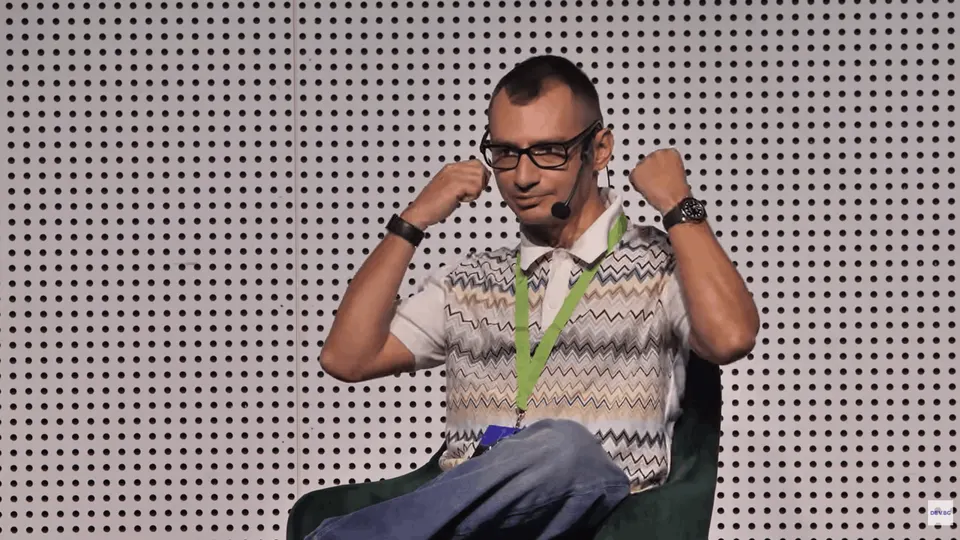
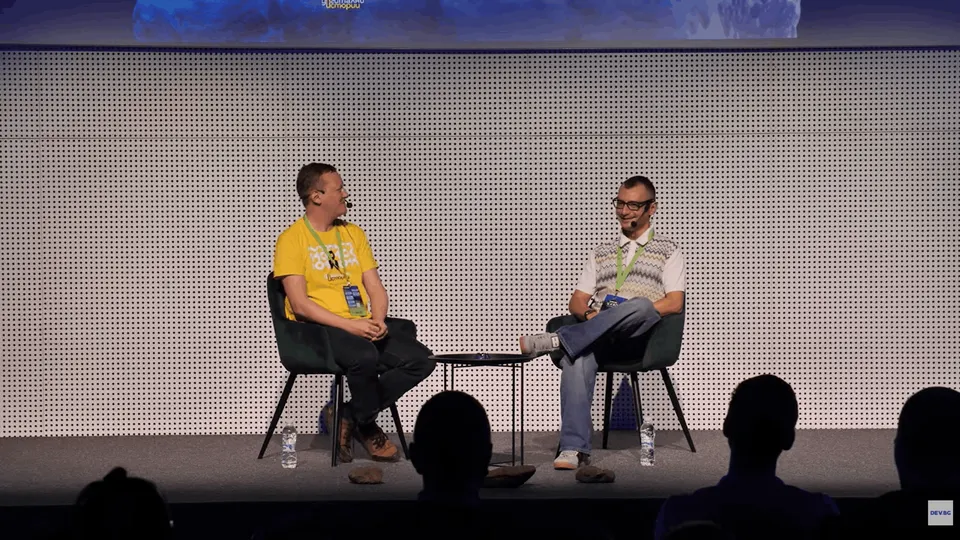
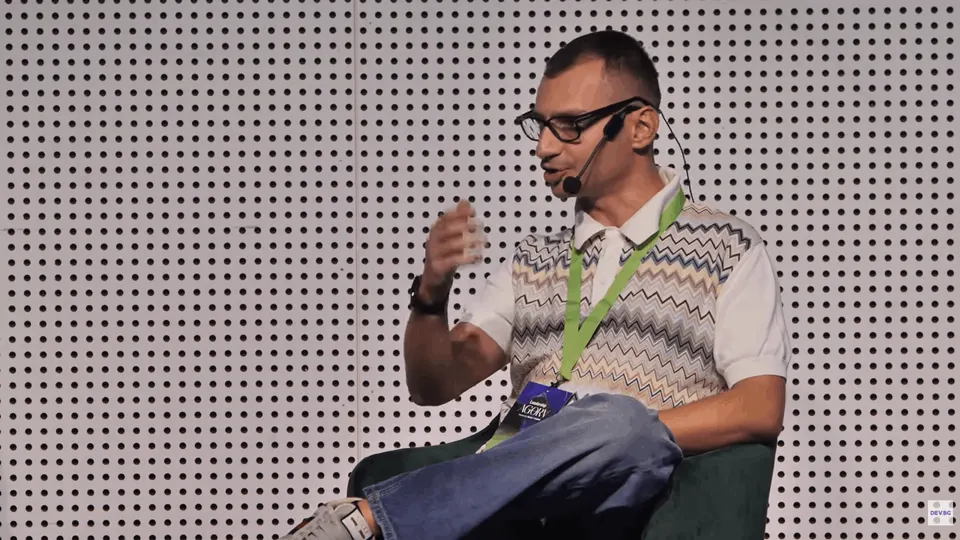
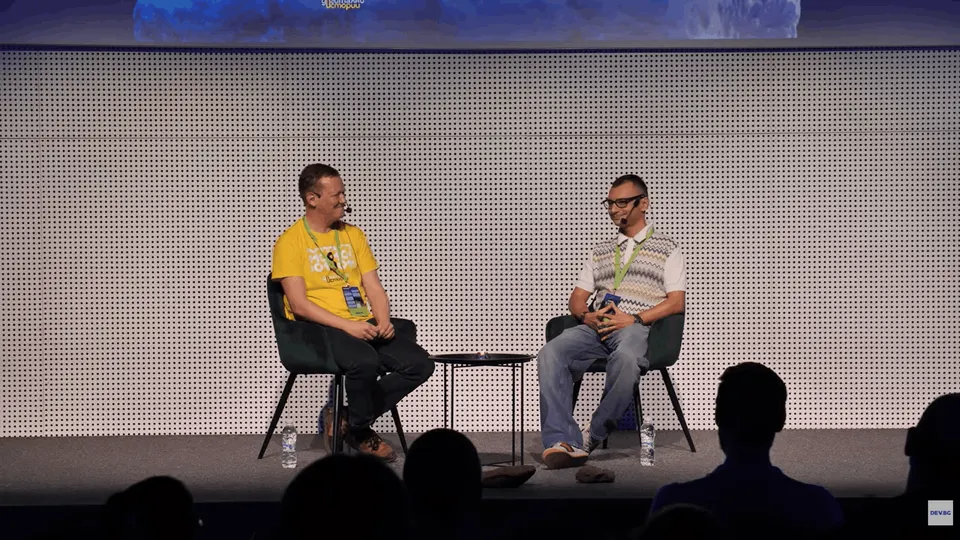
This piece is based on the conversation I had with Tenko Nikolov at the DEV.BG Leadership Agora event in November 2025 at Sofia Tech Park. You can watch and listen to the conversation here.
Never Grow Up
Pippi Longstocking, you may remember, never wanted to. What will you be when you grow up? To me, this question and children's answers to it say a great deal. So does the way they change from generation to generation.
As a child, Tenko has no clear idea of “what he wants to be” until one day his grandfather gives him his first computer—the legendary Pravetz 8M, the Bulgarian-made home computer of the 1980s. It is a momentous meeting. “The moment I saw the computer, I already knew I wanted to be a programmer,” he recalls.
Computers are a rarity in those years, but Tenko is lucky enough to get a second one—a reward from his parents after he is admitted to the Language High School in Stara Zagora in 1991.
From then on, his interest turns more and more toward technology. And although life leads him down a different path and he never does become a programmer, computers shape his destiny.
The Wheel of Fortune
Ask Bill Gates, if you like, about all the stereotypes surrounding great tech success. The moment we start talking about wealth, we quickly arrive at the image of a straight road paved with luck.
But that is exactly why stories remain the last bastion where artificial intelligence lags far behind. Their strength lies in the seasoning, in the things beyond the words themselves.
SiteGround's story begins modestly and unexpectedly—in a student dorm at the American University in Bulgaria in Blagoevgrad, where a group of friends decide to try their luck in the hosting business. Tenko Nikolov isn't even among them, but he joins very soon—when the team numbers just four people, by then working out of a small apartment in Borovo, a neighborhood in the capital, Sofia.
At that point the venture looks close to hopeless. There is no money; the team scrapes by from month to month. “Everyone did everything. I worked around the clock, my partner Ivo did too, everyone around us worked around the clock.”
Tenko's office is in the kitchen, where his colleague Dima makes pancakes in the mornings.
Never Give In—Never, Never, Never, Never
One Friday the team gathers and his partner Ivo Tsenov says, exhausted: “Well, we tried, it isn't working. It's not going to happen…”
The business simply isn't taking off. It's time to close the company. But since it's Friday, they decide to wait until Monday.
Meanwhile… a small miracle happens. The team is still together, “drowning the failure,” when a message arrives: the first sale has been made. After months of hard but fruitless work, things are finally happening, and someone somewhere has paid for their service! Saturday morning brings… a second sale.
And so on Monday the office is euphoric, and the end is postponed. Yes, we know fate has a sense of humor: a little later a message arrives that the money has been charged back—it turns out the first two “purchases” were made by a fraudster with a stolen credit card.
The joy turns out to be premature. “But that's why we still exist today—because of a failed thief and a wink from fate at just the right moment,” Tenko smiles. The third sale soon follows, and the wheel slowly but irreversibly begins to turn, before rolling at an ever more dizzying speed.
The Wheel of Time
Is success a matter of luck? To some extent, yes, Tenko Nikolov believes, but with an important caveat: “Luck is always part of it. But you have to provoke it. It doesn't work with luck alone, and it doesn't work without it.” A lucky break on its own isn't enough if you don't have the right team beside you and you don't take risks. “Without the right people, nothing works. And of course the right moment matters too.”
How does a fledgling business choose the right people? From day one, Tenko says, they looked for colleagues who thought alike, with the same ideals and value system. Today that sounds like a cliché from an HR post, but at the turn of the century, when this story begins, even clichés weren't what they are now.
At the time Bulgaria has many well-trained engineers and system administrators—many of them self-taught talents capable of working wonders. And that, according to Tenko, is a paradox, because back then the education system isn't capable of training them, and the big companies haven't arrived in the country yet. Still, the talent is there, and SiteGround quickly figures out how to attract it. With an idea and a team, not just with promises of a high salary.
“The hosting business has never been the sexiest venture in the world,” Tenko smiles. So the strategy isn't to lure people with grand promises, but with a different approach. “We tried to attract people by doing things differently, by making them interesting,” he explains.
“Never Mind, I'm at Work”
I'll confess: one of the saddest sights for me is people who don't love their work. Time is our most precious resource, and I can't imagine what it's like to give such a large part of it to something you don't like.
Today's protagonist thinks the same way. “It's very common for people to hate their jobs, and when they get together with friends, the venting is aimed either at their other half or at their work,” Tenko says. “We can't do much about the other half, but we decided to try to change the direction at least when it comes to our employees' work.” At SiteGround, the philosophy that work can be a pleasure arises naturally, not out of a textbook. Today many companies talk about “shared values” and “team culture”—but all too often these remain mere good intentions.
The company grows fast. The first apartment-office in Borovo becomes too cramped once the team passes 10 people. They move to another, bigger apartment. And there, every time they have a problem to solve, Tenko and Ivo go outside and launch into a heated debate. They argue for hours about what to do, and many of their unconventional moves are born on the street. One of them is expanding beyond Sofia—a rather exotic decision for an IT company in those years.
After Plovdiv comes Stara Zagora, Tenko's hometown. Meanwhile, the Sofia team keeps growing, and by 2011 it's time for SiteGround's next step. The age of apartments is over; they need an office in the traditional sense of the word. Here comes one of those fateful street arguments between the partners. They tour buildings around Sofia and come across something that both attracts and frightens them—an entire floor of 3,500 square meters in a modern office building. “It's big,” says Ivo. “It really is big,” Tenko agrees. But an idea is nagging at both of them: “I think we should take it.”
A Big Heart
At first the sight is surreal. Twenty-five people occupy a space that could hold hundreds. “Thirty percent of the office was used as working space,” Tenko recalls, “the rest we turned into… fun.” The two partners decide to invest part of the profit in things that will make their people happy. Game rooms, foosball tables, pool tables, even an indoor tennis court.
Tenko tells a funny story from that time. Coca-Cola Hellenic also has its office in the same building—a corporate giant occupying six floors. One day he runs into its director for Bulgaria in the elevator. “He's in a suit from head to toe, with a tie. He greets me and says frankly: ‘You should know I really envy you. You have the most beautiful office, the happiest employees. And on top of that, you come to work in flip-flops!’”
“People don't need all that much to be happy. Someone just has to think about it,” Tenko says, returning to the story. “We realized early on that it was very important for us to spend some of the money on making our people happy.” He doesn't hide his satisfaction that their example has gradually become the norm.
Give and Take
And here we come to what, for me, matters most in this story. Already in SiteGround's first years, Tenko and his partners begin asking themselves: “What can we do that is positive not only for us, but also for the ecosystem in Bulgaria, for the developer community in general?”
They realize they use an enormous amount of open-source software. It quickly occurs to them that they can build on these projects and give them back to the community. To be not just users but also creators of free software.
Ten years later the results are impressive: 160 contributions to the Linux kernel, millions of lines of code used by programmers around the world. “Today a pretty solid percentage of the internet runs our code,” Tenko notes proudly.
Doesn't this defy the logic of competition and the market? Doesn't it hand an advantage to competitors, who can use the code ready-made?
“Strong competition produces a good product for the end customer,” Tenko says. “We've been weakest as a company when we didn't have strong competition. So if your competitors get stronger—thanks to your code or anything else—you'll get stronger too.” And he adds: “You can't only take. If you do, at some point the apples on the tree run out. If you don't plant a new one, there won't be any left, not only for your children but for you yourself.”
A vivid metaphor, wouldn't you say?
Coding It Forward
This effort to “plant” in the soil of the community proves extremely valuable. At first it's hard—it takes discipline and a different way of working, but the effort pays off. And as the results become visible, the team's confidence grows too. They see that a (then) small Bulgarian company can contribute to the global software ecosystem.
Then comes time for the next step. Tenko and his colleagues start asking: “What else useful can we do?” They want to build on the idea of giving. And so the company's first internal initiative is born: before a Christmas party, Dima (the same colleague with the pancakes) suggests that everyone together support a meaningful cause. She has prepared a list of three ideas for the team to choose from—the company will give employees a chance to donate, and it will double the amount raised.
The result exceeds all expectations—they raise an unexpectedly large sum. They announce the three chosen causes, explain why they matter to society and set out the donation box. “We expected people to give 2–3 leva (about $1–1.70),” Tenko recalls, “and everyone was putting in 50, 100. We raised an impressive amount.
That's how we understood that the problem isn't that Bulgarians don't want to give, but that it's hard for them to do so. Dima had put in a huge amount of work, she had researched dozens of proposals and picked 3 of them. She had checked carefully and assessed exactly where a donation was not just needed but would have a lasting effect. Most people would find it hard to do that work on their own if they decided to give 5 or 50 leva to a good cause. Especially the element of sustainability,” Tenko stresses, “not just giving some money, but wanting something to happen in return for it. That's broadly missing here—people either don't trust, or don't know where to donate, or can't be bothered to check. And that leads to apathy and the nihilistic belief that nothing depends on us and that every cause is suspect.”
The Wrong Way Round
And so we arrive at today, when Tenko has even handed the day-to-day management of SiteGround over to his trusted team. Instead, he is active in running the Za Primer (“Set an Example”) Foundation, which has the important and ambitious goal of supporting causes that make Bulgaria a better place to live in a lasting way. Quite an impressive transformation, wouldn't you say? Among the foundation's main areas of work are education, sport and health.
And since we've touched on sustainability, it's no surprise that education gets particular emphasis. You may remember the Digital Stories series on children and technology—one of the few opinions that unite parents is that today's education system is out of step with the times we live in and needs serious change.
So why doesn't anything much change?
Tenko Nikolov has a firsthand answer: despite hundreds of proposals for changing the education system, very few have actually been implemented. And real change remains as far off as ever. The reason, in his view, isn't a lack of will or expertise, but that everything always runs into the same wall—the institutions.
“The bureaucratic machine is so ossified that a handful of people can stop any initiative,” he adds, and gives a telling example. Unhappy with the food his children get at school, he digs into the subject. It turns out that pupils' food is prepared according to the so-called School Meals Recipe Book, which hasn't been updated… since 1968!
Tenko's team notices that the solution isn't complicated: they propose hiring top chefs to update the recipe book. The condition is that the food mustn't get more expensive—a healthier menu has to be achieved within schools' existing budgets. “An apple instead of a sausage roll.”
The first problem is surprising and, once again, has to do with apples—this time not metaphorically at all. It turns out there aren't enough Bulgarian apples in the country to supply all the schools. The bigger problem, though, is once again the will for lasting change at the national level.
An Insight into INSAIT
Here, however, comes a particularly important and telling example that big change is possible, even in education. I mean the most successful and promising venture in this field in Bulgaria, which would not have been possible in its current form if Tenko Nikolov in particular hadn't put his trust in it.
Sometimes solutions come from unexpected places—through remarkable people with vision and courage. Like Prof. Martin Vechev, well known to readers of Digital Stories.
One of the most important components in building a complex structure like INSAIT is attracting the best artificial intelligence scientists in the world here, to Bulgaria. Beyond state funding, this requires additional money for part of these people's salaries, especially the first ones to start at INSAIT, since they set the level for everyone who follows.
Tenko remembers how, halfway through his meeting with Prof. Martin Vechev, he interrupted the professor and said: “Even if you do a third of what you're telling me, it will change our country a great deal. Tell me, how can we help?”
SiteGround's founders were among the first to put their trust in this ambitious undertaking, and to date they are INSAIT's largest donors, with more than €6 million. This money has been key to bringing some of the world's most renowned artificial intelligence scientists to Sofia in person (such as Prof. Luc Van Gool). Although today INSAIT is supported by the entire Bulgarian ecosystem and by companies such as Google, Amazon, Toyota and many others, SiteGround's initial and continuing support has been fundamental to INSAIT's success.
“You have to be a little crazy and believe that even the impossible is possible. Clearly, without a little madness, it just won't work for us,” Tenko sums up.
Setting an Example, for Example
Can this story be repeated in other fields? Tenko believes it can. “There are Bulgarian professors at top universities. People need to have the desire to do something here. Where there's a will, there's a way.”
It's no accident that his foundation is called Set an Example. Good is “contagious”—all it takes is to show that something can be done, and it will give wings to everyone who follows.
What does someone like Tenko Nikolov dream of today? As it turns out, the same thing I do. “I dream that my children will want to stay in Bulgaria. Right now it's a strange period, and a lot has to change for that to happen.”
But I believe that when people like him set themselves dreams and goals like that, it can't help but happen. It's time for a little more optimism, for reclaiming the public conversation, for shared goals.
And besides, it's true—a person is as big as their dreams. Especially if they have the courage to follow them…