Today—May 6, St. George's Day, which Bulgaria marks as the Day of Bravery and of the Bulgarian Army—we are supposedly celebrating heroism, but… what does it mean here and now? What is heroism to you today? Is there courage on social media too? Is it worth honoring people who lived centuries ago? And do we actually do it?
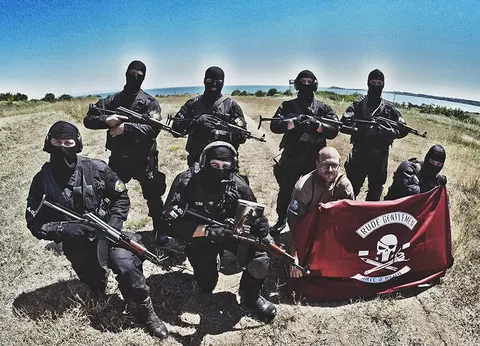
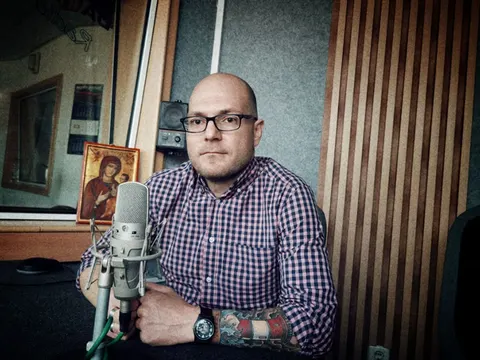
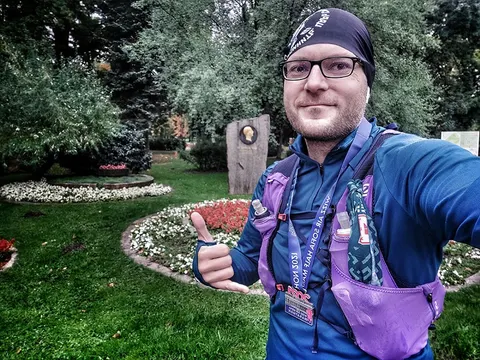
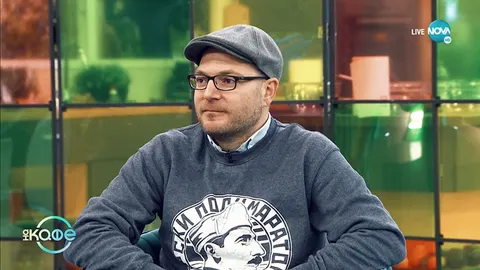
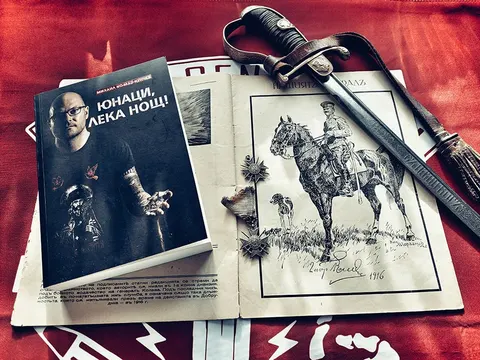
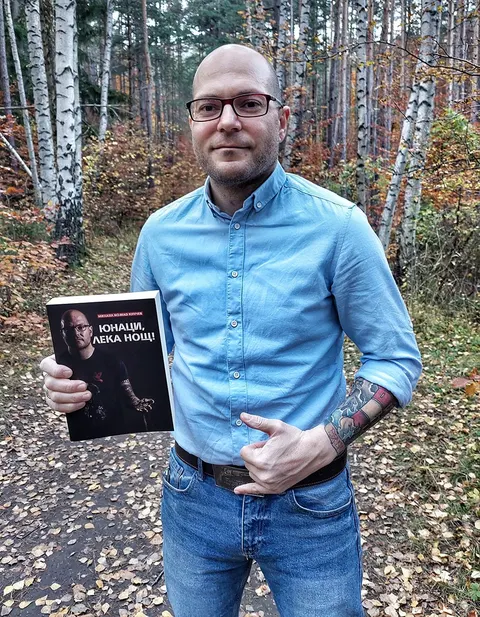
Mihail Kunchev founded Adopt a Hero to care for the graves of great Bulgarians of the past. Together with like-minded people gathered in the Club of Rough Gentlemen, he does it selflessly, out of reverence for heroism. As he searches for the heroes' final resting places, he also collects their stories, and his book Yunatsi, leka nosht (Good Night, Heroes) came out recently. In it, the fates of people to whom we owe the very existence of our country emerge from oblivion.
He is also well known as the creator of the documentary series The No-Mad Chronicles, which offers countless perspectives on courage and sacrifice, telling stories from the battlefield and from the daily lives of fighters around the world, all the way to the present day.
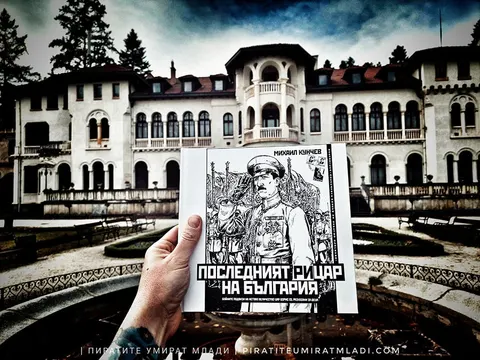
One of his great causes is bringing history to the next generation. He is the author of the first children's book about Tsar Boris III, Bulgaria's monarch from 1918 to 1943, and just days ago another one came out, about Gotse Delchev, the revered revolutionary of the Macedonian liberation struggle, and the poet Peyo Yavorov.
These are the causes of our guest, who by profession is also the chief editor of reality formats such as The Farm, Games of Will, Who Wants to Be a Millionaire? and Hell’s Kitchen.
Let's talk about heroism. About why it is important to preserve the memory of the past and how our future depends on it.
– Does there have to be a war for there to be heroism?
– There is a difference between a soldier and a warrior. I've talked to Navy SEALs, to fighters from the British special forces, to the Peshmerga—the Kurdish forces who carried the fight against the Islamic State. To all kinds of people who fight in hot spots, and they all agree that being a warrior is not the same as being a soldier. Yes, sometimes the two come as a package, but it is by no means a given. To fight, to put your fists where your heart is, you don't necessarily need a weapon.
A warrior doesn't always hold a rifle. Sometimes, for instance, he holds a loaf of bread. Or a pen and a brush.
Look how many Bulgarian families took in refugees from Ukraine, even though we are not a country with a high standard of living. Anyone can be a warrior by fighting just, everyday battles. There are people who fight for a crust of bread every day, and they can be far more warriors than some professional soldiers who fight only for money and dubious causes, or who have spent 30 years in a barracks without ever needing to do what they were trained for.
– Alas, despite that, it seems we have to accept that “the natural state of man is war, not peace,” as Georgi Bardarov says.
– I hope, and I wish it for Bulgarian soldiers, because I have many friends among them, that they never have to do what they were trained for. I wish them, from the bottom of my heart, many boring years in the barracks, and evenings spent with their families rather than at the front, because we can see what a horror war is.
Recently I came across Stefan Zweig's autobiography, and I was shocked. He describes how at the beginning of the 20th century everyone, himself included, thought: “Lord, we are civilized now. War is a barbarism that belongs to the last century. We no longer even need armies.”
And that was before two world wars. Even now we live in a fairy tale, believing we are a civilized society. How could there be a war in the 21st century? Alas, it is something that repeats itself in cycles.
– Can there be heroism on Facebook too?
– Social media is behind some of the best and the worst things in modern society. I was shocked when the coronavirus crisis began and statistics on the number of deaths started being published, and underneath, lots of people reacted with laughing emojis. I agree that everything should be subjected to critical thinking, because there are things in history that the authorities said officially and that turned out not to be true. Yes, you should keep your wits about you no matter who tells you what. But laughter at news of victims…
And now—at the news of Russian soldiers killed, underneath, people who sympathize with Ukraine: laughter—they got what they were asking for. Civilians killed in Ukraine: laughter from the other side—they weren't “real civilians,” they were Nazis, and they had it coming…
People are certainly dying on both sides, and they don't deserve this. All of them, whichever side they fight on, are someone's sons or daughters. Fathers, mothers. I think that
right now Facebook really is a battlefield.
Can there be heroism there? To me, heroism is resisting all the disinformation and vulgarity that floods us there.
– It was on Facebook, in fact, that I read you saying, “Our parents dreamed of having the right to vote, and their children freak out when someone doesn't share their opinion. We have self-totalitarianized.” The word struck me as very precise…
– For many years I've been in touch with people who fight in hot spots in the Middle East. I once came across a very interesting book about the rise of the Islamic State, and it talked about self-radicalization. People who never thought they would hurt a fly, because someone constantly mocked and harassed them for being Muslim, radicalize themselves and become terrorists, to the astonishment of even those closest to them.
The same thing is happening now. One group of people constantly mocks your posts. Explains that there's no coronavirus, that vaccines are poison. Another group is glad that the first one will die without the vaccines. And everyone is entertained by the idea that someone who doesn't share their opinion is going to suffer. Right? Serves him right! I don't take either side, but I can see that there is
very heavy propaganda that involves humiliation and ridicule toward people who don't share “our” opinion.
And that humiliation leads to self-radicalization. Today, if we lightly bump cars in the street, we get out and beat each other to death. Over a dented bumper, when we all have third-party liability insurance. The human in us is dying, because
Facebook shows us that we can be disgusting to anyone, calmly and with impunity, and it even starts to give us pleasure.
– What do you think is the way out of this?
– The bad thing is that I don't have an answer. Many times I've decided to cut myself off from Facebook. And yet just minutes ago, in the Club of Rough Gentlemen, a community I founded three years ago, we got word that a fellow camera operator from Bulgarian National Television (BNT) had been seriously injured and needed blood. Within 30 seconds we found someone to donate.
Cutting yourself off isn't an option, because we lose the ability to help. We live in a godless time, and for me the answer is the balance between faith and remembering history. Of course, there are people who don't believe in God. Recently I was a guest on a popular podcast, and they asked me whether
I really believe there's a man with a beard up there who controls your life.
I can't convince you that there is a God up there. But I can certainly tell you that only 50 years ago there lived St. Luke of Crimea, a renowned surgeon and at the same time a priest, who, despite persecution by the communists and being sent to all sorts of camps, devoted his life to goodness and to helping others. Bishop John of Shanghai, a man who led thousands of Chinese children out of orphanages and took them to America when China became communist. Today there are two whole neighborhoods in San Francisco made up entirely of the descendants of those children. Even if we don't believe, we can surely draw lessons from the saints about how to be better people.
That's why I named my campaign for children's books “The Past for the Future.” Because I believe that if we remember the worthy examples of the past, we will be able to build a better future for our children and grandchildren.
– What won you over to history yourself? I read somewhere that it wasn't “love at first sight”…
– That's right. When people meet me, they think these subjects have fascinated me since I was little. But until I was 18, I had no interest in history whatsoever. I grew up with just my mother, and, as I realized later, at some point in my life I must have been looking for a worthy male role model. I found him and recognized him in my first favorite historical figure, who, surprisingly, wasn't Botev or Levski—the poet-revolutionary Hristo Botev and Vasil Levski, the apostle of Bulgarian independence—but General Stefan Toshev.
I was amazed that what I was reading in his memoirs was so terribly different from what I was being taught in history class. That in fact I hadn't studied history at all, but some mix of math and geography, of dates and places. By then I already knew that a few years later I'd have to take a history exam to get into university, and every time I thought about it, the very idea of having to learn 5,000 dates and 5,000 places made me sick. But when I first read General Toshev's memoirs, it turned out that
history has a completely different face, and that face is the personal view, thoughts and passions of the people who made it.
So at 18 I started buying whatever I could find, wherever I could find it, in secondhand bookshops. Those were the years. I bought books published in different periods, and by trial and error I had to find the truth somewhere in the middle. Now it's much easier: there's the State Archives Agency, and you can easily check anything you have doubts about.
– Perhaps it's because you found history that way yourself that you put so much effort into presenting it to children today. In the words of those who took part, not as math-and-geography…
– Absolutely. I'm often invited to visit schools, and I always approach it with some reserve, because it's an enormous responsibility. Children are very impressionable, and it's very important to know what you'll tell them and in what tone. You can win them over or, quite the opposite, lose them for the cause forever, simply because you were uninteresting or even tiresome.
Some people wag their finger: “You must remember your grandfathers, otherwise you're nothing, you have no history, you're a tree without roots.” I've seen many people give up on history because of that kind of attitude alone. It's true, we really do owe an enormous debt to those who came before us, and it can never be repaid, whatever we do. But that's not the way to remind society of it. So I'm very careful with the kids, but I'm often shocked, because it turns out that even straight-A students don't know very important moments in our history. They've simply been erased from the textbooks for some reason I can't explain.
– Tell us a story that grabs their attention.
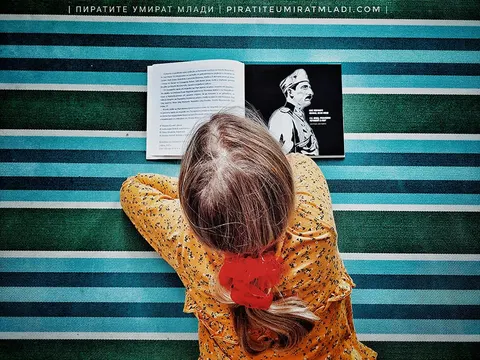
– My daughter is 9, and she has become keenly interested in what I see as a cause. That's exactly why I decided to create a series of books about historical figures who have never been written about for children. The first was about Tsar Boris III. I visited several schools and saw that most of the students didn't even know this man existed. It's sad, because he is one of our heroes who, through his personal example, can teach our children many lessons about life. Not about history—about life.
During the First World War, the crown prince was a liaison and special-assignments officer to the commander-in-chief of the Bulgarian army, General Zhekov, and was very often on the front lines. Once, as part of some military information exchange, officers from a Scandinavian country came to visit. At one point shells began to rain down, and the trenches had been dug to fit the soldiers, but not the twenty or so newcomers. Some stayed outside the trench so that the distinguished guests would have shelter. And Tsar Boris said: “I will stay outside with my soldiers.”
We shouldn't fool ourselves that this was a foolish man who didn't understand what would happen if a shell hit him. But he always lived with the idea that if he didn't set a personal example, word would spread very quickly and it would hurt the army's morale. The Scandinavians were puzzled: “Your Majesty, we see that you wish to show your courage, but isn't it foolish to stay out there?” And Tsar Boris joked: “Like you northern peoples, I too love fresh air.”
– Do children understand stories like that?
– It's a very important example, and my child decoded it immediately, which surprised me—I thought I'd have to explain it to her. She said: “I think bosses should live the same way their workers live.” Yes, that's exactly it: lead by example.
Of course, according to the textbooks on military tactics, this is one of the worst moves an officer can make, but at the same time, for decades, this kind of behavior was probably the most important factor in our self-awareness and our victories at the front. Our commanders always led from the very front.
General Toshev describes how in the Serbo-Bulgarian War he was wounded in both knees and nearly died because he was leading from the front. General Vazov writes about the First World War: “The bullets started whistling, I was about to hit the ground, but then I saw my soldiers looking at me and I felt ashamed.” Even in 2003, when the horror in Karbala happened, Lieutenant Saraev, leading his soldiers toward the tanker truck that turned out to be a bomb, was at the very front. He went to check it first, but it was detonated remotely and he died.
But this is part of the legend and of the Bulgarian spirit. Lead by example. Sadly, we've forgotten it.
I try to lead my family by example, and I believe that if we return to this and many other forgotten values of our grandfathers, we will live in a different kind of society.
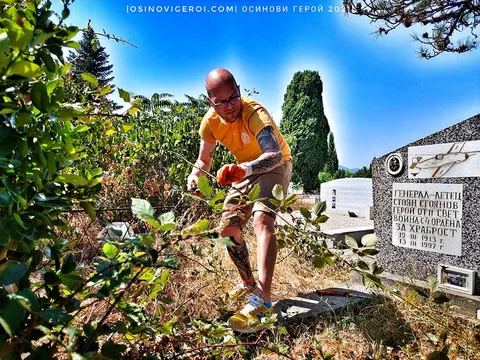
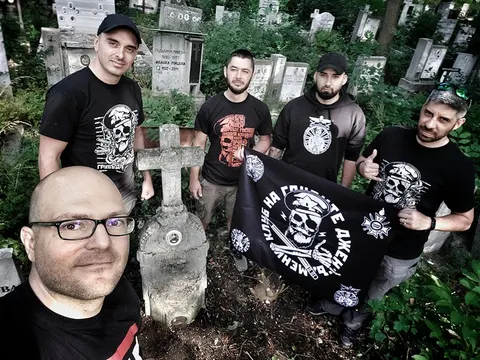
– I was very impressed by your project Adopt a Hero. You clean the memorials of significant people—from generals to poets. I've walked through the Sofia cemeteries and, every few meters, seen the graves of people who are in our history, literature and art textbooks, completely neglected. Why are we like this?
– Adopt a Hero is now in its fifth year. At first I was inclined, in a not very Christian way, to get angry both at the relatives and at the nation as a whole.
The first grave I found—back then the initiative was still a personal one—was General Toshev's. It has an obelisk more than two meters tall, and only a couple of fingers' width of it stuck out of the bushes. I knew where the grave was, and I walked past it three times because it couldn't be seen. If people go to our site, they'll see what it looked like. Back then I was very harsh in front of my friends: “Those descendants of his, how can they, man, they're republishing his books! When it comes to making money—great, but cleaning their grandfather's grave…”
Later I happened to meet General Toshev's grandson. He turned out to be an 80-year-old man who lives in Switzerland and has no other direct relatives. I realized I was completely wrong.
Very often the direct relatives fled abroad back in 1944, and in the families of more distant ones this kinship simply wasn't talked about. Naturally, there are also people whose grandfathers I know we're looking after, and when there's an anniversary on TV, this person is the first one interviewed, waving his hat and explaining how we must remember his grandfather, but he hasn't set foot at the grave in ten years. That's normal—it takes all kinds.
– What do you think is the most important meaning of the project? That it brings back the stories of these people?
– Yes. And that it reminds us that each of us is the descendant of a hero. I think that lately people's desire to search for their past has come back somewhat. Every day I get two or three calls for help, so about 1,000 a year: “Please tell me, I was very inspired by something you said, I know my great-grandfather fought in such-and-such a war, how can I find out who he was?” And I explain the steps—the town hall, the archives…
Many people have started searching for their grandfathers, getting excited about it.
I'm even happier about that part, about helping them in their search, than about the purely cosmetic cleaning of the graves.
But the second part gives me enormous pleasure too. I always go to the cemetery with a smile, and at first my comrades asked me: “Are you crazy? We should be cursing these people for abandoning it!” And I reply: “Think about it from another angle. If everything were clean, how could we have done something for General Vazov? For the man who led our grandfathers into battle.” It's incredible to be able to help, even with something so small, the people who gave everything so that you could have your own land and language.
If you know your own history and your own grandfathers, you will inevitably arrive at the great figures too. During the First World War, out of 5 million Bulgarians, 1 million were soldiers. So there's no way that you or I don't have at least one grandfather who served under the command of these great Bulgarians. Once we take an interest in our grandfathers, we'll inevitably reach their commanders. And then their faith and values, which, sadly, we've completely forgotten today.
– That's true. I've edited quite a few historical publications about the wars at the beginning of the last century. Only after I'd finished the work did I realize that my grandfather's grandfather, who had the same name as me—Senior Sergeant Georgi Karamanev—was killed in the Balkan War. History suddenly became much more personal…
– We have to preserve these things, to search and to tell them. At home, for instance, we have a bravery medal from the Russo-Turkish War of Liberation; one of my forefathers was an opalchenets, a volunteer in the Bulgarian militia that fought alongside the Russian army in 1877–78. It occurred to me to ask about him only when there was no one left to answer.
I have the feeling that we, people between 30 and 50, are the last ones with this kind of sentiment and personal attitude toward history. It's our duty to seek out our grandfathers' stories and
pass them on to our children, because they live in a different time, in which they'll need them.
Today everything is becoming globalized. We're starting to talk about wars as something that shouldn't have happened. Yes, they are cruel, but it's not for us to decide whether they had to happen or could have been avoided. Throughout the 20th century we never set foot on foreign land as aggressors, except for a very small part of the Second World War. It was always for some ideal. We must remember that ideal and not deny our history without knowing it well.
– Yes, but in history it's always very hard to find the balance; you can't be impartial.
– For 45 years people were told that Tsar Boris was a fascist, and the sad thing is that afterward some kept repeating it like parrots. Recently, on a TV channel, they asked me whether I wasn't worried about writing about a “controversial” figure. Except he isn't a controversial figure but an uncontroversial one, as long as someone bothers to check instead of repeating blindly. Today we have access to all kinds of documents. While we're talking, with five clicks I can get into the British archives and see what our enemies at the time said about our tsar. Nowhere does it say he was a fascist, a Nazi, or that he betrayed the Jews. Quite the opposite. We're trying to be more Catholic than the Pope.
Let's just cross out our history, because maybe it looks bad in other people's eyes.
Just like that, to be on the safe side. And this when even our enemies speak of our history with dignity, while we drag it through the mud. It's very sad.
It's the same with crossing someone out because of a tiny part of their life. Alexander Protogerov, for example. It's said that he may have been involved in the murder of Todor Aleksandrov, the leader of the Macedonian revolutionary movement, and so we've erased him from history. If he really did take part in that vile murder, it would be terrible, but on the other hand, should we lightly forget that this man shed his blood for his homeland for 20 years and has bravery medals that I could line up from here to the next apartment? We can't pass such harsh and, above all, such extreme judgments simply on the basis of our own ego. History is made by people. And neither it nor they are that simple and one-dimensional.
Take Tsar Ferdinand. Some say: this man brought us three national catastrophes. We're talking about something within three or four years, but what did he do for the 20 years before that? Why, he turned Sofia into the “Little Paris” of Europe. Yes, he is a contradictory figure. Because of his desire to rule a greater power, he overstretched the resources he had. On the other hand, we take pride in the Bulgarian military miracle of the Balkan War, the Second Balkan War and the First World War. Did he have nothing to do with those wars? Why, he was the final authority on every decision made in them. How can we both dislike him and take pride in his deeds? Not everyone was literally an angel like Gotse Delchev, that we could stick a one-dimensional label on them. Strong personalities are many-sided and often contradictory. Which doesn't make them simply “good” or “bad.”
We need to be a little more broad-minded. What my many years of work as a journalist have taught me is that
you have to put yourself in the other person's shoes. Not to justify them, but to understand them.
Once we start understanding the other person, maybe we'll get to the point where, when we bump cars, instead of getting out to fight, you go over and say to the other guy: “Are you okay, man? It's just sheet metal, big deal…”
– Why “adopt” a hero, exactly?
– We feel all these people are our relatives, and I wanted it to be clear that we accept them as such, not just as distant heroes on a pedestal. The trouble is that we don't have a word for recognizing an older person as a member of your family. If there were something like „обащини“ (obashtini, “father-adopt”) or „одядови“ (odyadovi, “grandfather-adopt”) a hero, I'd have used it, but the only word is “adoption.” I thought there'd be outrage—“How can you, a 30-year-old kid, say you're adopting General Vazov?”—but nobody said it, which was very kind.
But all of them really are our relatives. Because we drink water from the rivers where their bones lie whitening, and we eat bread from wheat harvested in the fields soaked with their blood.
– I watched the video of you finding the grave of one of Botev's rebels in a village that no longer exists. It looked downright magical. How did you come across that story?
– In the beginning things were very hard. No one has the right to clean a grave that isn't a direct relative's. For the first two years, Adopt a Hero was an illegal campaign. We didn't talk much about what we were doing, because we were worried they'd stop us. Later we were officially given permission and started posting photos and videos. When people saw them, they started sending stories too.
One of the guys who became a member of the Club of Rough Gentlemen told us he maintains the grass in several villages around Gabrovo. A descendant of an old chorbadzhi family—the wealthy notables of Ottoman-era Bulgaria—told him about an abandoned village and a very old cemetery a few kilometers away, where one of Botev's rebels was buried. He went, saw it, called me right away, and the story turned out to be true. It warmed my heart. We searched a lot, and it turned out he was a man with no descendants, and we're the last people looking after him.
We found not only the grave but part of his story too, and so he lives on.
– What's your favorite story born from the project?
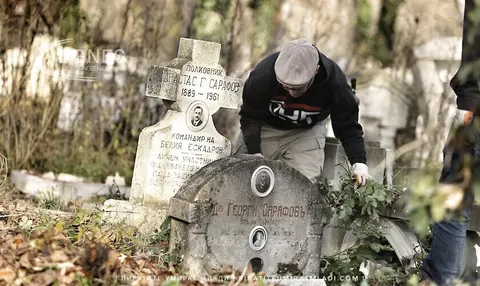
– It's a very sad one, connected with finding the grave of Cavalry Captain Anastas Sarafov. I had never heard his name. Neither had most of my friends who work on history. When we found the grave, I searched Google, the last bastion of popular knowledge. There were exactly zero results.
A huge tree had grown over this man's grave. When we removed it, the letters had kept their original paint from 100 years ago, which I hadn't seen anywhere, because rain washes such inscriptions away within a decade. In other words, for 100 years no one had gone to clean his grave. This is the man who personally captured Shukri Pasha during the taking of Adrianople. The man who literally grabbed him by the collar and took him to General Georgi Vazov to surrender his saber.
If we had remembered him, we wouldn't have had that problem three or four years ago with the Turks claiming the saber had never been captured. We didn't know how to respond, while Cavalry Captain Sarafov, in the magazine Nashata konnitsa (Our Cavalry) in 1918, had described over two pages exactly how they went in, which way they came, how Shukri Pasha surrendered his saber to Vazov…
This is a big problem. Almost the same as the one with North Macedonia. For 30 years, whatever they've thrown at us, we haven't managed to respond and tell the world what our problem is. We understand it ourselves, but the countries around us don't, and we do nothing to help them understand. The difficulties with our neighbors will keep deepening, and as long as we don't respond, they can do whatever they like. And they do, because there are economic interests at stake and enough money and resources for propaganda. In fact, that was the main reason the children's book about Yavorov and Gotse came out now, as the second in the series, rather than the seventh, as I had planned. We have to act urgently.
If we forget our history, we will suffer not only historically and spiritually, but economically too. Our children will live in a worse, more vulgar and poorer world… But my faith and, of course, my mission is to make my small contribution to the efforts of the many Bulgarians who have tried and are trying to prevent that. Our grandfathers made sure we would live in better times than theirs, and we are obliged to leave our children Bulgaria as we received it—strong and proud.