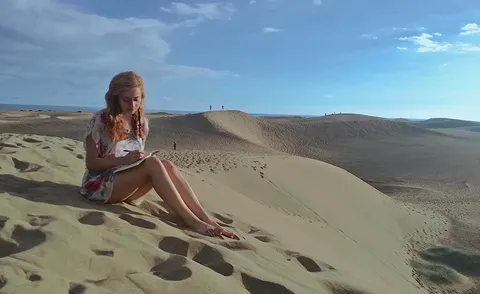
Anna is a traveler, by spirit and by calling. She has harnessed all her efforts to visiting every country on the planet and has already been to more than a third of them. She travels not only for the meaning of it, but also for the stories of entrepreneurs she collects along the way, so that they might help someone else.
Digital nomads. More and more professions today let us work from any point on the planet. So what—how many people actually use this opportunity, which seemed unthinkable just a few years ago? Especially in recent years, instead of taking advantage of the positive sides of globalization (while its negative ones lie in wait for us), we shut ourselves up in our homes.
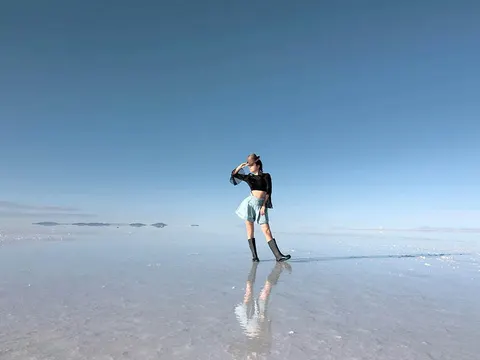
The Call of the Wild
The idea of digital nomadism isn't new, but it has never been as accessible as it is today. The inspiring story of today's guest proves it.
Anna Pelova was only 24 when she decided to enter Bulgarian politics and became co-chair of an ecological party. She co-authored books that take us to the most remote Bulgarian villages, and she has a novel of her own.
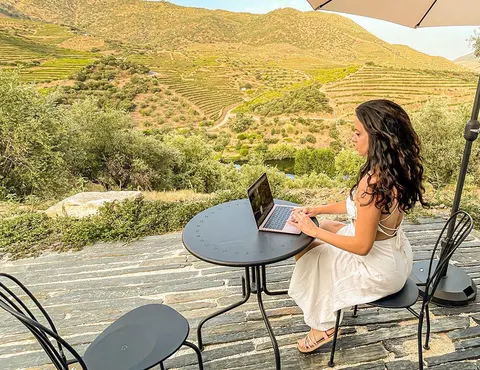
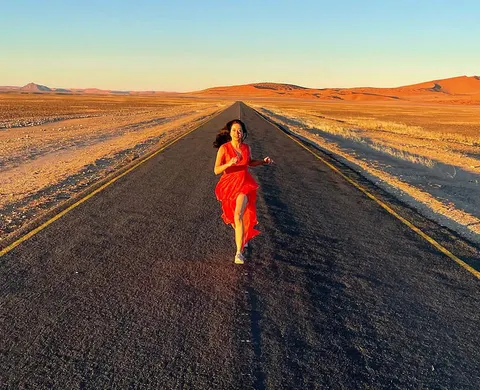
Today, eight years later, she can barely bring herself to spend half of each year in one place, at her “headquarters” in London, while the rest of the time she roams and roams. She travels while working from just about anywhere. She does digital marketing and runs her own agency, which lets her work remotely from all corners of the world. She has already been to 74 of the planet's 197 countries, and her ambition is to cover the remaining 123 within a few years. Listening to the enthusiasm with which she talks about travel, I have no doubt it will happen even sooner than she has planned.
Anna travels the world not only to collect emotions and impressions, but also to gather the stories of various entrepreneurs. Before long she will put them together in a book. So fasten your seatbelts—we're taking off!
Night After Night on Unknown Roads
This story begins before the digital era. Anna is only 12, but to this day she remembers that magical evening when a documentary came on the huge Soviet television set in the living room. It told the story of Sir Richard Branson, who was flying around the world in a balloon at the time. “At that moment I glued myself to the TV and said to myself: ‘That's what I want to do too.’ And the next moment I realized where I was and thought: ‘But I'm not a millionaire, and I never will be.’ Still, I decided I would be a traveler.”
Then her path led through the twists and turns already mentioned. As early as 16, when the internet was only taking its first steps toward what it is today, she was lucky enough to find her first remote job.
Today travel is a rather redefined activity. If you ask me, I wouldn't practice it more than necessary, whereas for Anna it's a vital need, like air and Facebook for any normal living creature.
“When you travel, it's as if you live many different lives, you go to different places, you see different countries. I'm a very curious person, and that curiosity makes me constantly want to understand new cultures, see new places, try different food. The unknown pulls me in strongly.”
A City Like Any Other
Before the idea of visiting every country on the planet was born, another one came along—to gather the stories of successful entrepreneurs from all corners. Of course, there are plenty of such undertakings, but almost all of them are concentrated in the Western world. Anna, by contrast, decided to seek out meaningful meetings with people who had started their ventures in distant cultures, in all directions. The idea was that their advice might somehow prove useful to people who are still mustering the courage for their own big undertaking.
As she began traveling to meet the entrepreneurs, she befriended more and more travelers, and that led her to the club of people who have decided to visit all 197 countries on the planet. Yes, the number doesn't really matter here; this isn't about collecting badges or about a competition. Far more important is the idea of touching as many cultures as possible, and the number of countries is simply the closest formal unit that allows for the element of a concrete goal achieved.
Hundreds of people have already gathered every country on their list. There's no official ranking, because verification is fairly loose, and there's no point anyway—it isn't about records. Still, it's telling that out of the billions of people on the planet, only a three-digit number have set foot in every one of its countries. What's more, fewer than 10 percent of them are women.
A Person Is a Person When on the Road
Anna had just made up her mind to take on both tasks more seriously at the same time when the beginning of 2020 arrived… yes, you remember what happened then. Suddenly the world froze in uncertainty, and travel became impossible.
Yet somehow she managed to travel the most precisely when the rest of us had stopped. She made it to South America, where restrictions were milder at the start of the pandemic, and the same thing later happened in Africa. So over the previous two years she managed to visit as many as 40 countries, 30 of them for the first time.
However pleasant an undertaking travel may be, it hides its risks—rest assured, Anna's relatives often remind her of them. Especially when, as in her case, there's no form of organized tourism involved. For example, there are always countries at war, and it's hardly advisable to find yourself in the thick of the fighting.
By the Roadside
Anna says that most people who collect “a collection of countries” either wait for the right moment or simply find a safe option, entering calm parts of a given country.
She hasn't been to Ukraine yet, but she's in no hurry. “I'd rather wait for this conflict to stop. To go after it's over and join some organization that helps people rebuild their lives.”
Traveling outside organized tourism, and in far-flung corners of the world at that, certainly comes with its risks. “You always have to keep a lot of things in mind—not getting robbed, not losing your documents,” Anna says. “I know travelers who are very organized and carry ten copies of their passport. I'm not one of them, but if you prepare and build up experience, it becomes much easier to move on to riskier places.”
Dear Traveler
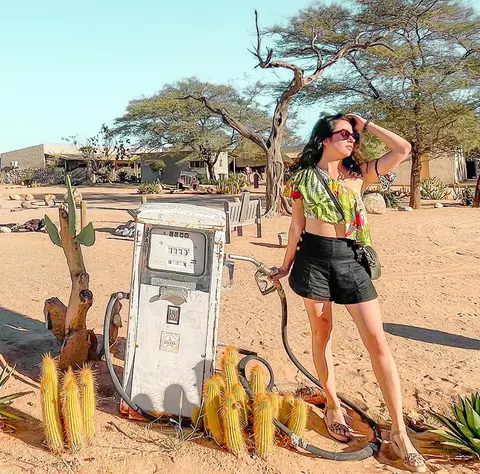
Most often she travels alone. Before leaving for a particular place, she searches specialized online platforms for locals who can help her. She says that everywhere in the world she has met good people ready to assist her and show her their country in the best possible way. Several times her bank card has been blocked, and there has always been someone to lend her money on trust.
In some respects, travel is even made easier by the fact that she's a woman, because people are more inclined to help. And in some countries—Islamic ones, for example—it's easier to blend into the crowd thanks to the traditional clothing.
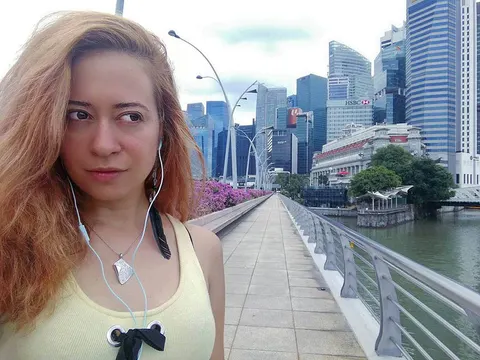
In the countries she has passed through so far, she has never ended up in a particularly dangerous situation. Not long ago she was in Somaliland—a part of Somalia that chose the path of independence. At first she picked a hotel far from the center, with a wall protecting against grenade-launcher fire; then the locals convinced her this was unnecessary, and she moved to an ordinary hotel downtown.
On the Other Side
Of course, for peace of mind it's important to be prepared for the risks and to avoid them. To know what clothing or behavior might provoke trouble, where you can go alone and where you absolutely need suitable companions.
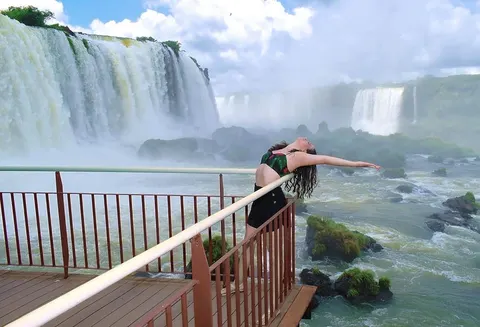
Anna has no rule about how long to stay in a given country; the “collection” is a loose one anyway. While she was in Zambia, the land border with neighboring Zimbabwe was closed, so she crossed rather symbolically over a bridge separating the two countries. She spent an hour or two on the other side admiring the view of Victoria Falls, and so one more African country joined her list.
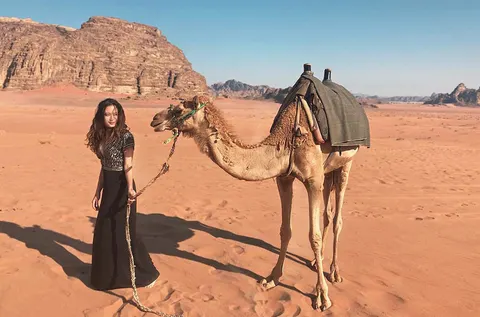
In Brazil, Colombia and Mexico she stayed a month each; others she passed through in a day or two. Of course, whenever possible, Anna prefers to spend at least two or three weeks in each country so she can immerse herself in local life. “If you spend more time, you start to understand a place better, you build a routine. You have favorite little shops, you get to chatting with more people.”
People, Houses, Splendor
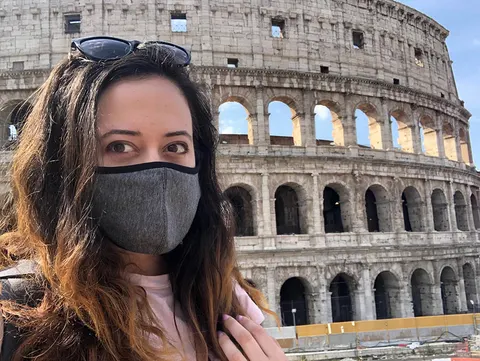
What could traveling through Bulgarian villages a decade ago have in common with traveling around the planet? “It's still travel, it's still a story. Yes, in the first case the culture is the same, but you see something different in the people, something that isn't there in your own city. For me, distance doesn't matter that much. Whether you go to Paraguay or to Zhenski Pazar, Sofia's old open-air market, the important thing is always to look for something new and different. And yet, the farther you go, the more it opens your mind to see the world as a whole.”
People everywhere are alike, the traveler believes. “If you listen to the inhabitants of countries in conflict—Somalia and Somaliland, Kosovo and Serbia, Palestine and Israel—you'll hear more closed thinking. ‘They're bad, they hate us.’ And at the same time, ordinary people want the same things. To start a family, to have a roof over their heads and food on the table. But once you've felt this, it's very hard to pass it on to more people—and that is exactly one of my big goals. To put an end to this ‘us versus them’ and ‘our country is the greatest’ way of thinking. But maybe, to understand it, you have to live through it.”
Anna is determined that by the end of this year the countries on her list will reach a three-digit number. She's 32 now, and her plan is to complete the list before she turns 40.
Alongside this, she continues her other big undertaking—not just traveling, but gathering the stories of entrepreneurs from different cultures. So far she has interviews with people from 18 countries on five continents, and she wants to add two or three more, though she still needs to find a few more stories of women, who so far are a minority on her list.
Every Train Has Its Passengers
Among the better-known guests in her project is Jeff Hoffman, the creator of booking.com. But her goal isn't to chase famous names, because their opinions are heard often and are easy to find. Rather, she wants to present an amalgam of stories from all corners of the world, in search of what is different and what is shared.
In both Pakistan and Somaliland, for example, Anna went precisely after arranging specific meetings. In the African country, the person she spoke with creates technology applications that make payments easier. “The local currency is so devalued that to buy a dress you have to fill a whole duffel bag with money,” she says. “For a coffee we had to hand over huge wads of cash. That's why this mobile payment system, which works everywhere, was a lifesaver. Even if you're buying socks on the street, even if the person giving or receiving the money has a completely primitive mobile phone.”
In Estonia she met one of the first programmers at Skype, who today is among the founders of the robotic delivery startup Starship. The Pakistani entrepreneur runs a meat company and has built a remarkably successful business model of his own. And in Brazil, Anna stumbled upon an intriguing fashion designer by chance. “I passed by her shop and saw a dress I really liked. Suddenly she appeared—the shop assistant had told her there was a foreigner—and we got talking. Sometimes it happens completely by chance… although I don't think it's really chance: you look for it, and it finds you.”
Where to Now?
Do entrepreneurs from different corners of the world share common traits? “Some of them seem to have simply gotten lucky. But still, there's almost always the pattern of having gone through many failures and not giving up. That story of persistence is a must—the idea that failure isn't actually failure, but something that should spur you on. From the outside it often looks as if success came very easily to someone. But if you learn their story, it turns out they went through very serious hardships. And the stories of failure are the most interesting.”
Her dream is to complete the list where her story began—with an interview with Richard Branson. When the billionaire visited Bulgaria, she came very close to succeeding, but at the last moment it didn't work out. Well, I'm sure that this dream's time will come sooner or later, just like that of the list of countries to visit. Today's world gives us many opportunities that we often miss, caught up in routine. And we shouldn't—ask Anna, if you meet her in some faraway corner of the world, still searching for what people have in common…