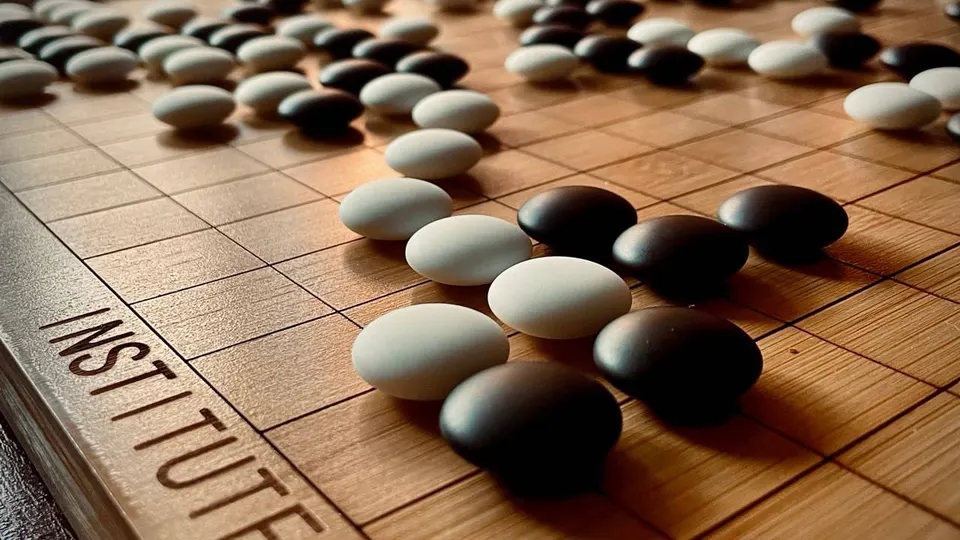
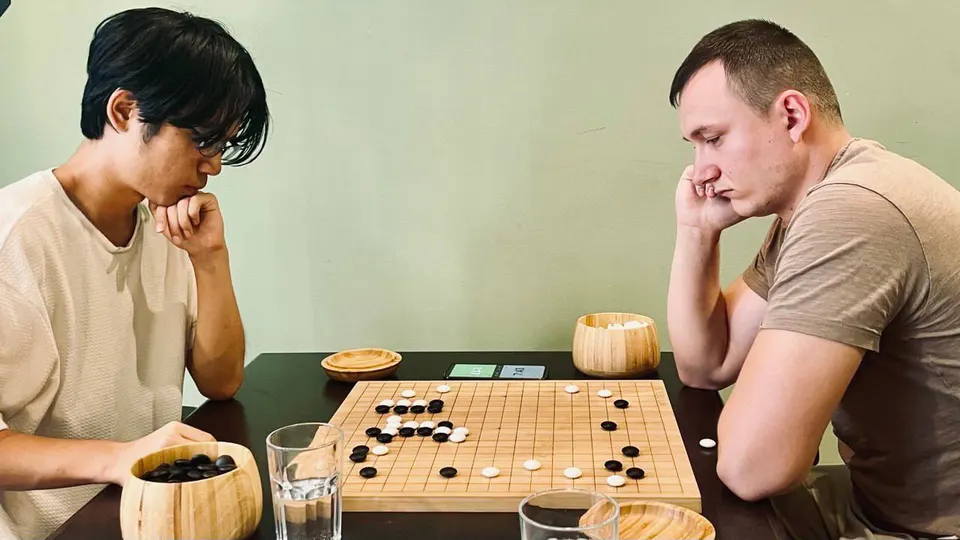
Two people stare stubbornly at rows of neatly arranged, round, flat stones. Just a game, you might say, but it is not that simple—not at all. Because this is not only one of the oldest games we know, but also the most complex. For a long time we considered it humanity’s last bastion, the one place where technology could never overtake us. And when that happened… a remarkable new digital story was born.
It comes to remind us that technology is here both to challenge us and to threaten us. But also to show us new horizons for creating, for making things, for evolving as a species.
Gone
Do you know what outnumbers the atoms in the universe? You might think of the unkept promises of Bulgarian politicians, and Einstein supposedly said that only human stupidity is greater. But there is one more undisputed winner in this race. It has to do with the game we are talking about today, whose name sounds so plain. Mystical and still not popular enough in Bulgaria (that is about to change), go is a whole universe.
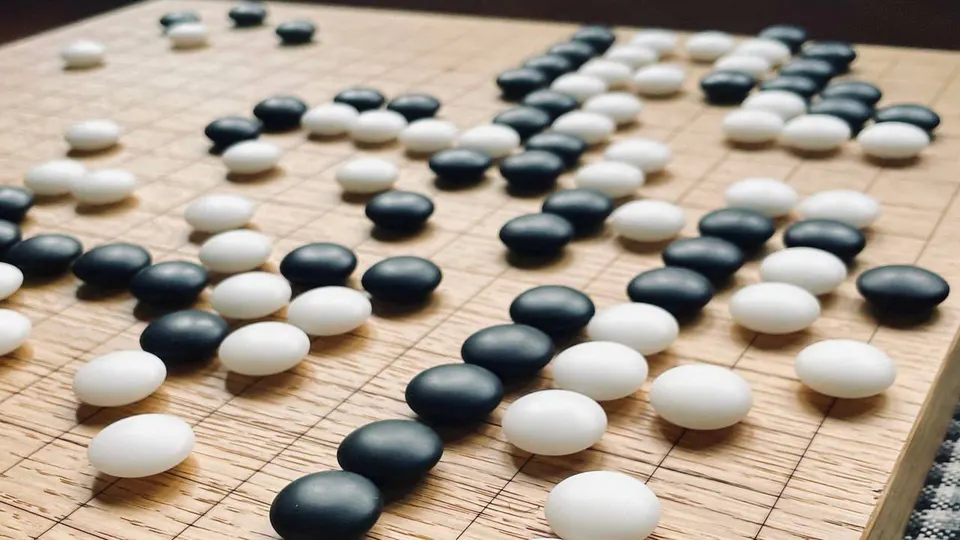
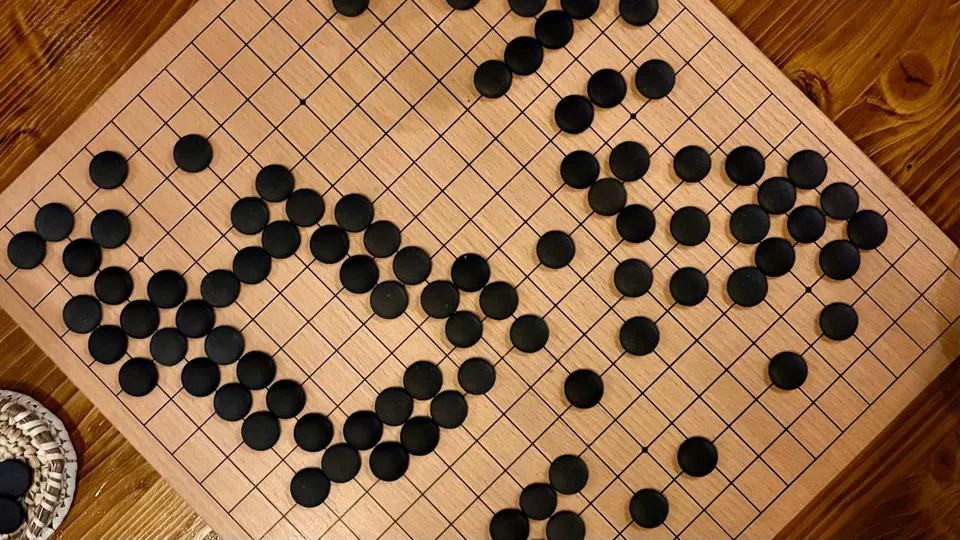
You would hardly guess it from the not-so-large board. Nineteen by nineteen possible positions in the classic version, about 2.5 times more than in chess. Yet all of this makes possible some 2.08×10¹⁷⁰ arrangements!
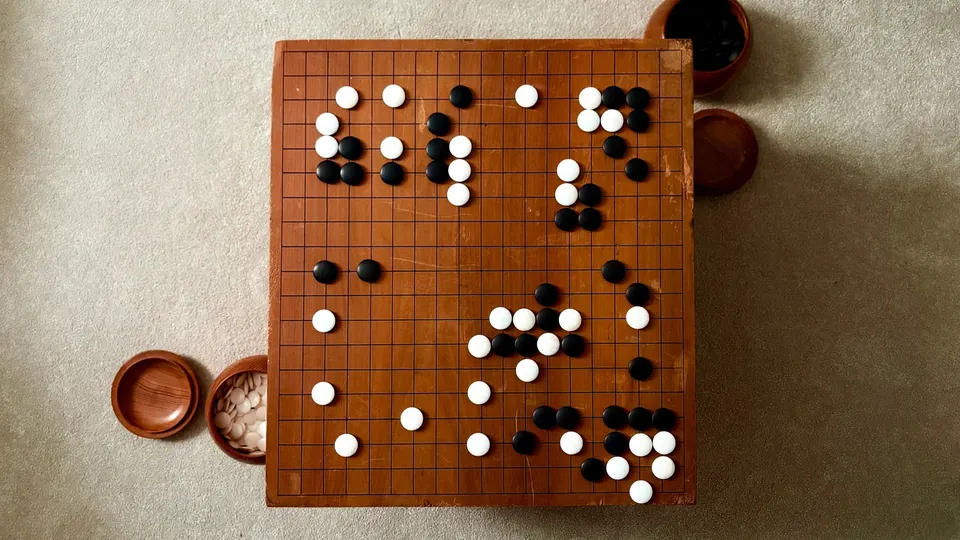
Care to try counting exactly how much that is? It will take a while: we are talking about a number drastically larger than the number of atoms believed to make up the universe—those are on the order of 10⁸⁰.
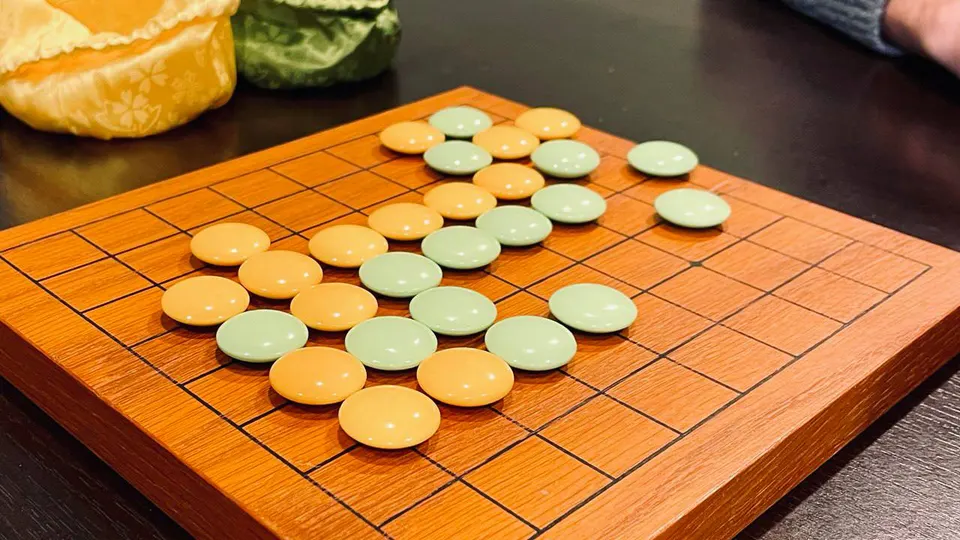
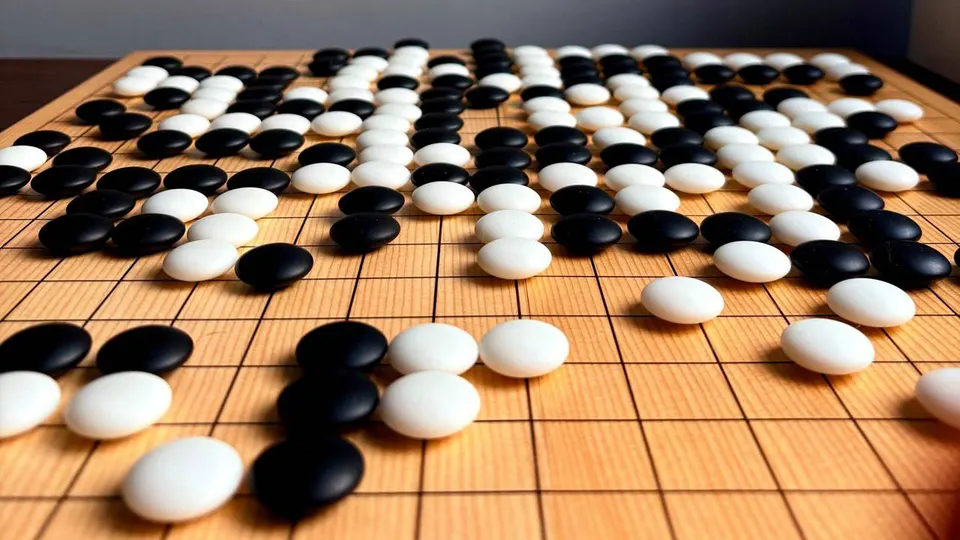
Not everything simple is brilliant, but everything brilliant is simple. So it is with go. You just place your stones—black or white, much like in chess—on the intersections. The goal is nothing more and nothing less than to surround your opponent’s.
Goliath’s Pebble
As simple as a handful of beans, right? Not quite. The stones are far more regular than beans and… a far greater challenge, not only for people but for technology too. If you don’t believe me, ask your favorite AI model to draw a realistic or animated scene from a game of go. It seems so simple, and yet… the lines won’t be symmetrical, the stones will come in different sizes, and it won’t look anything like the real game.
So what about the competition itself? All of us (older folks) remember the momentous day of May 11, 1997, when the computer Deep Blue defeated world chess champion Garry Kasparov, and machines officially proved stronger than us at this ancient and globally popular game. But it would take another full 18 years and 10 months before technology could achieve the same in go.
And… so what? Did we stop playing chess after the best human in the sport lost? Not at all.
Did we stop playing go? Not only did we not, the game has reached new, unprecedented heights and is more popular than ever.
Goal After Goal
Will we stop writing once AI starts writing better than the most widely read authors? Will we stop thinking, creating, making sense of things, if algorithms overtake us?
Games are a fascinating lens through which to make sense of the changes technology brings. I have written about Tetris—the game that came from the long-gone USSR to show us that humans are always capable of reaching the next heights. Of setting new records, finding new angles. New forms, arts, paradigms.
For a long time after the chess showdown, go was pointed to as the game in which computers were doomed. The main reason was precisely its enormous variety—the potential moves and positions on the board are so numerous that they simply cannot be tamed by dry calculation, the way it had been done earlier with chess. So machines had to “change strategy”—not just compute possible outcomes, but grasp the logic, look for patterns, enter into the secrets of the game.
Going Deeper
But how can a game with single-colored stones of equal strength and a board woven into a grid be so complex?
If we look beneath the surface, it is much more. It is strategy, and a logic developed over years and generations of players. Anyone can start quickly, but becoming truly good takes years of dedication and serious practice. Just as in chess, the odds that someone who has barely learned the rules will beat the world champion are slim.
Besides the greater number of possible combinations, we are also talking about an immense history. Go is provably 2,500 years old, though some researchers trace it as far back as four millennia. Chinese patience is not to be underestimated, and it was in China that the game truly flourished. They call it weiqi, and they revere it so much that they placed it among the four essential arts of the educated aristocrat, alongside playing the zither, calligraphy and painting.
Going Back
As early as 196 BC, two military leaders—a prince and his general—recorded a game of go under exactly the same rules used today. According to Chinese legend, the game was invented at the dawn of that civilization by the semi-mythical Emperor Yao (c. 2100 BC) and his advisers, to develop the mind and concentration of his somewhat scatterbrained son.
Concentration… the very thing we lose so easily today in the online battle for our attention. Could go be our recipe for getting it back?
Generations refined and enriched the approaches (without touching the rules), until in the 20th century the game reached the Western world and became a popular pastime far beyond the Middle Kingdom. It had arrived in Japan more than a thousand years earlier, as igo.
Today more than 50 million people around the world are thought to play go, with over 20 million active players. Most of them are from China, Japan and South Korea, which explains the numbers, but the continents are gradually expanding (with or without AI).
We are heading toward technology… from afar. The Japanese engineer Masahiro Hara invented the QR code in 1994 while playing go during his lunch break. The board inspired him with the idea of a two-dimensional pixelated code, the kind that now surrounds us everywhere.
Going to War
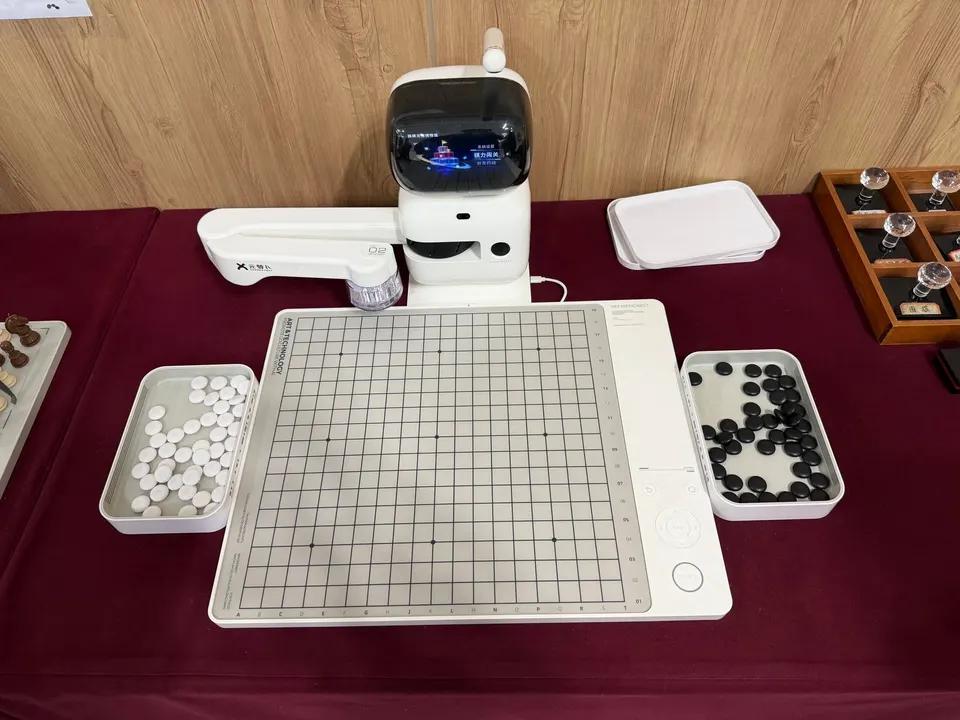
And here we are, exactly a decade ago. March 9, 2016, the decisive battle. The undisputed world go champion Lee Sedol steps into the final fight that could decide everything. Facing him is AlphaGo—a super-program built specifically for this contest, as its name suggests. It was created by the team at DeepMind, Google’s division devoted to developing artificial intelligence.
Exactly five battles will be played. The man doesn’t know it yet, but he is already doomed to lose this race against the machine too, and by the telling score of 1:4.
The most interesting part happens in the second game. Move 37, everything is going as expected, the two players are outfoxing each other with familiar ideas and strategies… when suddenly AlphaGo plays a completely unexpected, seemingly insane move. The commentators, among them players with enormous experience, immediately note that the machine has made a mistake and handed its opponent a huge opportunity.
Gone with the Wind
Lee Sedol, however, doesn’t think so, and withdraws for nearly a quarter of an hour to find an answer.
DeepMind would later note that, by their estimates, this was a move a human in the same situation would have had a 1 in 10,000 chance of choosing.
Lee fails to recover; the move turns out to be extremely effective. The world champion would later describe how he felt—for the first time he realized that he was facing not a person but something that could think in an entirely different way. And he would not recover as the battle slipped away.
One small nuance that is often overlooked. In the fourth game—the only one Lee won—he too made a legendary, unconventional move that brought him victory. I’ll leave the lessons to you.
Gold Rush
Move 37, though, has become a kind of emblem of the AI revolution of recent years, helped in no small part by the fact that it is a central theme in several of Yuval Noah Harari’s books.
For him, Move 37 is not a sporting detail but a symbol of the big questions of our time. It is one of the reasons the historian-philosopher speaks of AI not only as artificial intelligence but as “alien intelligence,” something foreign to the human psyche and intuition.
Go is the perfect example: a game with a millennia-old culture, schools, philosophies, rules of good taste. In Harari’s metaphor, humans had been circling certain “islands” in the landscape of the game and mistaking them for the whole world. Then along comes AlphaGo and in no time discovers “new continents”—strategies that tens of millions of players had never grasped. Move 37 shows AI’s freedom from the limitations of human minds, which out of habit never “set foot” in certain zones of the possible.
Godzilla
Alongside the enthusiasm, however, comes danger. Move 37 also shows us how impenetrable these systems are. Even after the triumph, the winning team was unable to explain clearly why AlphaGo chose that particular move.
So AI is at once radically innovative (discovering “continents” humans cannot see) and radically opaque (making key decisions without any causality humans can understand). Something, by the way, that we can easily confirm today simply by watching the progress of the field.
According to Harari, today we marvel that AI has discovered a “new continent” in go; tomorrow we will repeat it in finance, art, cybersecurity. But what will we do when systems make decisions in ways we cannot meaningfully verify? While we overlook the dangers…
But who’s talking about dangers? We’re here to play! Because, as Harari also says, Move 37 may be, but does not have to be, the end of human creativity. Whether it will be is up to us.
In the case of go, the association is more than optimistic. After the defeat, people not only didn’t stop loving the game—quite the opposite, it is more popular than ever! Clubs are springing up, online forums too, and more and more professional players are climbing the strict hierarchy of this ancient contest.
Good Will Hunting
What’s more, experts say that human players have broken out of old patterns of thinking in many strategies. After millennia of contemplating the game, huge innovations are emerging!
Which brings us to the cherry on top—AlphaGo thanked its creator for the good publicity by securing him… a Nobel Prize. Demis Hassabis received the prize in chemistry for predicting the structure of proteins. The computer program he used to achieve it is based largely on the work behind AlphaGo. What’s more, it is the first Nobel in the modern history of AI.
Go is an abstract and highly intuitive game that cannot be measured mathematically. Before artificial intelligence entered the fray, when a master made a strong and unexpected move, it was said to be “inspired by the gods.” And true masters can rarely explain such a decision logically; they tend to say they simply felt it.
As a result of the machine’s arrival, opening moves that no one would previously have dreamed of using have become popular. Gradually, even in games between top players, analyses reveal a huge number of ideas that came from artificial intelligence. And it could hardly be otherwise—as with chess, today even the best have in algorithms the sparring partner of their dreams, one to learn from. And one that, almost by default now, is stronger than them. But so what?
An interesting paradox: on the one hand, AI expands knowledge by discovering moves humans had never seen; on the other, it can lead to uniformity when everyone learns from the same “master.”
Good Company
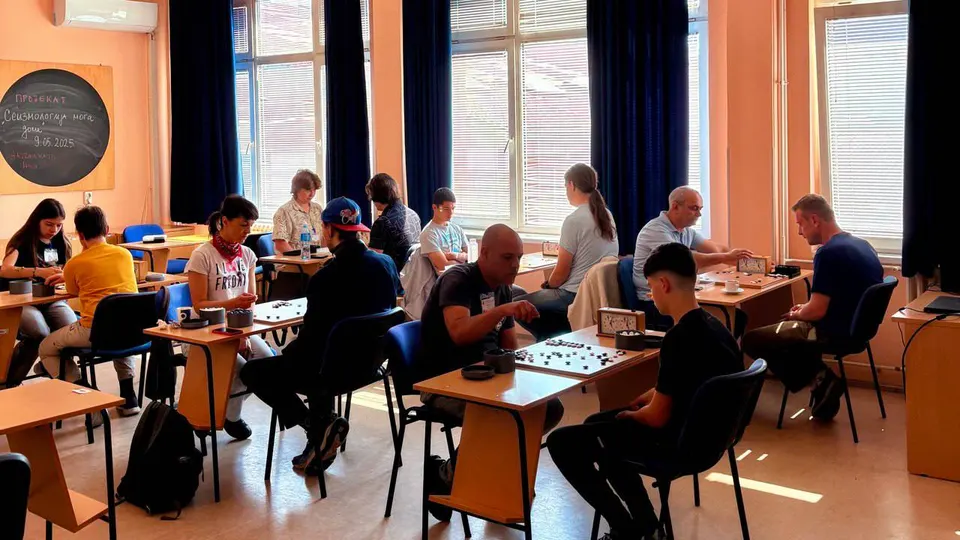
The history of go is full of curious touches, and yet, for all of them, it remains simply… a game. One worth trying yourself, and now you can do so in Bulgaria too! After a long hiatus, at the end of March, exactly 10 years after the famous battle between man and computer, a Bulgarian go championship will be held!
The co-organizers are the Confucius Institute and the Bulgarian Go Association, and the tournament is officially recognized by the European federation. The championship will take place on March 21 and 22 in the Confucius Institute building in Sofia, at 79 Todor Aleksandrov Blvd. The format is open, and players from all over Europe are invited.
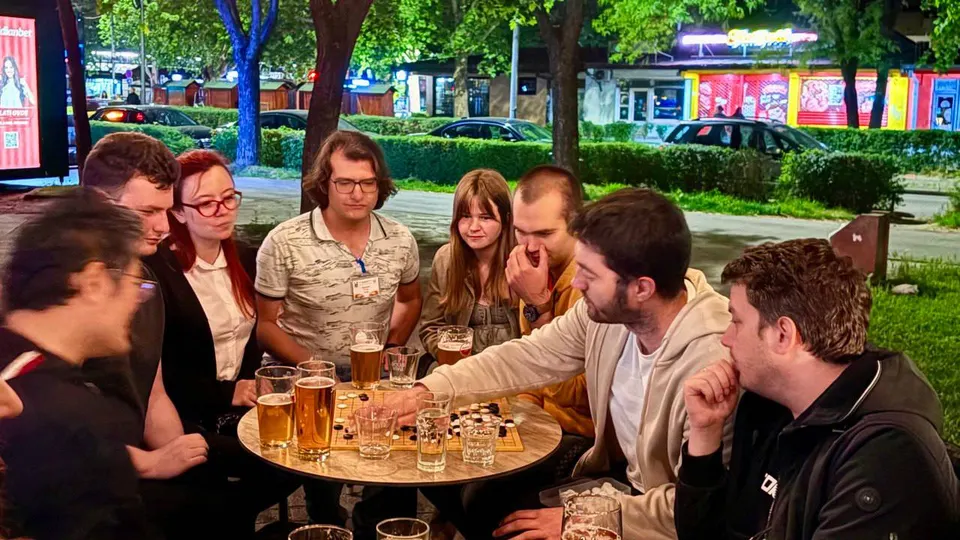
But even if it’s too early for you to compete, it’s never too late to try. You can do so with Atari Safari—a group of enthusiasts who in recent years have put serious effort into popularizing the game with weekly meetups. You can find them in Sofia every Tuesday from 6:30 p.m. at “The Grumpy Dwarf,” 3 Pozitano St. Good luck!
You’ll find more information here.