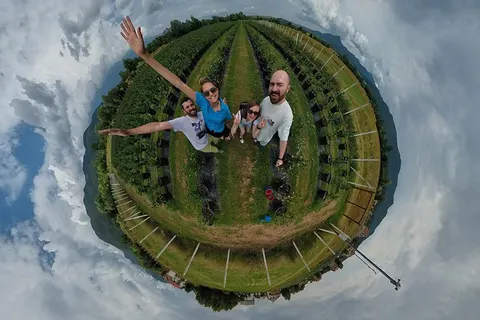
“I have a dream…” Neno begins, a little unsure of himself. He and Krisi have climbed the hill with the sweeping view of the Valley of Roses and of the farm-to-be. “To grow blueberries. Will you be by my side?”
“Yes, 100%!” she answers without a second thought. “I had no idea what I was getting into…” Krisi adds today.
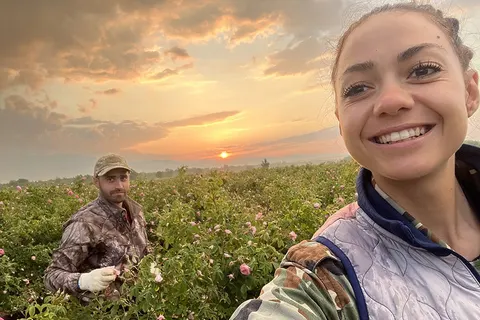
Both of them work in the world of information technology. He is a programmer, she is a project manager. Today, together, they own 4,700 blueberry bushes, whose remarkable taste delighted hundreds of buyers this summer. They also tend 5 decares (a decare being 1,000 square meters, so about 1.2 acres) of roses, alternating dailies with digging, and conversations about data science with conversations about agronomy.
Sometimes life really is a bed of roses; it only takes courage to appreciate it and rethink it. To believe in your dreams. And to forget about stereotypes…
Roseberry fields forever
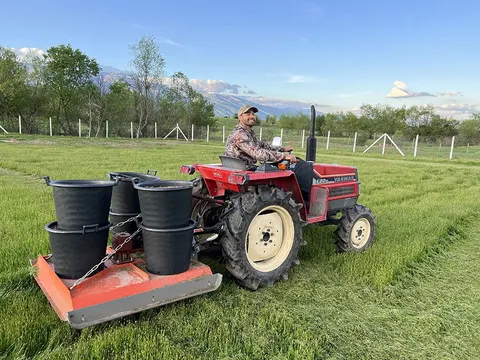
“Tomorrow I’m taking a day off… I’m buying a tractor,” Neno once said, and his boss, what else could he do, replied: “Okay!”
Information technology has become a field that offers plenty of opportunities to all kinds of people. A “field” only in the metaphorical sense, supposedly… But not for Krisi and Neno.
She is from Lyubimets, a small town in southern Bulgaria; she studied abroad and quickly climbed the career ladder of her profession—project manager. He is from the village of Osetenovo, and while he was piling up years of experience as a programmer, he nursed a big dream of going back to the village, back to the land…
And he worked stubbornly to make that dream blossom. Step by step he built the plan for a farm where he would grow two very different crops—roses and blueberries. He thought over which plots to use, exactly how to care for the plants… and while work went on, so did life. Then came the pandemic years, when the love between Krisi and Neno sprouted, only to burst into full bloom.
Blueberry Hill
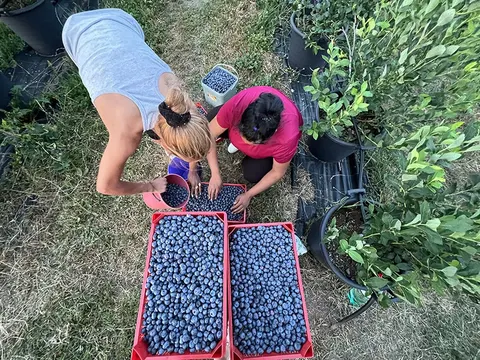
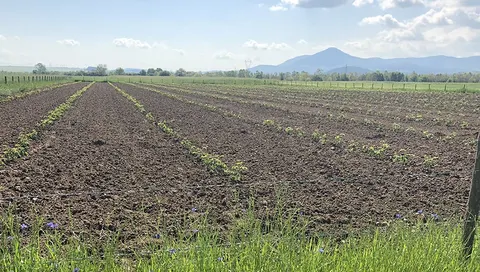
The two have just finished their first full season with both crops. In late spring the rose harvest was good, and then came the blueberries’ turn.
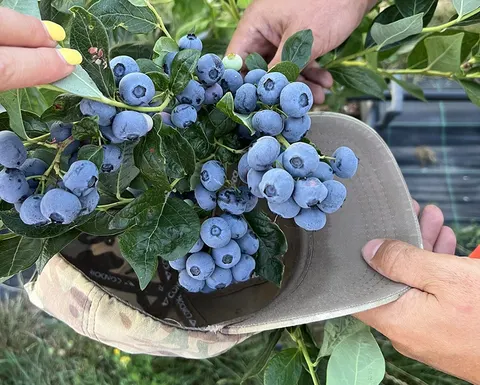
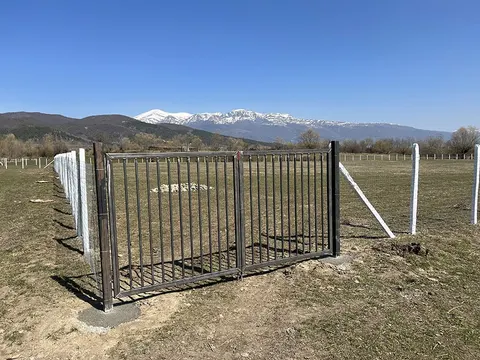
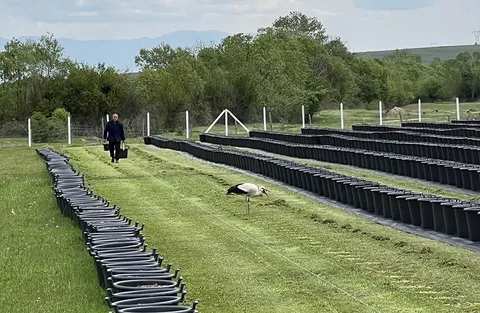
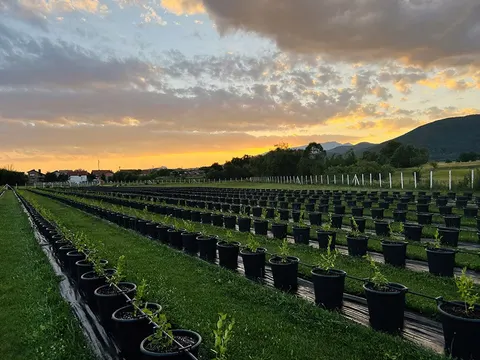
And speaking of the fragrant fruit, it is Neno’s great dream. For many years the programmer has been curious about how to grow this supposedly familiar crop so that the berries turn out thrillingly sweet. The result: after securing a plot, he bought varieties unknown in Bulgaria as seedlings and… hundreds of enormous pots. He filled them with the acidic soil in which this fruit thrives best—it is no accident that its usual home is the mountains. Although the practice is almost unheard of in Bulgaria, it is widely used around the world and has proven itself in the field.
Since they don’t own the land, they can rest easy knowing they can move the pots if the farm ever has to find a new home. They grow about 20 varieties to see how each one develops. Five or six are the main ones, making up most of the stock; they stand out for their large size and their different flavors—some are sweeter, others less so. All the other varieties are there for experimenting, for trying out different solutions.
“We want to see how well each one does and when it ripens under our conditions, because what the book says is one thing and what happens right here is another,” says Neno. The idea is to combine varieties so that the season lasts as long as possible, offering customers different versions of the delicious fruit.
A Rosy Future
Quite a programmer’s approach, even an engineer’s, wouldn’t you say? Our heroes think so too. Neno’s idea is to take the best ideas and carry them back and forth between the two very different worlds they live in…
At work, Krisi is in charge of a team of data processing specialists. At their last in-person meeting she gave each of them a jar of jam and told them what she does in her free time. They responded with genuine interest, impressed not only by the story but by the taste. A colleague from India told her he has relatives back home with farming experience and would help if they ever decided to set up a farm there too.
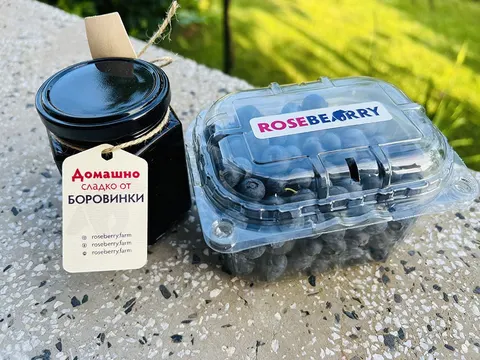
The name came almost naturally—RoseBerry brings together the roses and the blueberries. As a flourish, the logo also features a bear, to appreciate the two fragrant crops. And not only that—above the village rises a spot called Mechi Kamak, Bear Rock, which became the venture’s mascot.
As a specialist in managing people, Krisi is usually the one closest to the workers. Is it harder to work with programmers or with rose pickers? “They’re all people!” she replies.
“My team is 17 people, wonderful, but not easy at all. It’s the same with the rose pickers. Everyone has pluses and minuses—very different people, with different pasts, different cultures. Two different worlds! You can’t compare them. They think in completely different ways, and meeting both universes enriches you a lot. Above all, you have to be human with the others, whether you’re facing a programmer or a rose picker. Because in the end it all comes down to people!”
A Mossy Beard
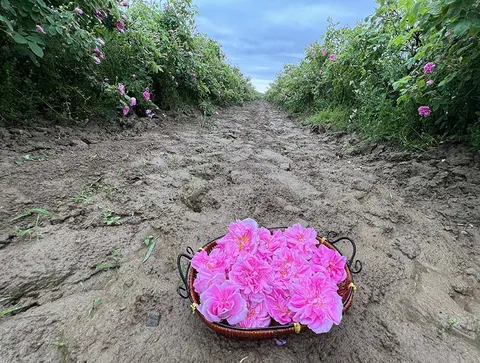
And where do the roses fit in? The two IT specialists actually started their farm with them. The traditional local crop has paid them back; they have a long-term contract for the sale of the rose petals. This also gives them peace of mind about the future—with two crops, even if one suffers for some reason, the other will help them get through the hard times.
The 4,700 blueberry pots already fill all 14 decares of the plot. Very soon they plan to expand the land for both crops and are negotiating with landowners near Osetenovo. The difficulty is that the plots are small and often split among many heirs who struggle to find common ground.
And so this year, when the farm ran at full capacity for the first time, interest was so great that at one point the two had to stop taking orders. Many people learned about them from reports on Nova Television and on the YouTube channel Boho Soulz.

Sweet Dreams
Others simply find them through social media, which Krisi actively cultivates. “On YouTube lots of doctors found us; on TikTok, people who were just curious whether these huge blueberries would be any good; on Instagram, followers get a glimpse of our everyday life. Facebook is for the somewhat more settled crowd—parents with small children often come from there,” Krisi says.
She takes the orders and insists on speaking personally with every customer. That way she learns what drew them in, and many stories are born. A young mother told her she had great trouble introducing solid food to her baby, and the only thing that helped was their blueberries. “With us everything is trial and error, and I listen to my customers. When I call and someone says, ‘But you’ll send me the big sweet ones, right?’ I know what they prefer; others go for the tarter ones.”
“Lots of people wonder why we bother with online sales, why we put so much effort and money into packaging and boxes with our logo. Only we know what it costs us. ‘Why go to all that trouble? Take it to the wholesale market, sell the whole lot and be done with it!’ Yes, but that’s not the point. We want to sell the product, but with meaning! And that’s exactly what we add—the idea, how we do it, our story, our life! You’re doing your job and making money either way. But put a little meaning into it!” Krisi says with emotion.
“The idea is for people to see who we are, who stands behind this farm, how we work, how we produce this product, and to know that they’re buying it from us.”
The Blueberry on Top
“Product, marketing… and then you have to keep as many customers as you can. At one point things were moving so fast… Neno told me: We’ve done so much in no time that we can’t even stop to catch our breath, take it in and see what we’ve done and what we’re doing!” Krisi smiles.
Demand keeps coming; they have already been offered the chance to export to Scotland and to distribute through one of the big retail chains.
Although the season is over, the work goes on, because soon it will be time for blueberry jam.
Both of them talk about how good the physical work is for them, alternating with the hours at the computer that their main jobs demand. After a particularly stressful meeting, Krisi grabs the spade, and half an hour later she has forgotten all her worries.
They have many more ideas—for example, selling rose petals as a natural fragrance, or organizing events. But, as they themselves say, working in IT has taught them to go step by step.
But how do they find time for everything? With difficulty. They have to turn down invitations to see friends, for instance. “How can we be out with someone at 10 p.m. when the next morning we have to get up at 5:30 a.m. and be at the farm?” Krisi wonders.
Agile with a Shovel
“We didn’t try to do everything at once,” Neno recalls. “I had a picture in my head of what had to happen over time. We get the land—done, we have it, we have lease contracts. Just like in programming: it moves from the ‘In Progress’ column to ‘Done,’ and you start the next thing. I think that’s the key to success—doing something big in two years with just a few people.”
Which brings us to another big opportunity that technology offers. The daily care of the blueberries is fully automated! The farm uses software from the Bulgarian startup Ondo Solutions. “I set up a program on my phone, telling it which sector to water at what time, for how long, and what to feed the blueberries there. It saves me a huge amount of time and optimizes the whole process. It also saves a lot of water, which is extremely important too,” Neno adds.
According to the young farmers, the risks from here on are minimal. The pots and the growing system give the plants everything they need, and there are anti-hail rocket stations near the village. “We talk nonstop about what to improve. And if we spot even one weak point, we try to fix it,” says Neno. “We tested the water so we’d know what to feed the blueberries afterwards, we regularly test the fruit itself, and we consult an agronomist.”
The Name of the Rose
One of the biggest challenges is finding workers for the busy season. So far it has mainly been people from the village pitching in, but as the venture grows they won’t be enough. “That’s another reason for growing two crops—first we pick the roses, then the blueberries, and that way we extend the period in which we can provide work for people,” Neno explains. Since they became popular, many people have written to offer to help with the picking, including from abroad. And what might happen if it turned into a form of team building for their colleagues from the IT world?
Neno’s goal is to leave everything else behind in a few years and devote himself entirely to the farm. Krisi will more likely keep going on both fronts. “I love mixing lots of things and building on them. That’s why Neno and I complement each other—I’m a bit more the person for communication, for the modern stuff. While he is the root; he grounds me, pulls me back and brings something real to all the purely digital things,” says Krisi.
When things are done with love and meaning, no dream is impossible. The story of our two guests proves it. As Krisi puts it, “farming is sweet and fragrant work…”