
Jason Citron knows all too well what it means to fail. He has done it many times, spectacularly, losing serious money. That was before he created Discord, the next-generation social network that long ago outgrew the world of gaming and became a convenient and secure means of communication, free of many of the flaws of traditional platforms.
But how did the programmer come to turn down an offer of… 10 billion dollars from Microsoft?! What failures did Jason go through before reaching his enormous success? What are the most important things he has to tell us, and the key lessons of his fascinating story?
He Who Plays Wins
Do what you love and things will work out beautifully for you, goes the popular cliché. Well, Jason has loved computer games since he was little; they are the thing that has thrilled him his whole life. Even on his first date with his wife, instead of indulging in more classic romance, the two of them threw themselves into an arcade game marathon. Since they are still together to this day, the idea apparently turned out to be a good one.
The other thing he has loved since childhood is programming. He is still in single digits when he discovers how interesting it is to tell a computer what to do. He learns fast—so fast that while still in elementary school he asks his dad: “How can I get money from a stranger online?” At first his parents wonder whether he is selling some forbidden substances, especially when it becomes clear what sums the kid expects to receive. But then they realize he is building websites as a freelancer, and they help him open a bank account.
Quite early on, his two hobbies—programming and games—come together. He is destined to spend a couple of decades making games that never manage to attract much attention before he achieves his first big success. And then comes his huge breakthrough, and not with a game at all…

Never Had Enough of Playing
Unlike many who have made it in Silicon Valley, our hero never so much as gets a whiff of the atmosphere of the great universities. He studies in Florida, at a private school of game design, and hurries to get to the practical side.
“Higher education is an interesting part of society,” says Jason. “When I work with people, it never comes up who graduated from what; the only thing that matters is how you do your job. The beauty of Silicon Valley is that if you have a great idea and can make it real, there is a way to convince even a complete stranger to give you money and join your project.”
As I mentioned, his first attempts are far from impressive. Take the idea of creating a dating site based on video calls. He and his colleagues find the funding, put in a good deal of time, and when the pilot is ready… for several weeks not a single user signs up.
His next venture is a little more successful. He creates an online game in which players communicate with each other while playing. He uses one of the grandfathers of today's social networks—Bebo, which exists only in North America.
Game of Thrones
But he has never shied away from risky decisions. He decides to shut the project down on the very day Steve Jobs announces the creation of the Apple App Store. Because he senses that very soon everyone will start playing on their phones. And the moment to turn to mobile games is crucial; he has to make the call right away to catch the wave that is only just beginning to rise.
The decision proves more than farsighted: after five months of hard work, Jason and his team release the game Aurora Feint.
The success exceeds even his wildest expectations. Clearly people really are rushing to look for cool apps on the new mobile platform, and there still aren't enough of them. The programmer hopes his game will draw 1,000 people in a week, and the goal is met within the first hour.

The Rules of the Game
And yet the venture turns out to be successful, but not profitable: despite the great interest, the team never finds a way to raise more money to develop the game.
So Jason decides to change the model. Both his father and his grandfather are entrepreneurs, and he says he learned the most important lesson from them—don't give up, always look for the different angle that can change the situation. And this time he finds it.
He decides that instead of games he will sell the technology the games are built on. Jason has noticed that while working on their project, the programmers made something more—a platform for communication, leaderboards, the ability for many people to play together over a network at the same time. If this whole foundation were offered to other teams, they would be spared the tedious part of the work and serious investment, while Jason and his colleagues would profit from their experience, from something they had already built.
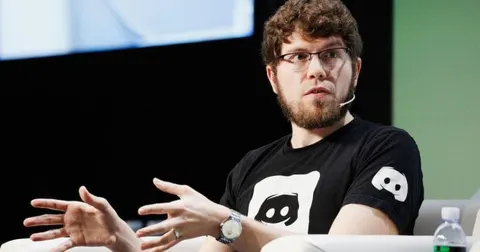
And sure enough, many teams quickly get in touch with them; within a few weeks, 15 projects are already running on their platform. Soon the company's logo—OpenFeint—appears in almost all of the most popular games. Then comes the time to part ways. In April 2011, OpenFeint is sold to the Japanese gaming company GREE for $104 million.
Back in the Game
For a while Jason works for the new owners, but he soon realizes that they have different views on how the venture should develop. Richer, but back at square one. Determined to create something truly big.
It is curious how much his story resembles that of Slack's creator, Stewart Butterfield. Both start out in games before realizing that the thing they are best at is something they created almost by accident, along the way.
Their two big successes are alike, too. In recent years, especially against the backdrop of the pandemic, Slack has established itself as the convenient communication platform for the professional world. Discord, meanwhile, has become the right solution for the same needs, but outside work—in an informal setting, in discussions in the spirit of the old internet forums. The platform has even found itself in the unexpected role of one of the contenders to become the next generation of social network.
Discord has long ceased to be a place for gamers alone. And yet it began with, and because of, the games its creator loves so much.
The Game of Games
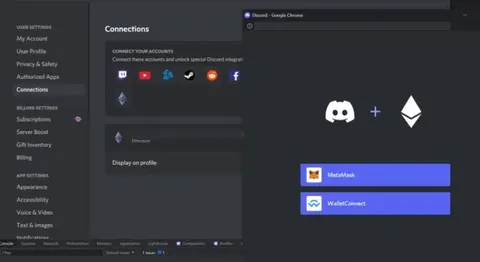
In the years before Discord, gamers came together mostly around technology platforms, such as consoles like the PlayStation or Xbox. Jason, however, judges that what is missing is a more convenient, shared platform through which they can talk, discuss games and coordinate.
Once again he starts with the idea of making a game in which users will communicate in real time—by chat, audio and video. Alongside it, a communication network would be built that could become a convenient place for showcasing future games, and for advertising too. But this time he has misjudged things—he has decided that tablets will become the next favorite way to play, and they never manage to catch on as a mass solution.
Two years later the game is launched, but it doesn't enjoy much success. And once again Jason decides to abandon it and, in its place, create something completely different… which at the same time is also almost ready.
A Big Player
The game's communication platform suddenly breaks away from it to live a life of its own under the charming name Discord.
As Jason admits, the idea isn't his but that of co-founder Stan Vishnevskiy, who at the time is also working on the new game. In his view, the time has come for a communication platform that isn't tied to a single game or technology. The entrepreneur agrees wholeheartedly, and this is where the big success comes in.
Jason judges by his own experience—all his life, computer games have been a way for him to connect with people, from his best friends to his own wife. So maybe they are the foundation that simply helps people communicate? To carry on from there, growing closer, discussing more and more things in life?
“So many of my fondest memories are connected with games. That's why my whole career has been dedicated to giving other people the chance to create special moments in their lives,” he says.
A Hungry Bear Won't Dance
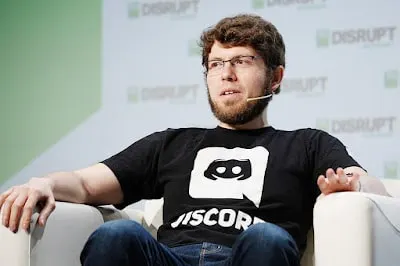
The first 50 users arrive after a post on Reddit; then interest grows at breakneck speed.
In its early versions Discord is extremely unstable, constantly freezing, but users don't give up. They have evidently found a platform where they feel at home. And it pays them back: over the following months the engineers work hard, and Discord begins to stand out for its stability compared with all the others.
Gradually, instead of a “chat for gamers,” the platform starts presenting itself as “a new way to chat with your friends and with people who share your interests.”
What helps it fit into the new times and quickly move beyond the world of gaming is its decentralization. People gather in what amount to separate platforms, called servers, based on shared interests, topics or their favorite games. The communication takes us back to the dawn of the online boom, with the magic of finding common interests with a stranger from the other side of the world. And on the other hand, it offers protection from hate: the individual servers moderate themselves, and when the community decides that someone is misbehaving, it takes action.
Ornaments on the Tree
Which, of course, creates the next “generation” of problems—the platform makes it easy for people united by extreme interests to gather, and the voice of the majority can very quickly turn into the law of the jungle. Into something that makes even Lord of the Flies pale in comparison. And yet Jason and his colleagues seem to be finding solutions: despite the decentralization, there are also forms of central control for when things don't appear to be going by the rules.
Jason admits he didn't expect quite so much interest. He says Discord's success is at once “surprising, amazing, but also very humbling.”
Then, as we all know, came the pandemic, and we shut ourselves up in our homes. It was in March 2021 that Microsoft offered a mind-boggling 10 billion dollars to buy Discord. And our hero boldly said no, because… he could afford to. Disappointed by his previous sale, when his venture went down a path he didn't like, he made the brave move. Believing that one day his platform would be worth much, much more.
“I discussed it with the rest of the team too, whether this was the path we might take… And it was wonderful—most people told me they wanted us to keep building together what we had started,” says the programmer.

Beating the Game
Jason has seen it all in his colorful career. “The road of building a company is full of highs and lows,” he says. “It's easy to talk about the peaks; it's always harder when it comes to the low points. But that's where you learn much more.”
Today Discord has more than 150 million active users every month, a number that has tripled in just three years. The platform mostly attracts young people with all sorts of interests. About 700 people work on it today, a headcount that has also doubled in less than two years.
Fortune favors the bold. And computer games sometimes resemble life quite a lot—they can teach you a thing or two. If you don't believe me, ask Jason Citron…