As the memes would “say,” if this picture caught your eye, it’s time for the more thorough check-ups that come with advancing age.
But why on earth is the wolf from Nu, Pogodi!, the Soviet cartoon whose title means “Well, Just You Wait!,” collecting eggs instead of chasing the hare? How did the wolf actually make it possible for Nintendo to turn from a playing-card company to electronics? And why is this story the exact opposite of another cult game of the same generation, Tetris, which came out of the USSR?
Oh, the fate of the egg-catching wolf, such a good friend to the kids of the 1980s and 1990s, turns out to be quite unexpected.
A Thousand and One Nights
If, thousands of years ago, you collected eggs in this game, do you remember what happened when you reached 1,000 points?
Let’s check, because you had to be among the nimblest nineties kids, with the skills of an octopus, not to give up at the unimaginable speed with which the hens maliciously fired out their eggs.
In fact, a piece of retro folklore still drifts around the internet: beat the game, and you get to see a never-before-suspected episode of Nu, Pogodi! that was never shown on television. Plenty of people still claim to have seen it, but… no such thing ever existed. Not because we weren’t good enough (some were, at the price of calluses on their thumbs), but because there was never any film in there. At 999 the counter goes back to zero, the eggs start rolling about a third faster, and that’s it.
The Russian Wikipedia puts it mercilessly: “No special reward was ever intended.” Just like in Tetris, as it happens. But, and this holds for both, with enough will you can always set yourself the next goal.
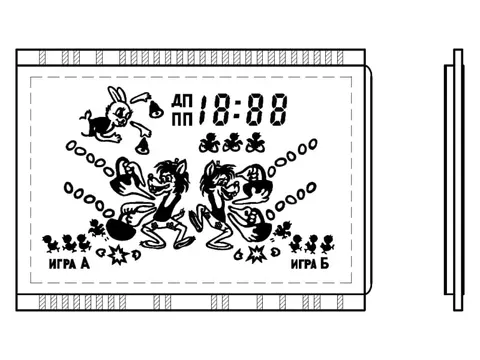
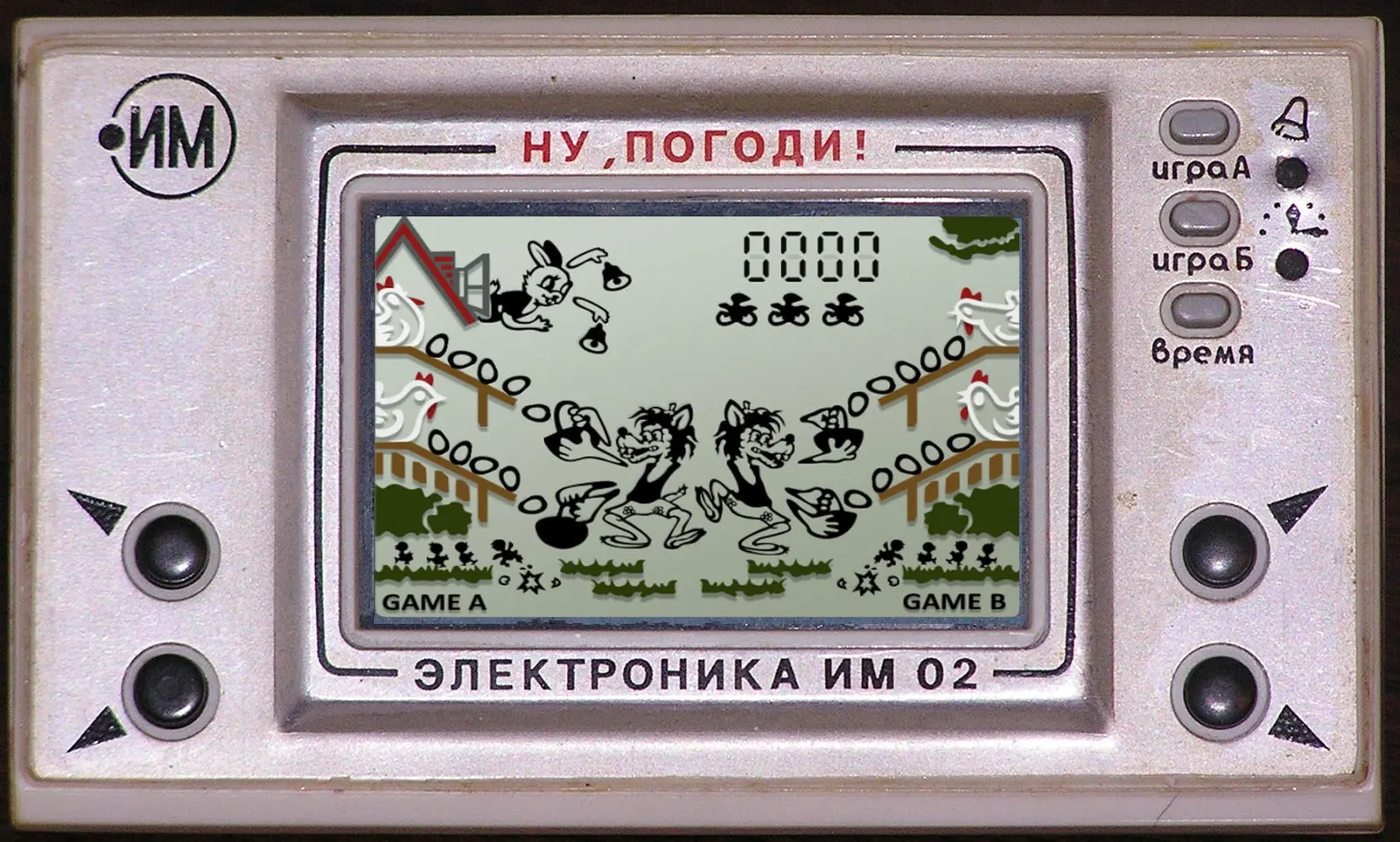
Admittedly, we are rather spoiled today. On a screen like this, where all the figures are “printed” in advance and can only light up and go dark, there can be no cartoon in principle. The only animation in the entire device is the clock mode, in which the wolf catches eggs by himself, without us.
The Wolf from Kyoto
The idea was born not on a collective farm but in the head of a citizen of Kyoto who watched a bored office worker on the bullet train. Later, without his knowing it, his idea would be “replicated” in a Soviet factory. And later still, in its own peculiar way, it would be returned, when Tetris left the USSR to become the most recognizable game in the world, mostly thanks to the Japanese maker Nintendo.
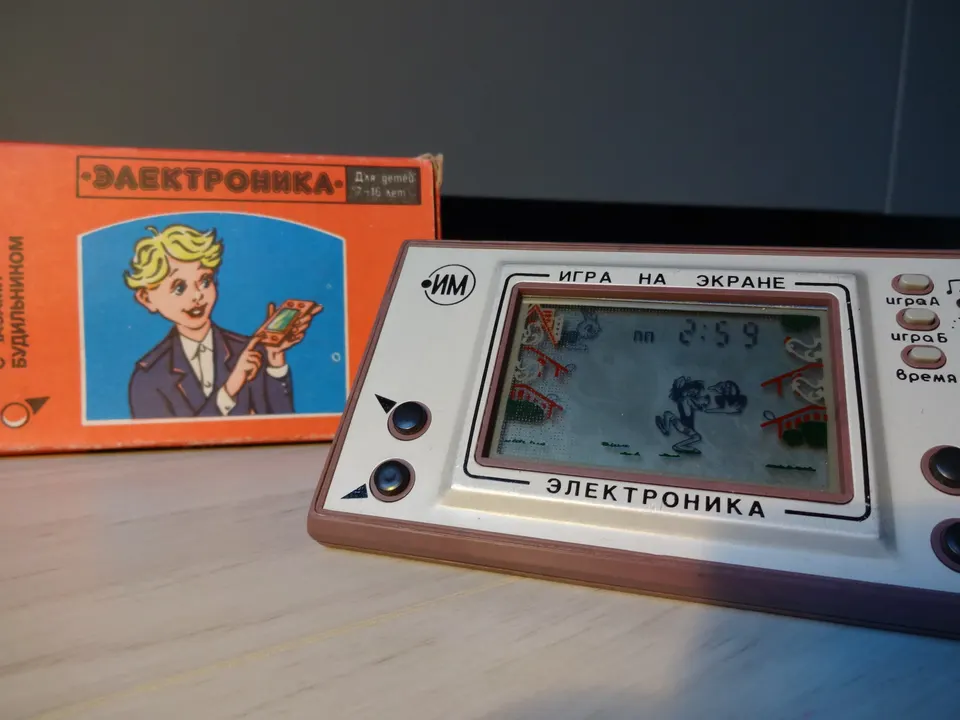
On the forum Our Childhood, one contributor recalls getting it in sixth or seventh grade and carrying it everywhere, until one day, “on a walk along the pier, it fell out of my pocket into the sea.” His parents had saved up for it, and he still feels guilty.
Another reader remembers that there was one kid in her apartment block with the “eggs,” and everyone sat on the stairs and took turns. A third writes that he bought it for his son in 1990, when the boy was 12, and he himself had fun with it “even more than he did.” Sound familiar?
The Alarm-Clock Game
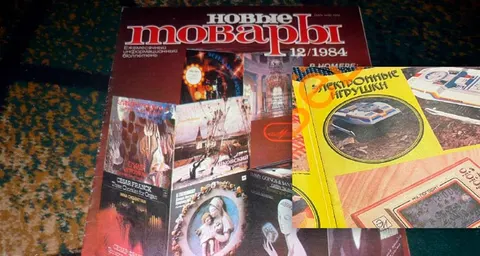
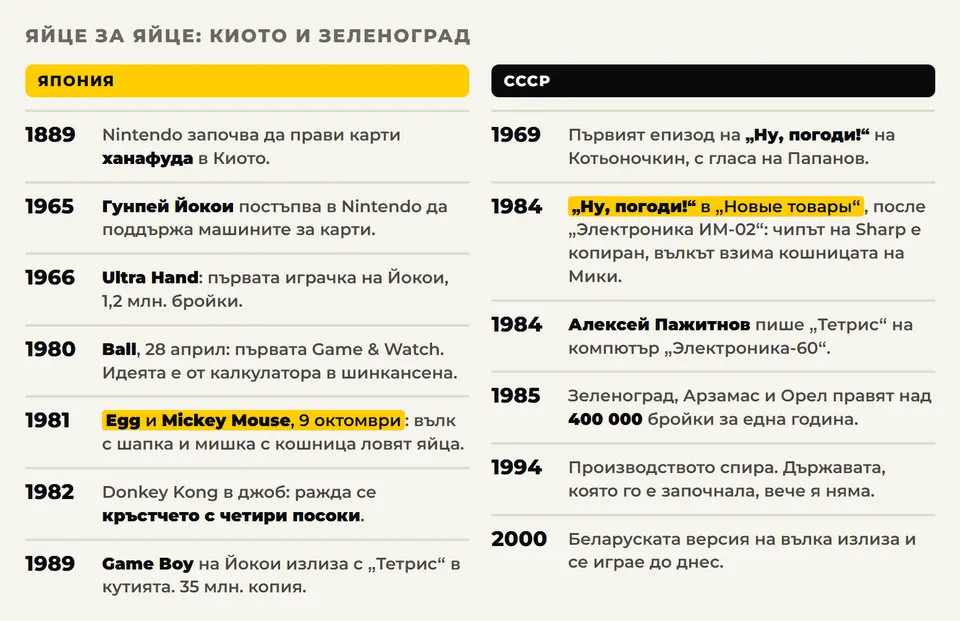
Let’s go back to the source. The game Nu, Pogodi! first appeared in the December 1984 issue of Novye Tovary (New Goods), the bulletin of the Soviet Ministry of Trade. No model number, just Nu, Pogodi! Only later did it get its official name, Elektronika IM-02. IM stands for “igra mikroprotsessornaya,” a microprocessor game. The IM-01 was a chess computer nobody remembers.
The price was 25 rubles (later 23), at a time when salaries were 150–200 rubles. In 1985 alone, three factories, in Zelenograd, Arzamas and Oryol, turned out more than 400,000 units, and in the following years a dozen or so plants scattered across the USSR joined in. Production stopped only in the mid-1990s, when the state that had started it no longer existed. The Belarusian version of the same wolf, however, came out in 2000 and is still played today.
The game is also a clock, which is why the Nintendo series that first introduced it is called Game & Watch. The “Vremya” (Time) button shows the hour, while the wolf on the screen keeps catching eggs and now and then dropping them, just like that, for decoration. There is an alarm too: when it rings, the hare appears in the little window at the top and strikes a bell. For a whole minute, the same single note, brrr…
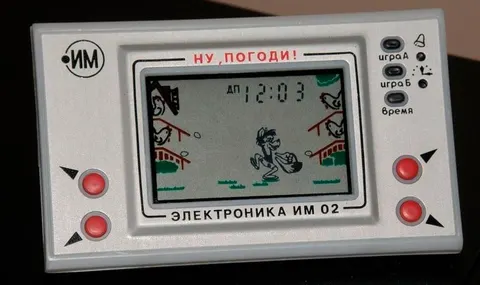
The time is set with the tip of a ballpoint pen pressed into two recessed buttons. There is no 24-hour mode, because in Kyoto they didn’t plan for one and in Zelenograd they didn’t dare add it: instead of AM and PM, the screen says DP and PP, “do poludnya” and “posle poludnya,” before noon and after noon.
Four hens, four chutes, four buttons. Nothing complicated, wouldn’t you say? Every egg caught is a point. Miss one, and a chick hatches from the broken egg and you get a penalty; three of those and it’s over. But if the hare is peeking out of the little window, the penalty is halved and the chick only blinks. At 200 and at 500 eggs the misses are wiped clean. “Game A” has three chutes, “Game B” four. Every hundred eggs the pace eases off for a moment, then climbs again. And on toward the thousand, where the speed is not for the faint of heart (or fingers).
Collectors today tell the production batches apart by the wolf’s boxer shorts: they come with polka dots, with flowers or with stars, and the last are the rarest.
Two Centuries of Card Games
And so from the USSR we fly off to Japan. Gunpei Yokoi was born on September 10, 1941, in Kyoto. He studied electronics and in 1965 joined Nintendo. Yes, that well-known company, which at the time was still mostly in the business of making playing cards, something it had been doing since 1889!
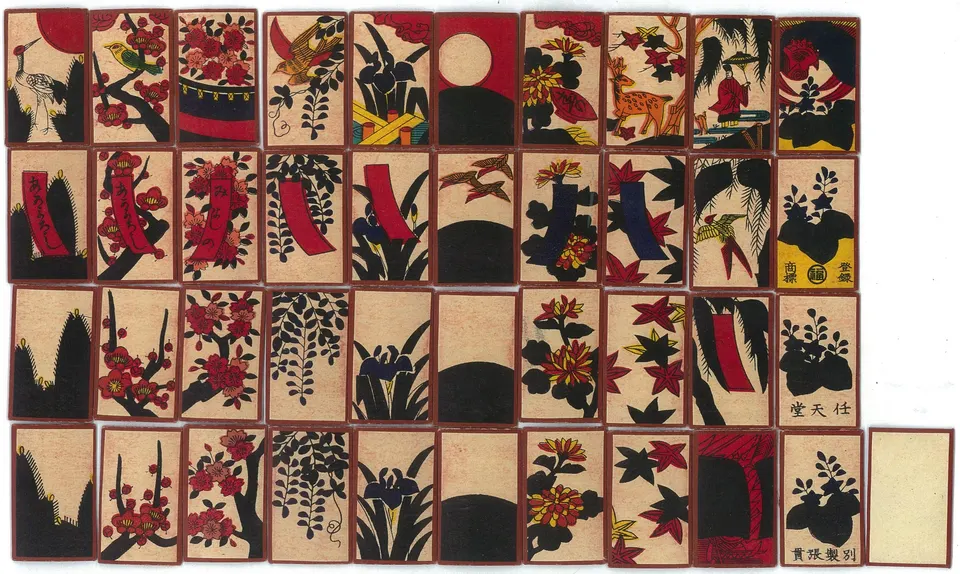
Not the kind Bulgarians shuffle for belote, but a variety called hanafuda, played with flowers. Yokoi was hired to maintain the machines that stamped them.
But how do you get from stamping to the wolf with the eggs? His boss, Hiroshi Yamauchi, the founder’s great-grandson, was at the time frantically looking for something else for the firm to do, because cards were no longer selling well enough. He tried a taxi business. He tried hotels rented “by the hour.” He tried instant rice. Well, none of it took off.
One day he caught the young technician playing during working hours with a folding wooden grabber arm he had invented himself. In most companies that ends with a scolding; in this case it ended with an order to have the toy in the shops by Christmas. The Ultra Hand sold 1.2 million units.
Nintendo discovered it could make toys, and Yokoi that he could invent them. Next came the Love Tester (1969: two people hold hands and a needle shows how much they love each other by measuring… electric current), a light gun with solar cells in the targets, and entire shooting galleries built in bankrupt bowling alleys.
Yokoi Rocks!
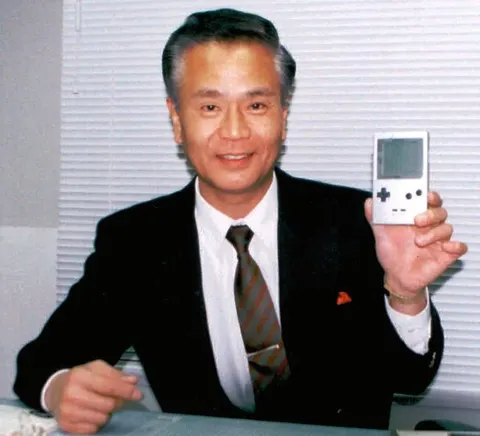
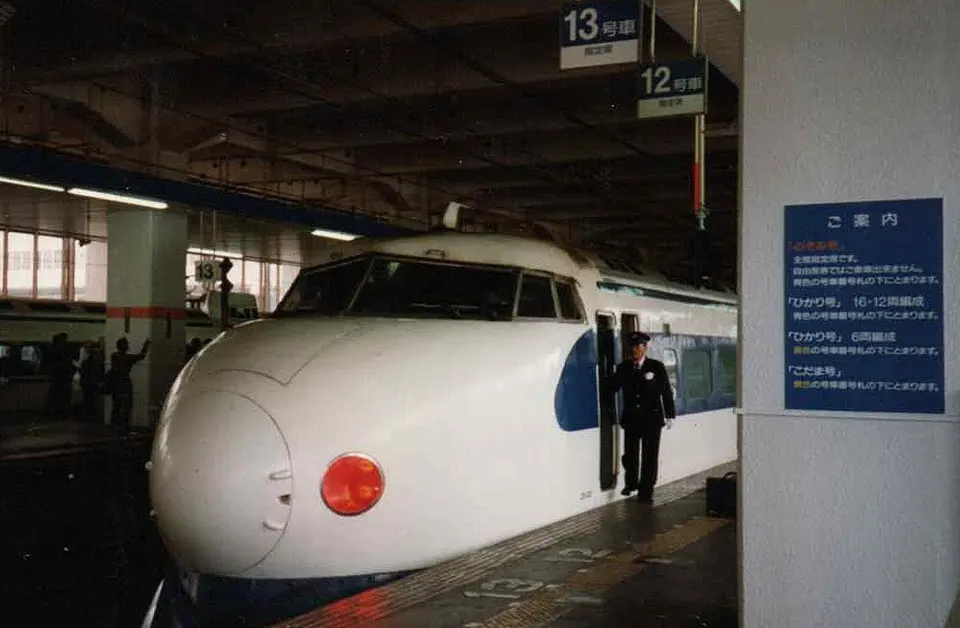
The legend, as Yokoi himself later told it, dates from the late 1970s. On a shinkansen, the bullet train, the inventor watched a man in a suit pressing the buttons of a pocket calculator. He wasn’t calculating anything, just pressing them, a forerunner of today’s screen zombies. And Yokoi wondered: if a bored grown man does that with a calculator, what would he do with something made for playing? Something small, that hides in your palm, so people don’t give you funny looks on the subway.
How the idea reached the president is also a legend that may or may not be true…, but it’s a charming one. Yamauchi’s chauffeur fell ill, and Yokoi got behind the wheel to drive him to a meeting. On the way he told him about the calculator. The meeting turned out to be with the president of Sharp, the biggest calculator maker in the world. A week later Nintendo had permission to make a game with the size and basic technical specifications of a calculator.
At the time Sharp and Casio were waging a calculator war, and liquid-crystal displays and 4-bit chips had become cheap and plentiful. Yamauchi gave the project to one of the departments, but they turned it down, saying it couldn’t be done. Yokoi and his assistant, Satoru Okada, did it themselves. Sharp also refused at first; then Yokoi left them the prototype “to play with,” and their engineers got hooked.
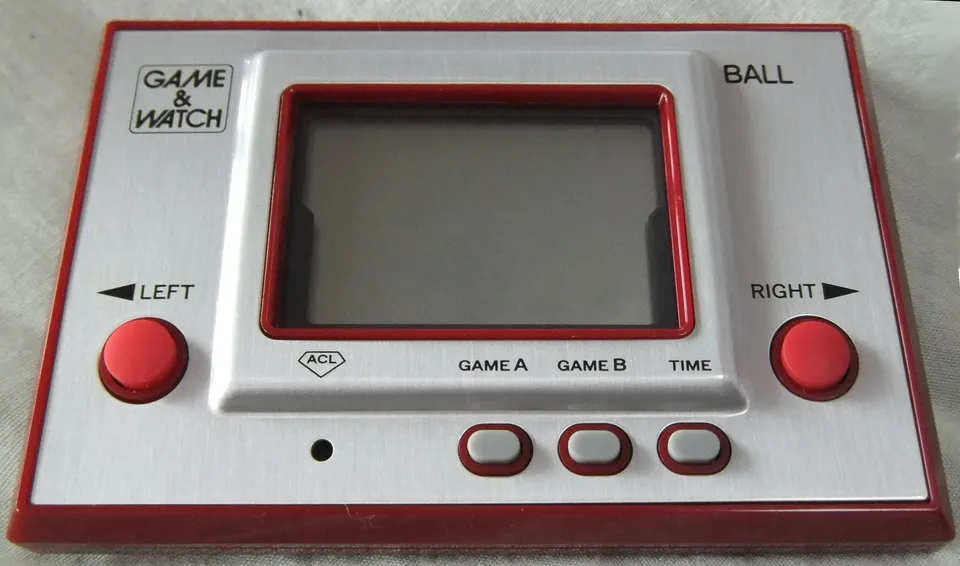
On April 28, 1980, “Ball” came out, the first game in the Game & Watch series: a little figure juggling balls, two buttons, two button-cell batteries, priced at 5,800 yen. Yokoi hoped for 100,000 units sold. By 1991 the series had reached 60 titles and 43.4 million units worldwide. Before “Ball,” Nintendo had debts of 7–8 billion yen; they were quickly paid off out of serious profits.
The Gorilla and the Plumber
Around the same time, at the same company, a young artist named Shigeru Miyamoto was drawing a gorilla and a plumber, and Yokoi liked them and pitched the idea to the president.
On October 9, 1981, exactly 45 years ago, Nintendo released two games with the same mechanism on the same day. In one, a wolf in a hat catches eggs rolling down four chutes from four hens. It was called “Egg,” model EG-26, from the Wide Screen series. In the other, Mickey Mouse does the same with a basket, under an official Disney license, model MC-25.
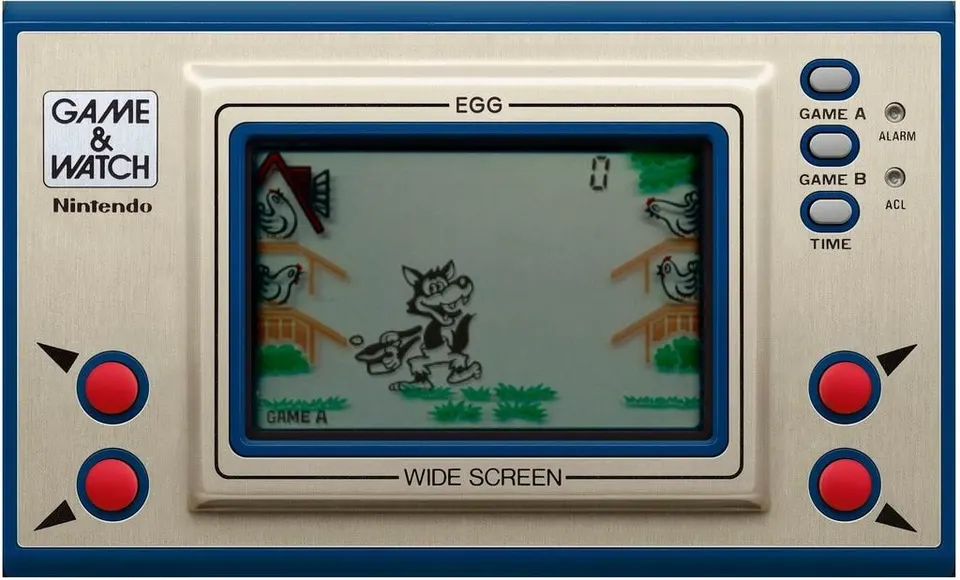
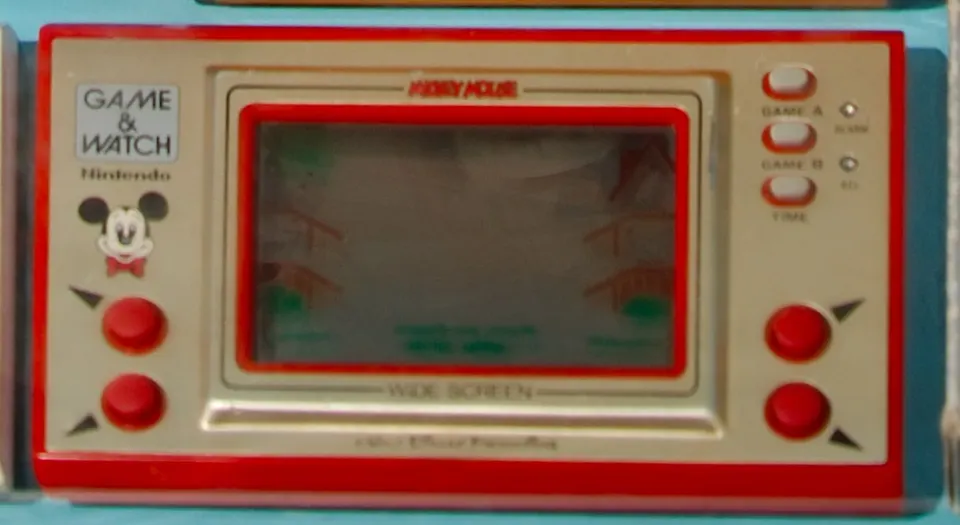
Why two? The Mickey license didn’t apply everywhere, and the eggs had to sell everywhere. The mouse sold about 1.2 million units, the wolf under 250,000. Officially, at least.
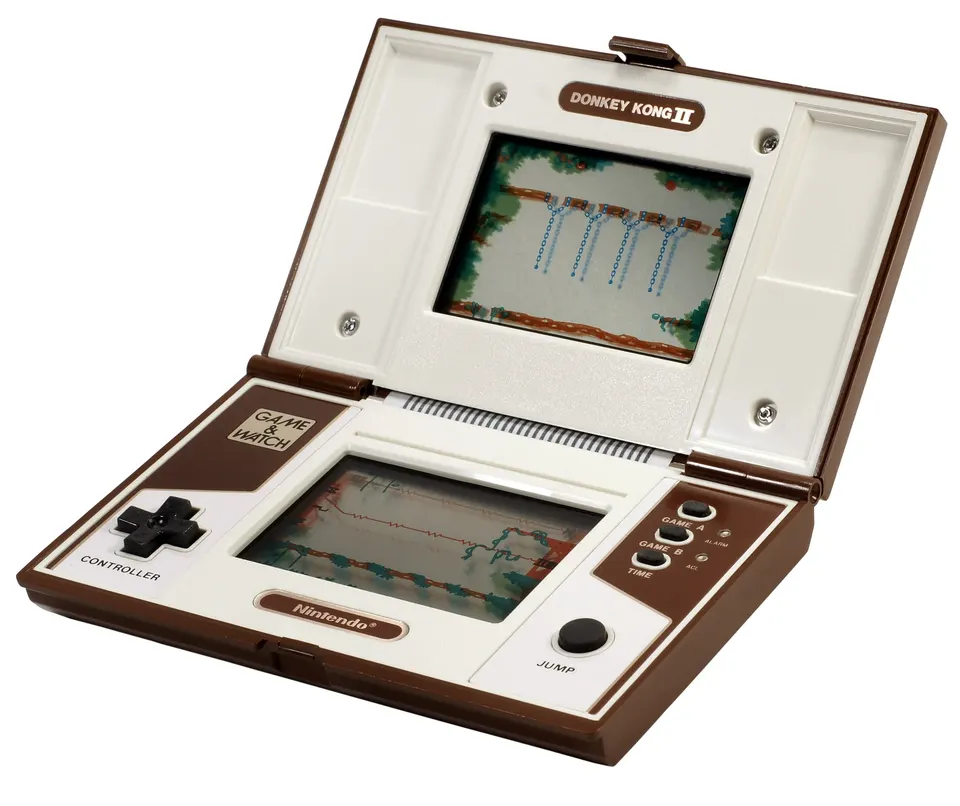
That same year Yokoi and his department took on Miyamoto’s arcade game, Donkey Kong, and had to squeeze it into a pocket. A joystick doesn’t fit in a pocket, so in 1982 the four-way cross was born, the D-pad that has sat on every controller in the world ever since and in 2008 won an Emmy for technology.
Copy-Paste, Comrade
Exactly how Game & Watch made its way to Zelenograd, “the Soviet Silicon Valley,” nobody knows. The author of the most detailed Russian history of the game suspects someone brought one back from a business trip.
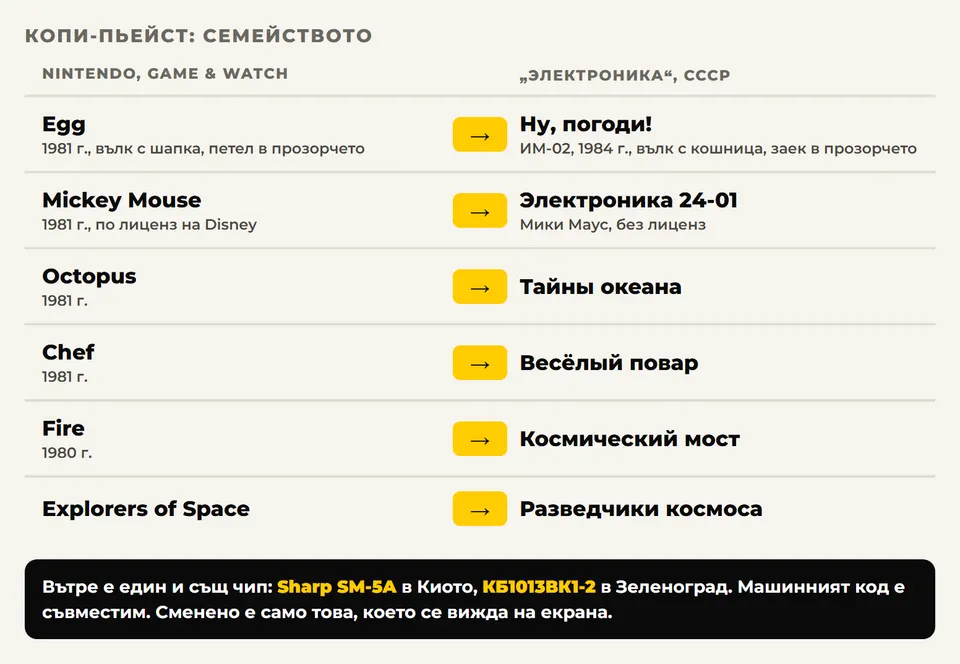
The heart of Nu, Pogodi! is the KB1013VK1-2 chip, a copy of the Sharp SM-5A, the same chip that runs the original “Ball” and “Egg.” A copy to such a degree that the machine code is compatible: Nintendo’s program would run on the Soviet chip and vice versa. They changed only what could be seen. The wolf in the hat got Mickey’s basket. The rooster in the little window became the hare from Vyacheslav Kotyonochkin’s cartoon, which since 1969 the whole of Eastern Europe had been watching, with the wolf voiced by Anatoli Papanov. In the cartoon, the wolf never once held a basket.
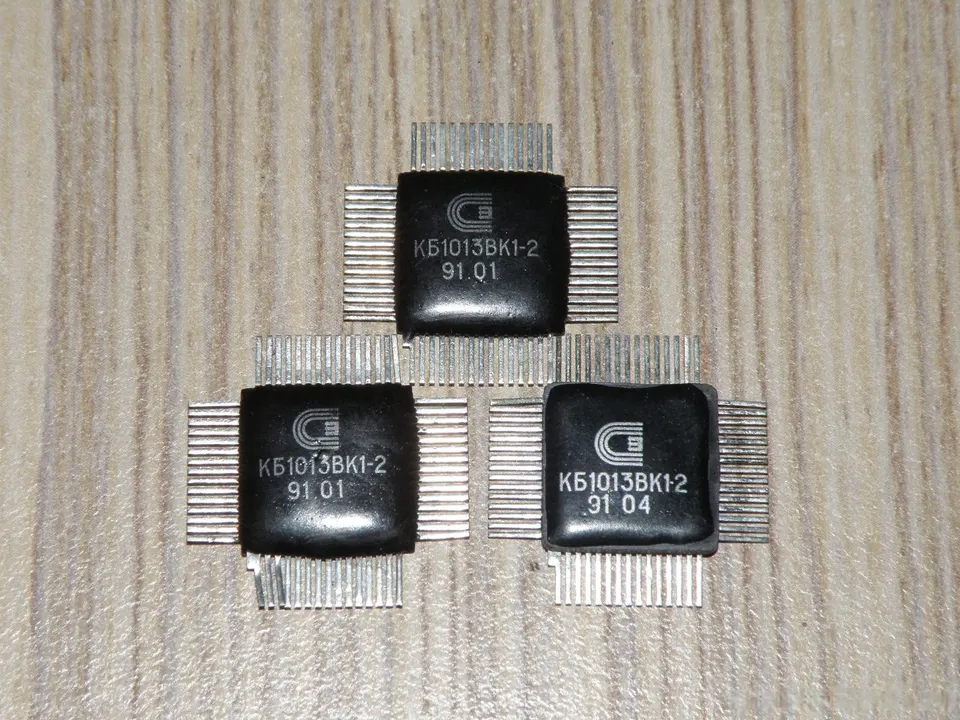
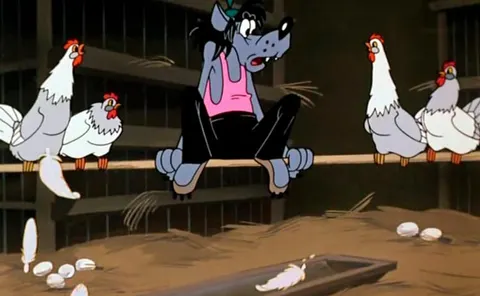
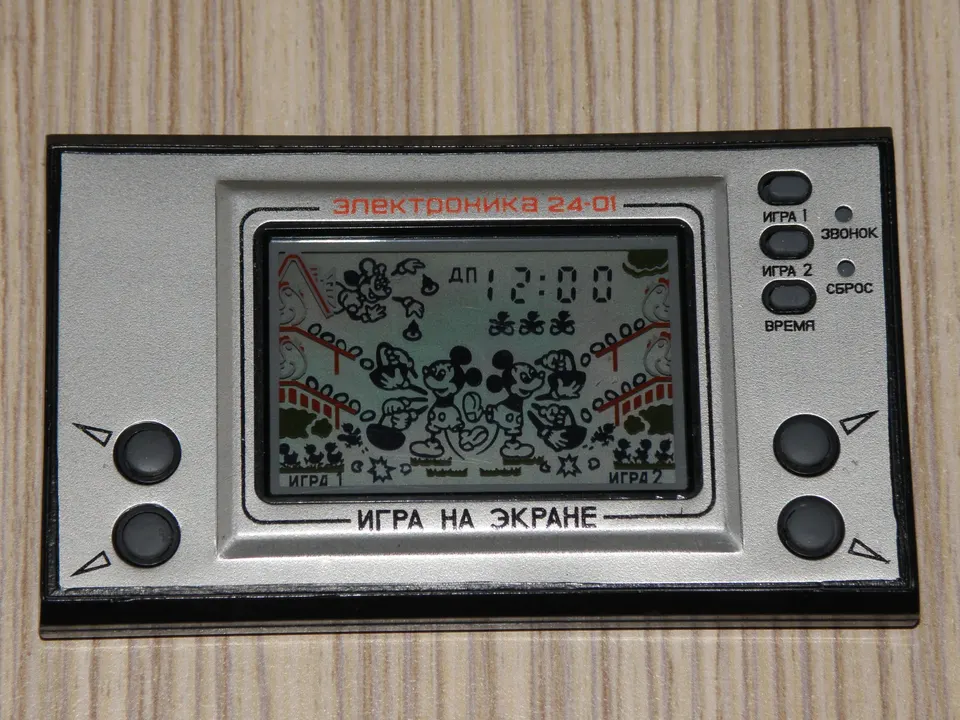
Nobody asked about the rights. Soyuzmultfilm was state-owned, and Disney was far away. So alongside it came the Elektronika 24-01, in which Mickey Mouse catches the eggs and Minnie rings the bell. Then a whole family followed: “Tainy okeana” (Secrets of the Ocean) is Nintendo’s Octopus, “Vesyoly povar” (The Merry Cook) is Chef, “Kosmichesky most” (Space Bridge) is Fire, “Razvedchiki kosmosa” (Space Scouts) is Explorers of Space.
An Egg for an Egg
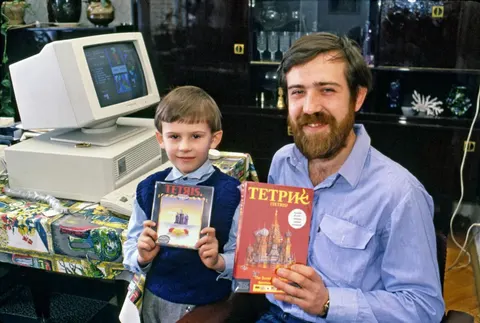
1984, the year of the wolf with the basket, was also the year in which, at a Moscow computing center, Alexey Pajitnov wrote Tetris. On an Elektronika-60 computer. The same brand. In one and the same year, Elektronika copied the Japanese game and created the Soviet one that would conquer the world.
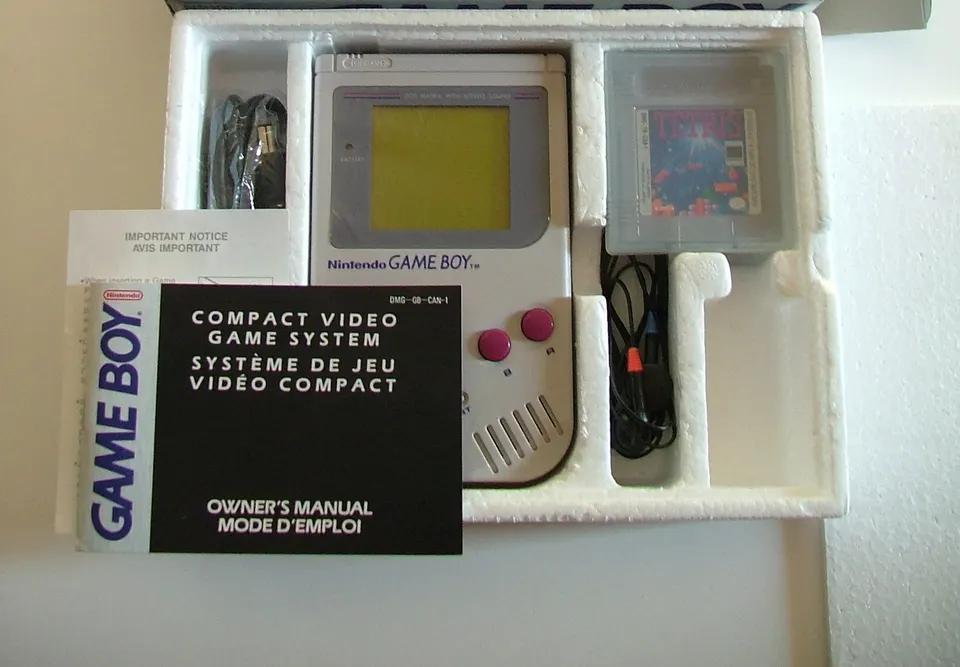
Five years later Yokoi made the Game Boy, and Henk Rogers, the man who held the rights to Tetris, persuaded the head of Nintendo of America to put it in the box, not Super Mario. The argument: Mario is for boys, Tetris is for everyone. Thirty-five million copies sold. The Soviet game sold the Japanese console all over the world, just as the Japanese game had sold Soviet electronics.
Claude, Catch the Egg
Finally, I ran an experiment. I asked Claude to make Nu, Pogodi! in the browser. One sentence: four chutes, a wolf, a basket, a hare in the little window, half penalties, misses wiped at 200 and 500, speeding up. It took minutes. 112 lines of code. Instead of liquid-crystal segments, the wolf, the eggs and the hens are emojis, but the rules are the same, and at a thousand points the counter goes back to zero. I hadn’t asked for that. In the code, right at that spot, the model had left a comment on its own: “as in the original: goes from 999 back to 0, only faster; no cartoon.”
It had obviously read about the legend, too. You can try it below these lines.
A Trusted Paradise
The name Nintendo, as we’ve discussed before, means something like “trusted paradise.” But paradise has a fence. Addressing shareholders in the summer of 2024, President Shuntaro Furukawa said that generative AI “can be used in creative ways, but we recognize it may also raise issues related to intellectual property,” so Nintendo would continue “to create value that is unique to Nintendo and cannot be achieved through technology alone.” Put plainly: we won’t be using it.
The company whose game was copied down to the last byte without anyone asking it now worries about being copied by a machine that doesn’t ask anyone either. History doesn’t repeat itself; there are always new brushstrokes.
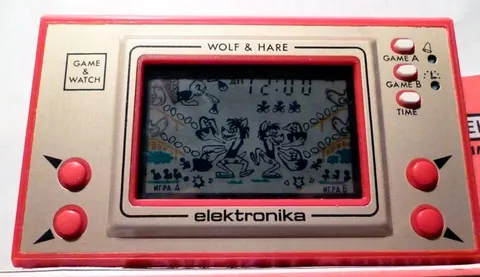
And if you’d like to catch a few eggs on the wolf’s behalf, you can find the game online for around 100 euros, and it also exists as a browser extension.
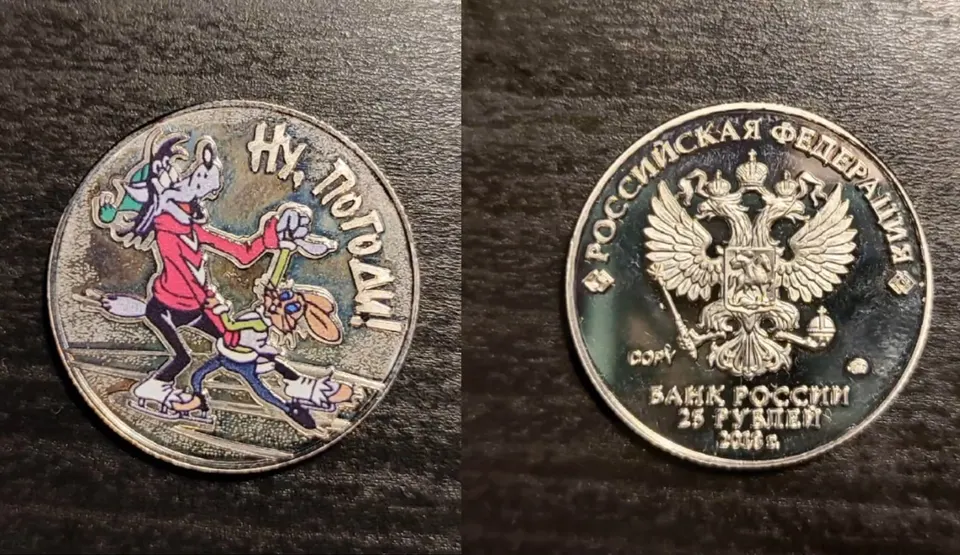
Everything new is the well-forgotten old. Or… the other way round?