By the time he turned 30, he had piled on quite a few pounds and was sliding down the slippery slope of alcohol, cigarettes, even drugs… But he decided it was time to change. He stepped timidly into the nearest gym. Then he started running. Not to run away, but to keep running, ever forward… and inward, toward himself.
He hasn't stopped to this day. He has finished dozens of marathons and ultramarathons and logged more miles than some of us put on our cars. He has run across the Sahara in temperatures that could melt a chip. And beyond the Arctic Circle, where the inhuman cold can snap off the finger that reaches for your phone.
Krasimir Georgiev is here, and he keeps running toward himself and for the sake of others. Soon he faces an even harder task—to spend weeks alone with himself, in front of all of us, with nowhere to run. To remind us who we are, where we are headed and what truly matters in our lives…
If They Chase You, Run!
You don't believe in miracles? Well, I can't find a more accurate word for what happened to the chubby 30-year-old who walked into a gym for the first time and asked the first trainer he came across to help him lose the extra weight. Would you have guessed that a few years later the same man would be running 200-kilometer ultramarathons? That he would run hundreds of kilometers across the Sahara in temperatures above 50 degrees Celsius, and then beyond the Arctic Circle, where it is 50 degrees again, only below zero?
The story of Krasimir Georgiev is a genuine miracle, and so is the man himself, with his wise outlook and his stirring fate, which makes people wake up and start running to catch up with their lives and with the things in them that matter.
The story begins in London, where Krasi was working as a cook at the time. “I had completely let myself go, I didn't like myself at all. I wanted to lose weight, I thought that was my biggest problem,” our hero recalls. At the nearest gym he was lucky enough to find not a trainer but a friend, someone with the power to motivate him to change. To this day he keeps in touch with Matt, the instructor who welcomed him to the gym and showed him the treadmill.
Will I Run Away from You?
As a child Krasi did sambo, the Soviet-born martial art, but apart from that he never went near sports. And since he isn't among the tallest, he had been told from an early age that running wasn't for him.
It turned out that it was. To put it mildly… The man stepped onto the treadmill and, with tremendous effort, managed to stay on it for a whole minute. “The first time I trained a bit, then I went outside and lit a cigarette. My lungs had just opened up, I felt awful, I started coughing. And I told myself: ‘Krasi, this won't work!’ I made the decision to change everything, and off it went…,” the ultramarathoner recalls.
The first workouts were devastating; he felt wrecked, even though he had covered only token distances. But then, quickly and steadily, things got going. “The one minute became 5, 6, 10. I started with small steps, I had no idea what would happen, my only goal was to lose weight.” Well, that happened very fast—he shed 25 kilograms in three months—but he also sensed that a much bigger change had begun.
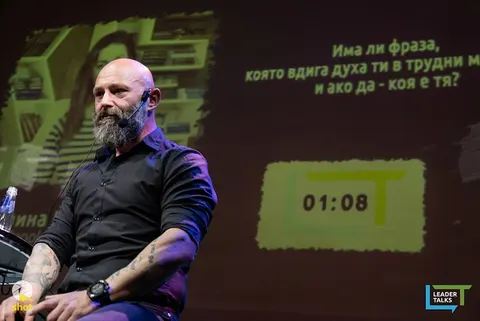
And I Start Running
“When I ran my first 10 kilometers, I already knew I could do anything. When you see that you started from nothing, that you couldn't put one foot in front of the other, and soon you're running 10 kilometers, it feels like you've done something out of this world. I loved it, it turned out to be a whole new universe! When you see the change in the mirror, the motivation comes too, you start telling yourself: I'm not so bad! You build confidence, it gets easier to talk to people.”
Without noticing, he had changed his whole environment. He had parted ways with all the friends who were dragging him back down the slope. “I left them all, I said that's it. Whoever of my old friends wants to, can come with me. No sentimentality! It was a matter of life and death—either you move forward, or you stay there, do nothing and sink.”
He found his new friends among people who run. “Super cool people, they get up in the morning, run, get together, talk about running. I got really hooked. I told myself: hey, I can run! I'm short and stocky, but I can run! That's how it started. There was always some carrot—the first 5 kilometers, then 10. After that I decided I had to bring my times down. I moved on to 15, 20 kilometers…”
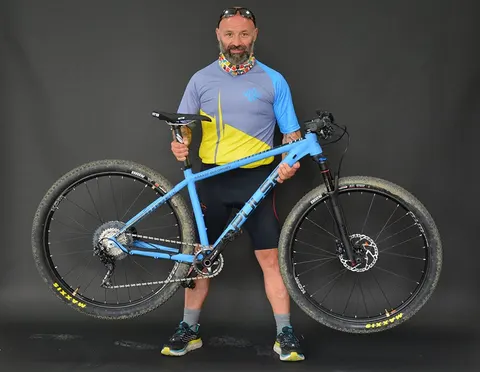
What I Talk About When I Talk About Running
That is how he reached his first big goal—the marathon distance. After a year of training with Matt, they decided the time had come for him to enter a race over the classic 42 kilometers. His first marathon was in Edinburgh. “I went and… what a crazy feeling! Every kilometer I wanted to stop, but I kept telling myself: come on, just one more. That's how I got to the finish…”
Almost imperceptibly, running turned from a hobby into a way of life. Krasi began traveling the world practicing what he calls “running tourism.” He would arrive in yet another city on Friday and look around. On Saturday he ran the marathon, and on Sunday he flew home to be ready for the working week. First he toured Europe, then moved on to the rest of the world. He ran more than 60 marathons, getting to know worlds and cultures.
Until at one point he felt… that even this distance was too short for him and it was time for the next step. Remember the 30-year-old who couldn't run for a minute? Well, now 42 kilometers weren't enough, so he moved on to 100…
His first ultramarathon was again in Scotland: 120 kilometers that take about 22 hours. He had just arrived when he learned the race had been canceled. Even so, he got together with other runners and they decided to run the distance anyway, without organizers, without support, without even anyone to hand them water.
“What feelings didn't I go through,” Krasi recalls. “First enthusiasm, you're thrilled to have started such an adventure; after 20 or 30 kilometers you wonder what you're doing here, how you'll last another 70 kilometers, everything hurts. You go through depression, euphoria, you're angry, you lie down and die. In 22 hours you go through every human emotion. Once you've been through it, it's different. Then you subconsciously make a kind of plan, you know what to expect. But the first time is horrible. I didn't give up, and I can't describe the feeling when I saw the finish. Afterward I got on the sleeper train and didn't move for 12 hours, I only woke up in London.”
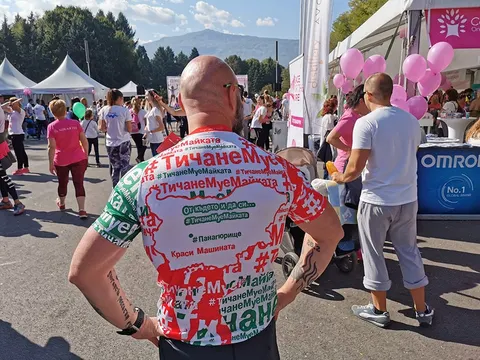
Burnt by the Sun
The next step? 160 kilometers. In Cambodia he ran a 230-kilometer ultramarathon. It must be handy not to need a car to get to the beach… But the merry-go-round kept spinning faster, and even the kilometers were no longer enough. Krasi decided to change the scenery. To turn up the heat on the challenge. That is how he ended up in the ultramarathon across the Sahara.
“The Marathon des Sables is the father of all races,” the runner says. “It was started 45 years ago by two Frenchmen who decided to cross the desert with two jerrycans of water. At first there were 5 or 10 people; by 2013, when I did it, around 900 had completed it. This race is iconic, something like Everest for runners—you run 260 kilometers across the dunes at 55 degrees.”
In the desert marathon the organizers barely intervene; the participants choose for themselves what to carry in a backpack weighing between 6 and 14 kilograms, and they are required to provide themselves with 2,500 calories a day. They use dried, high-calorie foods that can be cooked quickly on the little stove from the pack. Everyone carries a sleeping bag, a blanket and a venom pump for poisonous creatures, which sucks out the wound if something bites you. They run in gaiters that protect the feet from the desert conditions—if a single grain of sand gets into your sock, it causes horrific injuries.
During the marathon Krasi saw a man ahead of him running in a zigzag. He caught up and realized the man was a hair's breadth from dehydration and would soon lose consciousness. He helped him come round, get to the next aid station and called the medics to take care of him. Then he carried on. “We finished the race, and three or four months later I'm in London, watching TV, and I see a familiar face—it turned out this man held a very senior position at Google. He has millions, but he almost died in the desert. That's exactly what you're reminded of out there, and you should remind yourself often. That it doesn't matter how much money or how many houses you have. What matters is the people you have around you.”
On the Ice Rink
Then Krasi abruptly changed the scenery again, going from +50 to… -50 degrees. The conditions were even more frightening, the runner says. “In the Sahara, if something happens, you have a flare, you fire it and a helicopter comes. But beyond the Arctic Circle they let you go, give you GPS coordinates and say they'll see you in 10 days at the finish. You drag a sled weighing about 60 kilograms, and in it you have a tent, a hatchet, everything you need to survive 10 days at -50. That's where I was most afraid, because it's no exaggeration to say you could die at any moment,” Krasi admits.
It was especially hard because he had never been in such conditions; until then he had trained in Hyde Park in London, where temperatures rarely drop below freezing. He had to learn a lot of tricks quickly. For example, how to get water from snow—you fill the bottle and keep it against your body so it thaws.
If you use an ordinary headlamp, the battery freezes in minutes; you need one with a cable, so the battery can be warmed by the only natural “stove” you have—your body. How do you dry your socks at -50? You tuck them between two shirts while you move. And how do you get up to go to the toilet at night? You have a red bottle for emergencies and another one, also in the sleeping bag, that you drink from. “Yes, you can mix them up. It happens, you're exhausted, on the edge of life, and that's the least of your worries,” Krasi says.
And I'm Gone in a Puff of Smoke
Doesn't he ask himself why he has to put himself through all this? “Oh, of course, every day, but my answer is that I want to see how far I can go. I started with a minute on the treadmill, and then I'm running 200 kilometers beyond the Arctic Circle. These are adventures, emotions that few people get to experience. It's something great!”
There are only three hours of daylight in every 24; for the rest they walk in darkness. Several of his companions literally barely survived.
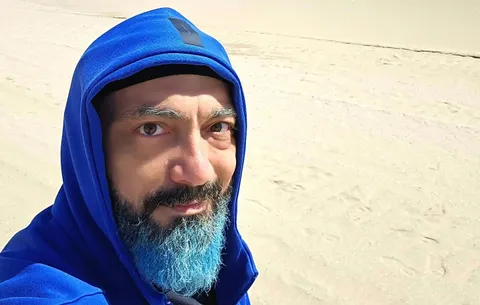
At these temperatures your hair, beard and eyebrows frost over. “Everything has to be completely covered, because your finger or your ear can fall off very quickly,” the runner says.
Well, luckily nothing fell off, and he finished this adventure safely too. “After a race like that I went back to London. When you see how people freak out over the most ordinary, stupid things—that the bus is two minutes late, over some nonsense—it makes you laugh,” the ultramarathoner says. “Civilization has spoiled us terribly, we're all overindulged, and that, in my opinion, is killing us. It's pulling us away from meaning.”
“You can die just like that, in one second of carelessness. In places like that you realize how ridiculous everything you worry about at home is. How absurd it is for us humans to quarrel and fight over nonsense.”
The Not-So-Lonely Long-Distance Runner
In the meantime Krasi had decided to move to Cambodia, came back to Bulgaria for a month, but… he liked it and decided to stay. Around that time the idea came to him to use his next challenges to draw attention to important causes and help raise money.
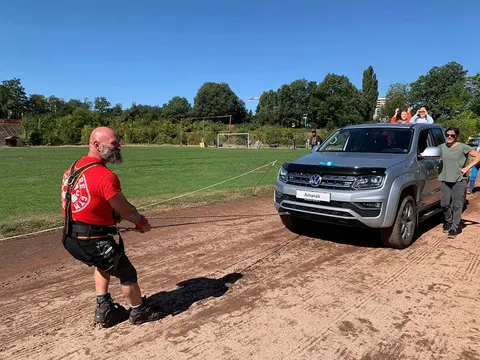
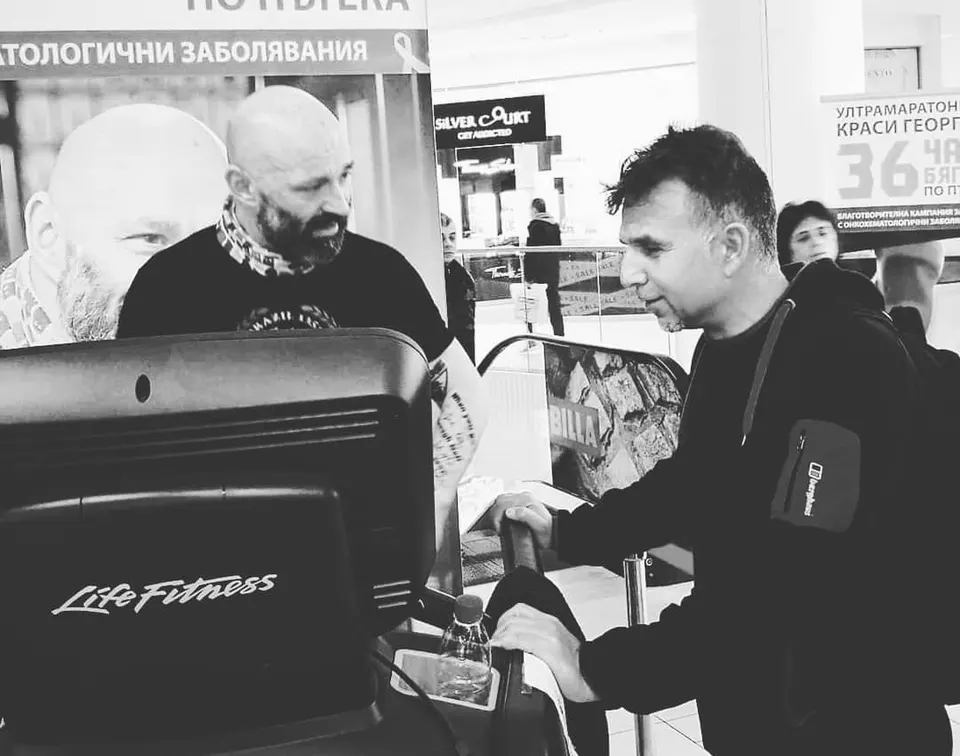
So in recent years he has set himself a series of challenges on home soil. He ran for 36 hours without a break on a treadmill in a shopping mall. He ran the route of Pan-European Corridor 8 from Varna all the way to Albania. He ran for 55 hours nonstop in Plovdiv, inviting anyone who wanted to join him for a few laps. He pulled a heavy pickup truck.
“I challenge myself and do things that make me happy, and above all I help someone—that's great! There has to be something bigger than you pulling you forward. That's why I do all these charity ventures: when I'm feeling at my worst, I can tell myself, I'm doing it for someone. Our brain is made to be terribly lazy, it really doesn't want to bother with nonsense. That's why I choose to help people, and that way help myself too, so I can see through what I've started.”
He still has so many plans and ideas, chasing the limit of what he can do. This year he had planned a 5,000-kilometer run around the Black Sea, but the plans fell through because of the war. He plans to run the Silk Road, 10,000 kilometers that would take him a year. Another goal is Antarctica—he wants to cross it alone, even though he knows how dangerous that is.
Which Way the Wind Blows
“Running gives you a lot,” Krasi sums up. “You know that life is one big marathon, there will be ups and downs. It'll go well, then it'll get awful, but that too will pass. By running you learn precious things like that, things you'd never think of if you were sitting on the couch cracking sunflower seeds.”
And so we come to the far more unusual challenge he will face very soon. As he says himself, if until now the emphasis has been on physical effort, this time it is his mind that will be put to the test. For at least three weeks the ultramarathoner will live in a transparent box in front of the Ticket Center of the National Palace of Culture (NDK), Sofia's huge congress and concert complex, in full view of all of us.
The only privacy he will have is in a hidden toilet; the rest of the time he will be alone under our gaze, and passersby will be able to set him challenges. He will have no phone, no computer—just himself and the passersby. As Krasi admits, this situation worries him far more than even the polar run.
So, do you still think there are impossible things?