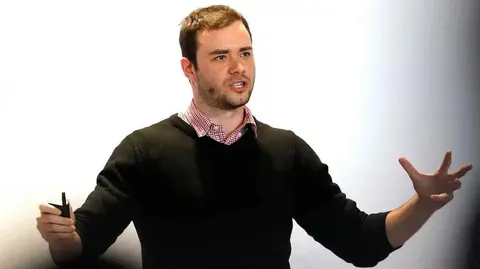
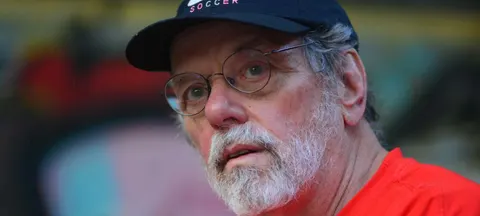
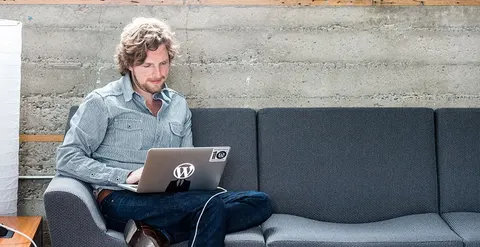
Linus. Even if you have no interest in technology, the name will surely ring a bell, sounding like… Linux. The operating system that today carries on its shoulders much of the technology we use every day.
It really is named (almost by accident) after its creator. Linus Torvalds is one of the good heroes of the information age. One of the people who built today's internet without being tempted to turn their skills into billion-dollar fortunes and monopolies that quickly take on ugly, manipulative colors. There are so few such people that they deserve to be mentioned more often. However heavy the cliché, without Linus Torvalds we would have neither Linux nor Git, and without them the online world would not just be different—it would certainly be a much darker and less pleasant place.
Linus and the Dragon
What do you do if the building catches fire? Git commit, git push, and run outside as fast as you can.
Only people from the world of information technology and those who love to code will get this little joke. Still, every single person whose life is connected to computer code in some way will get it. Because just as Linux, the first great creation of our hero, changed the way we relate to computers, his second technological offspring, also born almost by accident, allowed programmers to work far more easily, in a standardized way and without risk on today's enormous software projects.
Linus Torvalds was born on December 28, 1969. If you are among the readers who care about both code and children's literature, you may already have raised an eyebrow at the headline—the Brothers Lionheart, from Astrid Lindgren's novel, are Swedes, while everyone knows the programmer was born in Finland.
And yet he belongs to the Swedish minority in that country. And just like the Brothers Lionheart, while still very young and almost by accident, he found himself the leader of the free-thinking people in the online battle for democracy in the 1990s. Well, we won't claim that his rival at the time, Microsoft, was as charming as the dragon defeated by the two brave brothers, but the association is not without logic.
Grandpa's Computer
One of his grandfathers was the founder of statistics in Finland, the other a well-known poet. His father, Nils, was a journalist who later turned to politics. Today he is serving his second term as a member of the European Parliament, and some believe he has a chance of running for president of his country.
The future programmer was named after Linus Pauling, the scientist who won two Nobel Prizes, for chemistry and for peace.
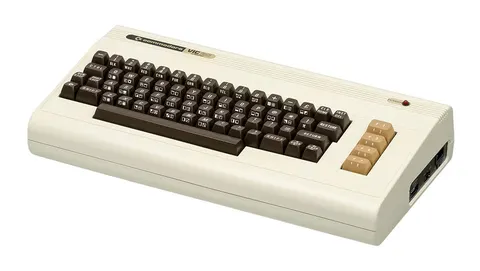
Our hero first sat down at a keyboard when he was just 10. He was lucky that his grandfather had bought the supermachine of the day, the Commodore VIC-20. Of course, today a computer with a 1-megahertz processor and 5 kilobytes of RAM (the deluxe version had 32) seems laughable, but those were the times. Its capabilities proved enough to make the kid fall for technology and get into the BASIC programming language. He found it so fascinating that a few years later he was already studying computer science at the University of Helsinki.
The Chrysanthemum Operating System
For his studies, in August 1991 he bought his first personal computer. He paid a whole $3,500 for an Intel machine with a 33-megahertz processor and 4 megabytes of RAM. The computer ran MS-DOS, Microsoft's free solution, but Linus much preferred the UNIX-based systems he had seen on the university's computers. He installed the Minix operating system from a floppy disk and… didn't like it at all. It seemed to him that it didn't work well, the more polished versions cost money he couldn't afford, and so he decided… to build an operating system himself.
Just a few weeks later he posted a message in one of the great-grandfathers of online forums, saying he had created an operating system. Anyone who wanted could download it for free, and it would be great if they then shared their impressions. And something more, unheard of until then: Linus shared the entire computer code of his project, down to the last line. That way any enthusiast could suggest ideas for improving it.
Linus and the Revolution
In this way, two revolutions happened at once for the computer world. In effect, the phenomenon of open-source software was born, one of the most meaningful directions in making programs. And for the first time users got a high-quality, lightweight operating system that anyone could use as they saw fit.
The support of his professors helped. Linus says that from the very start he insisted it should not be a student project, but Finland's higher education system looks very kindly on meaningful side ventures.
At the time, Microsoft ruled the world outside, and Windows was considered the holy of holies despite its hefty price, which made Bill Gates the first computer billionaire and the richest man on the planet for two decades.
Linux, however, quickly found fertile ground. Users liked it, and programmers liked it even more. Many different versions of the operating system soon appeared, each aimed at a particular purpose. Ubuntu, for example, resembles Windows in its convenience for the end user, but for long stretches it has been considerably faster and easier to use. Kali Linux remains the weapon of hackers and of those who fight them. And then came the time of Android, which also stands on Linux, giving mobile phones what is today (by a wide margin) the most used operating system.
All this changed the computer world as a whole. Yes, Windows is still alive and still paid, but all the biggest companies today race to have their own open-source solutions, because the approach turns out to be useful even for them.
Give me Git
While working on Linux, its creator ran into an annoying problem once again. More and more developers were gradually joining the project, which created plenty of difficulties. One would propose a change while another had meanwhile been working on the same file… Version control systems existed at the time, but they definitely didn't do the job for a project like Linux, which kept growing. And Linus decided to take the same approach—since he needed a working solution and none existed, he built it himself. Well, no longer entirely by himself, as at the dawn of his first big project: he had a solid team of programmers who joined forces to create Git. Something simple and, it is no exaggeration to say, perfect.
Today Git is in every software project in the world, without the slightest exaggeration. The system is, once again, open source, and it makes programmers' lives many times easier. The basic workflow is convenient and relatively quick to learn. Programmers work on one project without getting in each other's way. At any moment a change can be rolled back in seconds if it turns out to have “broken” something. Every programmer has access to the whole project and its entire history, and can track which change was made, when, by whom and why.
To people outside the software world this probably sounds a bit abstract. It is very hard to find a fitting comparison from another profession, and still: Git is an undisputed jewel that makes the work easier, standardizes it and makes programs more reliable. And these days that is a blessing not just for programmers, but for every user of every program—which means all of us.

Billionaires Basking in the Sun
So what is Linus doing today? He must have become filthy rich, grown tired of his main job and, as is fashionable among billionaires, taken up colonizing space or chipping humanity?
Not in the least. His projects, being open source, are definitely not that easy to make money from. Well, I'm not saying he can't afford a beer with friends, but his fortune is estimated at $150 million. That's not little, but it is somehow out of proportion to his achievements and to the moneybags in the previous paragraph.
Otherwise, his main occupation to this day is taking care of the Linux kernel. That part of the operating system which lies at the heart of how it works and has kept evolving to this day, 30 years after the inexperienced young man took the first step. All other versions of Linux rest on this kernel; the work carries great responsibility and must be done with precision.
In 1997 Linus went to work for the microprocessor maker Transmeta and moved to California. Six years later he changed jobs and became a project coordinator at the Open Source Development Labs, a consortium set up by giants such as IBM, Intel and Siemens to work on the further development of the Linux community. He still lives in the United States, but now in Oregon.
In 2000 Steve Jobs invited him to work on macOS, but Linus turned down the tempting offer.
Unix for Freaks
So here I am telling you about some modest, stubborn programmer, which somehow… contradicts the fact that today we all keep mentioning a slightly altered version of his first name. If he is like that, how and why did he give his operating system that name? There are quite a few stories on the subject, but they all claim it happened almost by accident.
In its first days the platform had no name. “I called it Linux for convenience, but I never intended to release it like that,” the programmer says. “It really was a great working name, but if I had thought of making it official, people would have thought I was some kind of egomaniac and wouldn't have taken me seriously. So I chose a very stupid name, Freax, as in ‘free Unix.’”
Except that, according to the most widespread version, Freax also sounded awful to the first system administrator, Ari Lemmke, who decided, without asking the author, to release the first more official version of the project under its working title. Which the community quickly took a liking to.
As for Git's name, the story shows once again that our hero doesn't suffer from an overly marketing-minded approach… which, at least to me, these days, is wonderful. In the very first release of the system, Linus listed seven possible things the abbreviation might stand for, each more absurd than the last, so users could pick for themselves. He's no Shakespeare, but truly, “that which we call a rose by any other name would smell as sweet.”
“The team joked that I always name everything after myself, this project included. In English slang, ‘git’ means a stupid person,” Linus says. Listening to him, he sounds like an interesting companion over a beer. One of the things that sets thoughtful people apart has always been the ability to laugh at themselves.
500/500
At first the fight was hard. Linux was not as easy to use as Windows or macOS, but that was not our hero's main goal anyway. From the very first moment, his solution stood out for its remarkable stability: it was efficient and almost never crashed.
Gradually the operating system received extra support from unexpected sources. Companies that were powerful in the 1990s, such as Netscape, Corel and Intel, embraced it as a cheap alternative to Windows and began backing the project in one way or another. Thanks to its open code, a big advantage was that it could be built upon and used on all kinds of systems.
Linus certainly had the luck to create the right thing at the right moment. But, more importantly, he made a product of a high enough standard. As he himself puts it, “there are lots of Linux users who don't care how the kernel works, they just want to use it. And that's a testament to how good Linux actually is.”
Today Facebook, Google and Wikipedia largely rest on Linux. Even in Microsoft's own cloud service, Azure, most projects rely on the rival operating system. Of the world's top 500 supercomputers, the number running Linux is… 500.
Today a huge community stands behind the project. In 2006 only 2 percent of the kernel's code had been written by Linus personally; he mostly coordinates the process. Still, that percentage is quite high, since by then thousands of programmers had “had a hand” in it.
The Accidental Revolution Goes On
Today Linus looks ahead and keeps going strong, with Scandinavian stubbornness. “I'm 51 now and I enjoy what I do,” he said in a recent interview. “What would it be if I hadn't created Linux? Weeding the garden? No chance in hell. But you can ask me again when all the kids have flown the nest.”
He has three daughters, now between 20 and 24. Let's hope he won't rush into gardening after all; in the meantime he might give us something else as meaningful as his two enormous projects.
As mentioned, he doesn't lack a sense of humor. His daughters' birth dates (converted into hexadecimal numbers) are used as hidden commands in Linux.
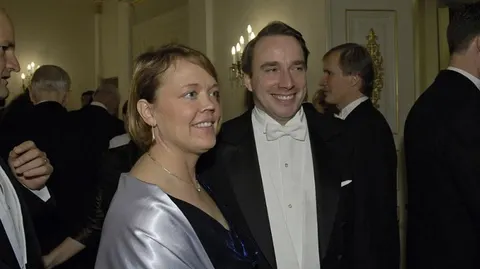
The story of how he met his wife, Tove, with whom he is still together, is an amusing one. She is a six-time Finnish karate champion. He met her while teaching classes at the University of Helsinki. In 1993 he gave his students a homework assignment… to send him an email. Yes, today it sounds rather funny, but we really are talking about different times. Tove sent an email asking him out on a date. Three years later their first daughter was born. This may well be one of the very first online love stories ever.
“The Story of an Accidental Revolutionary.” That is what Linus called the book in which he and David Diamond tell the story of his two great projects. And its first sentence reads: “Just for fun.”
Sexy Software
In any case, our hero says he has never in his life made plans more than six months ahead—neither for personal matters nor for the development of the Linux kernel. He is confident that a rather serious circle of specialists now stands behind the operating system. He says he can't picture himself still programming at 70, but 20 years ago he thought the same about today.
“Software is like sex: it's better when it's free,” he likes to joke. Hardly anyone would argue. And one more comparison: “A computer is like air conditioning. It becomes useless when you open windows.”
He is sometimes accused of the harsh tone in which he speaks. But people still forgive him, for instance, for writing about “fucking Nvidia,” given that their graphics cards work best with his operating system.
Linus does not like public appearances at all; he feels uncomfortable in front of large audiences and avoids them whenever he can. His best-known hobby is scuba diving. Nor is he a fan of social networks—the only profile he ever had was on the long-departed Google+.
Linus the Liberator
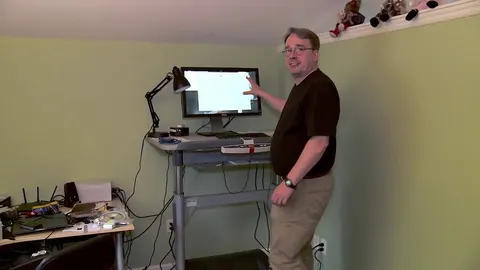
That is the title of one of his rare talks to the community of Linux fans. In it he says: “There are two golden rules in life. The first is ‘do unto others as you would have them do unto you.’ For some reason people associate it with Christianity, and I'm an agnostic. The second rule is: ‘Be proud of what you do.’”
In his view, programming can't be called an art; it is more focused on “proper engineering.” “As an engineer, I believe very strongly that details matter. In fact, details are the only thing that really matters. If you get the details right, the rest will follow,” says Linus Torvalds. And also: “Most good programmers do it not because they expect to get paid well or to be recognized by people. They do it simply because programming is fun.”
Today it is certainly much harder for one person to create something as revolutionary for the whole world as our hero managed to. And yet, far from motivational speeches, had he thought the same back then, we would all have lost a great deal today. “Nobody has ever told me I'm cool. I'm just the thing halfway between a normal person and a tech geek,” Linus says with his trademark smile. Well… here's hoping there are more people like him.