They say journalism is the second oldest profession. Because once the first one appeared, somebody hurried to report what had happened. This Digital Story isn't really a story at all, just a collection of reflections. Where did the people whose job is to get facts to readers, to the audience, start out, and where have they ended up? Where did influencers come from, and why is their place at the end of this chain of professions so important?
I'm sharing the entirely non-binding opinion of a former journalist who has enough time at the retirees' club to ponder these subjects over a cup of tea and a spoonful of white preserve, the snow-white sugar sweet Bulgarian grandmothers serve to guests. All while we are still waiting for artificial intelligence to step in and make its contribution in its role as a seeker of truth.
The Naked Truth
So here is what the thread along which information has been spun over the last century looks like. I make no claims whatsoever; communication researchers would probably have a good laugh, but then I've had a good laugh at them too, and laughter, they say, is the best medicine.
Come on, let's call everyone in this lineup creators of content that is not fiction but aims to inform a particular audience.
Shortly after journalism, advertising stepped onto the field of communication. In some way, for many decades the two complemented each other and, ideally, kept apart, without meddling in each other's goals. Advertising has never claimed to be truthful, although over the years regulation has at least partly made it possible to set rules that keep it from containing false claims.
Then the current millennium drew near. Some researchers rushed to proclaim the end of advertising (which never came) in favor of the rise of public relations, or “PR.” Of course, for many journalists the Bulgarian abbreviation ПР stands for „пречим на работата“ (prechim na rabotata, “we get in the way of work”)… And although by definition the idea of this profession is the opposite, the fact is that its very nature demands that when a piece of information harms the organization or person the PR people work for, it be concealed and manipulated. Not to mention that this field increasingly comes in the phrase “crisis PR,” and then nobody can convince me that there are any forbidden methods for that type of specialist.
An Instinct for Truth
After that came digital marketing with all its countless subdivisions. By all signs, this form of communication will reign for a long time, because the digital transformation has moved a huge share of the exchange of information online. Of course, this isn't even a single profession; there are far too many distinct “departments”—from copywriting and social media to SEO and who knows what else.
As Vassilena Valchanova, a specialist with vast experience, put it superbly in an interview for Digital Stories, “to some extent, content creators in marketing work exactly like media in terms of the production cycle. But on the other hand, they are terribly subjective. You can't rely on any journalistic ethics, on a mandatory presentation of different points of view.”
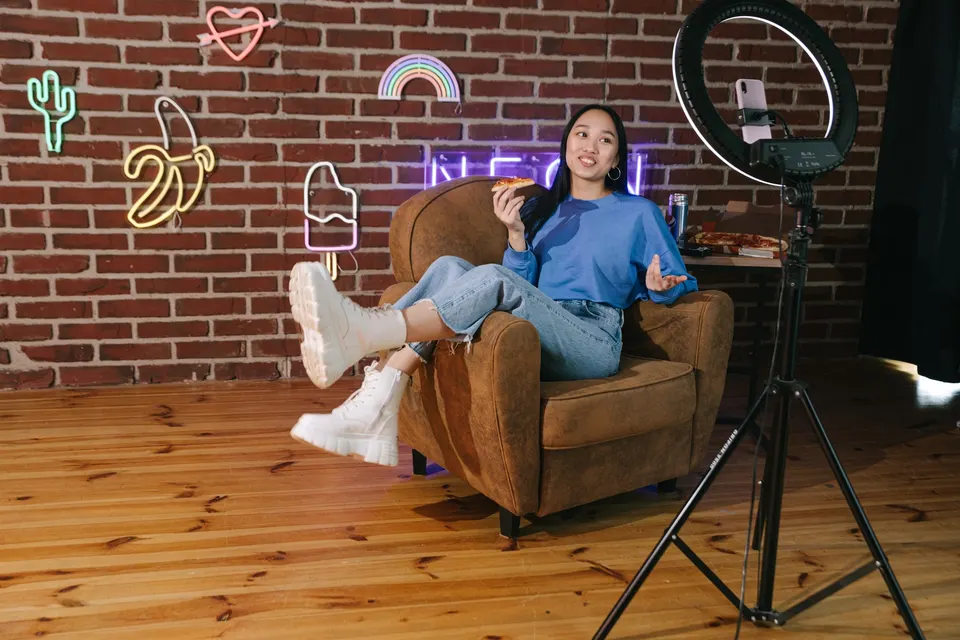
And so we've reached the cherry on top, the influencers. Because they are, in themselves, a peculiar link that shapes communication. And although there are nuances, of course, in the most widespread form of this phenomenon they are, in my view, the end point in the abandonment of the search for truth.
The Truth Gazette
I keep repeating “truth this, truth that.” But what is it? Is there one and only one truth? Nothing of the sort, of course. Your truth is not my truth. Just as there is no such thing as a “good person,” a “perfect social system,” an “honest politician.” But once we stop fighting to seek out that kind of facts, stories, subjects, we are doomed. So what is truth, after all?
We won't waste time peering into weighty philosophical sources—where do we look when we don't know something? The question is too dumb to be rhetorical. We won't use Google because of the filter bubble. As I said, we have no connection to academia, we're ordinary users, so we'll trust good old Wikipedia in its rather well-tended Bulgarian version.
“Truth is a philosophical concept that has no single definition, but is most often defined as a statement or utterance in accordance with the facts or with reality. (…) In colloquial language it means sincerity in one's actions. The opposite of truth is a lie.”
Truer than True
Actually, I think that's short, precise and clear. You look for a way to present the facts and reality as best you can, while being sincere in your actions. How close do the two professions at either end of the communication path we've sketched come to this?
Once again we ask the impartial free encyclopedia.
“Journalism is the practice of gathering, analyzing and interpreting information about current events, topics, phenomena, personalities and trends of contemporary life, presented in various genres and forms and distributed to a mass audience.”
I especially like the next sentence, although it touches on a different subject:
“Under certain circumstances, journalism can also be regarded as a science.”
Sometimes it's a science, sometimes it isn't, ha-ha… But never mind. The poor influencers (poor metaphorically—financially they're nowhere near as poor as today's journalists) don't even have their own page on the Bulgarian Wikipedia to explain their existence. There's one only for the marketing genre whose instrument they are.
“Influencer marketing is a form of marketing, a channel for promotion and sales, in which visible and impactful personalities on social media, the so-called influencers, draw attention to their lifestyle, and in particular to the products and services of various companies they use, thereby creating a channel for promotion and sales.”
Homegrown Influencers
Our local influencers are definitely not yet as significant a phenomenon as they are in the West. There are exceptions, of course, which you can probably think of right away, especially if you're on the younger side.
Besides, it would be a big mistake to slap some common negative label on all of them. What's wrong with someone becoming popular, say, with a cooking blog? If they have a talent for cooking, if they're useful to their readers, helping them find their way through the thickets of the culinary arts? Absolutely nothing.
There are two problems. When people become famous simply for being famous.
And when the audience starts to perceive them as sources of reliable information. Which they could be, but that's far from certain.
The Good, the Bad and the Influencer
Let me tell you a short story without comment. A few years ago I was walking around Sofia with a friend of mine, a vlogger who was quite popular among teenagers at the time. A pretty young girl came up and, without any lengthy introduction, said to the influencer: “Thank you. Because of you, I didn't kill myself!”
All of us need authorities, and in recent technological years we've been trying every way we can to destroy them. There are almost no undisputed public figures left who unite us in our approval.
We people also need reliable sources, truly good examples. Only online it's hard to offer a good example with a good story without the traditional hater comments, or just plain idiotic ones, worming their way in underneath. Comments that leave a sour aftertaste even after the most perfectly balanced story in terms of flavors and spices.
A Grain of Truth
We're pushed to simplify, to look for the good guy and the bad guy. In bigger languages, simply because they're bigger and there's a critical mass, there are “meaningful” influencers who are talented writers, popularizers of science. But even there, in influence and interest, they lag drastically behind the “simply famous.”
I'd be very glad if you corrected me and it turned out that in Bulgaria, too, there's a truly popular influencer who creates something meaningful, beautiful, inspiring, connected with culture or science. (The only one I can think of was our guest on Digital Stories, and said the wise words: “the onli thing i cud do was eat, sleap and go to the toylet. with thos skils i had no uther choyce of profeshun exept to becum an enfluenser.”)
My Friend the Influencer
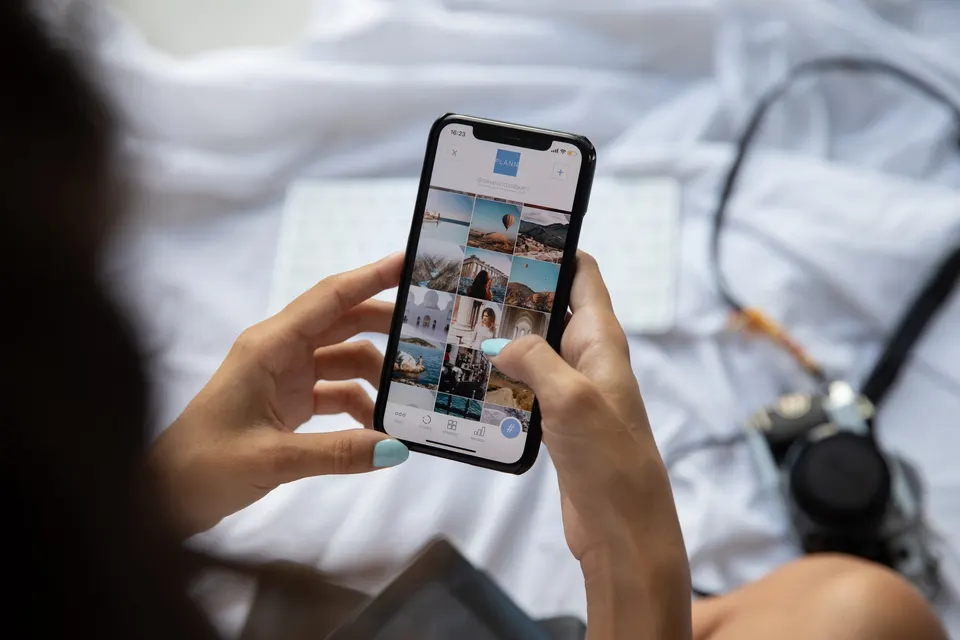
Which of us doesn't want to be famous? To be liked—yes, it's no accident that the communication-killing system of “likes” is so successful on social media. Who doesn't enjoy being recognized on the street? And on top of that, making a living just from being famous, by posting the occasional photo on Instagram with some company's pink socks or a particular laundry detergent…
What's more, the internet shortens the distance, because influencers are both undisputed authorities for their audience and, deceptively, seemingly within arm's reach of every follower. You can always write to them, comment… like. This, however, blurs the line considerably when we get to the marketing side of things and how they can use their role as both celebrities and “your friend” to recommend something to you.
Even advertising has regulations on content, protection against misleading claims, some minimal ethics, while here… there's no way anything like that could happen.
Ideal Petrov on Instagram
There's another aspect we should think about. As psychology professor Daniel Wagstaff told the BBC, “the problem with influencer culture is that it feeds us a false image of what is normal in terms of appearance and success in life. An image that our normal lives simply cannot achieve.” In other words, we're stepping deep into a fiction that is far too well disguised as reality.
Let's even set aside the fact that if you saw this “friend” on the street, you might not recognize them because of the brutal Photoshop interventions in their pictures. In fact, this type of influencer could easily one day be digital people who don't exist offline at all. There's simply no way anyone would notice, as long as the technology is good enough.
Then again, having seen the photoshopped pictures of certain stars and the stars themselves in person… I think it's already good enough.
A big part of the problem is that to become an influencer you don't need any meaningful talent whatsoever. Which is also the difference from the authorities of decades past, who were people from the arts, from sports, even from politics. No need for many additions or explanations; I'll say just one word, and if you've never heard it, you're lucky. Kardashian.
Eternal Glory to Fame!
And while we're visiting across the ocean, it's worth mentioning this year's HBO film Fake Famous (you can watch it with Bulgarian subtitles thanks to the Dokumentalni project here).
One of its main themes is how our lives have changed in the pursuit of likes and followers. Suddenly, of all the landmarks in Los Angeles, the most sought-after and visited becomes… a pink wall. Just a pink wall, where people come from all over the world to have their picture taken.
Meanwhile, the answer to a question we've always asked kids—“what do you want to be when you grow up?”—has in recent years in the US boiled down to almost just one. Yes, the one you're thinking of.
But what exactly does it mean to be an influencer? Do you know how many people have more than 1 million followers on Instagram? You'll be surprised. 40…. only it's forty million! And a total of 100 million have at least 100,000. Well then, is it really such a source of pride that the little numbers keep growing?
The main part of the film is a social experiment. From a casting call with 4,000 participants, the filmmakers choose three people to turn into influencers. The core of the technique is buying fake profiles, bots, through which the follower count grows quickly. And for hardly impressive sums, on the order of a hundred dollars or so.
Bali on a Budget
Then, of course, comes the right content, the glossy bimbo photos, the proven strategy. They pretend to be in Bali while they're actually in IKEA. Along the way, two of the three drop out of the experiment because they simply can't stand the “fame” they had dreamed of so much.
When their main star reaches 100,000 fans, suddenly countless companies start contacting her, offering her gifts, trinkets and direct advertising deals.
You have to be brazen and promote yourself to succeed in this kind of competition—that's one of the indisputable conclusions. And one of the indisputable problems with the whole subject.
In the US, Generation Z, as they call them in the West—those born shortly before and after the start of the new millennium, today's young people between 16 and 26—make up 40 percent of active users. Something similar surely holds true for other countries too. They spend an average of 3 hours a day on social media. What do you think—in the coming years, will influencer marketing, and influencers as its consequence, shrink in reach and importance?
Food for the Soul
I don't know. For me, truth remains an inseparable part of freedom, and the ideal, even utopian, point that should guide us in the way we get our information.
In recent years it's become very fashionable to scrutinize what we eat. The food should be real, well seasoned, prepared with love and skill.
Personally, I still believe it may soon become fashionable to think about what we feed our souls, too. To look for the same qualities and choose carefully. Then, somehow, journalism will return to the lead, or at least produce some heir suited to our times.
Perhaps the factors will gradually settle down, at least a niche will be found for genuine authorities, the criteria will be refined. Or exactly the opposite: the simplified worldview and the false idols will keep dragging us down in online communication. And in our own development as informed beings.
Until then, salvation is individual. It's in the hands of each of us, drowning in a sea of information full of little fish, of fake heroes…