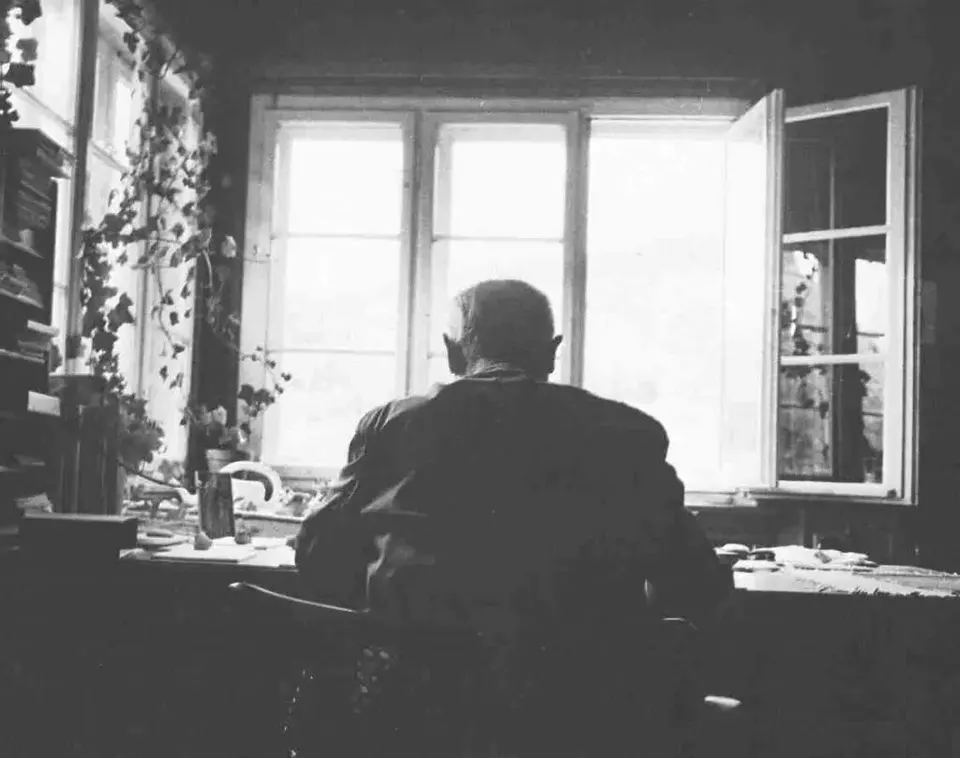
“We remain unfree and chained to technology, whether we passionately affirm it or deny it.”
Sounds timely, doesn't it? More timely by the day, in fact. With the first quarter of the 21st century behind us, we have surrounded every step of our lives with technology. It dictates our working days, it connects us to the people closest to us, and to a large extent it shapes the way we think. By all appearances, we are nowhere near the limit of this love-hate dependence—quite the opposite. With the rise of artificial intelligence, we face the next generation of challenges. And that strips us of more and more freedom in exchange for overtrust.
The words above belong to a man who never scrolled through Facebook or TikTok and never held a smartphone in his hand. And perhaps that is exactly why the social dissection he offers of our relationship with technology is so precise and impartial, so prophetic and so historical. It comes from the past to give us a new view of the future.
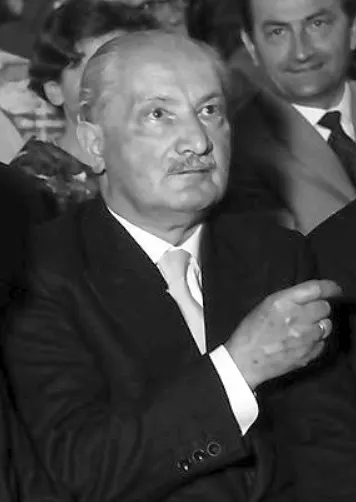
Martin Heidegger was one of the most controversial philosophers of the 20th century. Today his words—specifically about our relationship with technology—matter more than ever. Here are 10 selected quotes for us to discuss.
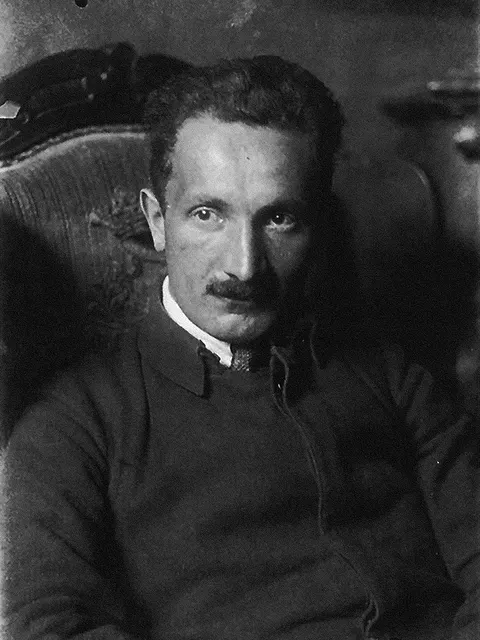
1. AI Out of the Bottle
“The will, as they say, is to ‘get technology spiritually in hand.’ The will is to master it. The will to mastery becomes all the more urgent the more technology threatens to slip from human control.”
Heidegger was controversial in his own time, but he is undoubtedly the philosopher who managed to capture the spirit of the great subject. Technology, technique, is here to change every aspect of the way we interact as human beings.
2. Precious Captivity
“Above all, modern technology is not a tool and no longer has anything to do with tools. I am not saying that we are captives of technology, but that we do not yet have a path that corresponds to the essence of technology.”
The philosopher was born four years after the Unification—the 1885 union of the Principality of Bulgaria with Eastern Rumelia—in 1889, in the small town of Messkirch. “Kirch” means church in German, and he, too, was first drawn to theology before deciding to devote himself to philosophy. Incidentally, he is the very philosopher who said that his own discipline would soon be replaced by cybernetics.
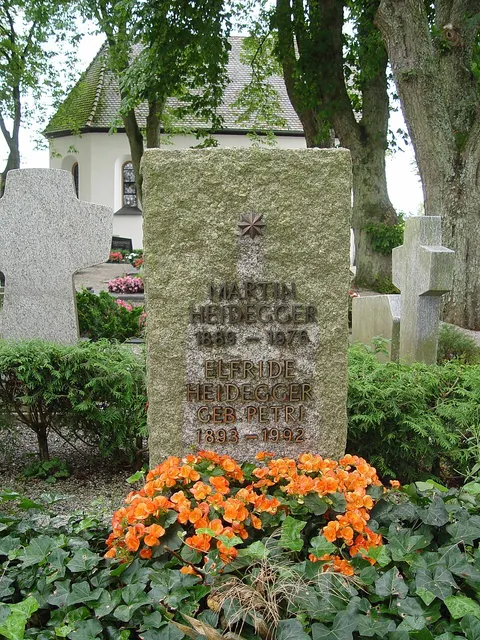
Early in his academic career he was captivated by logic. During the First World War he served in the army, though far from the front for health reasons. In 1917 he married Elfride Petri, with whom he stayed for the rest of his life.
In 1927 he published Being and Time—a book that rearranged 20th-century philosophy with the idea that the key to being runs through concrete human existence.

3. Democracy, You Say?
“Over the past thirty years it should have become clear that the planetary movement of modern technology is a force whose magnitude cannot be underestimated. For me today the decisive question is how a political system—and which one—can be adapted to the technological age at all. I have no answer to this question. I am not convinced that it is democracy.”
I'm not at all convinced either, at least not in the form we know it. And yet it is extraordinary, almost impossible, to imagine that Heidegger reached these insights long before computers became widespread, before anyone was even talking about artificial intelligence.
But why did we say he was controversial? In 1933 the philosopher became rector of the University of Freiburg and joined the National Socialist Party. His rectoral address from that same year remains one of the most debated documents connected with his name. In 1934 he resigned as rector, but his party membership and the positions he took during that period left a lasting mark on how he is regarded.
After the Second World War he was banned from teaching. He was rehabilitated in the late 1940s, but he would suffer all his life for the decision to support the Nazis. Some of his actions weigh heavily here too: as rector, he refused to appoint two lecturers because of their Jewish origin, and for the same reason he himself removed the dedication of his best-known book, which had been dedicated to his teacher Edmund Husserl.

4. Uprooted Man
“What is uncanny is precisely that technology is uprooting man from the earth more and more. I was frightened when I saw the pictures of the Earth taken from the Moon. We don't need an atomic bomb at all. The uprooting of man is already a fact. All that remains are purely technological relationships. What man lives on today is no longer the earth. Recently in Provence I had a long conversation with René Char, the poet and Resistance fighter. In Provence, rocket bases are now being built, and the land is being laid waste in unimaginable ways. The poet, who certainly cannot be suspected of sentimentality or of glorifying the idyllic, told me that the uprooting of man now under way is the end, unless thinking and poetry once again become a nonviolent power.”
Of course, let him who is without sin cast the first stone, as one popular read puts it, but it is only fair to mention that at the same time many other scientists who had collaborated with the Nazis enjoyed worldwide fame—it is enough to recall Wernher von Braun, who took man to the Moon.
Unlike Heidegger, who is often called “the spineless genius”—largely undeservedly, though that only became known after his death in 1976. Exactly a decade earlier, two journalists from Der Spiegel visited his home for a lengthy interview. In it, the philosopher spoke at length about the decisions he was accused of. But he also laid out his remarkable views on the future interaction between humans and technology. Most of the quotes you are reading come from that interview; the rest are from the 1954 lecture “The Question Concerning Technology.”
He himself insisted that the interview be published after his death, which, alas, makes it impossible (for now) to ask him follow-up questions. But there is no need, I believe, as you will see for yourselves that sometimes questions matter more than answers. And that pure, meaningful scholarship can sometimes look like a prophecy come true.
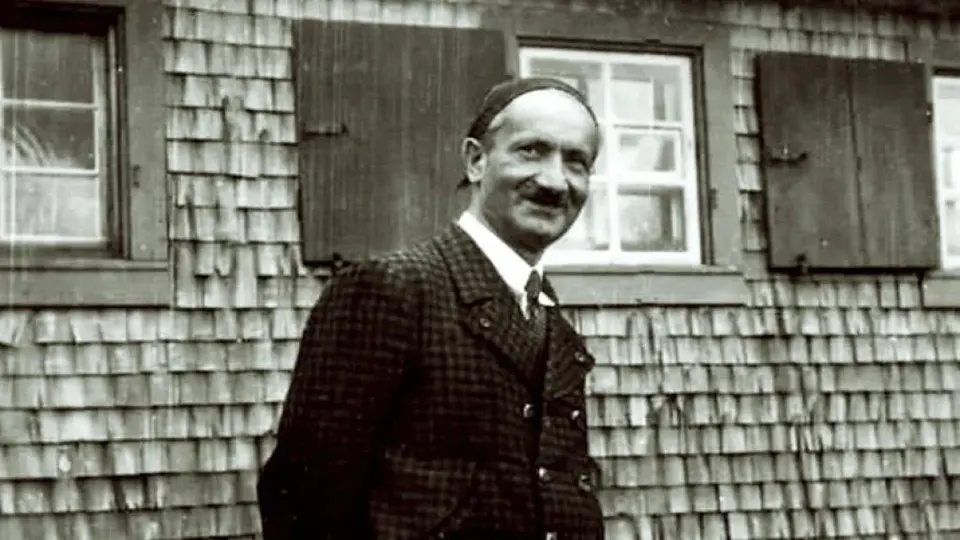
5. Man on Call
“I see the essence of technology in what I call ‘Ge-stell,’ an often ridiculed and perhaps clumsy expression. The rule of ‘Ge-stell’ means that man is placed at the disposal of, claimed and challenged by a power that is revealed in the essence of technology and that he himself does not control. Thinking asks nothing more than to help bring about this insight. Philosophy is at an end.”
Aren't we, more than ever, at the disposal of technology, which is supposedly meant to help us, to make things easier for us, to give our lives meaning? And not it at ours…
Don't we depend on the battle for attention? Don't we increasingly find our meaning in the reaction that reaches us through technology? Don't we fear technology and thrill to it at once?
Aren't we led along the thread of progress, doomed to greet every new technology that changes us, molding our daily lives like modeling clay, while as a species we remain just the same?
And in all this rush forward, couldn't art be the thing that leads us—even if only to slow us down?
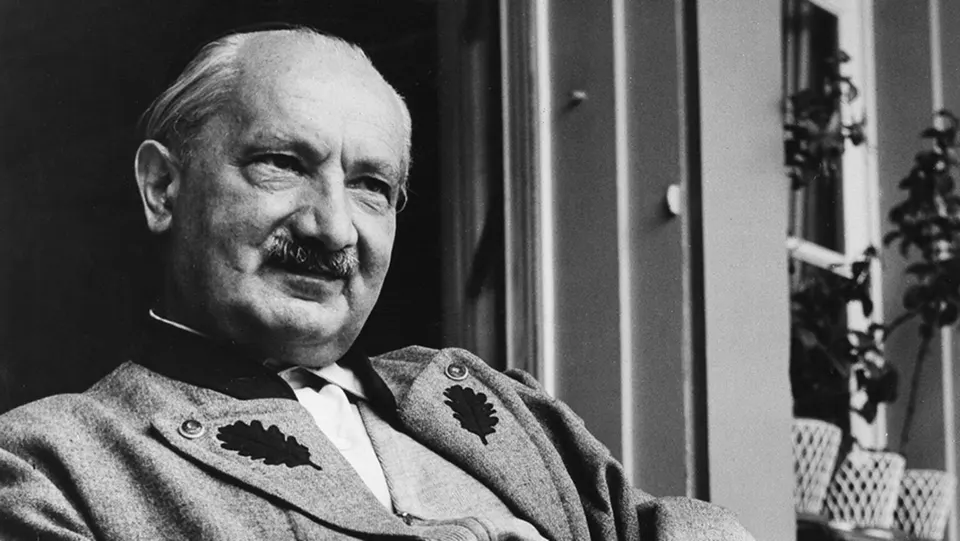
6. Close Encounters
“That is precisely the great question: where does art stand? What is its place? I do not see what points the way for modern art, especially since it remains unclear what it sees as the innermost essence of art, or at least where it is looking for it.”
Or is it too late? Have we managed to welcome the new forms, genres, ideas and plots of art in the new and so very different times we live in? Will it ever happen? Is it even possible?
Heidegger lived at a time when television and the telephone were only just arriving, but he clearly sensed the trend: technology makes the world “smaller” in space and time. In the essay “The Thing” (1950) he wrote that “all distances in time and space are shrinking”—airplanes, radio and automobiles were removing the barriers. Then the internet erased geographical distance once and for all. But it turned out that “this frantic abolition of all distances brings no nearness; for nearness does not consist in shortness of distance.”
Yes, art remains a form of survival. Even when algorithms write poetry indistinguishable from a human's. It's simply time for unexpected ideas.

7. Alone with the World's Destiny
“It is not a matter of simply waiting until, over the next 300 years, something occurs to man, but of thinking our way into the coming age, without prophetic pretensions, from the unthought fundamental features of the present era. Thinking is not inaction, but is in itself the action that stands in dialogue with the destiny of the world.”
I will never tire of repeating that this is why this site exists, just as I never tire of giving it a chance in its naive battle to start that conversation—about the world of technology and the path it is leading us down.
Heidegger approached the question of technology beyond its everyday understanding. What interested him, once again, was “the essence of technology”—that invisible something that makes modern inventions so all-pervasive.
For him, the essence of technology is not even something material. It is a way of revealing and disclosing the world. Technology does not simply serve man; it determines what we perceive as reality, and how.
8. Science and Technology
“Philosophy is dissolving into the individual sciences: psychology, logic, political science. And what will take the place of philosophy now? Cybernetics.”
Heidegger even adds that “modern science is an application of the essence of technology, not the other way around.”
From Heidegger we will come back to the everyday mundane drama of traffic cops, who will have to cope with the challenges of self-driving cars as well… —but they'll manage, I'm sure!—only to arrive at the most philosophical question of all.
What do we do now?
9. There's Water for Everyone
“The truth is that today man nowhere encounters himself, his own essence.”
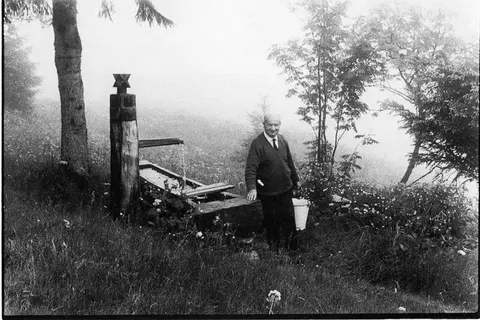
Our lives change, and so does technology. The old windmills drew energy from the wind naturally—letting nature reveal itself in its useful aspect on its own. But as Heidegger says, modern technology challenges nature: it “demands” raw materials and energy from it and rearranges it according to human goals.
He gives the example of the Rhine. For the poet Friedrich Hölderlin, it is a “majestic, free-born river that flows with its own voice and spirit.” For modern man, however, it is just an object “placed at our disposal.” “The river now flows only as an object on call for inspection by the tourist industry.”
In this way the technological gaze reduces things to their usefulness—we see the world through the eyes of an engineer or an accountant, and less and less often through the eyes of a poet.
10. On the Way
“What is dangerous is not technology itself. There is nothing demonic about technology; but there is a mystery in its essence. The essence of technology as a mission to reveal what is concealed. The threat to man does not come from the potentially deadly effects of machines and technical devices. The real threat has already affected man in his essence.”
Modern man easily gets lost in his own technological abundance. In the 1950s Heidegger wrote that “the truth is that today man nowhere encounters himself, his own essence.”
The technological environment lures us outward—toward the endless stream of stimuli and tasks—until we forget to look inward at ourselves.
Does that sound familiar in the age of the smartphone? Instead of staying alone with our thoughts, we check our messages. Instead of asking ourselves who we are, we scroll. And in these reflections on the screen, we lose ourselves.
Does anyone today talk to ChatGPT about philosophy? About literature? About meaning?
As we said, today is a time for questions, not answers. And, I hope, for a little admiration for Heidegger and for the people capable of peering beneath the surface of the topical. Are there still such people today?