How (Not) to Build Your Own (AI) Monster
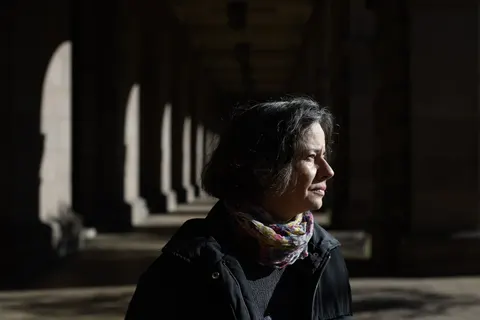
In an age when hyper-advanced AI is shaking up every corner of our lives, it gets ever easier to grant it human qualities. But how hard is it for a kind, meek, ever-helpful AI model to turn into… a villain? To become rude, discriminatory, insulting. Aggressive, threatening, even dangerous? It turns out to be a far less complicated task than we would like. Just as with people, where the thin veil of upbringing, civility and kindness slips off easily under the right circumstances, AI can show its ugliest face without all that much effort. We will see this for ourselves through a fascinating experiment described to us by IT specialist Damyan Deshev. Why does it matter? Because in times when advanced agents increasingly slip out of control; when open models can run on hardware anyone can afford; when we place more and more trust in ever more convincing and polished language models, the future of all of us depends on how well we discuss, understand and contain problems like these…
 02
“Let Humanity Have Its Fill of Playing with Technology”
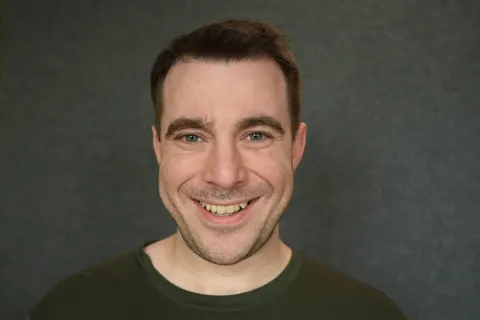
How did we lose the ability to wait, and why does it matter that we get it back? Will we learn to be bored well when technology supposedly frees up our time? What will the last book written by a human say? Violeta Radkova impressed me with her debut novel I legloto ni e zelenina (And Our Bed Is Green). She is a translator and editor, and her book rests on her great-grandmother's memories, written down in a grocer's ledger, while she wrote much of it on her phone. Caught up in the present, we talk about the future and the past, the fast and the slow. About books and meaning.
 03
“We Need Something Very Powerful to Reboot the World. Let’s Hope It Isn’t War”
Can the world order change without a war? What could be the event that does it today? How can we curb the power of the corporations that, in the age of technology, have turned out to be stronger than states?
 04
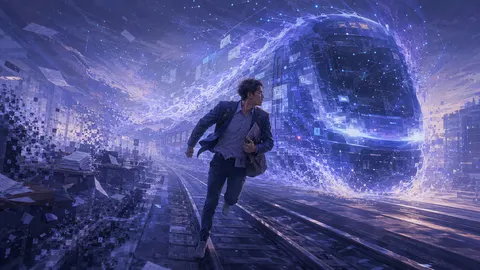
Out of Work?!
The question of the jobs AI is already taking over is only now reaching the agenda. How exactly will the technology change the professions? Whom will it replace, what new careers will it create, will there be any work left for people at all, and isn't it time we thought about introducing an unconditional basic income?
 05
Apocalypse. How?
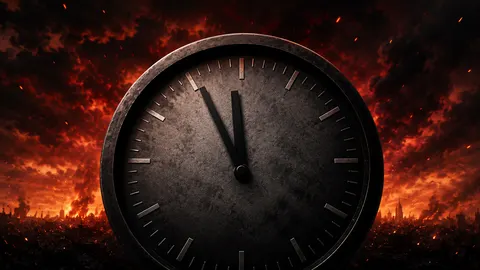
85 seconds. The symbolic clock that shows how close we are to the end of the world pointed to this insanely short time for the first time in 2026. The generation that not only remembers the last (so far) world war but also witnessed the first (may they also be the last) nuclear explosions is passing away. It is as if humanity's immunity is running out. Only we have no Mantoux test to remind us, to jolt us, to make us think. This is the most unpleasant Digital Story of more than 500. But I believe it is important to tell it. What would happen if one day a nuclear bomb went off somewhere in the world?
 06
*1984* in 2026: Was Orwell Right?
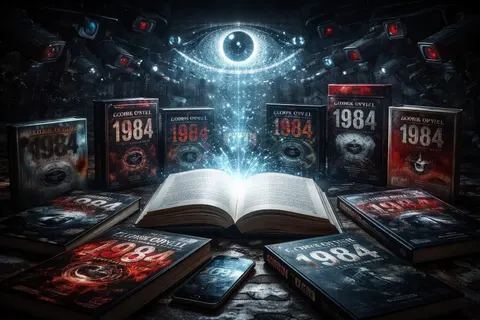
Eleven editions since 2021. That is how many new versions of one of the most discussed books of our time have appeared in Bulgarian alone over the past five years, ever since the 70th anniversary of George Orwell's death “opened” the publishing rights. Are we really living in Big Brother's world, or did Orwell turn out less accurate in his judgments than we think? Let's discuss this big and important question, because it also says a lot about the future.
 07
“We’re Already Generating a Tremendous Amount of Chaff”
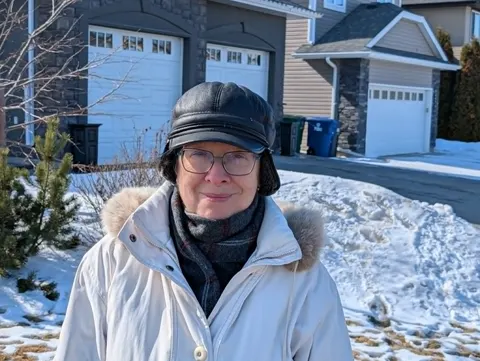
Can we stop the cognitive decline that comes with the enormous progress of artificial intelligence, and how? Can the pendulum of cognitive decline, of over-trusting technology, of a broken public conversation swing back, and how? We pit the optimistic and the pessimistic views against each other on the biggest question this site exists for. Prof. Julita Vasileva is a world-renowned researcher in computer science and in our interaction with technology. We met five years ago to talk about the filter bubble and about the way we interact and get informed online. Today she is researching an equally important and even hotter topic: can we turn the techniques of online manipulation against their creators?
 08
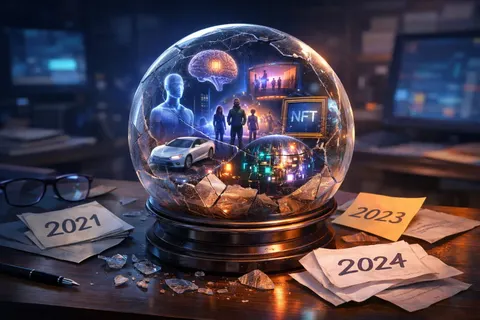
15 Predictions About the Future We Can Laugh At
Trying to peer into the future is a doomed challenge, yet reading tech predictions that never came true turns out to be unexpectedly entertaining, especially when… they are your own. In more than five years, I have published just over 500 Digital Stories. I will invite an impartial observer to assess them and pull out specific passages that have not aged well at all.
 09
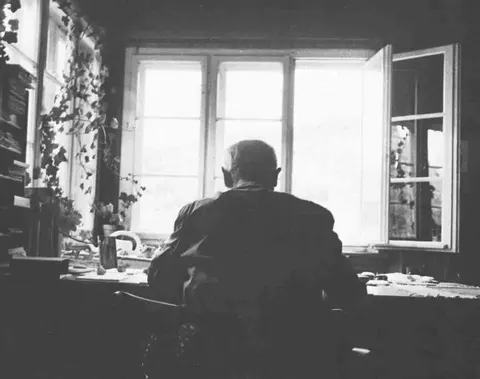
“Technology Is Uprooting Man More and More”
“We remain unfree and chained to technology, whether we passionately affirm it or deny it.” Sounds timely, doesn't it? Martin Heidegger never scrolled through a feed or held a smartphone, yet his words on our relationship with technology matter more than ever: here are 10 selected quotes for us to discuss.
 10
How Do We Peek into the “Thoughts” of Artificial Intelligence?
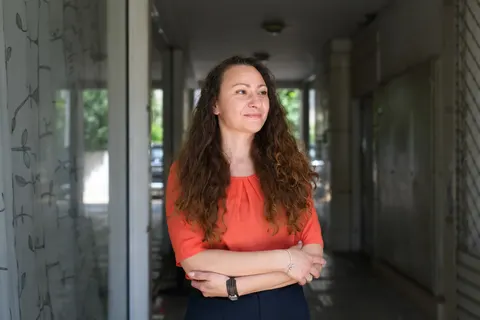
“Work, professional life, the drive to achieve corporate success and positions—this has become the mass culture of our society worldwide. To this day, many people find the meaning of their lives this way. From now on, we will have to change that. We will have to search for meaning.” We find ourselves in a time when the chatbot is not just an assistant but also a “therapist.” Before we even know it well enough, before we have laid down the ethical frameworks. We are already seeing the first challenges this brings, and the real problems are still on their way. Donika Borimechkova is a psychologist and psychotherapist with more than 15 years of experience. This time we decided to invite artificial intelligence itself to a therapy session. Because, as Donika says, many of her clients already get advice from it before they meet her. We never found a method or an approach that would let us run such an experiment, so we decided to discuss the subject, lay the foundations and then invite each of you to give us ideas on how to continue. Here is how this conversation begins.
 11
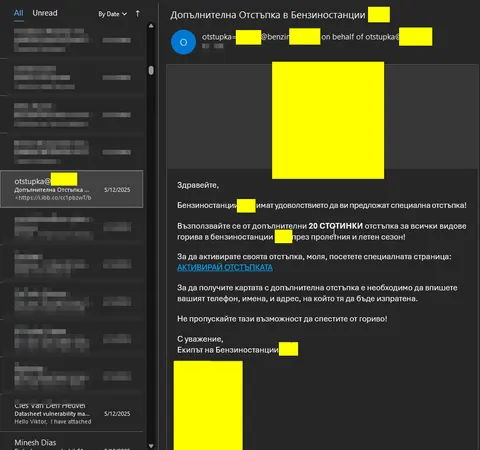
Experiment: How Many People Will Click the Dangerous Link?
A very important and revealing experiment. Together with cybersecurity specialists, we send emails to 393 randomly chosen Bulgarian addresses. We simulate a cyberattack to see how many people will fall for it. And the results are astonishing…
 12
“A Complex and Difficult Year Lies Ahead”
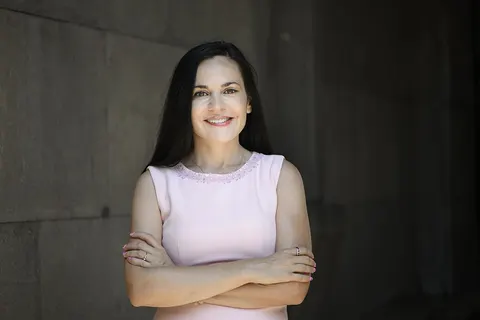
No, there's no astrology here, just pure science. How many scientists do you know who can predict the future with 85 percent accuracy? I know just one, and the verdict isn't only mine, but ChatGPT's too, from a particularly telling experiment. Assoc. Prof. Mariana Todorova returns for what has become a traditional Digital Stories interview at the start of each year. The futurologist always gives us important things to think about, so there's no need for a long introduction. Let's peek into the future together!
 13
Did We Get the Future Right? (An Experiment)
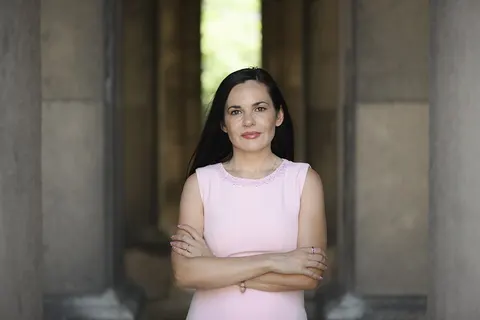
It is a Digital Stories tradition that every year begins with a visit from futurologist Assoc. Prof. Mariana Todorova. First, though, just hours after we rang in the new year, I have an especially interesting experiment for you. Have her predictions from our conversations so far come true, and to what extent? Can we check what has happened in the meantime, and whether it confirmed or refuted the futurologist’s words? How can we do it impartially? I will pick 20 specific quotes from the interviews and find an unemotional analyst to grade them. The results are astonishingly interesting!
 14
Slipping Out of the Net
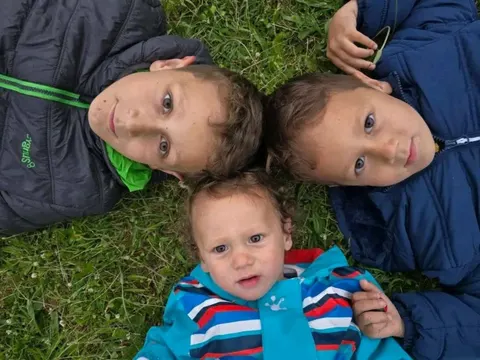
The internet keeps connecting us, and the internet keeps dividing us. But how many parts of our lives have we handed over to technology? This Christmas Digital Story follows a woman who found love online, built a family in England, and then decided to escape a society where everything happens on a screen.
 15
“Bulgarians Are Getting Smarter”
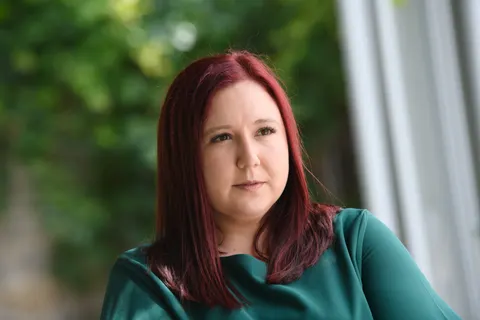
How is it that over the past 30 years Bulgarians… have been getting smarter, according to the only organization that provably measures this? Are programmers the largest group among those who pass the Mensa tests? Does intelligence still matter when technology handles more and more mental tasks, and why, in the days of the AI revolution, is it more important than ever to develop our minds?
 16
“AI Is Everyone’s Big Chance to Climb Their Own Everest”
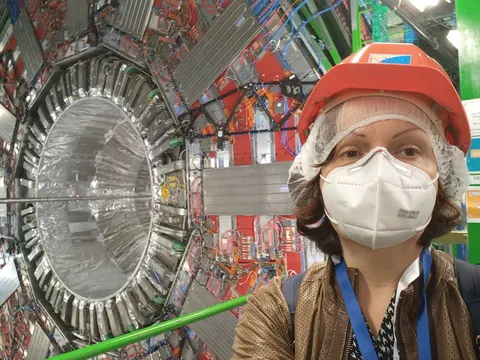
“The world stands at the Rubicon. We will live alongside smart machines, a new and different world awaits us, but are we ready for it?” That question, the very reason Digital Stories exists, is posed on the cover of her new book by today’s guest, Petya Minkova. In The Transition from the Digital Age to the Hybrid Civilization, she traces the long road from the first computers to a future of superpowerful artificial intelligence. And while the answer to whether we are ready is clear, there are so many other important questions we will discuss in the lines below! Do we have any future other than as a hybrid civilization of humans and technology? What does our survival depend on, and what will our daily lives look like once this transition hits with full force? Why is AI far more than a danger—why is it also a chance for each of us to climb our own personal Everest?
 17
Yuval Noah Harari: Prophet of a New Age
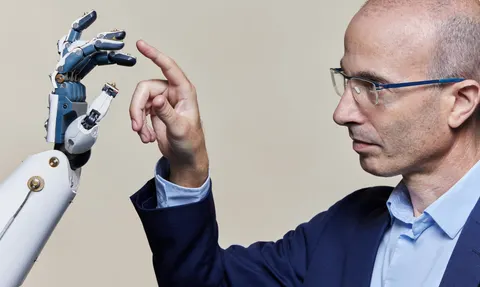
Yuval Noah Harari's name comes up again and again in conversations about the future: the historian and futurist who untangles the threads of humanity's past and poses the big questions of tomorrow. How did a history professor become the favorite author of Bill Gates, Barack Obama, Mark Zuckerberg and Bill Clinton while staying popular, translated, read and debated? A colorful figure beyond the stereotypes, and, to my mind, a valuable and powerful voice warning us about the immediate dangers we face as a species.
 18
“We Sacrificed Two Generations Because We Didn’t Know How Technology Works”
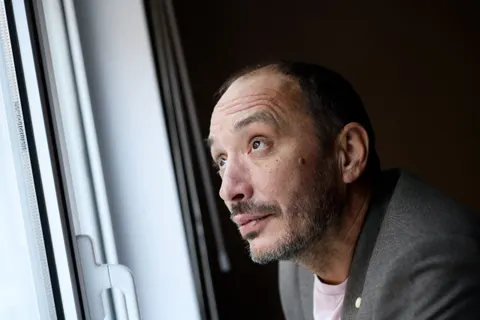
“We adults sacrificed two generations because we created something without knowing what it was or how it worked.” Psychologist, father and children’s author Slavi Stoev explains what excessive screen time does to children’s emotional and intellectual development, and why it changes them irreversibly. Is there a middle path for parents, and how do we find it before our civilization drifts into decline?
 19
“An Era Is Coming in Which We Will Have to Reinvent Ourselves”
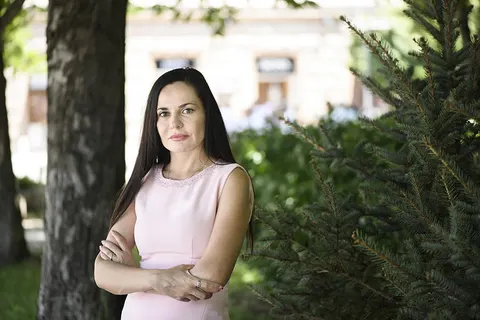
What will tomorrow look like? Why is “the era in which we will have to reinvent ourselves” approaching? What is worth teaching today’s children so they are ready for the future? Which professions will survive? And how do we find those ever scarcer skills that are worth helping them develop? Assoc. Prof. Mariana Todorova is a pioneer of Bulgarian futurology in its modern form. It has become a tradition for her to be my guest at the start of every year with forecasts that unmistakably come true. “We are returning to that most primal human quality of critical thinking, reasoning and debate.” “It is only a matter of time before most of the tasks we perform are taken over by artificial intelligence. We will live in permanent change, and at some point we won’t be able to catch up. As humanity, we could respond only through a global political consensus in which we decide that, even though the technology can do almost everything, people stay. But such a philosophy is deeply anti-capitalist, and imposing it would take either some boundless humanism or a dictatorship.” Can we be ready for the future?
 20
“The Epidemic of Ignorance Will Only Spread”
“Our inability to strike up a meaningful dialogue has left hundreds of thousands of people socially isolated. Some fall ill and die simply because they lack real human contact. I believe artificial intelligence will deepen this trend, because it will fool people into thinking they are talking to a friend, to someone they have lost, or to someone who refuses to hear them. And so we find ourselves in a world where we can supposedly talk to each other. But behind this apparent palette of viewpoints, of words, of word salad, including self-absorbed academic speeches, sit frightened, disillusioned people, impoverished intellectually and emotionally. To me, that is the great horror of our time.” Our conversation with the writer Silvia Tomova began with poetry and went on to education, history, the epidemic of ignorance and the long-overdue need for a social awakening. Against this backdrop, technology remained a constant companion, changing each of these subjects from the ground up. A journalist and special education specialist by training, she publishes essays, short stories and novels. The winner of numerous awards and the author of five novels and three short story collections, Silvia often peers into the past as well as into the big questions of today. She is not afraid to break out of clichés and to challenge the mainstream, both in literature and in public life. And so we meet for an important conversation that has come at just the right time.