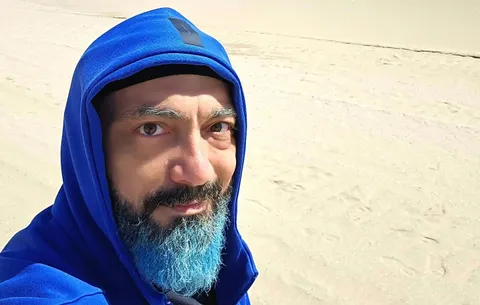
To run until you beat yourself. Sixty kilometers on the steep slopes of Pirin, the rugged mountain range in Bulgaria’s southwest, marathons, ultramarathons on several continents. To ride a bike 600 kilometers along the entire Bulgarian bank of the Danube. And to find the bike-and-run loop around Vitosha, the mountain that towers over Sofia, known as “Vitosha 100” and a favorite challenge of hardcore programmers, “a race for parquet-floor runners.”
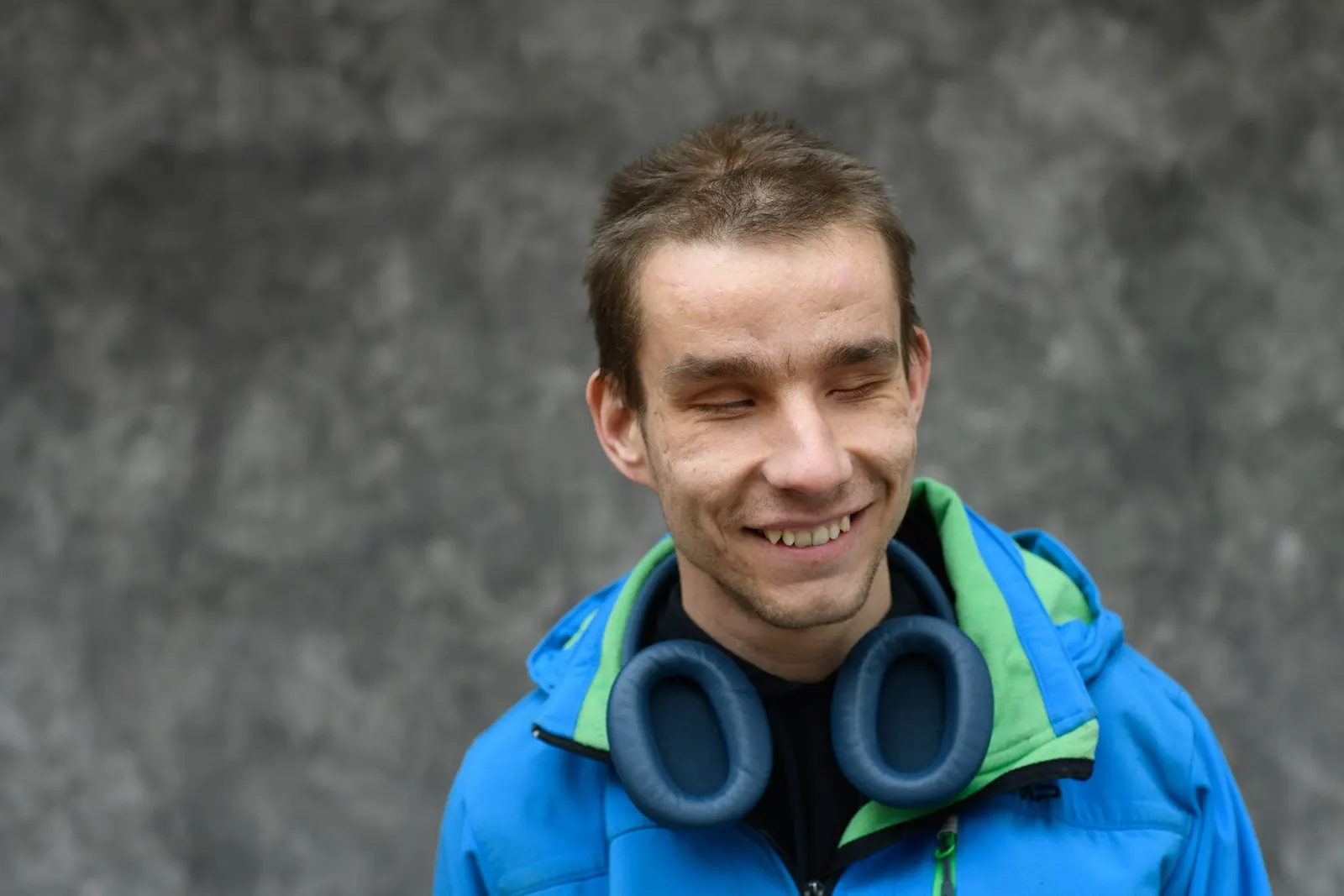
That is our hero today—Viktor Asenov, who loves to challenge himself, to run, to overtake and to show what is possible. He graduated in social pedagogy but never managed to build a career, disappointed by the way we in Bulgaria treat people with disabilities.
We can learn a lot from today’s digital hero, so we meet him and ride around Sofia. To talk about the challenges life throws at us and the ones we have to set ourselves.
Did I forget to mention that he is blind? But that doesn’t stop him from chasing records. Or from chasing his dreams…
Now Look…
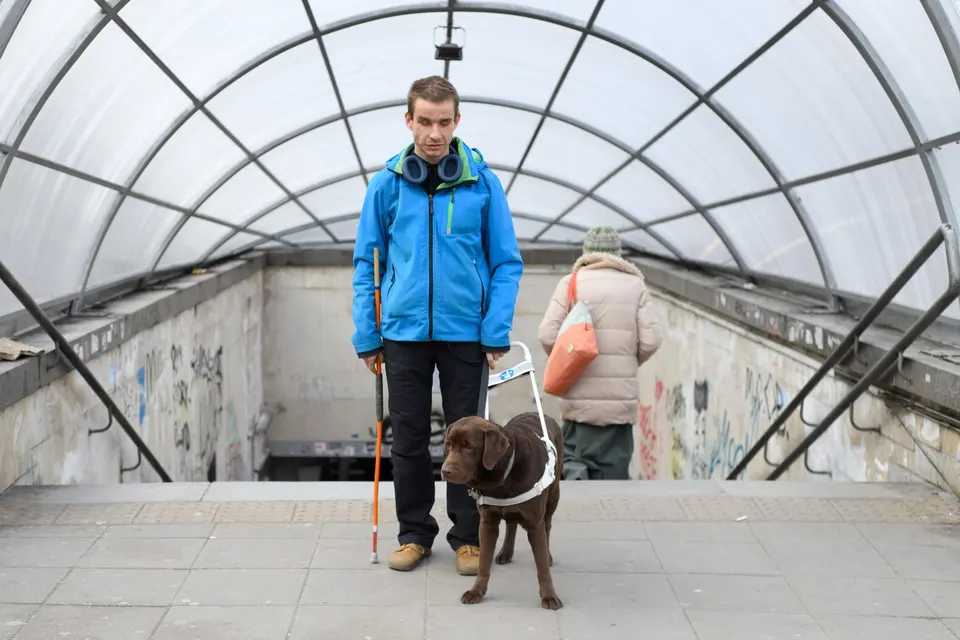
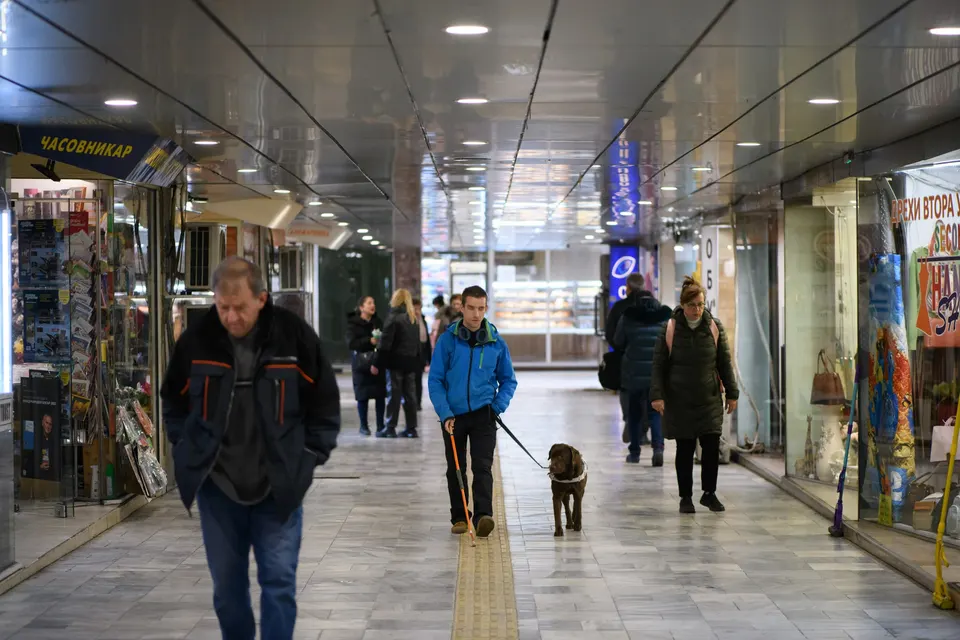
We are strolling around Sofia, as I said… I just tell him where I need to end up, and he adjusts his earphones, lightly touches his phone, and by the time I’ve opened my navigation app, I can already hear him dictating the ideal route to me, how to get to the bus stop. Then we are quickly on board, and his faithful companion—the Labrador—settles down at his feet.
Sofia’s buses at rush hour can be a challenge for even the most cool-headed passenger. From the colorful company, through the far-too-close personal contact, to the characteristic smells. ChatGPT could write a novel if it took a ride on the 604, but Viktor, who is impressed by nothing, deserves a novel far more.
Because he has seen so much! Ugh, seen… I’ve always found it hard when I have to think about how to be considerate toward someone—is it the same for you? He has never seen anything, at least not in the banal sense of the verb. He was born with severe visual impairments, barely able to make out the shapes of nearby objects, and then even that faded. Today he can only tell whether he is in a dark room or whether a lamp is on. Because back when it mattered, medicine had not yet reached the possibilities it has today for helping people with problems like his.
“Blind by birth, loud and a fighter,”
he writes in one of the posts I came across. But how does he “write,” and where do I read it? I don’t read Braille, unfortunately… But he uses technology to the full—he writes, reads, finds his way, fights, and, as became clear right at the start, can do a great deal more.
For example? Well, bringing home a freezer. From Pazardzhik, a town some 100 kilometers from Sofia. By BDZh, the Bulgarian State Railways. Changing three means of transport. Needless to say, the freezer arrived straight at its destination—the right spot in the family kitchen.
Do you still think it’s worth grumbling when a loose paving tile splashes us on the sidewalk?

Run, Forrest, Run
Actually, it is worth it. Not to grumble, but to not get used to problems. To try to improve things, to change them. Not to resign ourselves.
The rest is vanity. Viktor marvels at how exactly we decide what deserves the public’s attention.
“People get far more excited about things they’ve seen on television or heard are dangerous. And other situations, which are objectively much harder but unfamiliar to them, they play down.”
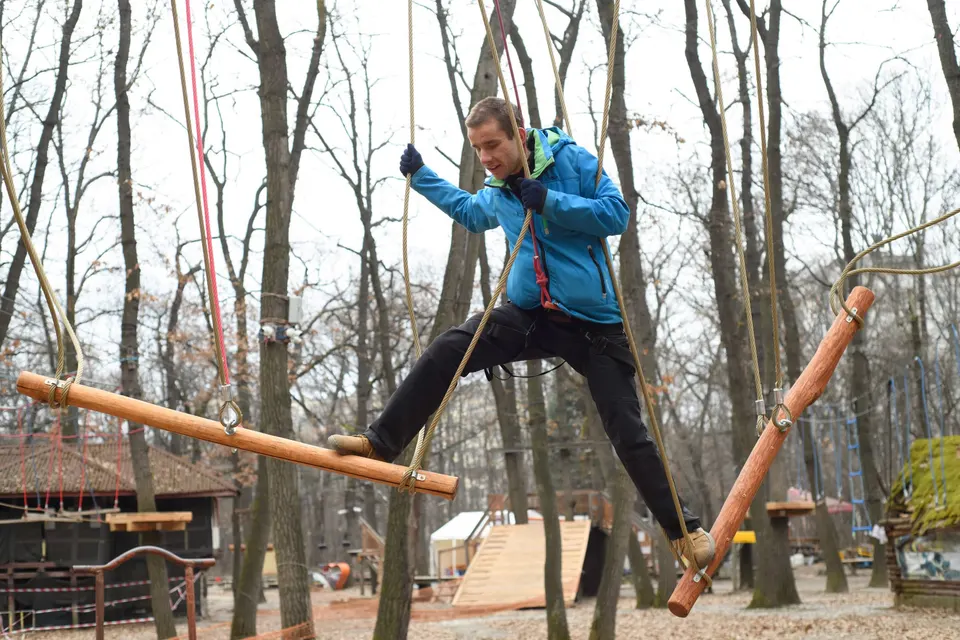
Fear has big eyes? Something like that. Viktor is surprised that when he crossed the spectacular Koncheto ridge in Pirin, the media reported it as a very serious achievement. Yet when he managed to run his first 43 kilometers in the mountains without a break, on routes that lead over steep rock, nobody paid any attention.
Is it hard to find things hard… or is it hard to define what’s hard?
Nothing is hard, if you listen to Viktor (except, perhaps, the battle with bureaucracy and the fight for reasonable conditions in which people with visual impairments can manage in Bulgaria. But we’ll get to that too).
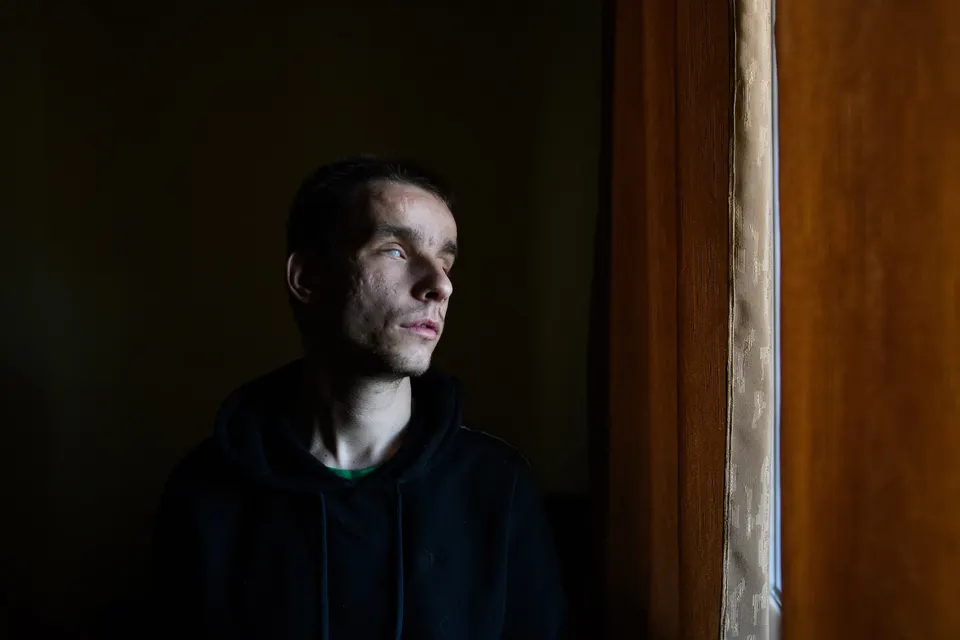
Will I Run Away from You?
“Danube Ultra” is one of the latest achievements of Invictus Viktor, as his Facebook page is called—“the Unconquerable.” There, he says, nothing is complicated—“you just turn the pedals.” I disagree. I ride a bike all the time, and it takes me two or three months to clock up 600 kilometers, the length of the longest cycling tour in Bulgaria, which he completed on a tandem bicycle with the help of a partner who steers. That isn’t enough for him, though; his next dream is to cover the same distance in just two days and nights.
His running achievements are even more impressive. In recent years Viktor has become well known in running circles for his drive, for his will to keep going. To make it possible, two “pacers” join him—runners in front of and behind him, in constant contact with him, who help him navigate obstacles, where they are and how to avoid them. He constantly hears “rock on the left,” “sharp boulder straight ahead”… That’s how he gets around Vitosha, Pirin…, and also Munich, even the heights of Nepal.
But every run has a start. And preparation. Until fifth grade Viktor attended a specialized school for children with visual impairments. Then his father decided that this way he would never learn to cope with problems and enrolled him in the neighborhood school. At first it was tough—he was used to being treated specially, to getting attention… “Then I pulled myself together. I couldn’t afford to fail, and gradually I started making friends. A mainstream school teaches you things you can’t pick up while staying among people who share the same fate.
There you learn that people will mock you for your disability, that you’ll get help or sympathy. And that helps you grow as a person, get used to life as it is once school is over.”
At that time Viktor lived with his grandmother and grandfather, who helped him with homework where he needed it. They often went to their country house, where his grandfather taught him to use a saw and his grandmother taught him to ride a bike. These skills soon proved useful in an unexpected way.
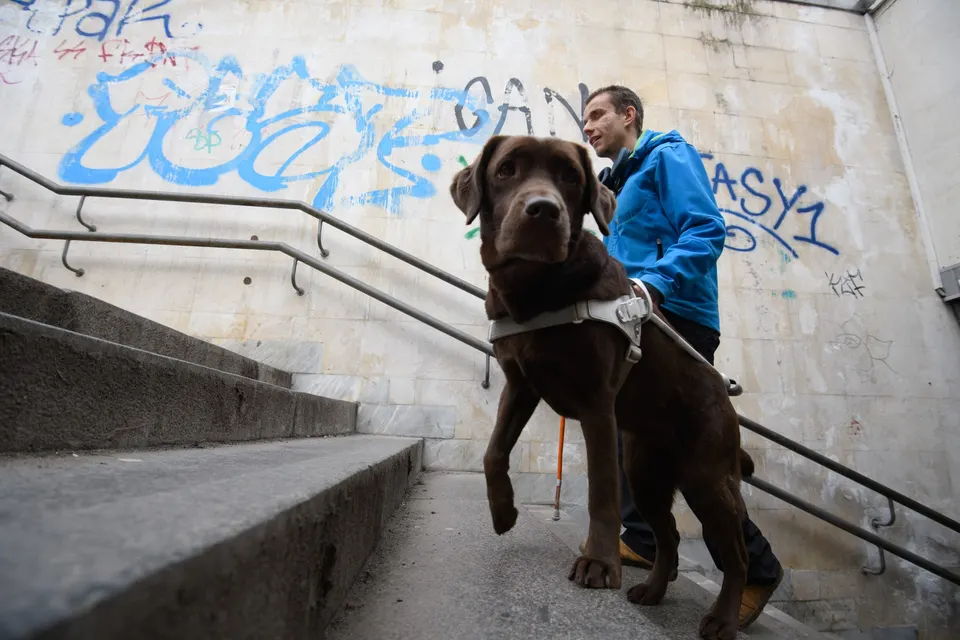
A View from the Mountain
Because… Viktor met love. He remembers very well the date when he first talked on Skype with the girl who would later become his wife—Kalina, who is also blind. February 21, 2012; he was amazed that anyone could eat ice cream in the middle of winter. She, in turn, wondered how he could saw wood and ride a bike without being able to see.
“Three days later I went to visit her, and on February 29 she came to my school on an exchange visit.
That’s where the teasing started—that I should take her to a pastry shop, for coffee… and that’s how, in physics class, we became a couple.”
Around that time Viktor found out by chance that he had spent his first five years in a home for abandoned children. Back then it was common practice to advise the parents of blind children to leave them, because the institutions would take better care of them. But later his parents took him back. Viktor took the news hard, but gradually came to terms with it.
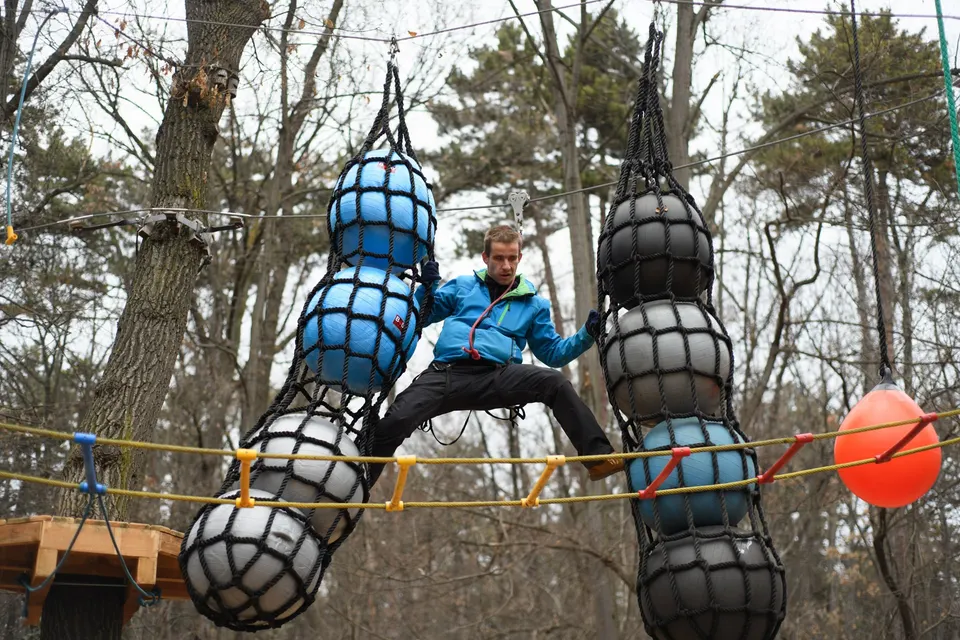
Why I Ran Away
In 2018 Viktor went to seek the advice of a doctor with extensive experience treating corneal problems. He told him that he roamed the mountains and rode a bike. And he was advised to stop, because it could only harm him.
The young man shut himself up at home, got stuck in front of the computer, stopped running and riding. He lost himself, lost his sense of purpose. Until one evening, when they were away from the city, his wife suggested the two of them go out on their bikes, and through the forest at that. “I was riding ahead of her and calling out to her, because she wasn’t confident enough to go fast down a dirt road knowing there were pine trees along the sides. We’d gotten thoroughly muddy after two hours of night riding through puddles, and she asked me:
‘Now tell me, does not being able to see stop you from riding a bike?’ Only then did I realize what had happened. That the first victory is in your head.”
The first… and the most important. And the hardest. Since then Viktor has known that he must not stop. He progressed in running quickly and unexpectedly. At first he ran only with his guide dog after the bus, then decided to try something more serious. He climbed alone from Knyazhevo, a Sofia neighborhood at the foot of Vitosha, up to the Kopitoto peak. A passing hiker saw him and invited him to try a 5-kilometer run in Borisova Gradina, Sofia’s oldest park.
Some time later he and his wife went their separate ways, but… that’s life sometimes.
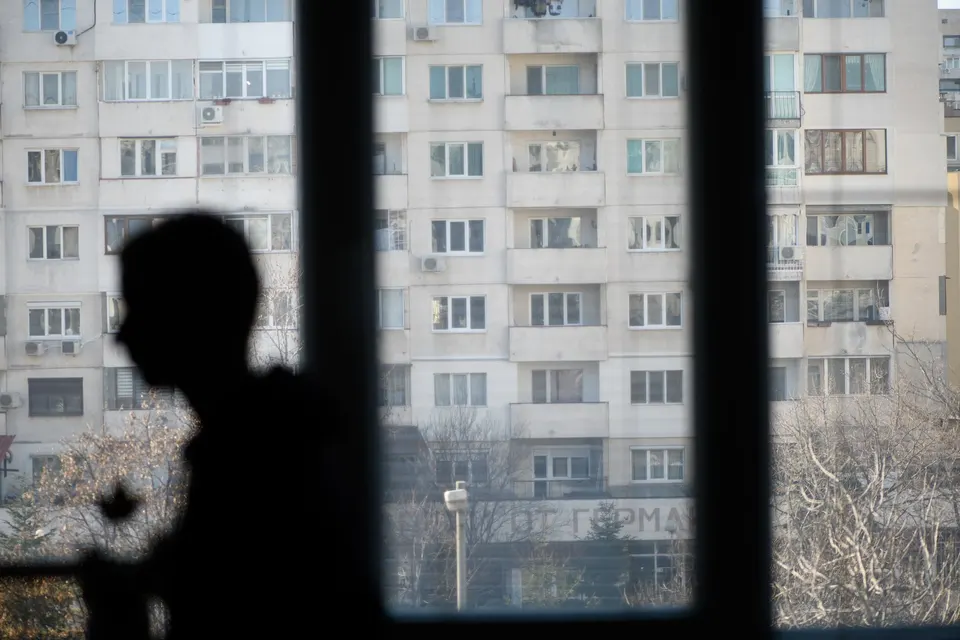
Make Haste Slowly
“I resisted a bit, because the event seemed too crowded and showy to me, but I went. We ran it in 32 minutes. That’s how I got hooked on running, started finding races and little by little cutting my times.
I discovered by accident that besides being talkative, I’m apparently also fast.”
Then came his first half marathon, in Nesebar on the Black Sea coast. The running community took to him, he became popular and found it easier and easier to get pacers.
He says his toughest challenge so far has been in Pirin—66 km with 4.4 km of elevation change, constantly climbing and descending. “That course is the hardest in Bulgaria. I’ve done all sorts by now. With ‘Persenk 160,’ the difficulty is the duration. It lasts 40 hours; the best do it in just over 20 and don’t doze off at all—they reach the finish without sleeping.”
That isn’t possible for him; he and both pacers have to stay alert. The person running in front warns him about every obstacle ahead. Because there is still no technology good enough to do it, and that is one of the things Viktor can’t wait for.
The harder it is, the more interesting he finds it and the more he enjoys it. Of the bike-and-run loop around Vitosha he says the only difficulty is not falling asleep; otherwise it’s “for parquet-floor runners.” Not like Pirin, which is marble and granite, constant obstacles and huge elevation changes.
What Is Essential Is Invisible to the Eye
“Lots of people around the world run city marathons; what interests me is the harder stuff. How on earth do we pull it off? Take the Sofia Marathon, for example. It’s flat, easy… yes, there are potholes, that’s the difference from other city marathons, but they’re nothing like Pirin.
If it isn’t hard, it’s boring. If there are difficulties, you start to think. That’s what makes it a challenge! That’s what makes you feel happy and alive!”
But… what keeps him running?
“On the one hand, the desire to show others! I know the possibilities are unlimited. People can outdo me and surpass me. I want other blind people to outdo me. And then I can ask myself: ‘Well, can’t I do better?’ There’s both—my inner competition with myself and, above all, the desire to provoke everyone else. I’ll help anyone who wants to improve on what I achieve, with my knowledge and experience.”
Mostly because in Bulgaria so many blind people, people with disabilities… and sighted people, and people without disabilities too, never think of inventing challenges for themselves, of setting high, supposedly unrealistic goals. Caught up in everyday life.
Stand Tall!
As for Viktor, he has quite a few such goals. He hasn’t given up the dream of having a child. Nor the dream of finding a job where he feels useful. Despairing of the system, he doesn’t think he has a future in education. Lately he has been doing massages; he found someone who built him a portable massage table he can carry to homes and offices. He hoists it onto his shoulder… and is ready for work. If you want a professional massage along with a conversation with a one-of-a-kind companion, write to him!
Meanwhile, he wouldn’t say no if someone trusted him with a permanent job. He has realized that a desk job is not for him. But he can organize, plan, discuss… I believe him unconditionally, not just because of the running, but because I see how he handles himself on the noisy bus, where people don’t know how to behave around him.
“I dream of finding a job. I want to be useful! But I want it to be something that involves movement. I can organize; I need something I can put my mind into. I love traveling and meeting new people.
Today I do massages in offices. That’s it, at least I have work. I love trying things, experimenting! Come on, people, let’s give it a try! We’ll find out whether it works or not. None of the things I’ve done so far would have been possible without trial and error.”
I don’t just hope—I’m certain someone will trust him. Capable people get nowhere… is the man who can conquer Pirin and Nepal really not going to conquer prejudice?
Up High, So I Can See You…
If a potential employer who will appreciate his skills is reading these lines, I’ll be glad to introduce you…
But I don’t have much time to think about it; Viktor is hurrying ahead with the dog. And setting his next supposedly impossible goals. “Danube Ultra,” not in five days but in under 48 hours.
As well as the bigger one. To create more opportunities for more and more people in a situation like his. We can all do this—make both the real world and the online one more accessible, more open to people with disabilities. That is exactly the topic Viktor is eager to lead us to in the next Digital Story…