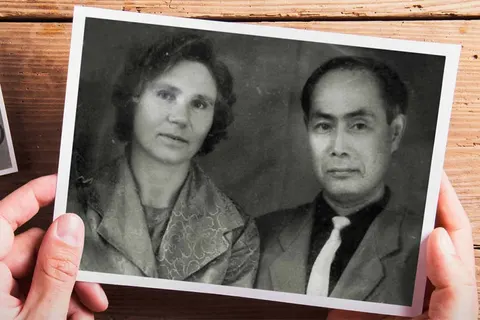
Life is a writer without equal, able to dream up plots beyond the reach of even the most gifted pen. Such is the odyssey of Yasaburo Hachiya, one of the most beautiful and powerful love stories I have ever heard.
Technology has changed stories, too—have you ever thought about it? Today Romeo and Juliet would never reach their sorrowful ending; they would have posted everything in their feed. Thirteen-year-old Juliet would just be enjoying her new profile, having reached the minimum age to sign up for Facebook.
Well, the story of Yasaburo Hachiya's incredible loves could not have happened online either. And therein lies a small part of its authentic beauty…
The Amur River Flows
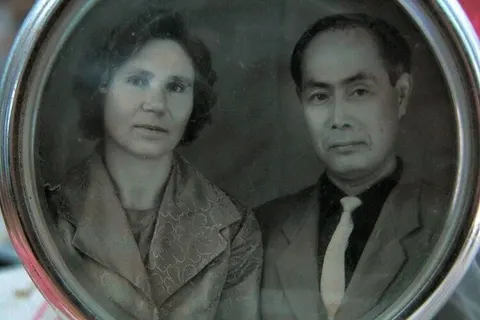
For 37 years the Russian Klavdia Novikova and the Japanese Yasaburo Hachiya lived together in a little village with the cheerful name of Progress on the banks of the Amur. And they dreamed of dying on the same day, on the same pillow. The samurai had even made two coffins of oak boards, lacquered, dried and assembled in the attic…
But the story was not fated to unfold according to plan.
Klavdia and Yasaburo met in 1959, when the Soviet “thaw” was just beginning and the wounds of Stalin's repressions were still fresh and bleeding. Our two heroes bore them too—the woman had spent 7 years in the camps, the man a whole decade. Neither was in the first bloom of youth; both knew what hard times and harsh trials were.
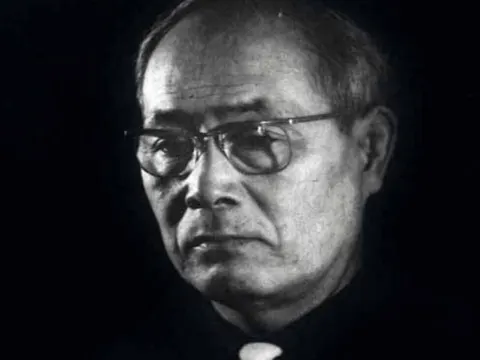
The Fate of a Man
Klavdia was born in a small village. Her mother died when she was very young, and her father married again. Just as in the fairy tales, the stepmother did not like her one bit and sent her away to live with her aunt. Then the fairy-tale plot seemed to carry on: she found love, and in 1940 she married a handsome young man. Two weeks before the USSR entered the war she gave birth to a son, and very soon her husband was called up.
But happiness returned! Victory Day came and her husband came home. By then Klavdia was working in a flour mill; the family was reunited and happy together.
Soon, though, the next misfortune loomed. Her boss was siphoning off part of the batches, something she never suspected, yet she ended up as the scapegoat…
Investigators burst in, the interrogations began, and in the end Klavdia was the only one charged. Within days she found herself in the dreaded corrective labor camp in Kolyma with a long sentence, which she did not serve to the end. After 7 years she was released, but… she had nowhere to go. She had waited for her husband to come back from the war, but he had not waited for her. He had married another woman and taken their son into his new family.
Hard-Boiled Wonderland
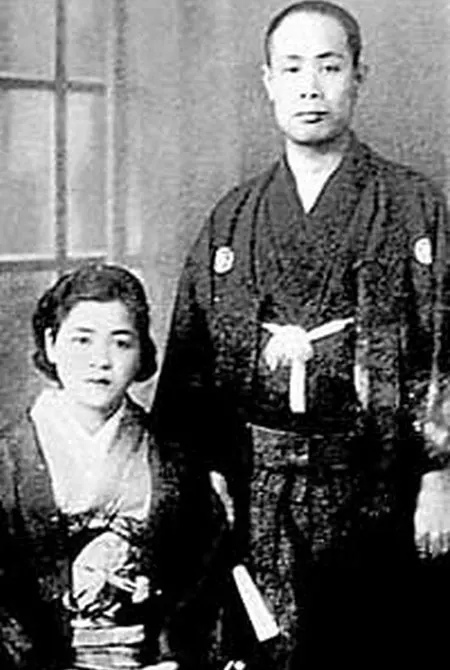
Yasaburo's story is just as sorrowfully fairy-tale-like. The son of a wealthy industrialist, he received a good education, and every door seemed open to him. But just then the great war began; within days his father lost his entire fortune and fled the country.
Yasaburo was forced to fend for himself, yet things started to go well. And soon he was no longer alone—he met the lovely, gentle Hisako and married her. The young family emigrated to the Japanese colony in Korea to seek a new life and a living. The husband found work at a local factory, soon a son and a daughter were born, happiness settled into their lives… Then everything quickly shattered.
The little boy fell gravely ill and died, and in August 1945 Soviet troops entered Korea and arrested many Japanese, Yasaburo among them, accusing them of espionage. A 10-year sentence quickly followed, and he too ended up in the camp in Kolyma… but that is not where he and Klavdia met.
After his release from the camp, his first hope was to return to his homeland. For more than a decade he had received no news of his wife and his little daughter. He did not even dare hope they had survived the meat grinder of the war, but he was determined to pay them his last respects. The authorities, however, would not allow him to travel; his countless petitions did not even get a reply.
One Day in the Life of Yakov Ivanovich
He applied for a Soviet passport and actually got one—under the name Yakov Ivanovich.
While waiting for the longed-for permission, he started work at the local factory. There, in the canteen, during one lunch, a woman he did not know, about his age, came up to the table where he sat alone and asked if she could join him…
Then they struck up an innocent conversation.
– Are you Chinese?
– No.
– Korean?
– No.
– Then what are you?
– Japanese—replied Yakov Ivanovich, and with that the conversation seemed to be over.
But Klavdia's curiosity was piqued; she had been drawn by the refined way the foreigner ate. As she later recounted, the moment their eyes met she sank into the inhuman sadness hidden in his gaze. Lonely herself and having suffered much along her way, she quickly opened her heart to the stranger's grief.
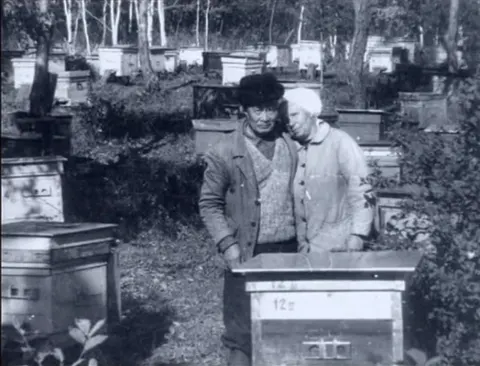
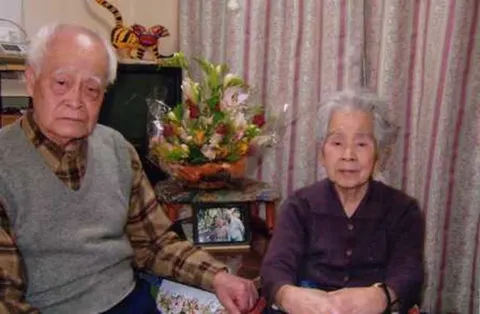
Love flared up, and soon the two were married. They built a cozy little house in the nearby village of Progress and held each other up on the road to old age. As their neighbors tell it, the two complemented each other beautifully. Although it was a shared sorrow that brought them together, their love was real, beautiful and passionate, long awaited and giving meaning to their lives.
Hear the Wind Sing
The villagers greeted Yasaburo with suspicion, but he quickly won them over with his hard work and skills—intelligent and courteous, he worked as a photographer, a masseur, a barber. When his beloved broke her leg, there was no doctor nearby, and he skillfully set it in a splint. And when her beloved fell ill, Klavdia borrowed money and bought a little goat to nurse him back to health with its milk.
The two bought a motorcycle and rode it to enjoy the beautiful cedars around the neighboring villages.
From every paycheck they set aside 10 rubles for the Peace Fund. They always gave, too, whenever donations were collected for people in need.
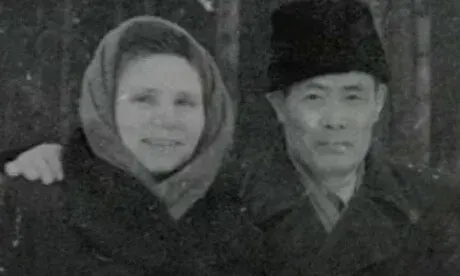
The Japanese man and the Russian woman lived the happiness of maturity, calmly welcoming and seeing off the summers in their little village and preparing to leave this world together. They had known both great suffering and true love.
And imperceptibly it arrived—old age.
Japanese in Progress
Yet this is neither the ending nor the most moving part of the story.
The 1990s came, international relations thawed as well, and the story of the “spy” from the village of Progress somehow reached his native Japan. It came to the attention of Yasaburo's brother and sister, who immediately sent him a letter, overjoyed that their lost relative was alive and well 40 years after vanishing into the labyrinths of history.
And one more thing: it turned out that his wife Hisako and their little daughter had survived too!
Soon after the letters, a large Japanese delegation arrived in Progress. Accompanied by a whole busload of journalists came Yasaburo's brother and his 50-year-old daughter, who had not seen her father since she was a little girl… Hisako was not there; she was already elderly, and it was judged that the journey might be too much for her.
The daughter stared at her father with wide-open eyes, and when he quietly began to sing a Japanese melody, tears welled up. It turned out to be a patriotic song whose lyrics the woman had kept for more than 4 decades as a precious keepsake, written down by her vanished father…
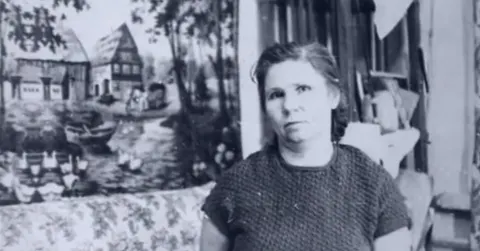
Then the Japanese left, and Klavdia and Yasaburo were alone again in their cozy little house. Nothing was the same anymore, but the woman knew what to do. She had made up her mind to insist, to send her beloved back to his homeland; he had to return to his other family.
For a long time Yakov Ivanovich refused—how could he live without his Klavdia?
She was unyielding: “If you stay, we will both be unhappy. At least for one of us the ending must be happy!” Even before he agreed, she had already filed for divorce. She bought him a ticket and exchanged the family's modest savings for dollars.
1Q84
Yasaburo set off on March 27, 1997. The night before, he and Klavdia did not sleep a wink; they wept, holding hands.
Now on the threshold of 80, they realized they might never meet again in this world.
In the morning they cleared the table, and in front of the house the whole village was waiting, come to see off the “Japanese spy.”
From the train Yasaburo waved for a long time, bidding farewell to the cedars. And to Klavdia, who went back alone to their empty home.
So that Hisako could welcome him 51 years later. She had waited a long time for her husband in Korea, until one day she decided he could not possibly come back. She took her little daughter by the hand, packed the cremated remains of her infant son in her luggage and set off for her homeland.
She made it home as if by a miracle; her luggage was stolen along the way, and several times she faced mortal danger. She took a job as a nurse and went on waiting for Yasaburo's return. She even bought a little house, which she registered in her husband's name. She never lost hope that he would come back, even as the decades passed without a word from him.
The Beauty and the Samurai
Her patience was rewarded. With a few years of happiness.
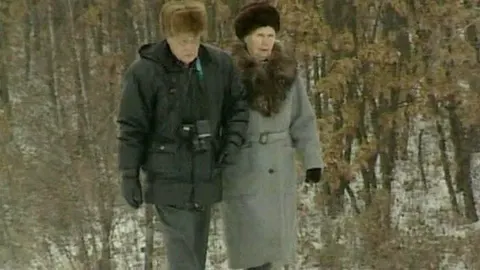
Klavdia visited Japan too. The first time, the two women sat down together and were silent for a long while, as if talking about the past and the future, about life's surprises and about love in some language far beyond words.
Dozens of newspaper pages and at least two novels have been written about this story. Films have been made, the best known titled The Two Lives of Yasaburo Hachiya, and there is even a stage play.
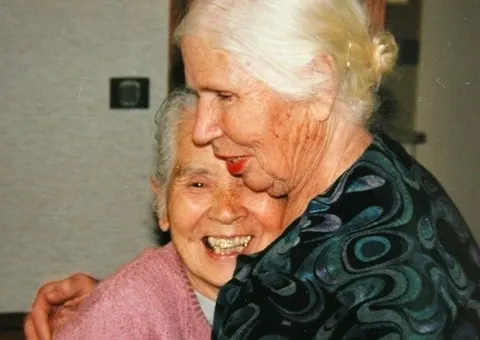
The story became so famous that Klavdia's first trip was paid for by enthusiasts from a Tokyo suburb who had been moved by it. She later visited twice more—she even attended the premiere of the play that told her life story…
In the last years of his life Yasaburo often repeated: “My heart is split in two…”
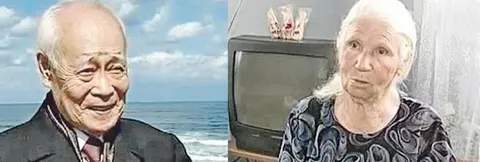
Today, of course, all three of our heroes are gone.
The first to go, at the beginning of the new millennium, was Hisako, in the arms of the husband she had waited for so long. He immediately wanted to head back to Progress, but Klavdia stopped him—she insisted that Japanese health care was much better, and he was suffering from the serious illnesses of old age.
Yours, Yasaburo
In September 2014 Klavdia, too, left this world. When he learned of it, a year before his own passing, Yasaburo wrote her a symbolic letter:
“Klavdia!
I learned that you are gone, and grief has overwhelmed me completely. I tried to call you on August 30, when I turned 96, but I could not get through. The last time I heard your voice was on July 11. All those 40 years I lived with you in Russia, you were always with me, always supporting me.
Thank you for everything. I was able to return to Japan only thanks to your efforts, and I am boundlessly grateful to you.
I remember how we even prepared the coffins for the two of us, in your homeland.
If it were in my power, I would fly to you and hold you close to my heart, tightly, tightly. But I am powerless.
Rest in peace, dear Klavdia.
Yours, Yasaburo.”
This piece was prepared with the special assistance of Albena Ivanova.