You know, certain other mythical figures create the world in a week. Brendan Eich took a little longer—10 days—to create another new world we all live in… JavaScript. A technology that changed our everyday lives by making it possible to build complex applications online. To open the browser, head to our favorite page and find it capable of miracles.
What follows is a cautionary tale about how a man who landed almost by accident at the epicenter of events can build something enormous. About how, in technologically turbulent times, fate quickly changes its favorites, and with a single blink of its eye you can go from hero to outsider.
Who is this Brendan Eich, anyway? Why, like other computer legends, does he enjoy so little fame today? How was JavaScript born, and why was it this language, supposedly so similar to the others, that managed to revolutionize the way we use computers?
console.log(“Here we go!”);

Java Street
These days languages are starting to look more and more alike. Both programming languages and human ones… This one, though, has a special place for me. It's how I earn my living, and for all its stubbornness, it is not only capable of miracles but creates them every single day.
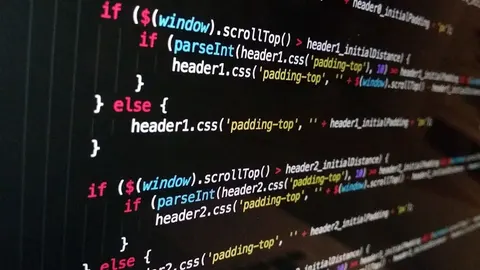
Today each of us uses JavaScript constantly, thousands of times over. It is the only language that lets applications “run” in the browser, the one that made it possible to turn the old static pages of pictures and words into huge applications—social networks, media outlets, shopping platforms and who knows what else.
Broadly speaking, programming internet applications today has two sides—front end and back end. The latter is everything that sits on the server and reaches us only when we request it, while the former is what happens in your browser.
Today JS is everywhere—it offers a wonderful alternative for back-end programming, and on the front end it reigns without competition, with no end to its rule in sight. JavaScript is often mocked, most often precisely because of its main advantage—it was designed to be as easy and convenient as possible… which also makes it just as easy and convenient to give yourself serious headaches.

Java… Script-ed
Java and JavaScript… sounds like the same thing, right? About as much as ham and hamster. Of course, the similarity in the names, as will become clear, is no coincidence.
Millions of people around the world (and tens of thousands in Bulgaria) make a living with JavaScript, yet hardly half of them could tell you who Brendan Eich is. Even if you look him up on Wikipedia, you'll see he is known for “JavaScript, Mozilla and his opposition to same-sex marriage.” A bit dismissive for the man who made today's internet possible, don't you think?
You've probably never heard of the Mosaic browser, created back in distant 1993. It is remarkable for being the first with a graphical interface accessible to ordinary users. In other words—a program you open, type in an address, and a page starts loading.
A year later the project's creators founded the Netscape corporation with the idea of building an even better browser. And they succeeded—Netscape Navigator quickly came to dominate the market and was a hit in the late 1990s. If you were among the Bulgarian internet pioneers, you surely remember it. And the memory takes you back to the days when downloading a single picture from the web took minutes…
Eich, Eich, Baby!
In 1995 the programmers decided to add a scripting language to it, so that websites could become more dynamic than simply displaying pictures and text. In parallel they signed two contracts with developers—with the company Sun Microsystems, to offer them a way of bringing its Java language into the “navigator,” and with the aforementioned Brendan, who was to adapt the older language Scheme for the purpose.
Soon, however, both ideas were dropped. History is silent on why things didn't work out with Java's parents. What matters is that Brendan, too… failed. He worked hard on the project, but no matter how much effort he poured in, it became ever clearer to him that using a language built for something else inside the browser was a very bad idea. New inconveniences kept cropping up. So he went back to his employers at Netscape with a far more ambitious idea: to create an entirely new programming language himself.
With a master's degree in computer science, Brendan spent seven years after graduating developing operating systems, then three years writing software for microprocessors… At the time he was 34, just past the age of Christ. The choice of him for such a task was rather unexpected—in college he had done coursework on creating programming languages, but at a fairly amateur level.
Let's not forget, though, that these were the “cowboy” years of technology, the days when unexpected heroes appeared. The programmer said he loved Scheme and liked Java, but proposed creating a simpler language “that could be used by people who don't know what a compiler is. They just load it and start writing code.”
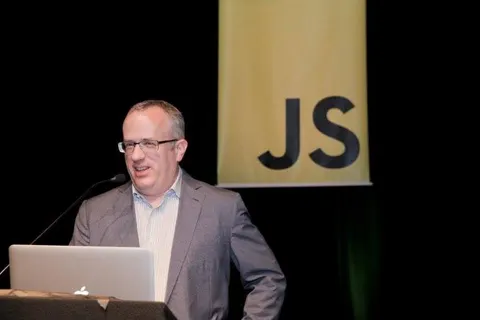
Java the Hutt
Well, his colleagues were close to the deadline for unveiling version 2 of Netscape and were rather skeptical of the idea. Still, they told him to give it a try—but handed him the nearly impossible task of getting it done in 10 days…
You probably don't realize how overwhelming the task Brendan had set himself was. To create a complex, working programming language… something like the mission of Cyril and Methodius, the brothers who gave the Slavs their alphabet, only in the digital age. Yes, by then there were already countless popular languages that resembled each other to varying degrees, but in 10 days he had to come up with something quite different, ready to perform a job that had not existed until then.
Exactly how he managed it within that impossible deadline is unclear. Brendan himself rarely talks about those times—in any case, if communication had been his superpower, today he would be among the tech superstars of our era. We'll get to the reasons why that didn't happen shortly, but here comes the crucial step.
One September morning in 1995 the programmer showed up before the people who had commissioned the project and presented the new language, named after his favorite coffee—Mocha. Then, together with them, he decided to add “script” to the name, to make it clear it was a scripting language that isn't compiled but executed directly by the computer. That's how they arrived at the name LiveScript.
Somehow, though, it didn't sound commercial enough. At the time Java was the cherry on top, and to borrow some of its glory, Brendan and Netscape chose the name JavaScript. To this day it causes confusion among non-specialists—the two languages really are seriously different.
On the Tip of the Tongue
As is now clear, my favorite computer language is a Virgo, which may explain its occasionally prickly character. Brendan's decision to choose a language in which variables are not typed is considered quite revolutionary. A word can quickly turn into a number, which makes programmers' lives much easier. But also the mistakes they make.
“What made JavaScript so powerful, despite all its problems and the flaws of rushed work, was that it could do in the browser everything that average web programmers wanted,” Brendan would later say.
JS turned out to be the paradigm everyone had been looking for, and over the following decades it developed at breakneck speed to conquer the world. Netscape Navigator has long been just a memory for early internet users, but its offspring reigns online with no prospect of surrendering its crown.
In its early years the language was quite different from what we know today—it went through a serious evolution—but its very appearance drastically changed the paradigm.
It proved such a successful solution that Netscape's biggest rival—Microsoft, with its Internet Explorer browser—used reverse engineering to study it and build its own alternative, JScript. For better or worse, it never managed to gain much popularity.
The Brendan Brand
The “battle” between very similar languages grew fierce… and at some point became a serious problem for website builders. Each browser had its own language, different commands did different things, and programming became almost impossible. In 1996 our hero emerged victorious from this battle. Browser makers rallied around his language and entrusted it to ECMA International—the organization that oversees its standardization to this day. And so JavaScript became available to everyone.
In 1998 Brendan was among the founders of Mozilla, which developed the first browser of the modern type we are used to today. Firefox introduced the concept of many open tabs, significantly sped up computers and paved the way for the modern internet. Only later came the dominance of Google's browser, Chrome, which quite openly started out as a copy of the project of Brendan and his colleagues.
Mozilla began as a nonprofit organization aiming to help democratize the internet, and it certainly did a lot in that direction. That, however, also turned out to be its weak spot when it had to pit its projects against huge companies that, on top of everything, were using its open-source code. Even so, the project survived and became a commercial venture, and many believe its successes were largely due to Brendan Eich's insight. For a full 16 years our hero led Mozilla's technology team, then held the post of chief executive officer for… 11 days.
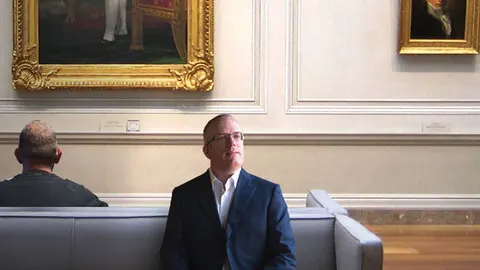
And so we come to the dark side of this story. Brendan was forced to step down after the media brought to light the fact that he had donated to political candidates campaigning against same-sex marriage. He had to admit that this was indeed his personal position, and as a result he had to leave the company.
Braveheart
Brave—that is the name of the project the father of JavaScript has been working on in recent years. The venture aims to create a next-generation browser that would once again help democratize the internet, this time by freeing it from the burden of monopolies. As he himself notes, the goal is to save us from tracking technologies, which, by an irony of fate, rely mainly on… JavaScript. Brave is open source and is developing its own system through which users can reward the authors whose pages they visit. Either way, in its seven years of history, no dizzying success has been heard of.
Ever since he became (part of) Brave, Brendan has bravely spoken out about his views, which today we would describe as conservative. He was among the outspoken critics of the measures taken against COVID, of masks, and of the famous American epidemiologist Dr. Fauci. This proved yet another blow to his image in the mainstream media.

How does Brendan view the development of technology today? In his opinion, artificial intelligence won't take programmers' jobs—on the contrary, it will speed up software development. At the same time, though, it will create many new security challenges.
Well, unlike its creator's fame, JavaScript's is flourishing. JavaScript regularly wins the title of the most used computer language online, with 64.9 percent of programmers saying they use it in their daily work. Of the roughly 1.8 billion websites online in 2022, 98 percent used Brendan's creation in one way or another. The language keeps growing, and new platforms are constantly being created that make it easier to use and ever more popular.
Since its birth it has never stopped evolving—every year ECMA International publishes an updated version, called ECMAScript. Numerous ideas for its development are discussed in the community and pass through three levels of approval before becoming part of the language.
Which matters more, the creator or the creation? Both, of course. But we ought at least to mention the names of the creators who changed the world in one way or another, as Brendan Eich most certainly did…