It is very easy to tell someone who has ever programmed from everyone else: if you have ever “touched” code, there is simply no way you haven't seen Stack Overflow. In just 15 years, the question-and-answer site fundamentally changed the way programmers work. It became a Mecca for software engineers, a safe harbor for almost every one of their everyday problems.
Today, however, the legend is heading toward its sunset. And, by a twist of fate, because of the very technological progress it made possible…
What's more, many predict that the project's decline will bring serious problems for the next generations of programmers.
The story of Stack Overflow says a lot about where we stand today in the world of technology. About the breakneck speed at which we are changing. About the seeds, the good ideas that can only sprout if they land in the right soil at the right moment. And about how quickly a giant that seemed unshakable only yesterday turns into a shadow of itself.
Thus Passes the Glory of the World
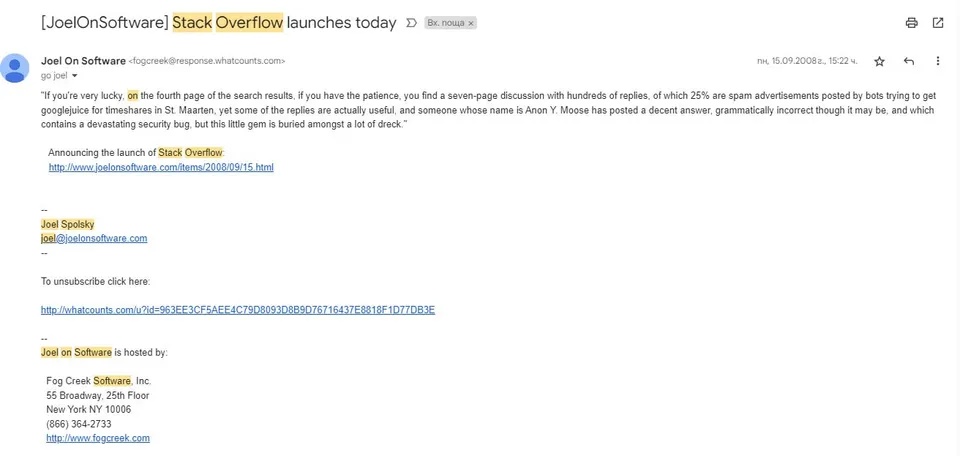
“Well, technology has come a long way since the days of forums. I think the programming community can do a lot better with a combination of a question-and-answer site where people vote for the most accurate answer and where answers can be edited.” So wrote Joel Spolsky on September 15, 2008, in the blog post announcing the creation of the famous site.
By yet another twist of fate, before it became programmers' best helper, the phrase Stack Overflow itself carried decidedly unpleasant associations. It is the name of an error in which part of the memory is overloaded and the program stops running. That is precisely why the name was chosen, after a vote among the people who saw the point of the venture.
It is such a common scenario in the trade. An error pops up, for some reason the computer isn't doing what it's supposed to… and, of course, if you don't know what's going on, the first thing you do is check online.

Don't Ask!
That turned out to be almost impossible before the famous site appeared.
“You know what drives me crazy? Programming question-and-answer sites,” Spolsky wrote in his famous post. “You know what I'm talking about. You type a very specific programming question into Google and you get:
- a bunch of links to forums where clueless people are struggling with the same problem and getting nowhere;
- a link to another Q&A site that claims to have the answer, but when you get there, it asks you to sign up for a paid subscription plan;
- an old post with the exact answer for Windows 3.1, which just doesn't work anymore;
- something in Japanese.
If you're really lucky, on page four you'll find a discussion with hundreds of replies, 25 percent of which are spam ads posted by bots; some of the replies are actually useful, and someone named “Anon Y. Moose” has posted a decent, if ungrammatical, answer that nevertheless contains a devastating security bug. And this little gem is buried under a truckload of garbage.”
Alone Against All
Well, into the middle of all this, exactly where it was needed, came Stack Overflow. There is no more precise way to put it. Suddenly there was a place online where anyone could quickly and easily find the solution to any problem related to building software.
At first glance, a plain site, retro-looking even for its time. Supposedly just a forum where anyone can ask and answer questions, but in reality much more.
The idea is brilliantly simple. Not only is everyone welcome to ask and answer, but the whole thing turns into a kind of game: the authors of the best answers rack up points. Every question that repeats one already asked is closed and redirected to the original. Every answer is rated, and if the person who asked becomes convinced they have received a correct, working and precise solution, they mark the answer that proved most useful, and it stands out visibly from the rest.
And at the very top of the answers appears His Majesty: the answer that has collected the most votes from registered users.
Posts can be edited, so they can be developed and enriched further. “There are lots of good ways to edit,” Spolsky wrote. “You can improve the spelling, the grammar and the meaning. Anything you can do to clarify, explain or improve the question or answer will serve the community. If there's code, you can run it yourself, refactor it or improve it. After all, for the next 20 years, this question will be the canonical place on the web where programmers come to learn exactly this thing.”
That last sentence became a prophecy: that is exactly what happened with some of the most common searches.
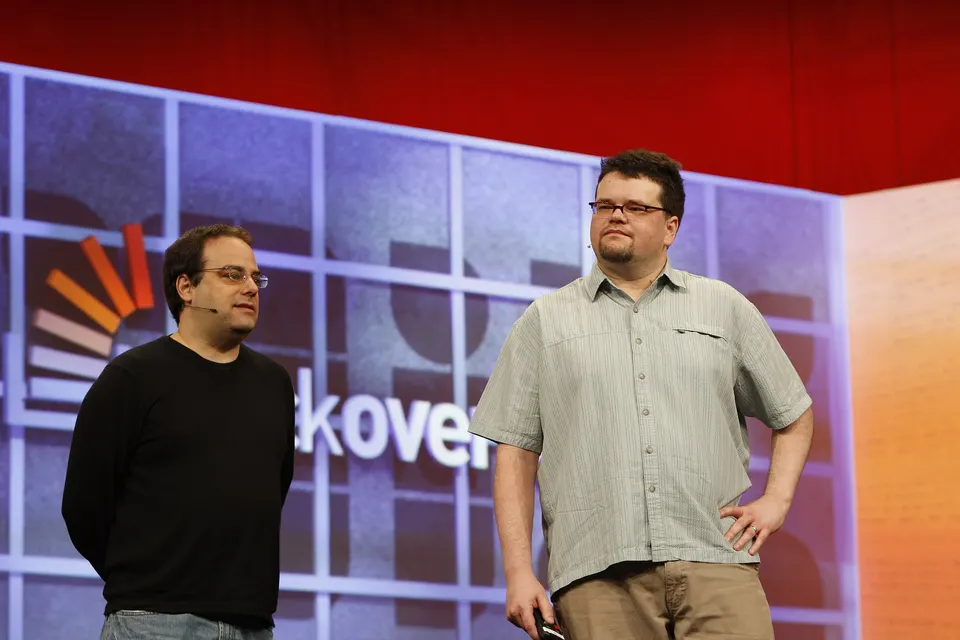
A few hundred programmers quickly joined the venture as volunteers. They all shared the need for a new site, and the timing coincided with the main forum of the day, ExpertExchange, going paid. Alongside Spolsky, the other main founder was Jeff Atwood, creator of the blog “Coding Horror.”
Ask, and It Shall Be Given You
The system gathered speed very quickly because of the way Google worked back then. The most fitting answers soon rose to the top positions, because the people who found a solution in them stayed a long time and left satisfied.
Spolsky's post began an entire era in software development. In 2017, when I was entering the profession, the site was the indispensable helper for every problem. So much so that at the software academy where I studied, we overloaded the traffic to it, our access was temporarily restricted, and… the exam had to be extended.
The site became a kind of encyclopedia for the community, where you could find the answer to any question, and such questions crop up daily in a programmer's work.
Not everyone has time to read huge documentation, which is often unclear and leaves out real-world applications… so salvation turned out to be shared experience. The chance, once you have stumbled over an obstacle and managed to get past it, to help the next person who is about to trip and fall.
To the Blackboard!
Questions are sorted by the technologies they relate to, and the database grows at a dizzying pace. Annual surveys begin, showing that almost 100 percent of programmers use the forum. Then this becomes a way to study trends, to track which technologies the people on Stack Overflow use and what gives them trouble. Which technologies are most in demand and best paid, and what the trends are in computing worldwide.
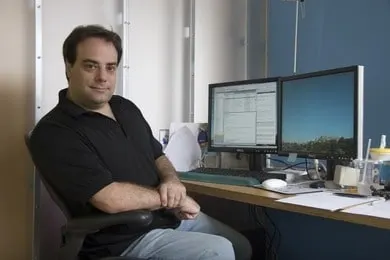
A few more words about Spolsky. He is also known for “Shlemiel the painter's algorithm,” which grew out of an old Jewish joke and describes how programmers write inefficient code because they don't understand the fundamental, basic layers of their work. But to keep a balance between the good and the bad, Silicon Valley also considers him the creator of the modern way the industry hires people.
Joel worked at Microsoft in the days when graduates of the most prestigious universities landed at the big software companies by default. He did the opposite: he introduced a strict filter of algorithmic problems, questions on general computer knowledge and multi-round interviews. Something he himself now considers a serious mistake, since software development is too complex, a team sport that requires a much wider, sometimes unexpected range of skills.
Phone a Friend
There is a curious study by the University of Maryland, according to which developers who use Stack Overflow as an advisor write less secure code, but code that is significantly more functional. In my view, though, the lines simply blur: intelligent software engineers also use it intelligently, as a source of information, approaching it critically and looking for the logic. Which, by the way, is exactly what matters in the age of artificial intelligence, too.
Gradually, a whole group of similar sites was created under the Stack Exchange “umbrella.” The approach proved so successful that question-and-answer pages appeared in many different fields, even outside the computer world.
Almost imperceptibly, the whole culture that accompanies any phenomenon of this scale was born. People with high ratings, who had given accurate answers and been recognized by the community, became celebrities in the programming world; their stars were a guarantee of quality. So much so that when Bulgaria became the first country where someone from Stack Overflow's top 40 became a minister, it made news widely covered across the software world.
And, of course, the memes appeared. About how programmers don't need to learn or work, how Stack Overflow practically writes their code for them and all they do is search and copy…
And then the jokes stopped. The large language models arrived and turned out to be surprisingly good at solving a large share of the problems. And even bigger questions appeared.
Programmers of the World
In the meantime, Stack Overflow had turned from a community and a venture driven by volunteer labor into a commercial product. Despite persistent rumors, it was not bought by Microsoft; in June 2021 it became part of Prosus, a Dutch company and subsidiary of the South African media conglomerate Naspers, in a $1.8 billion deal.
After many years at the helm, Joel Spolsky left the company, and the post of CEO went to Prashanth Chandrasekar.
In 2022, Stack Overflow had about 20 million registered users and over 50 million visitors a month, practically every working programmer on the planet. Some 24 million questions had been asked on it, receiving 35 million answers. And then… ChatGPT appeared.
Sunset and Dawn
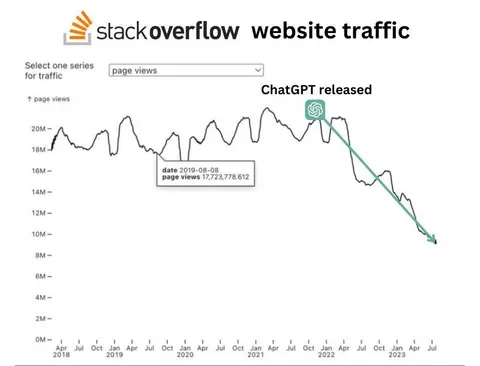
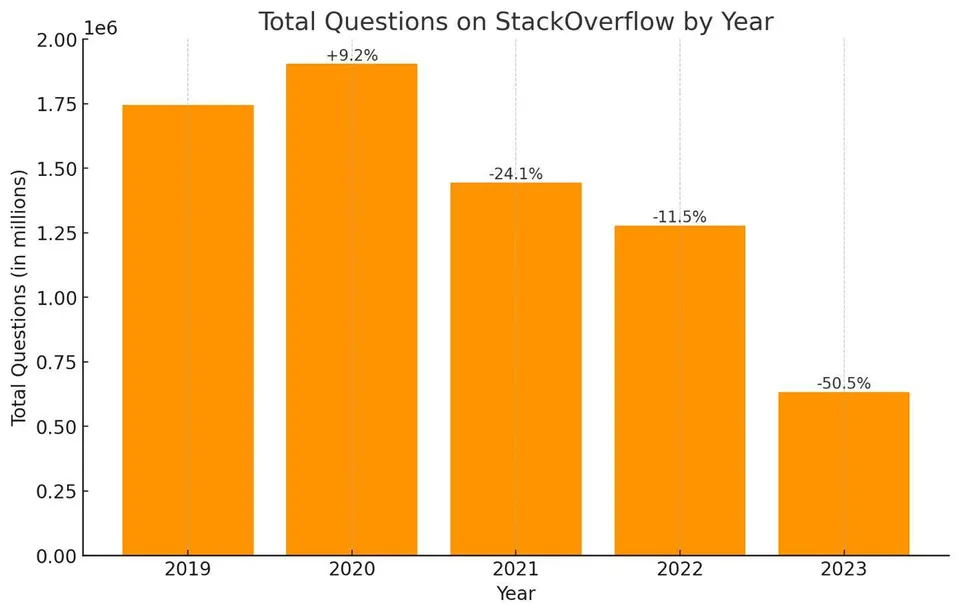
Over the last two years, traffic to the legendary site has fallen by about 50 percent. There are significantly fewer questions and answers, and all of this is, of course, easy to explain: today most programmers use various artificial intelligence systems and return to the good old “Mecca” only when those don't do the job.
This is gradually changing the rankings on Google, too: today results from Stack Overflow, once the search engine's undisputed favorites, get lost among the rest. The change is also visible in the discussions under the answers, where more and more users write that, at last, the hate, the needless rudeness, the drifting off into side topics and the impossibility of moderation have arrived here as well, just as on social networks.
At the end of last year, 10 percent of the 700 employees who look after the site were laid off. Of course, all this comes against the backdrop of layoffs at many other companies in the industry.
Nothing new in human history, is it? A venture captures the spirit of the times, becomes the fashion of the day, the standard, and then reaches its natural sunset. Here, however, the natural course of things may come with an unexpected price.

The Snake Eats Its Own Tail
Stack Overflow has always been an open, freely accessible site, even if it gradually developed its commercial side. But then it is only logical to wonder… how did large language models suddenly become so capable of writing computer code, improving it, finding bugs… answering complex or highly specific questions about building software?
“Some of the big companies explicitly cite Stack Overflow as a major source of training data,” says the project's current head, Prashanth Chandrasekar. He remembers the days when he was a young programmer, writing and debugging code late into the night. Because he would hit a dead end and there was no one to help him. “That's the reason Stack Overflow became so popular. You don't have to spend long hours at night to figure something out. You have this phenomenal community resource, and that can only be appreciated by people who have faced the problem.”
Now, however, Prashanth says, we are entering a new era, because we have the next generation of algorithms. Stack Overflow is also betting on bringing AI into the platform, like most of today's software giants.
Truth or Dare?
And so we come to the big question. What will we do from here, as the next new technologies arrive? Then there will be no one sitting and writing the answers, so what will artificial intelligence be trained on?
Yes, the companies developing large language models are willing to pay, and ever larger sums, for access to training data, but what if… there is no one and no way to provide it? Or will the algorithms move to the next level and no longer need it, having developed something ever closer to human thinking?
“All AI models need a constant stream of quality human data to train on. Without it, they are doomed to worse results,” says Chandrasekar. “This is a very real problem; we will always need solid, high-quality sources of truth like Stack Overflow.”
In other words… in programming, AI is quietly replacing human collaboration. And even here, the problem of defining, seeking and validating the truth emerges.
As Boris Simandov said not long ago, we are building ever more complex software solutions, but the whole process by which we do it is wrong. We keep piling up technical debt… and what happens next we can only guess.
The most important thing, in my view, is to keep asking the questions. Preferably before the answers overtake them…
- At the end of 2023, the largest group of Stack Overflow users were aged 25–34 (37.28 percent), followed by those aged 35–44 (23.02 percent). Last came those 65 and over (1.32 percent).
- The most used language today is JavaScript (63.61 percent), followed by HTML/CSS (52.97 percent) and Python (49.28 percent).
- According to the site's latest survey, for the first time the best-paid programmers are those using the new language Zig (earning an average of $103,611 a year). For several years in a row, Clojure held the top spot.
- Most users come from the US (21.21 percent), Germany (8.34 percent) and India (6.4 percent).
- The average time spent on the site is quite high by online standards: 7:21 minutes.
This piece was prepared with the special assistance of Irina Marudina.