What do you think about artificial intelligence? Is it a danger or an opportunity? The future or the present? Marketing or a colossal breakthrough?
In December I invited anyone willing to fill out a short but important survey. I asked the same questions a year and a half ago. Now the time has come to discuss the results.
This time nearly 350 people took part (compared with 750 in mid-2024). Thank you from the bottom of my heart! We will compare the conclusions of the two polls to look for trends. And together we will sketch today's landscape of how Bulgarians feel about the most discussed, most dizzying technology of our time.
It is important to point out, of course, that the survey makes no sociological or any other scientific claims whatsoever. It is a journalistic experiment aimed at the readers of Digital Stories. One that, in my view, nevertheless offers plenty of food for thought.
If you're interested in the main results in a nutshell, you'll find them here.
Chatting Now and Then
Once again, there are almost no questions whose answers show anything close to unanimity. Among those who filled out the survey are regular AI users and people who don't use it at all, skeptics and optimists, fans and people who aren't fond of the technology (on the whole they are fewer in the survey, but we can see them in the comments on social media, too).
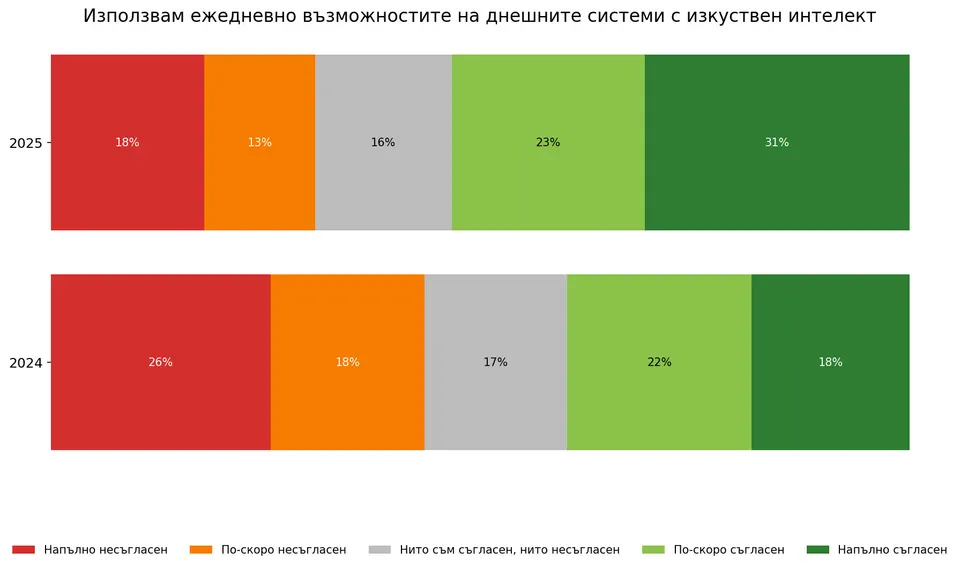
One wouldn't expect the results to change dramatically over time. Here, however, is where the biggest shifts are. Daily use of AI is clearly growing. A year and a half ago regular AI users were almost half as many, whereas now more than half of the respondents (53 percent) say they use today's systems every day, and the share of those who avoid them has dropped to about a third.
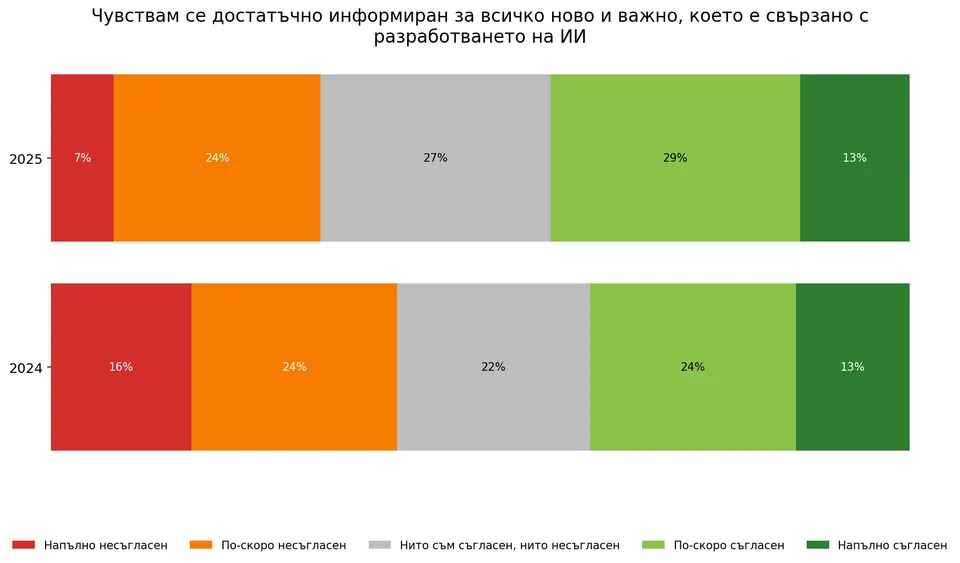
The share of people who feel informed on the subject has also risen considerably: 42 percent, against 31 percent who consider themselves uneducated about AI. Just a year and a half ago the ratio was the other way around.
Chatimists
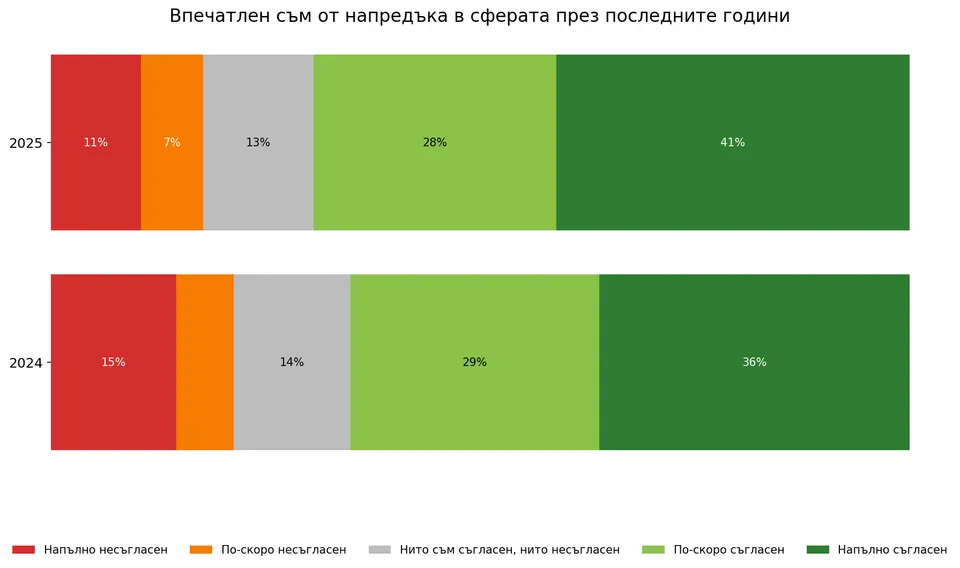
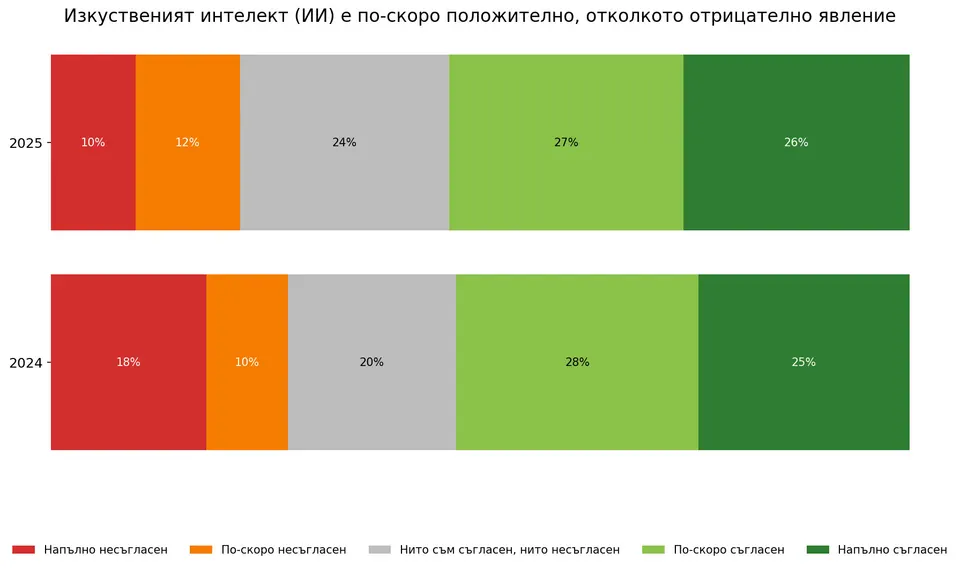
Public attitudes toward AI look rather positive. More than half of the participants (54 percent) continue to view artificial intelligence with optimism, while those at the opposite pole are shrinking (22 percent, compared with 28 percent before). At the same time, the share of people impressed by progress in the field keeps climbing: nearly 70 percent say they feel that way.
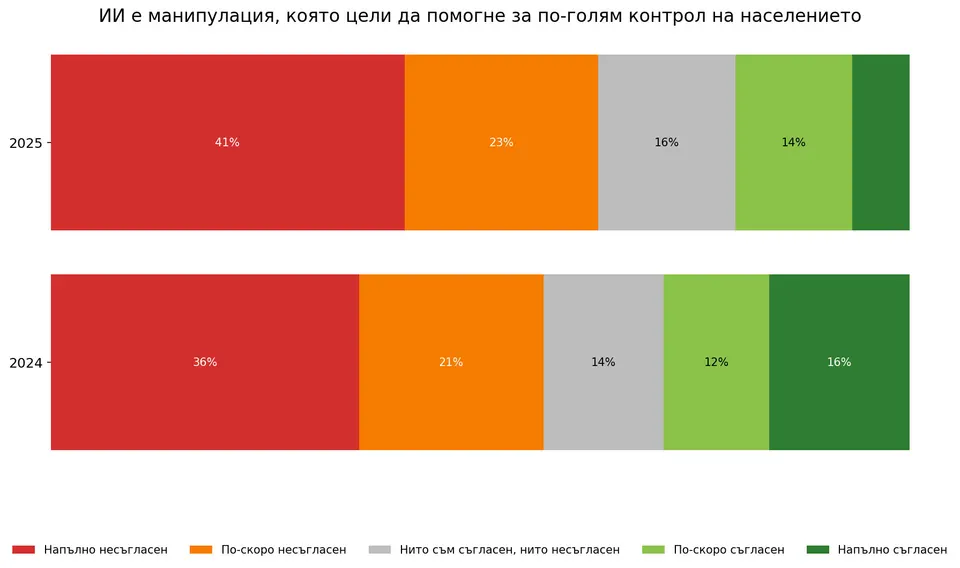
Some fears are fading. The belief that AI is a tool for mass manipulation is clearly in decline: the majority don't buy it, and the firmly convinced have halved (a mere 7 percent “strongly agree,” against 16 percent before).
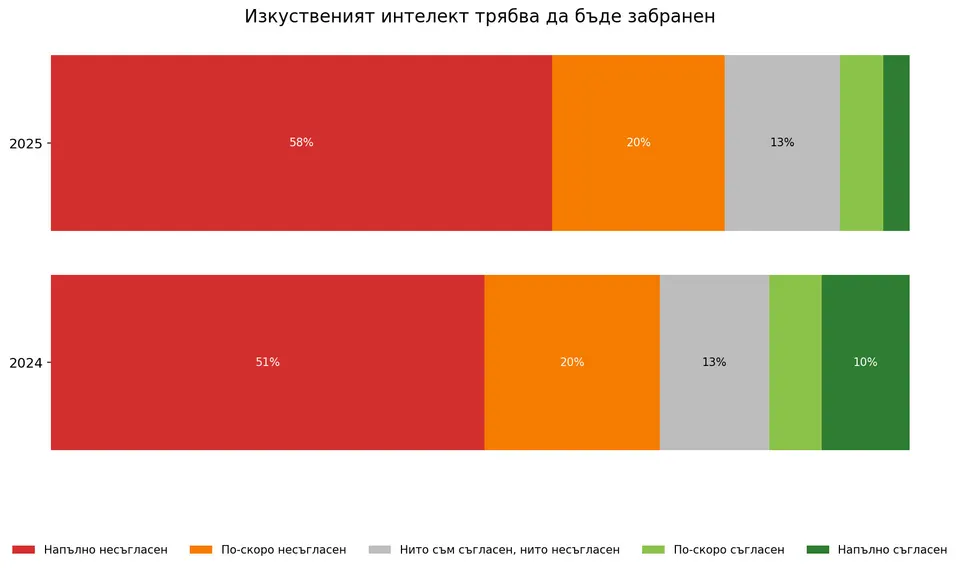
An overwhelming majority rejects the idea of banning AI altogether; the share of supporters of that idea has fallen by half (to 8 percent). Even the view that AI brings “more risks than benefits” is less common: only 27 percent agree with this statement (compared with 33 percent before). I'll confess that here I, too, find it harder and harder to settle on a clear-cut answer for myself.
Fear Is for the Chatbot, Not for Me
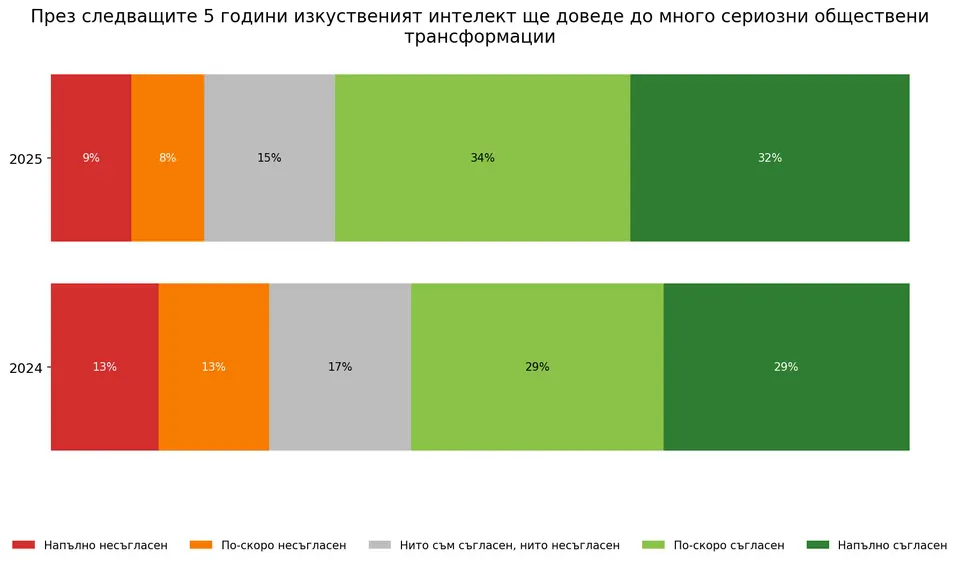
Apparently not only on Wall Street but here at home, too, expectations about the effects of AI's progress are rising. About two thirds of the participants predict that over the next 5 years the technology will bring about major social transformations, noticeably more than in the previous survey (67 percent now versus 58 percent then).
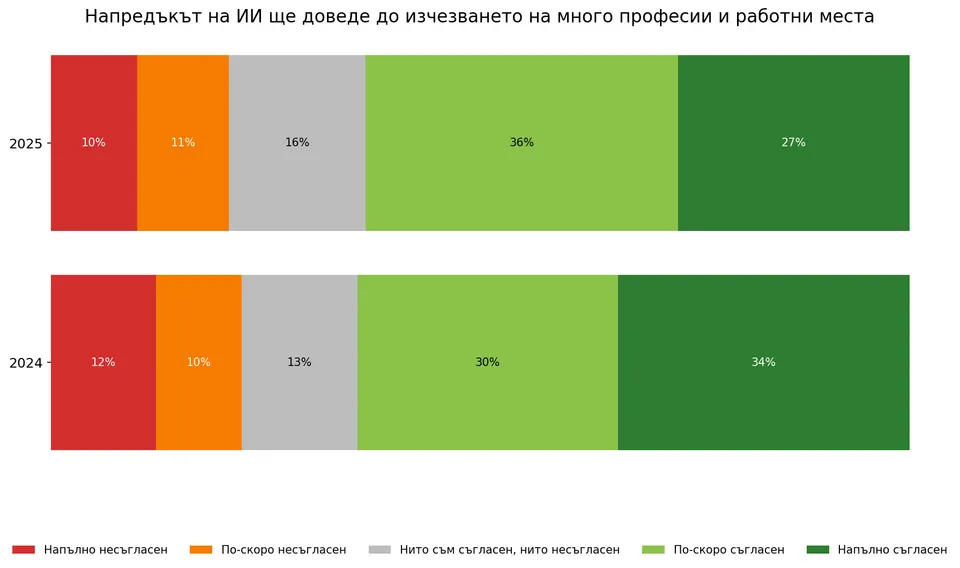
Almost as many (63 percent) believe that AI will wipe out many jobs.
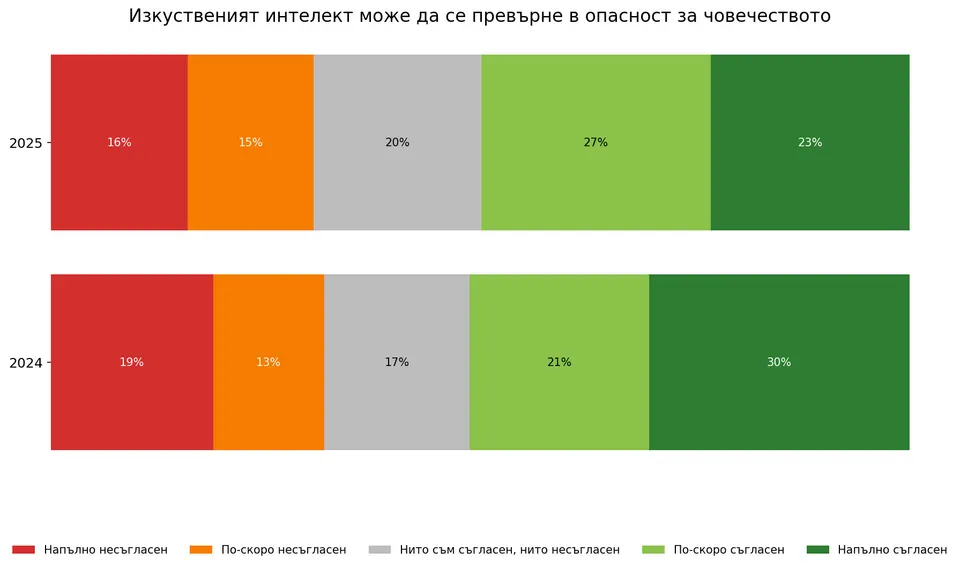
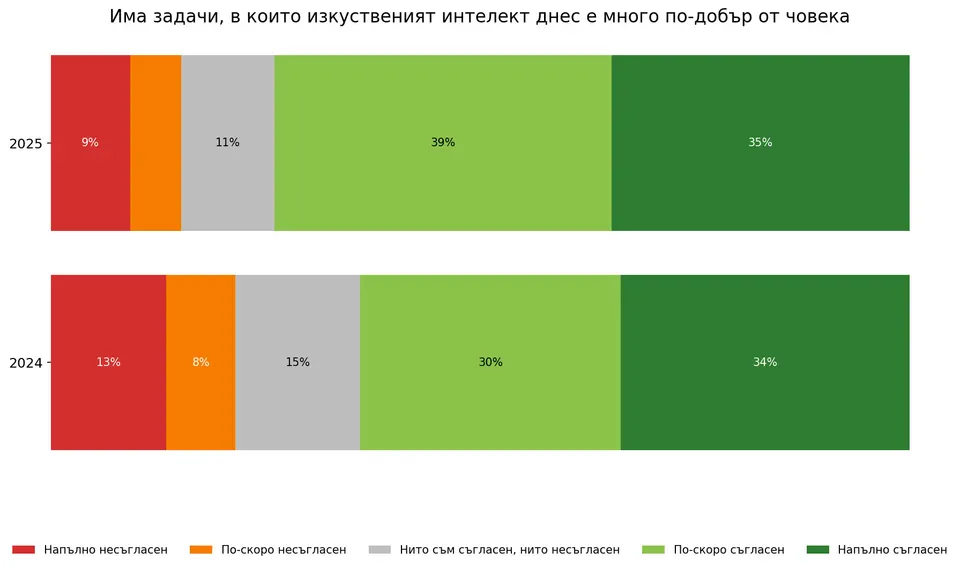
There is also a far more realistic assessment, at least in my opinion. A full 74 percent believe that there are already tasks in which AI outperforms humans (up 10 points!). And although half of the respondents continue to believe that AI could become a danger to humanity even without being used as a weapon, more and more people think we are still far from its full potential.
An Optimistic Chateory About the Bulgarian People
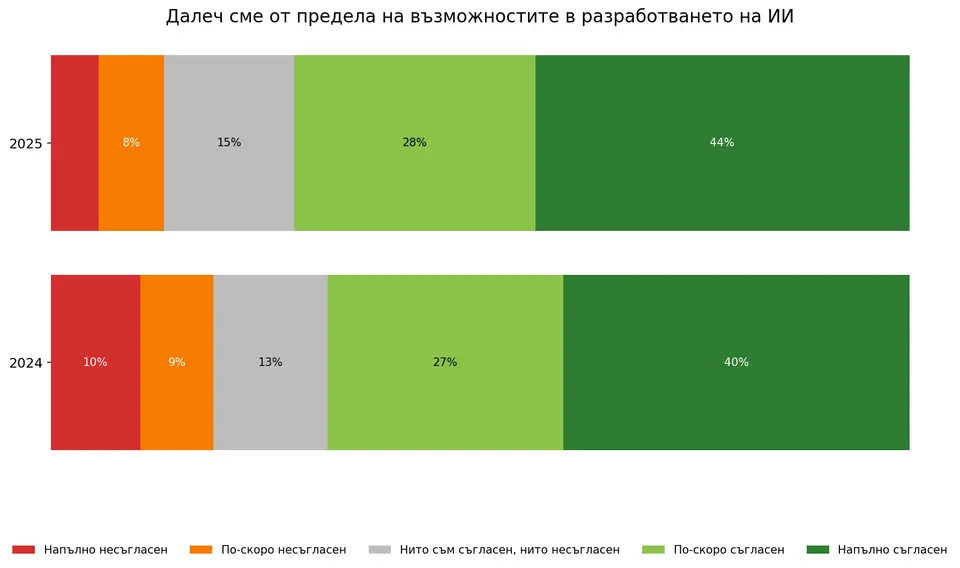
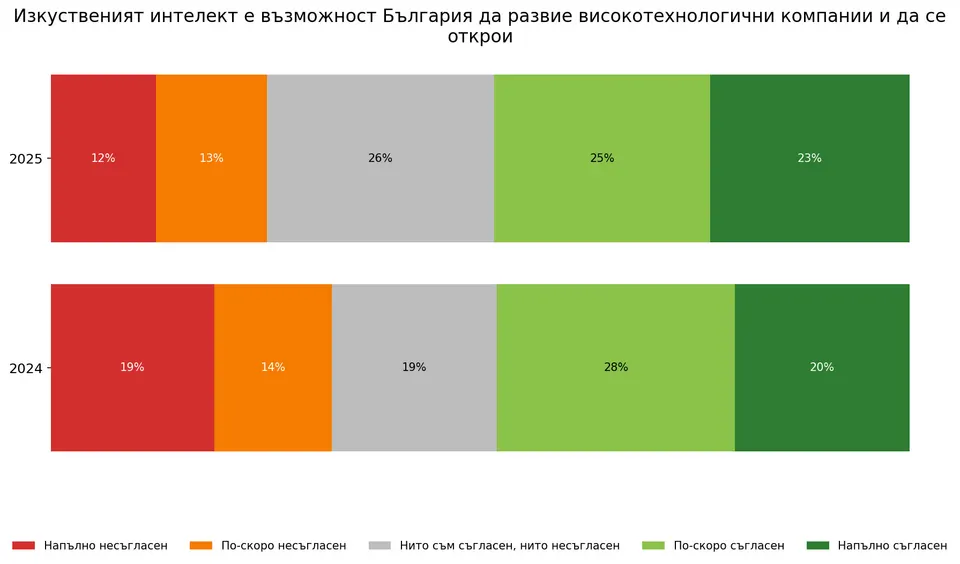
Over 72 percent are convinced that we are far from the limits of what these technologies can do (even more than before), and nearly half of the participants also see AI as a chance for the Bulgarian economy!
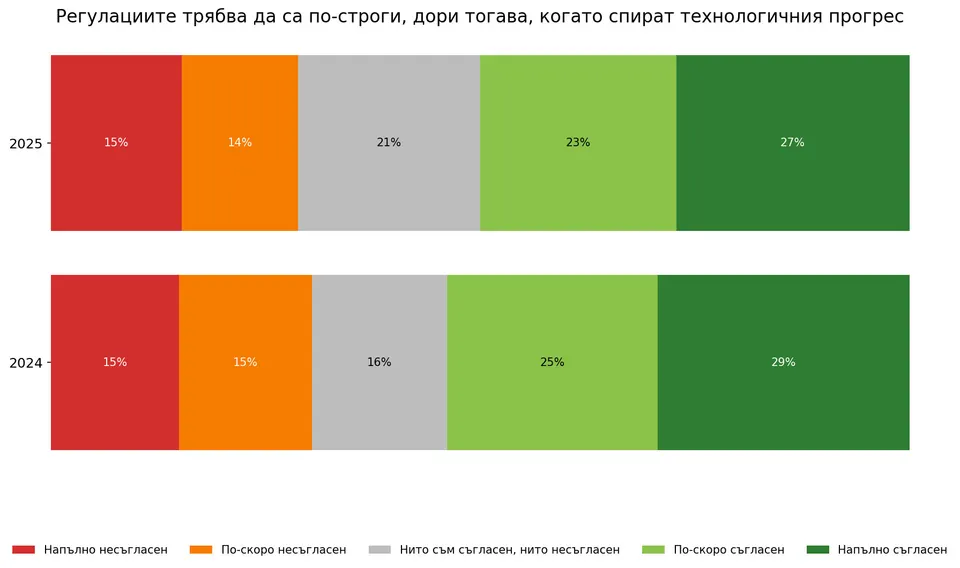
The balance between regulation and freedom is shifting slightly toward the center. This year, too, respondents clearly oppose extremes: a large majority disapprove of radical measures such as a ban or excessive tightening of the rules, yet at the same time they continue to support reasonable restrictions.
Supporters of very strict regulation (even at the cost of slower progress) have dipped slightly to 50 percent (from 54 percent), while their opponents remain at around 29 percent.
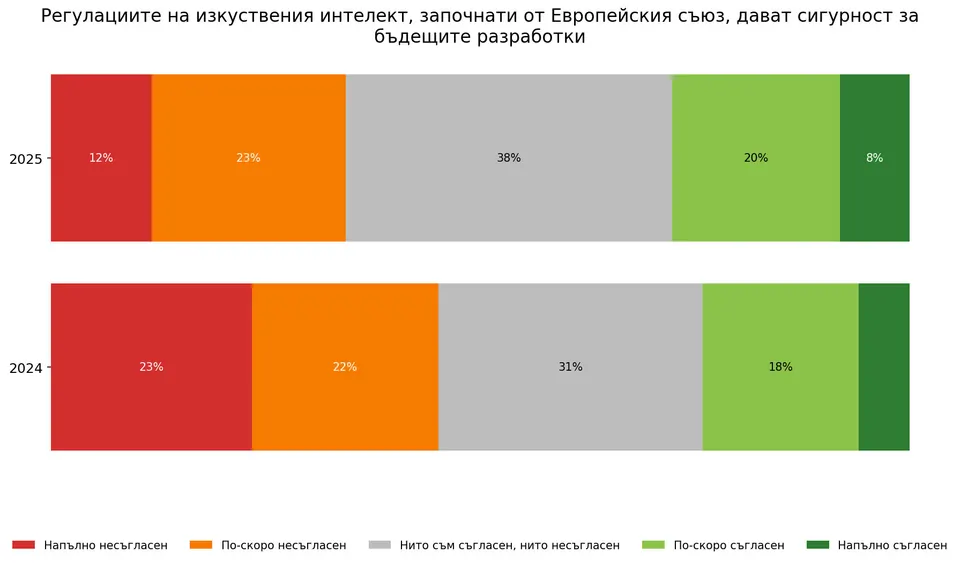
The only question on which the neutral opinion dominates is, once again, the one about European regulation: a plurality of 38 percent have no firm opinion on whether the EU's efforts provide security.
Are You in the Chat?
42 percent of the participants believe they follow developments in the field closely enough, while about 31 percent admit they are not up to speed. (The remaining 27 percent chose “neither agree nor disagree,” which is quite a high share.) Evidently the avalanche of AI news over the past year has helped more people get into the subject after all.
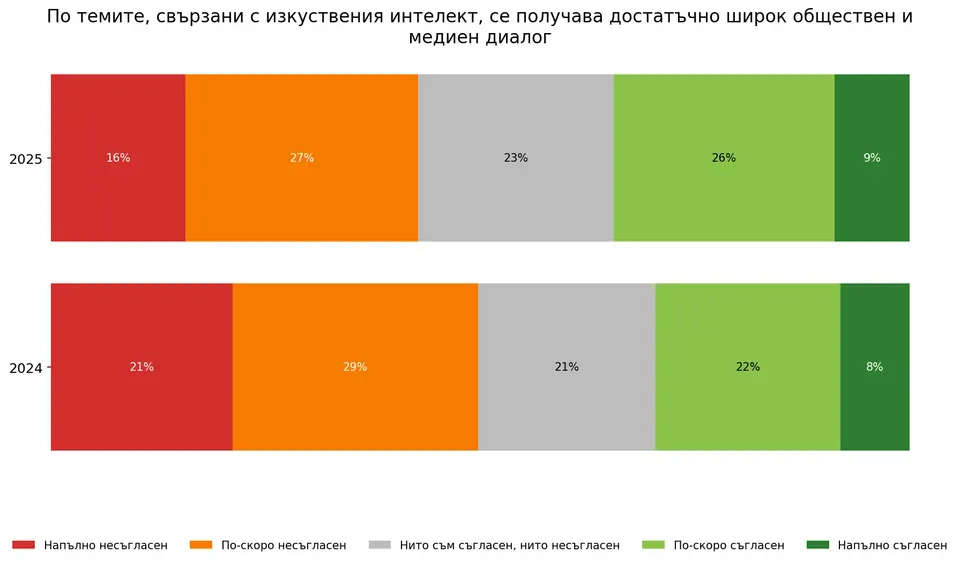
A curious paradox. People say they are increasingly well informed about artificial intelligence. And yet one of the few questions on which a single answer seriously dominates is that there is not an active enough public conversation on these topics.
I think so too. That is precisely why this site keeps going, even though, alas, it is still rather lonely in this important conversation. But nothing is lost; the future is still in our hands.
It matters to know who took part in the survey. Participants were 51 percent women and 49 percent men. The age distribution, however, is far narrower: nearly 2/3 are over 46, about a third are between 26 and 45, and a very small share (5 percent) are under 25.
Special thanks to the roughly 30 percent of participants (94 people) who say they get their information about AI mainly from Digital Stories! Answers like that definitely give me the strength to keep fighting this battle.
The Sly Chatter
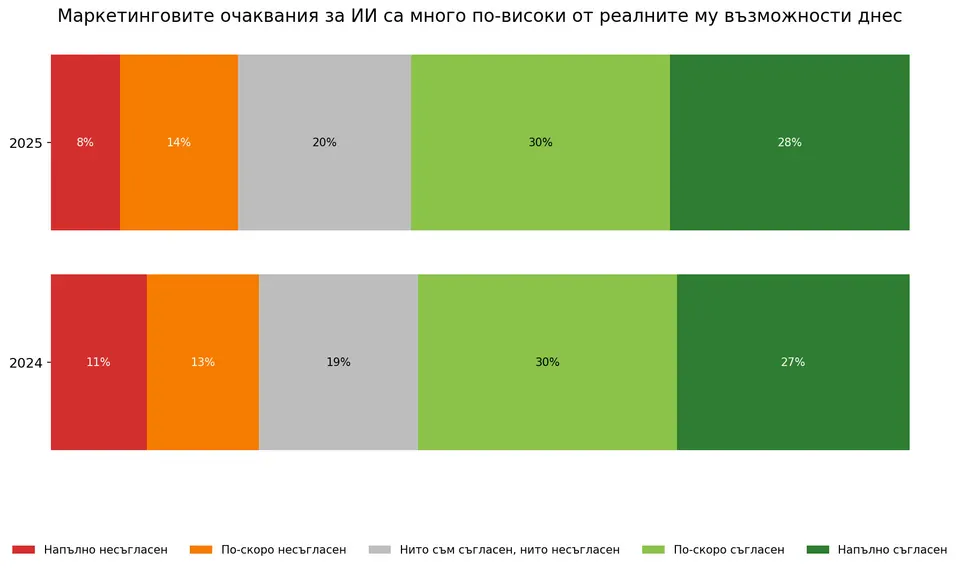
Another fairly clear conclusion that hardly anyone will dispute: the marketing noise around AI remains loud. But how loud exactly?
Over 58 percent of respondents believe that the expectations created by marketing exceed what today's AI systems can actually do; there's no significant change here compared with the previous survey. At the same time, though, as I mentioned, people continue to be impressed by the technology's progress.
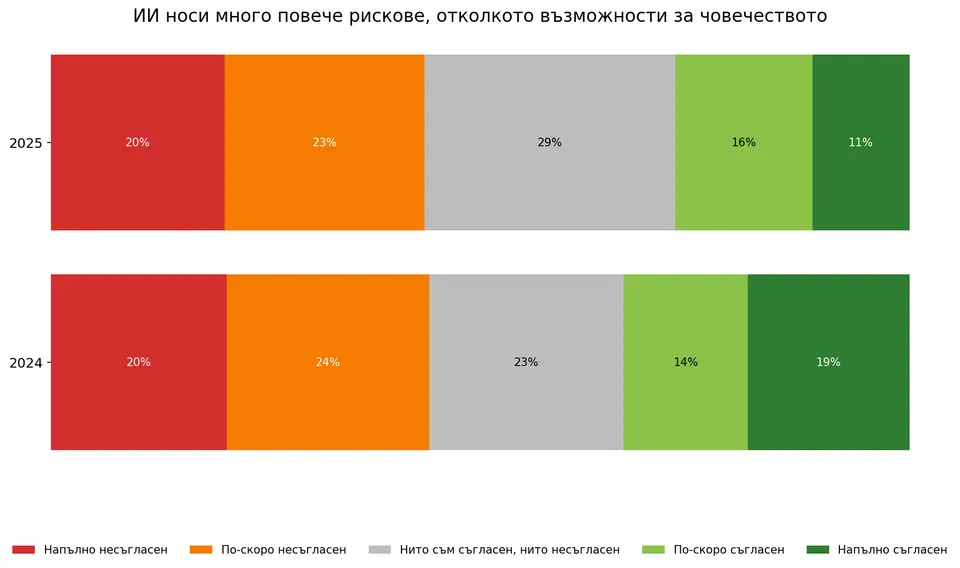
One of the hardest questions reads: “Does AI bring more risks than opportunities for humanity?” After almost 500 Digital Stories, I still believe the truth here lies somewhere in the middle.
That is how the answers split, too. Even so, the pessimists are shrinking: in 2024, 1/3 believed the risks outweigh the benefits, and now it's about 27 percent. The optimists remain at around 44 percent. Interestingly, the “gray zone” is growing: the neutral and the undecided on the question (from 23 percent to 29 percent).
Chatch My Drift?
Yes, AI could become a danger to humanity. Here the positive answers stand out: exactly 50 percent of the participants agree (to varying degrees) that it could pose a threat to the human species.
63 percent agree that the progress of AI will lead to the disappearance of many jobs (and I can confirm that as someone who has ended up in exactly that position).
67 percent believe that over the next 5 years AI will bring about very serious social transformations. This share has grown noticeably, by 9 points!
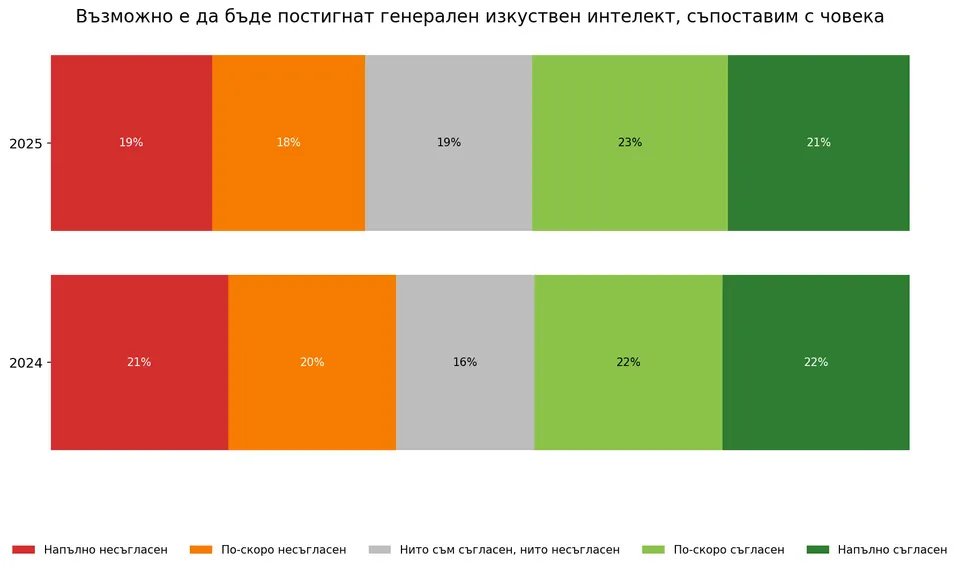
A full 72 percent of respondents are of the opinion that we are far from the limits of what is possible in developing artificial intelligence.
I'll leave the conclusions to you.
O GPT, Stay Thy Flight?!
Are there big differences in opinion depending on profession, age or main sources of information on the subject?
It turns out the differences remain minimal. There are no great statistical deviations between the sexes, or between people who work in IT and everyone else.
Still, I'm tempted to mention that there are clear differences among people who said they get their information from Digital Stories. They use AI's capabilities daily significantly more often and are more optimistic about the technology's future. Considerably more of them believe that Bulgaria can make a serious breakthrough in the field.
Another interesting pattern: the older people who filled out the survey are more optimistic about the AI future. A larger share of women expect serious social transformations in the coming years, while men feel significantly better informed.
One more curious touch: no fewer than 3 of the comments on the survey suggest that it was created by… artificial intelligence. No, it wasn't, but I think it's extremely important that we ask ourselves this question more and more often about everything we read.
The Chat's Out of the Bag
So, in short, the most important conclusions from everything said so far are:
- The big questions continue to split us very sharply into extremes
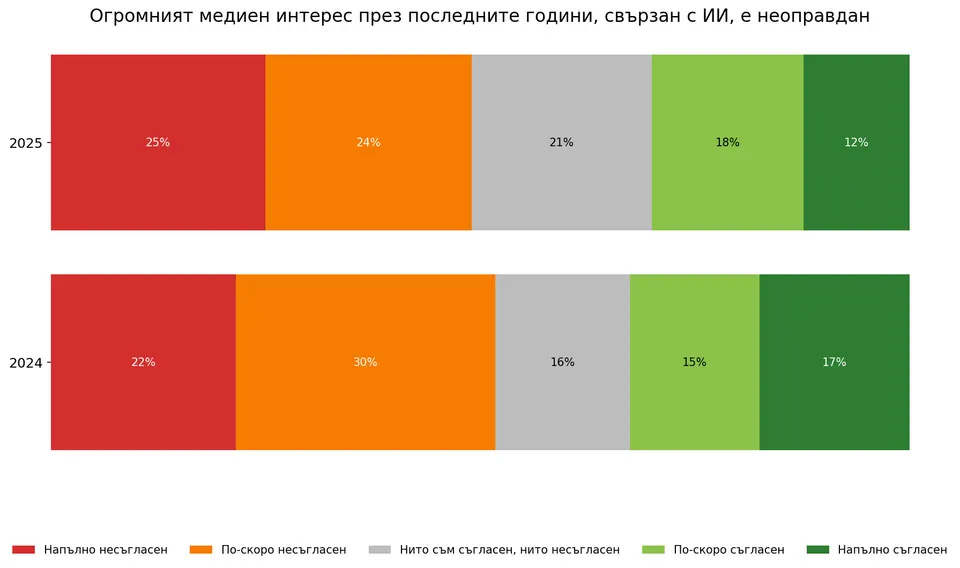
- Artificial intelligence arouses enormous interest, both in the media and among the public. It stopped being a niche topic long ago;
- At the same time, an adequate public conversation isn't happening. Those who took the survey clearly sense a vacuum in the serious discussion about AI: it lacks both depth and breadth.
- We approach the subject with stereotypes and extremes. The answers reveal quite a few preconceived attitudes.
- Every statement divides us, to some degree, into opposing camps. Consensus is the exception (example: almost everyone is against banning AI).
What are your conclusions? I'd be glad if you shared them. Where are we heading? What will the results of this experiment look like in another year?
The discussion continues, and I'm open to any interesting ideas here.
Thank you for your trust!
And here are the promised prizes! Five of the participants who chose to enter the draw receive books as gifts: iva_***@gmail.com, v.i.***@abv.bg, crazy***@hotmail.com, mitk***@gmail.com and nov***@gmail.com.