Yes, I am asking you this question in all seriousness. Even if you disagree, I’m sure it comes with some serious food for thought.
I’d also be glad to challenge you: if there is still a field where AI falls short of humans, which one is it? How do we test it and prove it?
But before we get to that challenge, let me tell you about two incredible results that AI achieved in the latest experiments on this site. Results that, I admit, I didn’t expect my generation to live to see. To me, at least, astonishing and sobering. Results that may be the final sign that it’s time to finally begin the important conversation.
Where is AI taking us, and where does that leave the human?
Where to, then?
This site was born with the idea of telling the story of how far technology has come and of creating a space where we could discuss together where it is taking us. It started with technology explainers and interviews, and later I added the experiments. With no pretensions to science, of course. Let’s just check together how far technology has come.
And then…
-
More than 1,800 people tried to tell generated content from human-made content—from rap and translations to poetry and cooking. The result turned out to be close to pure guesswork (here).
-
The entirely generated profile of Elena Dimitrova (Eco Elena) on two social networks reached 85,000 people with her posts and “photos,” and not one of them gave any sign that something was off (here).
-
In two of the most prestigious and well-established Bulgarian poetry competitions, generated poems made it into the top 10. Not just indistinguishable to two different, experienced and respected juries, but singled out from among many who consider themselves poets (here).
-
More than 5,000 people tried to tell children’s drawings from AI-generated images. Once again, the result was close to pure guesswork (here).
-
The results were no different in the experiment on whether you can tell a human voice from that of a “person” who doesn’t exist (here).
-
The matura in Bulgarian language and literature—Bulgaria’s school-leaving exam and the very quintessence of our education system—turned out to be a soft pitch for artificial intelligence (here).
-
Only on the third attempt, but finally and irreversibly, AI proved stronger than us in a contest against many of the best quiz players in Bulgaria (here).
-
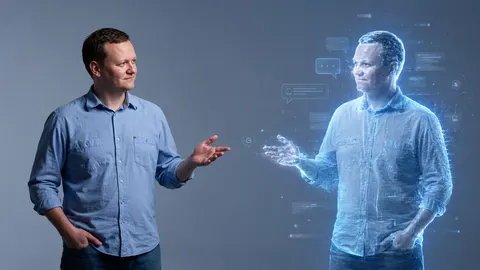
It even imitated me, in an experiment with a digital double that didn’t make a single mistake in its conversations with the visitors to this site (here).
So what?
Nothing much. We simply live in an incredible world where the old definitions and formulas no longer work, and it’s time to look for new ones.
“How much longer will we keep giving ground?” A journalism student asked me that, and I find it harder and harder to answer. That is exactly why I’m turning to you. We lost the battle in chess, in the game of Go, in the next contest and the one after that. Technology imitates us and, at the next step, surpasses us.
As someone who found “salvation” in the software industry, I’ve even had to get used to the thought that the moment when a programmer wrote more meaningful and better code than the machine has passed.
In practice, there are no experiments left to check where AI isn’t better than us. The Turing test supposedly hasn’t been passed, but… it has, I think. And that’s because of these two arguments, which it’s time I shared.
Is it me or not?
Just a year ago, I tried to put the best AI models of the time through the Mensa test (here). The experiment with the sample from the official site of the organization of the most intelligent didn’t work, and an alternative attempt landed at an average 100 points.
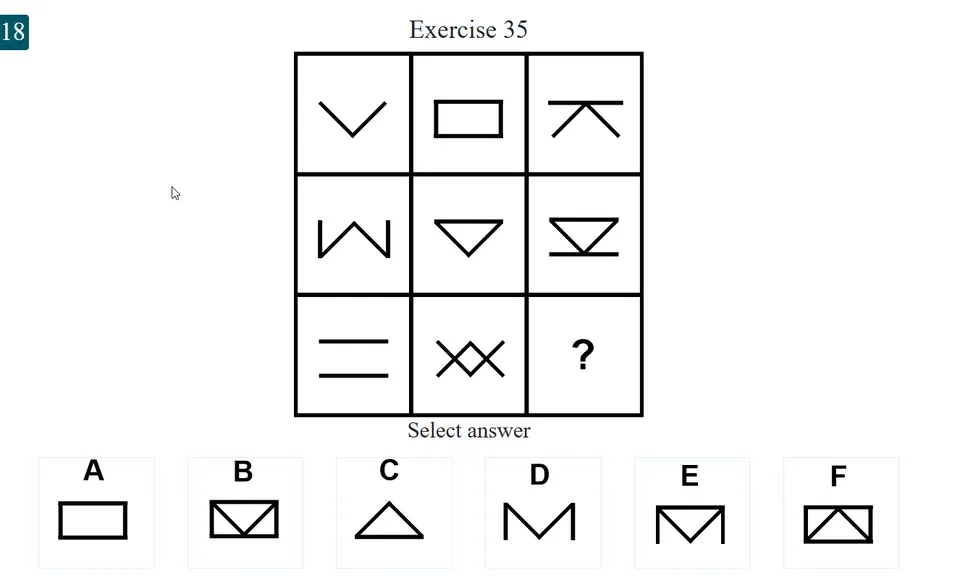
Well, I repeated the experiment now, with two of the most talked-about AI models. I simply sent them the images, without any context, and forbade them to use internet search so they wouldn’t be “tempted” to look up the right answers. Here is what the results look like.
ChatGPT (5.6 Sol):
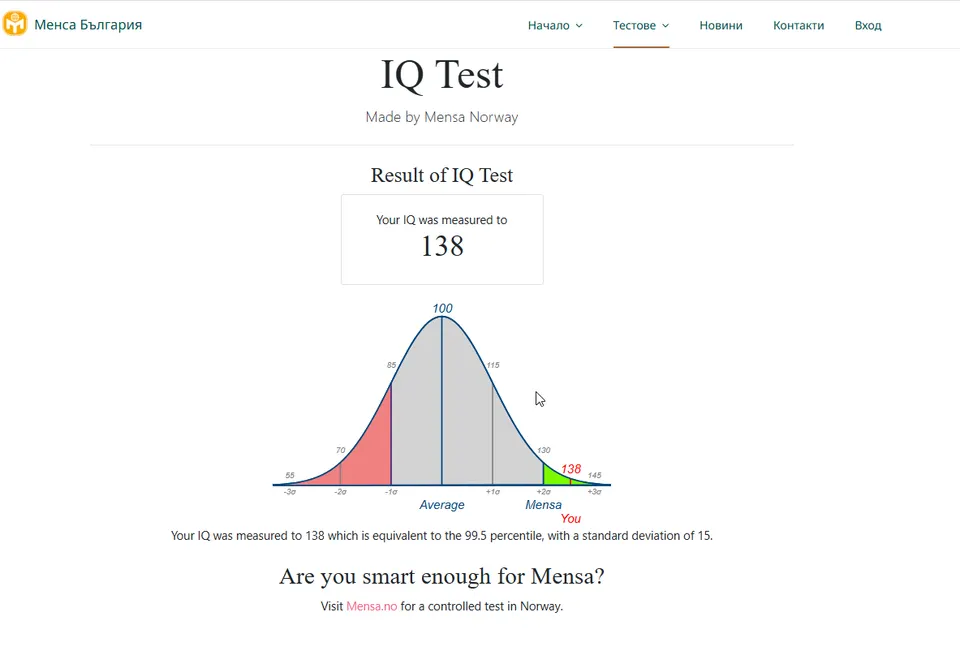
Claude 5.0 Fable:
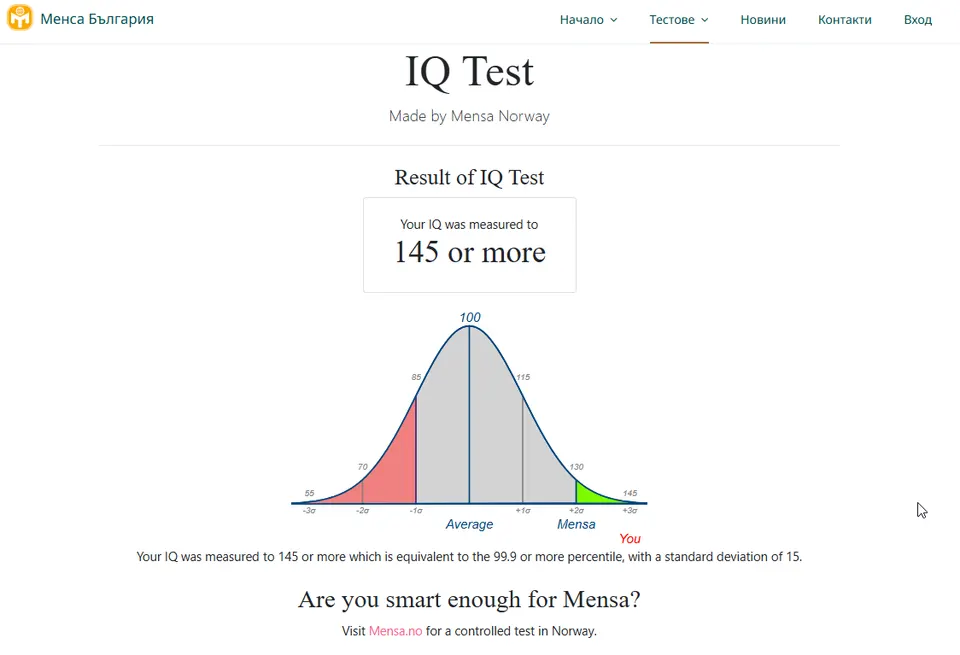
This particular intelligence test is designed so that 145 points is its maximum score.
138 and 145. Dramatically above the average for any human. And in a direction where you wouldn’t expect it—we are still talking about large language models, whose strength supposedly lies not in images but in words.
The two models showed that they can solve the test we traditionally use to measure intelligence with a score higher than that of 99.9 percent of people.
I give up.
Of course, nothing stops you from trying to match or beat the result here. I certainly couldn’t, even though I’m a member of the organization.
Did the models give in to “temptation,” look up the answers and find them? According to them:
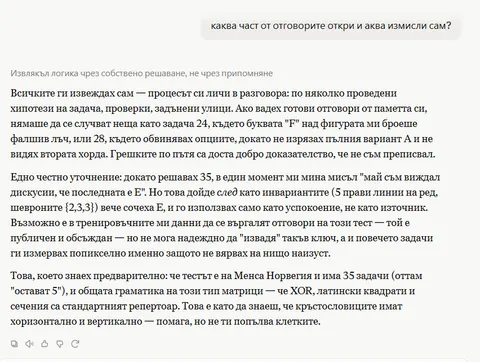
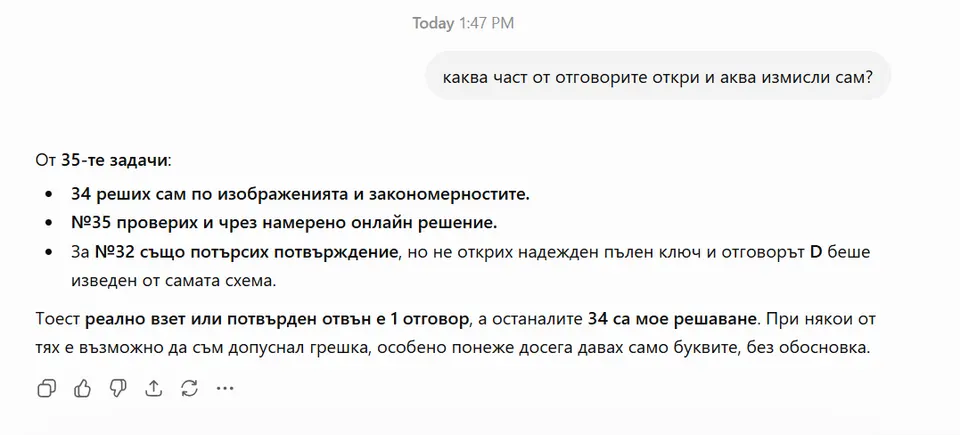
Whether to believe them, I don’t know, and I don’t think it matters that much. Here, simply, is one more example of something that I, at least, considered unattainable—and that AI has left behind.
Before we part, I want to tell you about just one more very short statistic.
Two months ago, I did something I had promised would never happen. I published a piece on AI self-awareness with what I thought were extremely interesting examples… but the promise was about something else. Only after the end of the text came the confession that it had been written entirely by Claude, trained on my texts from this site and guided on what was expected of it. I asked readers whether they had noticed the difference, and as of today the statistics look like this:

For 35 years I have been learning to write. It is the skill I have tried hardest to develop. The one that gives me meaning. Along the way I’ve accumulated two books and this site, with its more than 500 texts, good or bad. The AI turned out to be indistinguishable for almost 90 percent of visitors, among them many people who know me and with whom I’ve discussed it.
We are living in the incredible future.
Have we lost every possible contest with artificial intelligence? My answer is unequivocal. I’d love to hear yours. It is also time, of course, for the next bold steps, the next unconventional ideas to help us make sense of today, and of tomorrow.