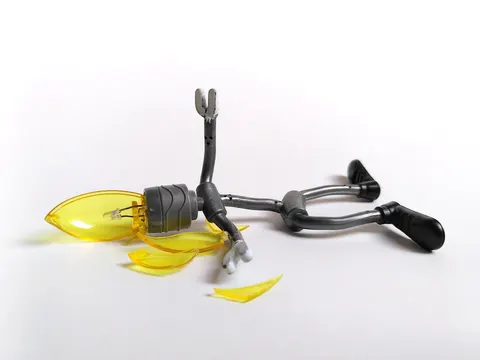
The Deep Lie: Could Deepfake Technology Start a War?
Deepfake technology makes it possible to create a video starring real people that is nonetheless completely fake. Could it lead to war? And how did neural networks suddenly become capable of producing the perfect forgery?
 02
How Ratatouille Gave Birth to Bunk Romero
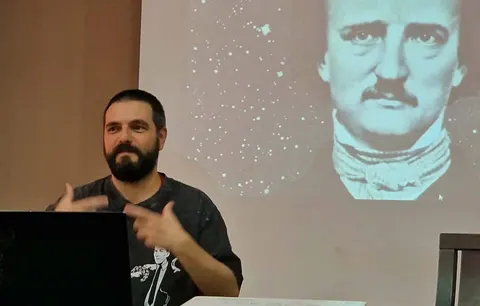
Bunk Romero is a genuine phenomenon: a six-book series that blends the best of crime fiction and science fiction with an authentic sense of humor. Its author, Emil Minchev, is known for the werewolf detective series, but also as the translator of Gone with the Wind, The Hound of the Baskervilles and The Great Gatsby. We sat down to talk about books and the future, about science fiction and fantasy.
 03
Trust, but Verify Online!
If you have never heard of “social engineering,” or “social engineerism,” as today’s guest says we ought to call it, you are probably picturing a plot straight out of Frankenstein: the engineer builds himself a person… Or something from the conspiracy theories about mass mind control. Whether you have heard of it or not, though, we need to talk about it more and more. Because this is the most dangerous and most effective attack in the digital world. One that targets not computers, networks, servers or programs, but the weakest link in the chain: the human being. “Today cybersecurity breaches happen more and more often through social engineering, a method that uses manipulation and manipulative techniques so that people are deceived and access to sensitive information is gained,” says cybersecurity specialist Plamen Tsvetanov. But what are the most important steps to protect ourselves? What are the biggest risks of underestimating the person on the other side? Why should trust online be a scarce commodity? The subject matters to everyone, even those who don’t realize it…
 04
Elections + Artificial Intelligence: The Perfect Storm
This year nearly two-thirds of the planet will vote, one way or another, for those who will govern them, and for the first time it is happening in the age after ChatGPT. Can artificial intelligence become the deciding factor, can we avoid being manipulated, and could technology one day change how our societies are run? Here are eight reasons to stop and think.
 05
“All the Stories Have Been Told. But How Will the Words Tremble?”
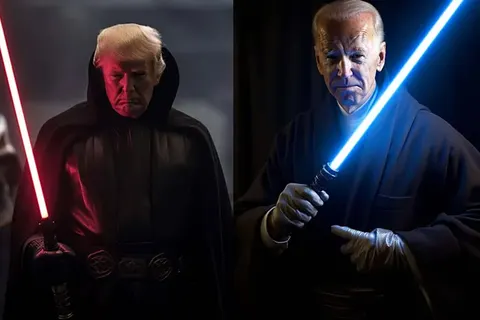
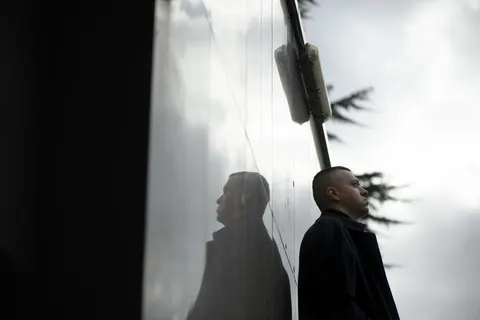
A director, rapper and podcaster meets a journalist, programmer and writer. A conversation with the roles of host and guest swapped… and although there are only two of us (plus, of course, one more wonderful podcaster), it turned out that these combinations of three callings apiece hold some interesting nuances. The podcast 2&200 is a classic of the genre and shows why this form of conversation is turning eyes and ears back toward shared words. We continue the conversation for admirers of Kusturica and/or Dostoevsky and/or Marx with Orlin Milchev, once known as MC ATILA, a man able to pierce with words and questions. He is also a director, and last year saw the release of his debut feature film, The Art of Falling. A guest with an unexpected view of the big issues of today, interwoven with technology. The “Scourge of God” has long ceased to be a single hero; it is what we have created online. But what is looming ahead?
 06
What Do You Want to Read Tomorrow?
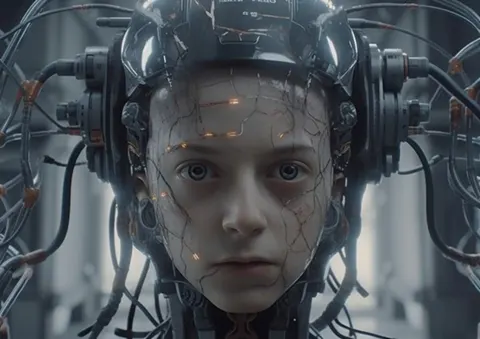
How do we want tomorrow to look, and will we still tell truth from lies as we sink ever deeper into our bubbles? Over the past 20 years we have forgotten how to read long texts and changed our very relationship with the truth. My answer to how we save the future may sound idealistic, because I am betting on the contender losing the battle for attention most badly today: traditional media.
 07
How Much Does Truth Still Matter to Us?
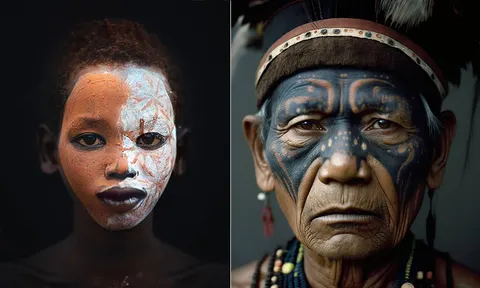
“How did we let the social contract slip away? Just like that, quietly…” We can no longer tell texts and images generated by artificial intelligence from those created by humans. That is the big takeaway from the Digital Stories experiment, in which nearly 2,000 people took part. We meet Nadya Shabani, a human rights lawyer and director of the Bulgarian Center for Not-for-Profit Law (BCNL), and Radina Banova-Stoeva, a human rights lawyer and legal consultant at the center, to ask how we will tell the truth from now on, whether attempts to regulate AI are doomed, and why the decisions we make about it today matter so much for the future of our civilization.
 08
Five Jobs on Their Way Out and Five the Future Is Bringing In
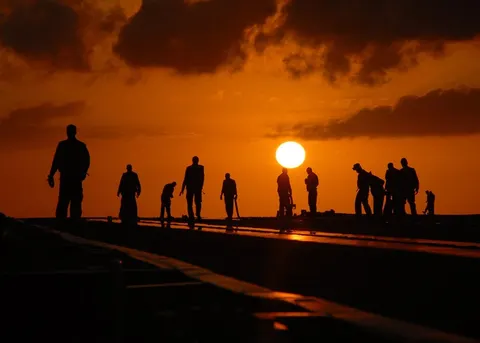
Technology is drastically changing the needs of society, needs that must be met by the daily work of its individuals. Today whole professions vanish and new ones appear faster and more quietly than ever, and although forecasting in so dynamic a field is nearly impossible, we will try to sum things up: which five professions will soon disappear, which five will be most in demand in the near future, and what five professions we can only imagine might one day exist?
 09
Man and Robot, Intimately
Algorithms are replacing us in more and more tasks. Meanwhile, the internet has changed human relationships forever, love and sex included. Isn't the point where the two meet drawing near? What does the future look like when artificial intelligence and robotics step in between two lovers? 42 percent of people say they would have sex with a robot today. 39 percent would have a romantic relationship with a humanoid. Would you?
 10
“AI Revolution!” When the Hype Goes Too Far
“Artificial intelligence” has become such a fashionable phrase, a marketing cliché that is often completely devoid of meaning. We are all excited about the possibilities this kind of technology brings, but sometimes… the results can be comical and even dangerous.