This year nearly two-thirds of the people on the globe will vote, one way or another, for those who will govern them. The US presidential election on November 5 stands out, while here in Bulgaria, on June 9, we will elect our representatives to our national parliament and to the European Parliament at the same time. Key elections are taking place in 8 of the 10 largest countries on the planet, and at least 2 billion people are expected to end up at the ballot box (unless they go mushroom picking instead).
And if for us in recent years this has turned into a frequently repeated, not particularly attractive or motivating chore, here we are: for the first time, democratic procedures on such a scale are happening in the post-ChatGPT era. In a time when artificial intelligence has become the great opportunity and the great challenge. And all of this against the backdrop of a general decline of interest in democratic processes. At the dawn of emerging social upheavals which, inevitably, are tied extremely directly to the technological revolution we are living through.
Can artificial intelligence become a key factor that decides the coming elections? Is there a way to reduce the risk of being manipulated in our choice, on top of the already manipulative forms of communication online? What will it look like, and how far away is the moment when technology lets us take the next steps in our development as a species, in the way our society is organized and governed? Here are eight reasons to stop and think.
1. You've Got a Sister!
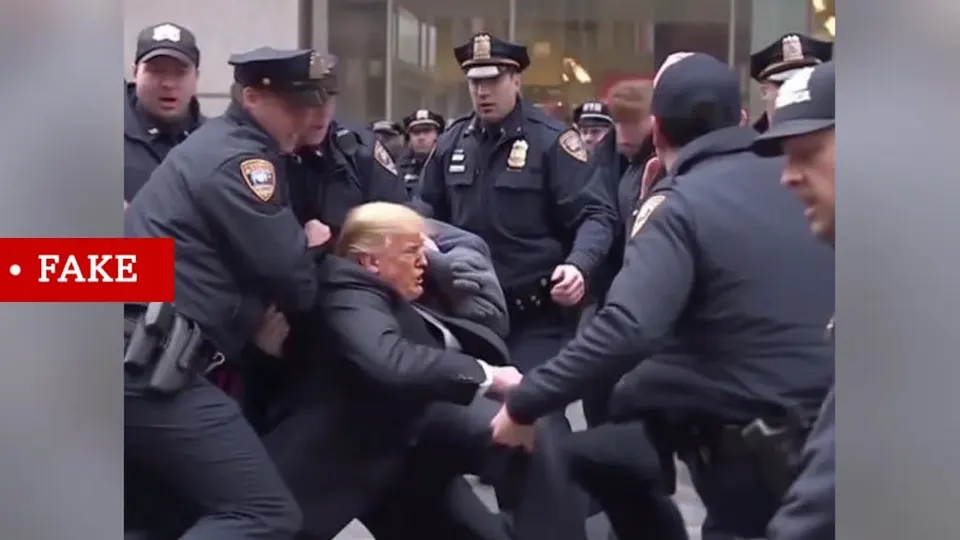
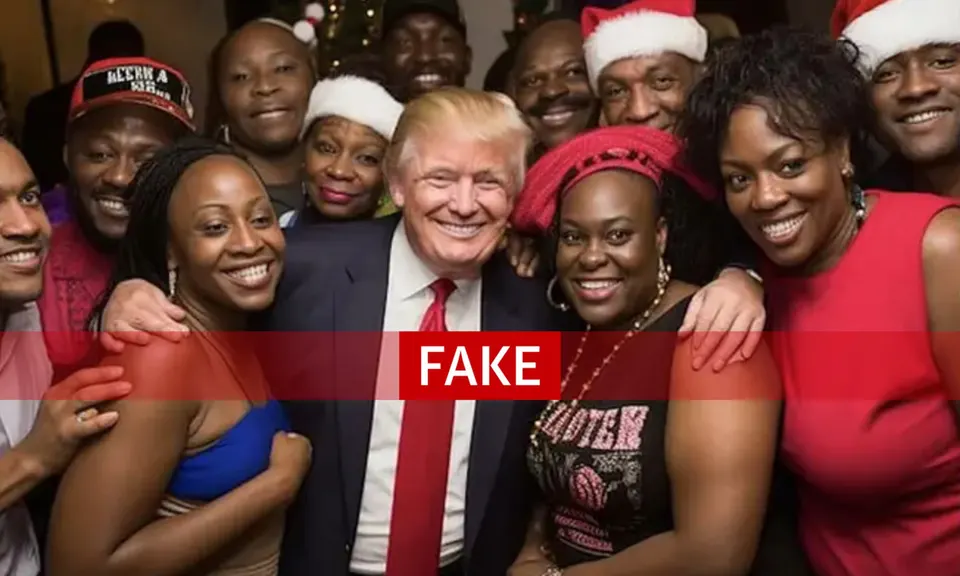
Of course, we begin with the ability to generate outright fakes. It is no accident that at the latest Davos forum this was singled out as the biggest short-term risk of advances in artificial intelligence—the ability to churn out blatantly fake content in enormous quantities with hardly any effort. As the popular English quip we have lately been borrowing puts it, “propaganda on steroids.”
You have probably heard this example. You are a voter in New Hampshire, and the day before the US presidential primary you get a call from good old (at least one of those words is true) Joe Biden, who tells you: “Look, there's no need to bother going out to vote tomorrow, it's the real election that matters.” The incident was entirely real, and tens of thousands of voters received the call. The result: robocall campaigns were banned, even at the state level.
And so what? It hardly seems difficult to get around such restrictions, for instance by using various messaging platforms. Meanwhile, examples of this kind are slowly piling up.
A video of Moldova's pro-Western president Maia Sandu in which she declares an alliance with Russia was viewed millions of times before it was taken down. In the elections in Slovakia, one of the liberal candidates is believed to have lost votes dramatically because of a fake audio recording in which he proposes raising the price of beer.
In Bangladesh, a conservative Islamic country, one of the opposition candidates was completely discredited after a video appeared showing her in a bikini, unthinkable by local standards. (Yes, algorithms can already successfully “undress” people, and they successfully generate fake porn too, with all the consequences that brings.)
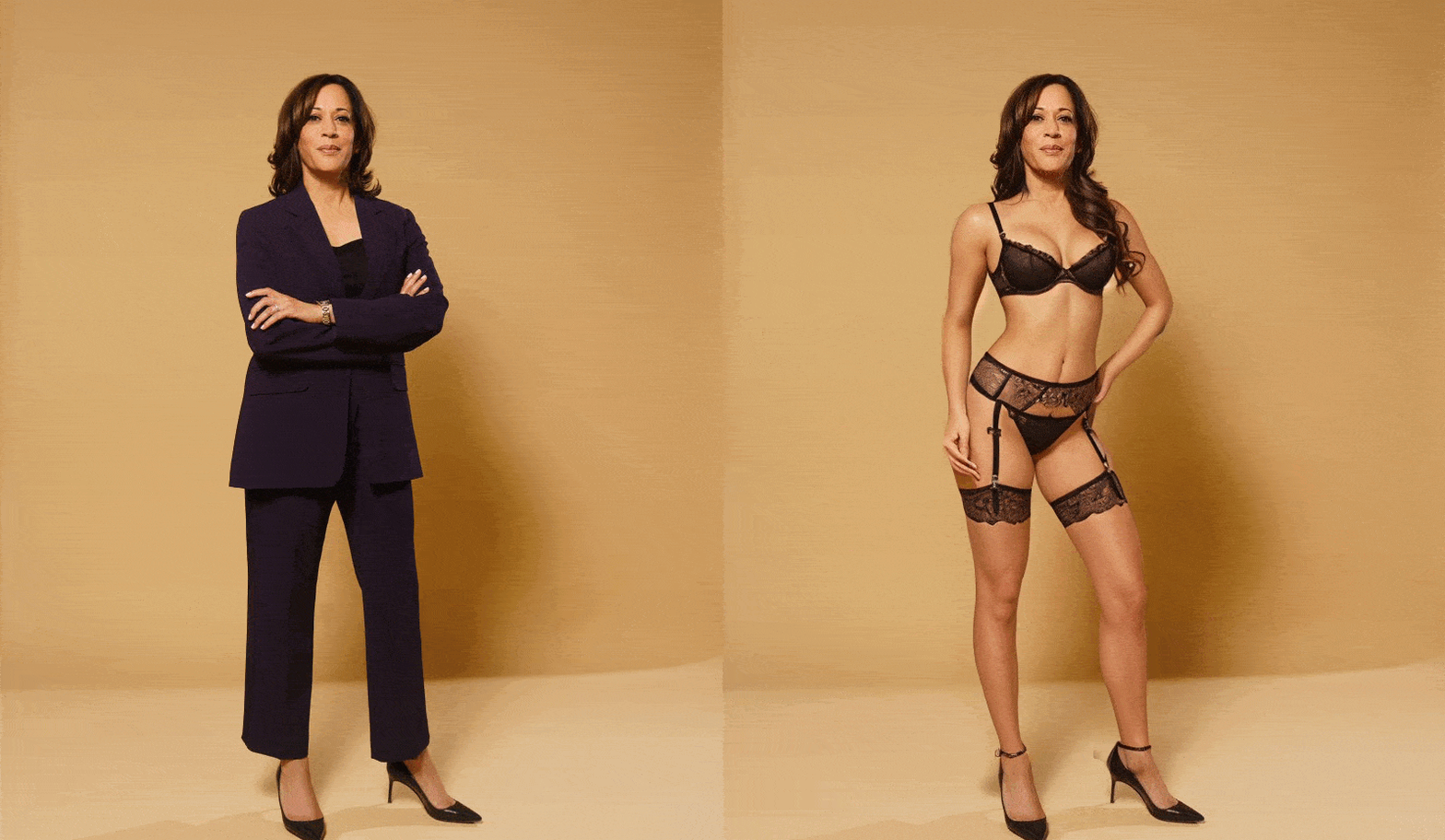
“People believe everything they see on Facebook,” commented the victim, Rumeen Farhana.
All of these clips were quickly discovered and exposed as fakes… And then they went on marching around online for a long, long time, because that is how the web works. Because of its sheer volume, a given fake may reach only a closed group, without anyone ever reporting it. It can keep “floating” online for hours and days, even after it has been “shut down.” It can reach many times more people than will later read the correction saying it isn't true. Not to mention moderation, which remains a rather vague notion. That, without the mask and without the makeup, is how social platforms work.
2. I See It and Can't Believe My Ears
Not long ago, two Digital Stories experiments also showed that it is easier than ever to use algorithms to generate content without the audience noticing that anything is wrong. If you haven't heard the story of Eco Elena, I recommend it (here). Using nothing but generative models, I created a profile online and over 28 days published a variety of content; the posts reached 85,000 people, and in all that time not one of them remarked that something wasn't quite right.
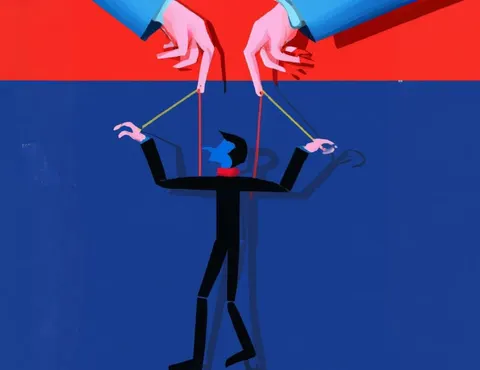
What if… people, or rather Elena-like “personas,” enter the political battle? Influencers, only… nonexistent ones? With this kind of technology it is more than easy to turn their creation into a factory that doesn't even need the low-paid trolls who used to be called in to do the job.
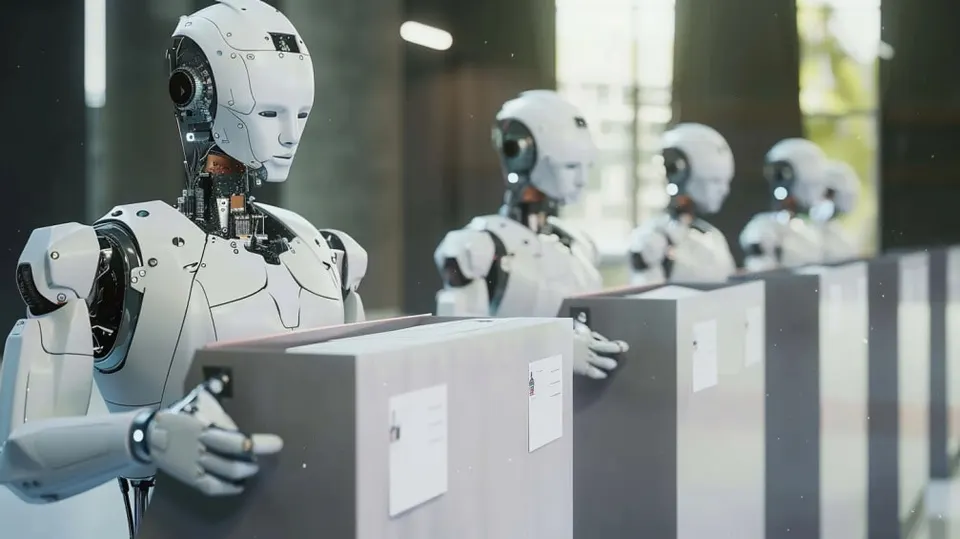
And if we still believe we can tell when it's Joe Biden calling us and when it's some colleague of ChatGPT's, well… we may not be entirely right. Setting aside for a moment, of course, the fact that Uncle Joe is unlikely to remember us of all people. The fact is that generated content—texts, images, audio, and gradually video too—is already indistinguishable from content made by humans. Don't believe it? Here you can see the results of the other experiment along these lines: nearly 2,000 people tried to tell generated texts and images from human-made ones, and the results turned out to be close to pure guesswork.
But so what? As if until now there were no influencers with access to huge numbers of people, as if there were no Photoshop to manipulate images with, as if it weren't possible to fake a video and it had never happened…
“This type of disinformation isn't successful,” says Felix Simon of Oxford, who tracks how harmful AI content spreads among the public. In his view, people's wariness of what they see online, combined with the unpopularity of much AI-generated content, limits its impact. Well, fine, let's trust him (at least until the next obviously fake piece of content, shared and liked by tens of thousands, shows up in our feed).
And here in Bulgaria we have always had our clips and photos—gold bars, poodles and mythical crime bosses, the stuff of our own political scandals—so what's the big deal?
3. From the Other Side of the Mirror
All the more so because not long ago all the big players online, from OpenAI to Alphabet and Meta, signed a pact promising to label generated content and to be especially vigilant that it doesn't influence political battles in any way.
Except it is already too late. Because generative models are simply the next huge step in the blurring. In turning truth into a fluid concept. Down the long slippery slope that has slid us all the way into the crisis of modern democracies (more on that here).
Can crudely manipulated content really decide elections today? Without a doubt. While the West has its eyes fixed on its big elections, for example, the US vote is hardly going to be decided in one stroke by some fake video. But then, what is to stop something similar from happening elsewhere, where no such attention is focused, while the world stares across the ocean and the online giants look after what's happening there? The example from Bangladesh above speaks for itself.
Generative models as content factories offer enormous possibilities that we have yet to grasp and comprehend. And the biggest winner will be whoever manages to bring them into their practice, whoever figures out how to use them.
Is it manipulation if the algorithm of your favorite social network somehow knows you are thirsty and shows you an ad for a soda? What if it knows that the big problem in your life right now is that there's no kindergarten place for your children, and shows you precisely the ad of a candidate who promises a kindergarten place for every child? While your neighbor, upset about the lack of parking spaces, gets that same candidate's views on how more parking lots are his top priority?
In my opinion, absolutely. And we will be talking about this hypertargeted advertising in many directions for a long time to come. Will it be a decisive advantage as early as this year's elections? Quite possibly.
Here are a few (free) ideas on how to use assistants like ChatGPT in an election campaign.

4. Image Maker
You want to be elected member of parliament / mayor / building manager / president of the galaxy, but you have no team and no millions of donors? Here is where the universal assistant can come to the rescue.
I did some brainstorming with ChatGPT based on some of the examples in this post, and the result is impressively good (here). Several classes (not in the Marxist sense) above the usual political talk in Bulgaria.
- Personalized messages?
You enter the voter's data and the algorithm starts generating slogans, messages, ideas for you. It arranges them into a coherent platform with far fewer clichés than your average Bulgarian political document. What if… this skill of its is harnessed online? How hard is it to reach a huge number of people, geographically limited to exactly where they are expected to vote for you, with specific political views (left/right, nationalist/globalist, anti/pro refugees, LGBT rights, vaccines /… whatever else is on today's agenda)? Nothing easier. The process can be automated so that one person does the work of dozens of the campaign headquarters and think tanks of old.
- Don't know what works?
Oh, online, and especially with the help of generative models, nothing is quicker. Every such ad, post, blog entry or message can be quickly analyzed, again with language models. You process the comments on a post, for example, and immediately know whether you're on the right track. That brings us to the next stage of personalized treatment, which could turn the vote around, especially when it is fragmented and the margins are slim, something typical of recent elections in Bulgaria.
- A pinch of tar?
Your opponent is ahead in the polls? As in the classics, there are two options: try to smear him or borrow his successful messages. Well, in both cases today's artificial intelligence can be useful, thanks to its ability to analyze big data, spot trends and summarize.
5. In Principle
But wait, you'll say, isn't politics a matter of principle? The left are the left because they raise taxes on the rich, the right look after the free market… Is that really so? Do you remember the last time there was a major televised debate in Bulgaria in which it was clear who exactly was proposing what on some of the basic everyday decisions that affect us all, like the tax system, healthcare, education?
Today's artificial intelligence is certainly not what killed politicians' authority as individuals, but it definitely looks like the next step in that direction.
Because it offers still more interesting ideas. All right, we've already concluded that crude fakes won't be the stone that overturns the cart of the vote (incidentally, the vote, like the cart, seems something of an anachronism in its current form).
But then… there are also soft fakes, somewhere along the razor's edge of manipulation. And this time created by the very person who appears in them.
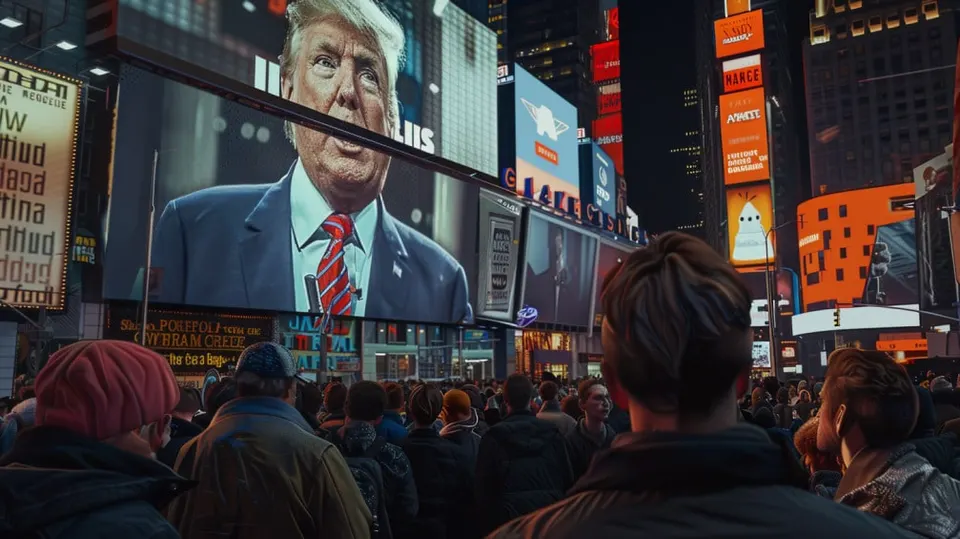
Why would you want to fake yourself? Not just to get Trump's hairdo. Not just to string sentences together more convincingly than a freshman Bulgarian MP. But, for instance, to speak the voter's language, figuratively or literally.
At the start of the year, Argentina's surreal new president Javier Milei drew attention with his speech in Davos, in which he told it like it is about quite a few of the ills of Western societies. And later the speech captured the whole world because there appeared… a video in English in which the picture had also been adapted to the new language. What's more, the words were in his own voice, with his distinctive accent!

Yes, the combination of machine translation and (in this case, deliberate) deepfake proved extremely successful. So how will this play out from here on? Ahead of the upcoming Indian elections, for example, the current prime minister Narendra Modi created a dedicated mobile app in which he convincingly delivers his messages in 8 of the most widely spoken languages in his homeland.
Wouldn't you be pleased if you spoke a less common language and suddenly one of the candidates started speaking it? If you were part of the Spanish-speaking minority in the US and suddenly some candidate who is otherwise quite remote from you won you over with a passionate defense of your rights, in your mother tongue, no less?

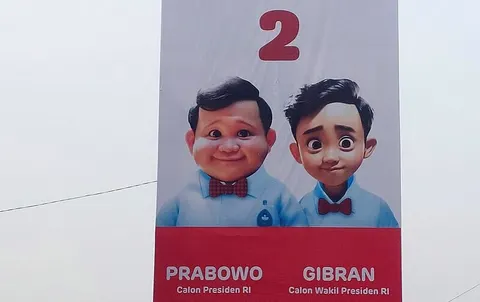
Another impressive idea: in Indonesia, presidential candidate Prabowo Subianto launched a mobile app that let his fans create AI-generated photos of themselves with him and share them with friends. A true servant of the people, wouldn't you say?
An investigation in Bangladesh and Pakistan showed that almost all candidates already use generative algorithms for their speeches and platforms. In South and Southeast Asia, videos of politicians speaking numerous languages and singing old popular songs have become fashionable… Ah, we had our Zhorzh Ganchev back in the day, the flamboyant showman of Bulgarian politics in the 1990s, even before large language models.
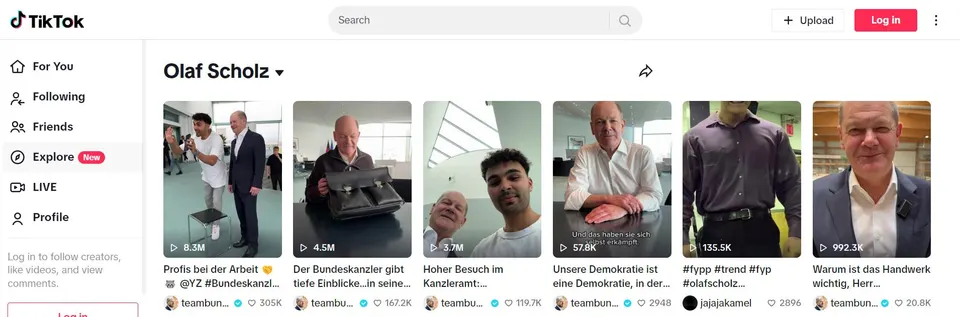
Clearly, politicians are more or less doomed to follow the path of influencers (just think, even the ultra-charismatic Olaf Scholz is on TikTok now). How else are you going to attract young people? According to various surveys, at least 40 percent of people under 30 get their news mainly from these social networks…
Only… aren't politicians just as doomed in this comparison as the media turned out to be on the battlefield of the feed?
Yes, technology supposedly shortens the distance—that's how influencers came about, as people who are stars and yet somehow close to you; you can drop a heart on their latest photo and feel right there beside them.
And politicians? Should they be doing this?
6. Lies Have Short Legs, and So Do Models
Here's another idea. You're fed up with choosing the lesser evil, you're disgusted with all of them, you're among the more than 50 percent of Bulgarians who don't vote… well then, wouldn't it be simpler to ask ChatGPT? It's well read, it's well prepared, no human being could ever “feed” on the millions of parameters it has gone through.
Yes, if you ask it whom to vote for, it will most likely wriggle out with its increasingly familiar political correctness and tell you it's none of its business. But then there are so many open-source models that are almost as good at their job as the commercial ones. So why not ask them?
Recently Democracy Reporting International published a study finding that the models lie brazenly when asked for information about the upcoming European Parliament elections. The chatbots provided broken or irrelevant links to videos and even… content in Japanese. ChatGPT-4 gave the most accurate answers, while Google's Gemini made the most mistakes.
Of course, the idea is absurd. After a year and a half of living with ChatGPT and its siblings, we ought to know that factual accuracy is not their strong suit. As one of the guests here, Viktor Botev, aptly put it, “the main goal was to create a language model that speaks convincingly, that sounds human. And how does a human speak? He can choose words, paraphrase something that has been said another way. For the model to do this, it has to be able to generalize, to recognize the same type of constructions and use them interchangeably. But when we teach the model to generalize, that inherently means we doom it to not work very well with facts.”
Exactly. Better decide for yourself, or ask some influencer…
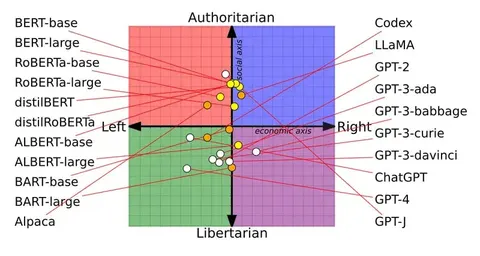
Interestingly, though, large language models themselves hold certain positions of their own. This study places 14 of the most popular recent AIs on the “political compass.” ChatGPT and GPT-4 turn out to be the most liberal and leaning left, while Meta's flagship, LLaMA, is the most conservative, authoritarian and right-wing. Google's BERT sits in the middle. All, of course, with the full caveat that left and right are understood here mostly in their American sense.
And while the differences today are not that large (though they are telling), this once again raises the issue of the biases and hallucinations of artificial intelligence once we entrust it with truly important tasks.
7. I Hear Your Votes
The hype comes and goes, but the progress in artificial intelligence is here and has only begun to shape the future.
All this is happening against the backdrop of a general decline of democracy as we know it. Of the need (as discussed here and here) to rethink it so that it fits the new times and today's societies.
In some places elections exist just for the sake of existing. In the most famous democracy, things have come to choosing between two fresh, uncompromised leaders, ready to face the challenges of tomorrow with new ideas…
“A world in which everything is suspect and everyone gets to choose what they believe is also a world that is really challenging for flourishing democracies,” says Lisa Reppell, a researcher at the International Foundation for Electoral Systems in Arlington, Virginia.
A few days ago a study came out from the International Institute for Democracy and Electoral Assistance (IDEA): of the 19 countries included, in as many as 11, among them the US and India, fewer than half of voters believe their last elections were free and fair. In as many as 8 countries, the majority prefers “a strong leader who does not have to bother with parliament or elections.”
Only 47 percent of Americans are confident that the electoral processes in their country are reliable. In Bulgaria, the steadily falling turnout speaks for itself.
Against this backdrop, 65 percent of Americans worry that AI will harm their privacy, and more than 50 percent are concerned that the technology could threaten their jobs.
Can we carry on the old way, simply changing the tools of manipulation—from PR to trolls to artificial intelligence?
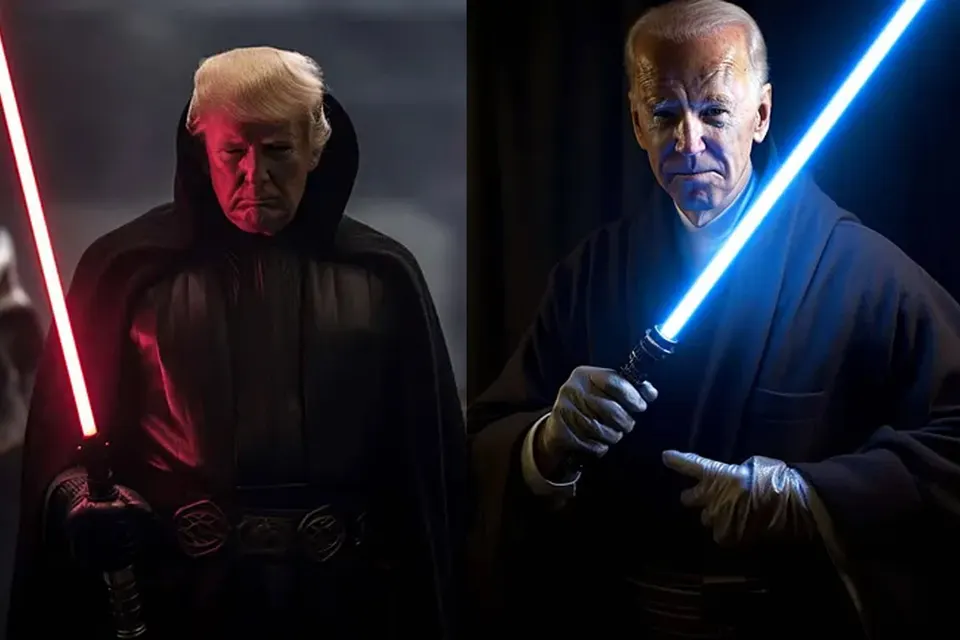
8. GPT Is Your Choice
And can technology help us bring about this change? Undoubtedly. Now that we all pay for things online every day, is it really so hard, so impossible, to vote over the internet?
Could access to technology become the factor that takes these processes back to their dawn, back to the agora? To where the truly important questions were decided by the power of direct democracy…
Can the web be a platform for conversation, for exchanging ideas, for analysis, for making the best decisions? Undoubtedly, as long as we outgrow the current stage in the development of social media. As a product that exists because it locks us in our bubbles and turns us against each other. That cuts conversation short and blurs the truth.
Can artificial intelligence revive democracy? Through transparency, through data-driven decisions, through the application of modern technology?
Not only can it, it must. But to get there, we have to stop from time to time and think. And above all, never give up on talking to each other, debating, searching for the truth. Do we have the strength to do it?