How do we want tomorrow to look? Does the information we surround ourselves with matter? Will we tell truth from lies, kindness from hypocrisy? Will we sink even deeper into our bubbles, until they grow so small that we run out of air?
No, we are not what we eat. We are what we read, what we learn. Over the past 20 years the paradigm has changed at its roots. We have unlearned how to read long texts; our attention hops about like a frog that has had too much coffee. We need to remember less and less, which is also changing us as a species. We have changed our relationship with the truth. We have changed our relationship with the way we perceive and make sense of the world, of what happens in it. And above all, with what lies ahead.
But how can we change this, so that the future does not come true in the darkest colors we so easily paint in apocalyptic scenarios of artificial intelligence slipping out of control? Of our own thoughts as the last refuge of freedom…
My answer will sound unexpected. Idealistic, even. Because I am betting on a contender that is losing the battle for attention more badly than anyone today. Traditional media.
An Optimistic Theory
“The truth shall make you free,” says the Bible. But what is truth? Of course it cannot be absolute, and yet if we stop searching for it, we also give up our eternal striving for justice, for being good people, for living better.
Sometimes there can be many truths. We saw it during the pandemic, when, clinging to our convictions and hopelessly lost in the clash of authorities and arguments, we were ready to grab each other by the throat as if it were a life belt.
It turned out that even perfect technology did not change the fact that, as a species, we apparently cannot save ourselves from the worst thing of all—war. And where there is war, there is always more than one truth.
Where should we look for it, then? In times when algorithms have started generating incredibly impressive images from a description, ever harder to tell apart from real ones. As deepfake technologies advance, the same will happen ever more easily with video. We have all seen for ourselves how good ChatGPT can be at generating every kind of content.
Somewhere in here lies credibility, too. And impartiality. More concepts that certainly still carry weight, but no longer hold a monopoly as criteria in the broken link between events, the news and the people who want to know what is going on.
And what if we add the enormous possibilities of personalization?
If we put it all together, won't we end up in a parallel reality that is also real, if not physical? The future of virtual people, though for now not in the dimensions Zuckerberg dreamed of in his collapsed metaverse.
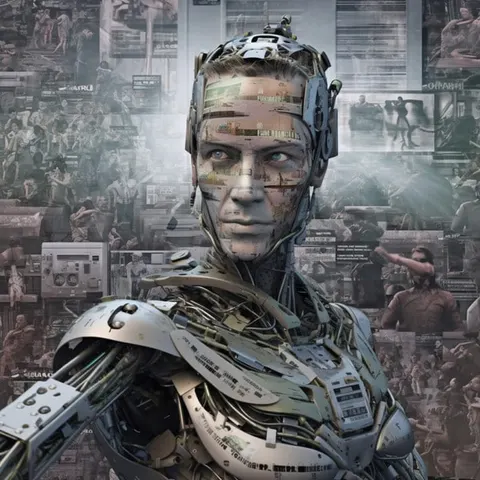
I Know Best
Twenty years ago I first crossed the threshold of the journalism faculty at Sofia University. Well, things looked rather different back then. Young people full of enthusiasm, ready to take up the profession they dreamed of. Lecturers who had grown up in times when the media were the keepers of information. The authority.
None of us imagined that traditional media would be swept away by new technology so quickly, and so imperceptibly, so perfidiously, with the velvet glove of convenience. With the tempting prospect that everyone would get in their feed whatever excites them.
At first we went to websites to read the news; today we rely almost entirely on algorithms to collect and personalize it for us. And this is exactly where the media entered an unequal contest with no rules. They started a battle that turned out to be lost in advance.
The battle for the truth.
An Ocean of Words
No one expected the field on which the swords would cross. With their traditional tools, the media found themselves in an environment they cannot control in any way. And in which they stand on an equal footing with everyone else.
That is how we reached the moment when online stars like Joe Rogan, Lex Fridman, or even mere influencers like MrBeast, reach audiences many times larger than even the most successful journalists. Without being journalists themselves, offering supposedly the same thing, but in a very different environment and with a different guarantee.
“Every medium stands between us and reality and shapes the way we perceive the world,” Marshall McLuhan wrote half a century ago. And one more line from this undisputed prophet of our day: “In this electric age we see ourselves being translated more and more into the form of information, moving toward the technological extension of consciousness.”
In recent months I have been lucky enough to take part in many discussions about which professions will be affected by advances in artificial intelligence, and how. Of course, riding the waves of the enormous marketing noise of recent months, it is easy to let our imagination run wild in futuristic forecasts that will sound comical a few months from now.
And yet, if there is one profession where the rescue of the drowning is surely in their own hands, it is journalism. Because it carries the responsibility and the duty to make sense of events, not just to report them.
Here are five tentative ways this could happen.
1. Monitor to Monitor
Yes, a journalist has the responsibility and the duty to make sense of events, not just to report them. To be not only the eyes of society, showing it what is happening, but also its heart—showing it what might happen, where the great dangers lie, where a problem is hiding beneath the surface of the obvious and the topical.
How society will be affected by the next technological steps depends precisely on how those steps are presented. Whether we will talk enough about regulation and conscious development, or end up with total control and decisions driven by the big corporations.
However much they have changed compared with their former standing, the media today still, in a sense, set society's agenda. Yes, the feed and the influencers draw attention, but informing still happens somehow in parallel—with political events, for instance, which concern everyone to some degree, the media still play the leading role. Or with sports—they still have the advantage of being where things happen.
However much we talk about citizen journalism, it has yet to come into its full breadth. Although some of the content even of traditional media is generated by online events, the other kind is still there too, the more “formal,” official kind.
A Poet Like Pishurka
But can traditional media tell the story of technology in an accessible, attractive way, with many points of view, sparking meaningful debates and a real understanding of technological progress?
Certainly. Alas, in my view that is not happening, and not only in Bulgaria. On the one hand, because of the knowledge gap—for understandable reasons, few journalists and public speakers know the field of technology, with its many and varied subfields, in enough depth.
On the other, there is the standard approach—giving the same points of view, those of the powers of the day, of favorite talking heads, of clumsily translated, uniform texts, without looking for depth.
Or maybe there is another way? To turn our gaze more often, more meaningfully and more timely to the big topics, to technological change. Without clichés, without flat-footed translations and banal news items.
The problem comes from the other side as well—the tech sector, in Bulgaria for example, is developing beautifully and has incredible specialists and opportunities. Exciting ventures happen within it, yet they never manage to be told to society in a gripping and engaging way. In a way that builds bridges and sparks a real dialogue.
2. The Truth and Nothing but the Truth
Then isn't it logical to look to the past, to the heart of journalism?
That is where we find the examples that brought about real change, that stirred and transformed their surroundings…
Before he was a poet, Botev—Hristo Botev, the nineteenth-century poet and revolutionary Bulgarians revere as a national hero—was a journalist. Not a master of piecework news items sold by the character count, though. He was a master of the opinion essay, that half-forgotten genre which restores the power of words, of arguments, of storytelling craft. What was the last committed text on an important, socially significant topic that moved you? Was it written by a journalist?
And what about the possibilities for new genres? For next-generation visual storytelling, with tools available to anyone? With new ideas that fit the new possibilities… Why should the media find it harder to come up with crazy, alternative ways of presenting important topics? How does MrBeast do it, while thousands of professionals who trained precisely to tell stories fail to think of it?
RoBotev
I am giving examples of written text, but all of this applies to other forms as well. In television, circumstances seem even more conservative. It is enough to see that the main topics come from formats created decades ago.
Today it never stops being exciting that anyone can make a website, write, create content with minimal effort and reach as many people as the algorithm allots them.
Alas, it is almost impossible not to depend on that algorithm, but the bigger mistake is trying to please it at any cost…
There are so many fact-checking platforms—why do you think this field never became a promising solution? Somewhere anyone could go and check whether a given text is true?
Because the truth really did get lost. Because, on the one hand, we ourselves are not built to look for the truth exactly, but rather for the truth we will like. And platforms promising total impartiality very often turn into undisputed centers of bias, insinuation and propaganda.
Then wouldn't it be easier if fact-checking had names?
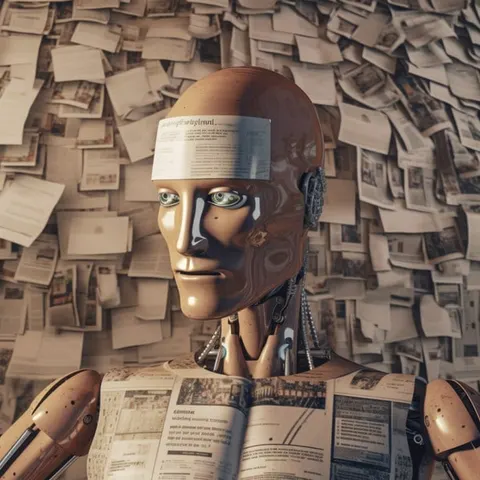
3. Signed and Stamped
Let us return to the journalist as a person, as a symbol. As a guarantor of truthfulness, of pluralism, of a wealth of points of view. Even of cooling the conversation down and fighting gratuitous hate.
This problem erupts with even greater force as content-generation technologies advance. If we already feel we are drowning up to our ears in the flow of information, that flow will very soon become a flood; the technologies, and those who use them, only need to improve a little more.
Validation—whether of an authority or of a system—makes sense only when it is sufficiently independent and guaranteed. Technology gives us solutions in that direction, as long as we are critical and willing to look for them.
Oh, I Know That One
We are used to associating blockchain, for instance, only with dizzying wealth and pyramid schemes, while this technology makes it possible to fully trace a piece of content. To be completely sure who wrote a given text and which sources it cites. I have not yet come across startups working in this direction, but I have no doubt they will appear… as long as the need appears too, and we all become a little more critical of what we read.
Who can perfectly recognize whether content has been generated? He who created it can kill it, ask Taras Bulba. Neural networks are being developed to recognize ever more precisely when something was made by a human and when by a machine.
Then again, in other cases we don't even need that. The pinpoint metaphor, the story that brings a tear, the clever pun, the well-placed neologism remain, for now at least, an unmistakable human monopoly. And I still think there are people who value them.
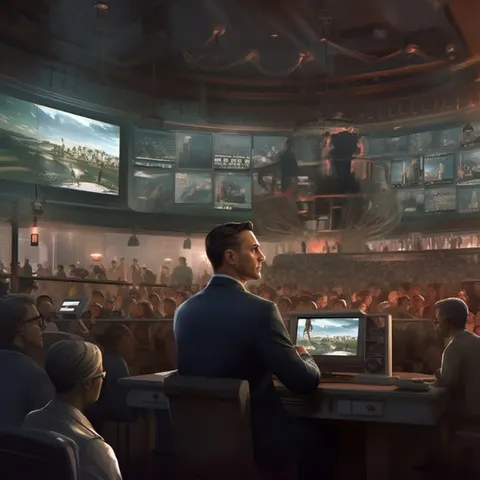
4. The Inevitable Coalition
Is that really so? Isn't it more comfortable to take in information in the least intrusive way possible? Through formulaic headlines, the monotonous, superficial treatment of a topic in our favorite outlet, which we read simply because we associate it with our values?
To scroll along and be stopped by a knee-jerk headline that relies on flat, familiar manipulation techniques? To click, looking to be delighted or frightened?
Easy as anything.
In this battle, I think, it is time to try to enlist another ally, one that seems unloved at first glance and all too often stands on the other side.
Audience expectations are different now from the years when news of the world arrived with the thud of the newspaper your grandmother subscribed to landing in the mailbox.
Giddy-up, Media!
If we accept digital marketing as one of the natural next steps in the “evolution of truth,” then I think we can learn a lot from it about what the next steps in the way we get informed will look like.
Personalized content, in my view, is an inevitable future. Since a number of giants already hold vast amounts of data about each of us, there is no way the next generation of AI algorithms won't use it to become the next step. Not just a medium that curates your feed, but one that can write it personally for you.
Not just surrounding you with people and news you like or that annoy you (since that helps it do its job, to hold your attention). But writing the news the way you would like it. Telling it in the way that would grip you most of all… One more step away from television news, where someone has decided how events are ranked by importance and how exactly they are presented.
Is this bad? Even if it is, nothing can stop it. And yet the media, as guarantors of the truth, can make a comeback even here. As long as they are ready for the challenge and have something to offer.
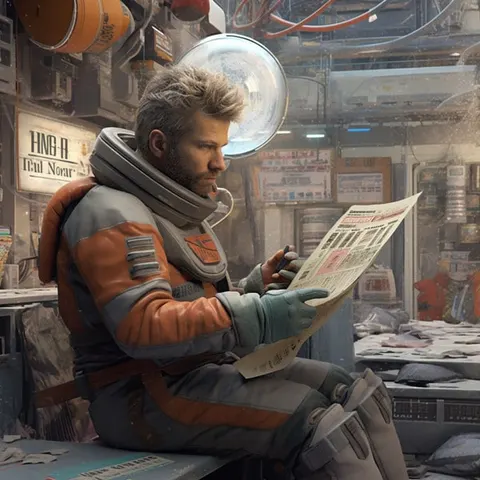
Zen and the Art of Watching Commercials
I know, you'll say it all comes down to monetization one way or another. And I will mention MrBeast again. Creating content that can reach an unprecedented number of people in the online age is an opportunity that can be profitable in itself. As long as you step outside the familiar template of how that is supposed to happen.
We don't have a TV at home, and when my children visit someone, their eyes are instantly swallowed by the screen. But… only until the commercials start. They find it intuitively incomprehensible that you should have to spend time to earn the right to keep watching your cartoon.
The same shows in the budgets—no wonder the online giants became advertising monopolists at the expense of traditional media.
But in this sense, since social networks imperceptibly turned into social media… Couldn't journalists use a similar approach? Only without depending on the moods and political leanings of the sponsor, the regulator, the advertiser. Life online, the rise of influencer marketing for example, makes it clear that advertising follows great interest. And interest can also be attracted with meaningful content.
Can a journalist be successful on TikTok? Actually, it seems they now have to be. The brevity of the format does not at all mean it is doomed to be devoid of meaning. It simply becomes an even greater challenge for our atrophied desire to create. To approach our work like craftsmen, not like an assembly line. Experience has shown that craftsmanship remains the highest art and a sought-after solution, even when industrialization takes over mass-produced goods.
Artificial intelligence is in the way? There are always excuses. Then again, thanks to it, automated translation will become easier and easier. Good content will reach its readers even more easily, beyond even the language barrier.
With those famous stories. Everyone talks about “storytelling,” but it is simply the skill, well known since prehistoric times, of standing by the campfire and masterfully describing a thrilling event. Today marketing does it, and journalists far less often. It is an area algorithms are increasingly entering, with all the enormous opportunities and risks.
Let us return to the numbers, but not to make an idol of them!
AI also brings the chance to help us with ideas. Let us learn to use it to draw conclusions, for investigative journalism, for data processing. To help us with its impartiality, instead of using it, as we have so far, as a weapon for multiplying biases.
Let it do the boring work for us: transcribe the text, translate, write news items—I personally hand those over with great joy—cover everyday events. Even tell stories; either way, for quite a while yet it will struggle with the highest art, true mastery. Choosing an original headline.
As my wise colleague Rayko Baychev aptly puts it, today there are three journalistic genres: “this got a lot of reads,” “this didn't get a lot of reads” and “this would have got a lot of reads if it had had a different headline.” Should that really be the leading criterion? The number of reads? The shocking headline that will provoke a wave of comments and verbal aggression below it?
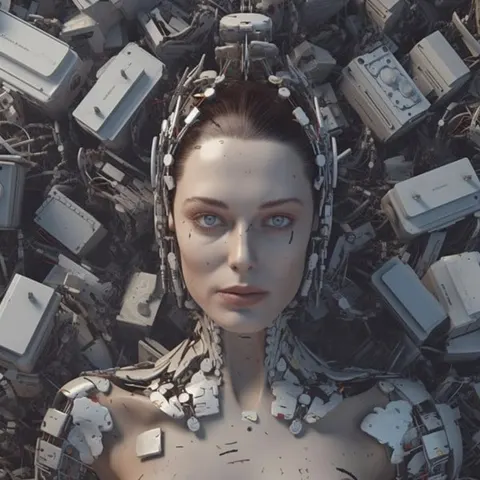
5. Look Up!
“The more the data banks record about each one of us, the less we exist,” writes the “prophet” McLuhan once again.
What deserves to be the greatest value from here on?
Isn't it information itself that belongs at the center, the story of what is happening?
Should information be paid for? It always is, one way or another. As we well know, especially online, “if something is free, you are the product.” Yes, it is hard to be persuaded to pay for something available everywhere; I admit that online I too subscribe to only a few outlets. In Bulgaria, 15.3 percent of people pay for news content, according to European Commission data.
How can we change that? And should we? Is one possible solution really platforms where independent voices are funded through donations?
A Matter of Taste
I don't have the answers; those are for entrepreneurs and business people. But I believe natural solutions will emerge in the changed paradigm, as the pendulum naturally swings back toward valued information.
And yet, if we are not what we eat… why do television and the internet run so many cooking formats and not a single one about creating content? There have been timid attempts at something like that, but nowhere in the world have they brought much commercial success. Apparently there is no demand, but… where is it supposed to come from?
If we continue the food metaphor… it is pretty boring to eat the same thing all the time. However much you live on ready meals, imagine the dish on your plate failing to tempt you even with its appetizing look. The right spices missing in the right proportion. The person who cooked it not having done so with skill and care, or even, forgive the cliché, a pinch of heart and a dose of love.
Shouldn't the same apply to what we feed our souls with every day?
Arise, Arise, Balkan Hero…
From my position as a retired journalist, here we sit, you and I, chatting over a glass of bialo sladko, the white sugar paste Bulgarians traditionally serve guests with a glass of cold water. I truly think the battle for the truth looks irretrievably lost today. The white flag flutters like a like counter in an ever more fragmented media landscape.
The harder battle, however, is looming on the horizon. The enemy is even more cunning and perfidious, and the price even higher. It is the battle for freedom. And in it, we, the media in the broadest sense, are humanity's last hope of preserving its essence. Our hope that, unlike in recent decades, societies will treat the challenges of the times, embodied in new technologies in all their dimensions, with enough responsibility.
Freedom still lives at the tip of the spear, of the pen, of the keys.
Journalists have nothing to lose but their chains!