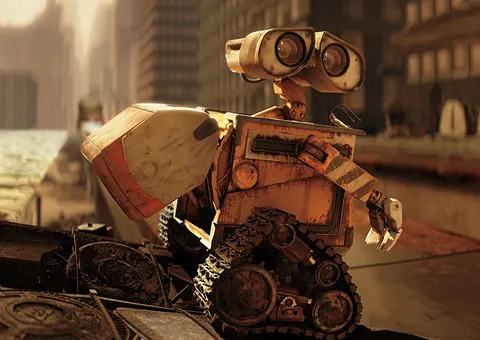
Did you know that a Bulgarian was deeply involved in making Finding Nemo, WALL-E and other cult animated films? The story of Antoni Hristov is even much more than that!
He landed in Hollywood at just 20, and his first job was in a restaurant. He decided that the way to make it in life was animation. He worked as an art director at Pixar for 18 years. His path crossed Steve Jobs’s venture (and Jobs himself) during the company’s golden age.
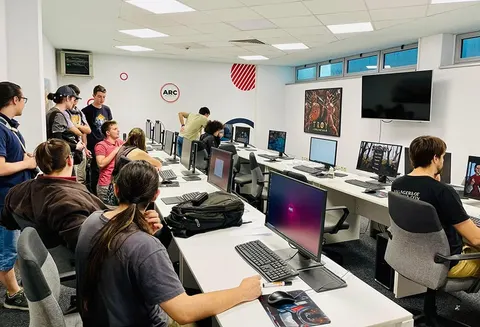
After almost four decades in the West, he came back to Bulgaria and, together with like-minded people, created ARC Academy, an educational center for the visual arts. There, lecturers from leading global companies prepare our young talents to take part in developing visual effects for film and video games.
How does Hollywood look from here, and how does Sofia look from over there? How does Antoni, who spent his entire adult life in the States, turn out to be a connoisseur of the humor of… Chudomir, the Bulgarian satirist of small-town life from the first half of the 20th century? Where and how did normality get lost on either side of the ocean, and where can it still be found? What is the future of creativity at a time when technology throws down its great challenges?
– What about life in Hollywood would no one ever imagine, looking at it from Bulgaria?
– As a city, Hollywood is not nearly as beautiful a world as it looks from here. The city itself is very dirty. You drive past parks that are now even fenced off like concentration camps, so that the many homeless people and drug addicts can’t get in at night.
But Hollywood is a concept, not a location.
There are interesting dynamics specific to it, for example a particular kind of emotion in the way people there pitch their ideas. “Hey, picture this!” and they start getting fired up—“the hottest thing, the coolest thing”! They charge you with enthusiasm. That can very easily fool you if you’re not familiar with the culture. We’re not very good at it in Europe. Here people worry about looking overblown or immoderate, there’s something..
Then again, I’ve spent my whole life there, and I don’t know if I’m the right person to answer. Both here and there are such natural places for me that I switch automatically. It was actually harder for me, when I came back, to figure out certain things. For instance, getting used to the fact that you don’t call people about work on the weekend. The people I worked with over there thought it perfectly normal to call each other on a Sunday evening and talk for two hours.
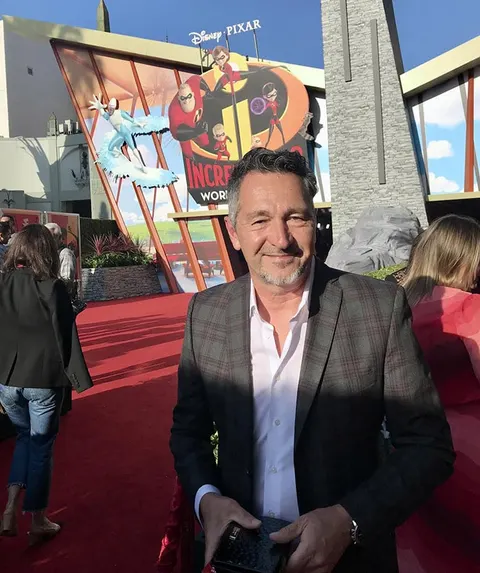
– What in your career are you proudest of?
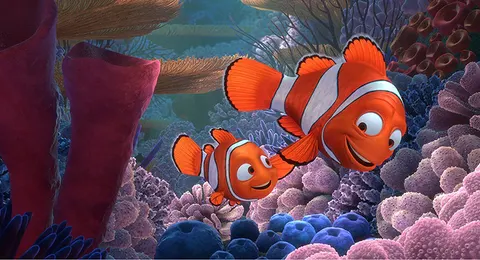
– Maybe that I was part of the golden age of animation. I was simply there, though I don’t know if that’s exactly a reason for pride. I remember Steve Jobs at the premiere party for Finding Nemo: he came out on stage and said, “When your grandchildren ask you what it felt like to be there, in Pixar’s golden age… you should know, this is exactly what it felt like.”
I’m glad I was there to see it, that I was there when all of us, my colleagues and I, came together to make films and not necessarily careers. In the evening we’d sit down, open some beers and brainstorm. Nowadays you can’t even drink a beer in the studios, you can’t joke, because someone will be offended by something or accuse you. Everything is very strict, sterile, and that inevitably shows in the final product as well. Things just changed, and personally I’m no longer interested.
– Are there any technologies in the visual arts that you can’t wait to see?
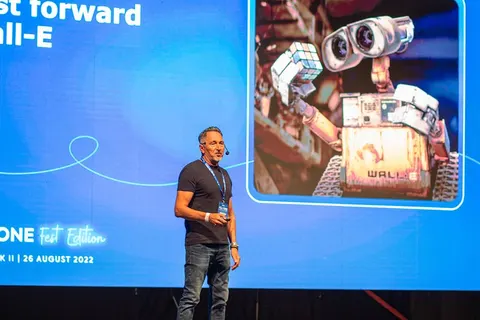
– I’m in a different seat now—that of someone who watches what’s happening. There are people who try to pull me into projects, but I say no. I have my schools, ARC Academy in Bulgaria and IDEA in Italy.
I no longer want to compete; I want to build something that has value and that I’ll leave behind me.
We have very valuable teachers from various studios, around 45 by now, and they’re on top of these new trends. With my partner Milin Dzhalaliev, we’re trying to build an institution that will last long after us.
– Wouldn’t the chances of that happening be better in a bigger, more orderly country?
– Probably, but it wouldn’t be as interesting for me. Bulgaria has a real need for something like this. We’re a small country; we can’t afford to make refrigerators for the world, we don’t have the labor force.
If we don’t teach young people to do something intelligent, with high added value, we don’t stand a chance.
A large percentage of our students who graduate stay in the country.
The teachers often notice them and hire them at the studios where they work. But for that, the student has to work hard and impress. When a young person gets a decent salary and is at home, in Bulgaria, when they start building a professional circle and contacts, chances are they’ll forget to emigrate.
Because you have a good life here, and you’re creative, fulfilled. That’s our idea. To give young, creative people the opportunity to stay in the country and create value. So the country doesn’t die, because that is what’s happening. Without young people, we’re going nowhere.
– I’ve walked a very similar path; programming is part of the same big sector. Do you believe we can establish ourselves in games as a kind of school, as a regional player?
– We already have foreign students, because there’s no similar school in the region. In Turkey there are academies that are further ahead, but it’s harder because it isn’t in the European Union. I’d be very happy if ARC became at least a regional training center in our fields, because inevitably some percentage of the foreign students will stay in Bulgaria, find work, and help the industry and the country.
The other thing is that Hollywood is outsourcing more and more productions, and quite creative elements at that, not just the routine work. There are many reasons why, if they find the talent here, they’ll take advantage of it. I imagine it was very similar here when Vasil Terziev created Telerik, the Bulgarian software company that became a national success story—most companies were outsourcing. But little by little you see Bulgarian startups developing, a local product being created. It’s a long but meaningful process.
– What is your favorite character in art created by a Bulgarian?
– There are many, starting with the classics. I find the characters of Elin Pelin, the great Bulgarian storyteller of village life, and of Chudomir interesting. I’m not very deep into the films, simply because I wasn’t here. I have favorite productions—Undercover, a Bulgarian crime series, is very authentic, and there are other interesting new films. But there’s a need for people who are still developing professionally.
It can’t be otherwise. The Americans have a saying: “If they tell you it’s not about the money, it’s about the money. If they tell you it’s about the money, it’s about the money.” It always comes down to that. No matter how brilliant you are, there’s no way to make an impressive production without a budget.
– Are there any undisputed authorities in your life?
– No. Apparently I’m in an American-sayings mood, but they say that “if we knew everyone, we wouldn’t hate or worship anyone.” Everyone is human, with weaknesses and strengths. I’ve worked with many people I respect enormously, for example John Lasseter and Ralph Eggleston. But on the whole I don’t believe anyone deserves to be an idol, or to be hated by the world. Even the worst person is, in some form, a victim of their experience in life, their childhood, their family and so on.
Excessive idealization and excessive hatred are, for me, needlessly strong emotions; real life doesn’t work that way.
– A lot of people see Steve Jobs as just such a figure, a man with a magical technological halo. You worked directly with him—what are your most vivid memories?
– I didn’t have all that much to do with him, but he really liked what we were making. He was pleased, and he had enough sense not to interfere too much. That’s rare; the temptation is too great. Steve Jobs was one of those people who understood that once you’ve hired decent people and paid them serious money, it’s a good idea to let them do their work.
His great strength was that he recognized talent and left people room to develop it.
– Is it harder to have authorities today, because online we’re all at each other’s throats?
– I think it’s always been like that. However successful a person is, there will always be people who just don’t like them. Yes, on these social networks it’s easy to snap at someone. We Bulgarians love to snap at each other, at the neighbors; we easily get into fights from our cars.
In the US it’s not like that; they’re much more polite. Until somebody picks up an automatic rifle and starts shooting at random.
There comes a moment when you’ve had enough. We somehow let off steam from the system, even if in a crude way.
That’s why I call Bulgaria Normalsville—“the normal place.” For all our thousands of other defects, there’s an unexpected normality here that I really dig.
– What does it consist of?
– Relationships are normal; we don’t go looking for a calf under an ox, as the Bulgarian saying goes—we don’t invent problems where there are none. People are much more experienced in life. They know that if they’re not perfect, they just shrug—nobody is. It’s a culture built on centuries of experience. It’s very hard to be impressed by anything.
That’s how we humans are; we’re not perfect, we’re made of clay, it says so in the Bible.
Of course, there are irritating things—every living soul throws their trash everywhere, and that I can’t understand. But in other respects we’re much more normal. I’m not afraid to go for a walk in the evening, I don’t need to buy a gun, I don’t worry that my daughter comes home late. The little things.
– Then why, as you said, are we disappearing? And what keeps us from being more successful?
– We’re disappearing because we’re the poorest country in the richest club. It’s natural for people to go somewhere for more money. Membership in the European Union is positive for some, who can travel freely and do business. But for others it’s an opportunity to latch on to a more developed society with a higher standard of living.
In my view, the main problem is so-called know-how. There aren’t enough people who have it. There are people with a lot of knowledge and skills—most of my friends here right now are like that. But they’re a very small percentage of Bulgarians. And that is exactly where a country’s wealth comes from—from its people’s skills and knowledge.
That’s what we’re trying to change at ARC Academy: to gather people who have knowledge so they can pass it on to the young, so they can develop. Your standard of living comes from your knowledge and skills.
That’s where your self-respect comes from, and from it, the way you treat your city and your country.
A person who respects themselves won’t throw their trash at every roadside stop…
– Your years in Hollywood were a golden age for animation. I prefer to put on Finding Nemo for my kids rather than something new. Almost all the parents I talk to think the same way. Is that a real thing, and what’s behind it?
– That’s exactly right! A lot of things degenerated over there. Many people I know canceled their subscriptions to the new platforms. Elements of a culture war appeared, and because of them stories stopped being entertaining, human. They started ticking boxes, checklists of requirements, instead of creating and having fun.
All of it came together as a perfect storm. Covid closed the cinemas, the video game industry grew enormously and is attracting the young. The interactive element is something powerful. At the same time, they started making a lot of dumb projects that sound far too much like lecturing society. People just don’t want to watch them.
Over the last four or five years—and this was my signal to get out—people appeared whom I call political commissars.
People who check whether you’re following the rules on inclusion, on diversity. It was like the Soviet army at the start of the Second World War—standing over the general were three political commissars who shared in the decisions, which is why they kept losing to the Germans across the board. There can’t be dual leadership; the director has to make the important decisions! If there are people standing behind your back telling you what you have to include, that waters down the story too.
Of course, it’s good to include all kinds of characters, but when there’s a reason for them to be part of that narrative, when it’s organic. Not for them to be there just because otherwise you won’t qualify for the Oscars.
– Do you think all the powerful plots, all the vivid stories, have already been invented?
– No! That’s like saying all music has already been invented, and to make something new you have to add new keys to the piano. There are so many things that can be told. So many things from life! I see them every day, incidents that could be turned into a wonderful story! There’s just no one to tell them… The focus is elsewhere.
– In recent years, technology has been moving more and more into generating images. Is that a danger, as competition for the creative person?
– All my life I’ve been used to “dangers” that come along every so often—computers were one, they were going to take everyone’s jobs. Years ago a friend was explaining to me how in the future, when we design the scenes, the director will ask for a house or a tree and those things will already be designed and built. You’d just download them, and there’d be no need for people who draw. Well, that happened. You can now download any design you want if you work with Unreal or another engine, but there’s still a great need for concept artists, for people who think about design.
No one knows where the future will go or what will happen.
The only intelligent prediction we can make is one based on the past.
So far, yes, certain professions disappear, but many others emerge in their place. Take UI/UX: a few years ago no one imagined such a profession would exist, and today it’s very important.
My approach is this: watch, let it develop, and see where you land, how you’ll find your place in the new context.
– And yet, will creativity remain a human strength?
– In my view, creativity and original thinking will never go out of fashion, and neither will the sense of entertainment, of fun. I have two friends whom I’ve banned from telling jokes. For example. They just can’t do it. “How did it go, wait, oh, no…” They can’t tell a story; they don’t entertain me when they tell one, they just stress me out. It’s not for everyone.
That will never disappear—the instinct for storytelling, for entertainment. Making others feel, making them think, making them grateful for the story you’re telling them.
It doesn’t matter whether it’s a film or a game; games today have interesting content, they’re becoming more and more developed in terms of meaning, not just shooting. There are many meaningful and intelligent projects.
– And the fact that images, video and games are ultimately becoming more and more realistic—does that change our relationship with the truth?
– Again, it’s worth going back to what happened before. Some people were very much against cinema, because it wasn’t like theater. They said it was something fake; if you have 20 copies of the same theater, that undermines its value. Or color films.
Or that photography would displace paintings, portraits, that artists would have no work. Rather,
the creative person has to be flexible and turn to this new method of expressing themselves.
– So only the means change?
– Yes and no. The means get added and transformed, but they often stay. Neither photography nor digital art has displaced the original art that collectors buy.
in my view, the way we tell a story doesn’t really change either.
Against those two friends I’ve banned from telling jokes—jokingly, of course—there are others I love to hear all sorts of stories from, because it’s fun, there’s a plot, they’ll surprise me. That’s a talent—either you have it, develop it and respect it, or it’s not your thing.
Creativity isn’t even limited to the standard fields like film, music, poetry. An accountant or a lawyer can also be very creative. It’s a matter of original thinking, of a fresh perspective. Of not getting stuck in conventional traps but staying open. Of taking a few steps back, looking, and solving the problem in a slightly different way…
If you’re creative, you’ll always find a way. Always!