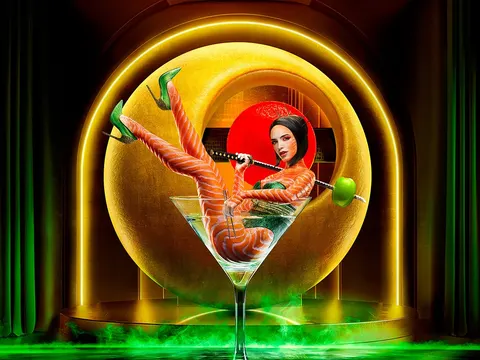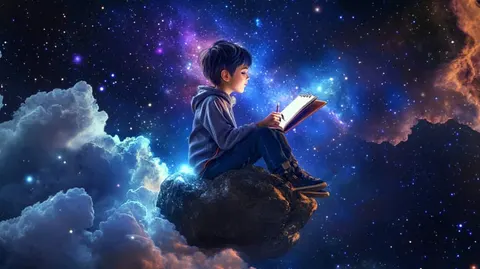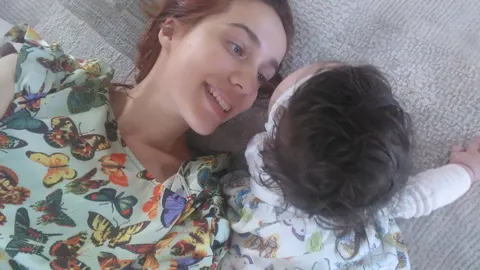
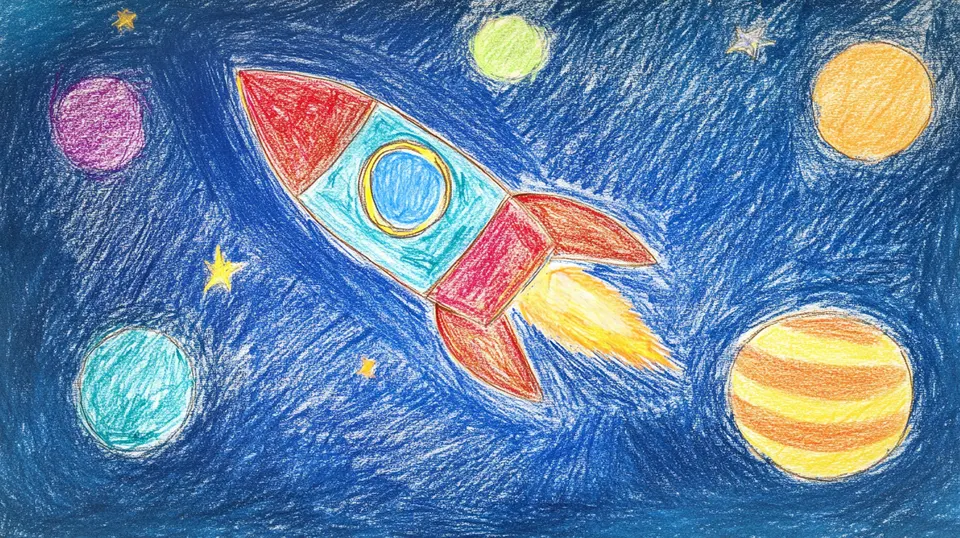
Can you tell 15 children's drawings from 15 images generated by artificial intelligence? In just a few days, the Digital Stories challenge for children and parents has prompted more than 2,500 people to test their intuition! The results of the test are shaping up to be extremely interesting, and we will talk about them once it closes on July 1.
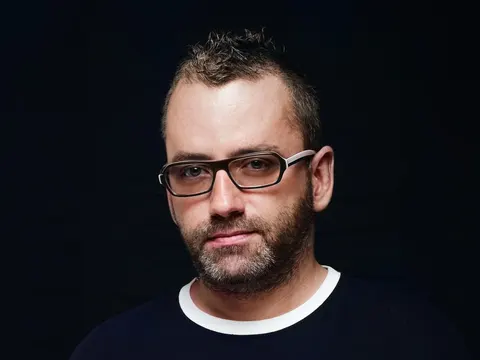
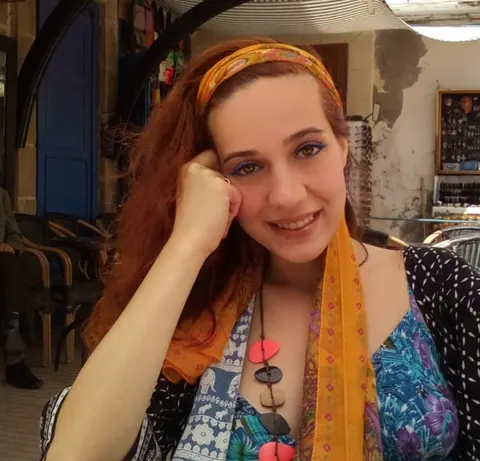
The experiment was created together with today's guest, Elitsa Staneva-Britton. A psychologist, journalist and teacher, she is currently working on her doctoral dissertation at the Bulgarian Academy of Sciences (BAS), and her subject is creativity in the age of artificial intelligence. The time has come to talk about each of these topics.
Why does it matter so much whether we can tell children's drawings from generated images? What does the future of creativity, of art, of the human being look like at a time when algorithms turn out to be indistinguishable from us as authors, and even better ones? What is worth teaching our children today?
– How did you come up with the idea of proposing this unexpected experiment with children's drawings?
– Lately the online space has filled up with countless (pseudo-)expert opinions on how to tell AI content from human content. Most of these posts are so identical that you start to wonder whether they weren't written by AI themselves.
On top of that, your online social experiments, along with many scientific studies, clearly show that AI content—be it text, music or images—is indistinguishable from human work. These two things made me think about what kind of creative content, on the one hand, hasn't been studied in connection with AI, and on the other, is so sincere that it would be startling if we mistook it for AI.
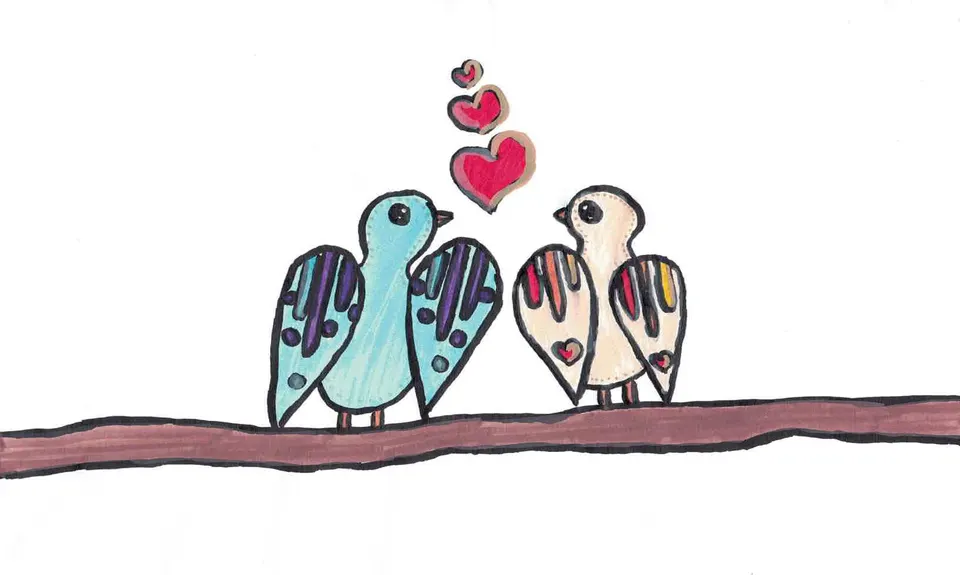
Namely: children's drawings:
the ones that cheer us up from the fridge door, the ones whose chalk lines lead us along the paths in the park, the ones we say “No!” to and later find on school desks or sometimes on the walls. The ones we feel traced by a little finger on our backs early in the morning!
– Why is it important to run this experiment?
– Why indeed? A while ago someone asked me: “Well, so what if it was written by AI?” In other words, perhaps whether a text or any other content comes from AI doesn't matter, and ventures like this aren't important to most people. Which is understandable, since the world faces plenty of challenges, and people—especially here in Bulgaria—are somehow worn down by their daily tasks. Those who aren't professionally affected by freely available AI tools don't care how they're used and don't worry that music designers and performers are already being replaced by AI.
After all, how many of us lose sleep over the fact that automation has taken away so many jobs?
And perhaps that's exactly where the significance of this idea lies: to make us “give a damn” a bit more, to seriously ask ourselves where AI's limit is, what exactly we use it for, other than pouring money into big companies and congratulating ourselves on the time we've saved by not reading books.
If we follow the narrative that AI frees up time for activities more creative than writing emails, making presentations and answering customer inquiries by hand—great! Then we can already rejoice that our children, too, will be able to save this “precious” time from the “tedious” drawing of holiday cards, which we won't be able to recognize anyway.
And what is this more creative activity that the people using AI are engaged in? That's what I'd be interested to find out!
I wonder whether, having saved an hour or two thanks to AI, a person uses them for creativity—making seashell mosaics, say, or working on self-improvement, volunteering? Or do they take on other tasks? Or do they just pull the phone out of their pocket…?
– Exactly! All these big questions are the reason this site and its experiments exist. Which way do you expect the conclusions to go?
– As in other studies, I don't think participants will manage to tell with 100 percent accuracy which drawing is by a child and which is generated by AI. And, to be honest, the AI drawings may well be seen as prettier, though that remains quite subjective.
– If it turns out that we struggle to tell them apart, does that mean AI is “more creative” than humans?
– In my view,
whatever the result, AI cannot be more creative than a human.
After all, we're talking about a tool, and I personally can't ascribe the qualities of living beings to it. It's a bit like asking whether a cookbook is a better chef than Gordon Ramsay!
That's why it's a truly big social challenge when this line between person and tool is erased and nobody publicly declares which content is generated by AI—on the contrary, there are attempts to give AI bots human qualities in customer service, consulting, recruitment, finance. There are quite a few cases of people who became attached to an AI agent and came to a sad end. So perhaps the question isn't whether AI is more creative, but why we need to make it that way at all, and make it imitate the human.
– And whether it isn't too late to turn off this road… Should people who fail to recognize the two types of images be upset? Do you think our test is better solved intuitively or analytically?
– We have enough angry people on the roads, in the neighborhoods, in relationships. I don't think they should be upset or feel deceived; they should channel that frustration into analyzing what happened and asking themselves about the relationship between technology and people. Otherwise, for me the intuitive approach suits the experience of art better, especially children's art.
– Every child draws, and then most of us stop. What is a child's drawing a sign of, what does it symbolize?
– We stop, definitely. Especially
with these devices constantly around us, we don't even let our minds wander through those oh-so-useful pen doodles on a napkin during a phone call or a meeting.
From a psychological point of view, a child's drawing is extremely valuable—it's used in many therapeutic activities and for communicating with children who don't express themselves verbally. Drawing is also rebellion—graffiti, for instance, is a form of social expression. To me it's the most precious thing a child can give—a gift, an expression of love, an investment of time and effort, sometimes even a pointer to a future profession.
– “AI today is better than us at divergent thinking, originality and speed, and therefore at creativity too. That is why the very definition of creativity must change”—in your proposal for the experiment you quoted these words by the cognitive psychologist Mark Runco. How should this definition change, and why does it matter?
– I'm still at the beginning of understanding the all-encompassing subject of creativity, but
the definition of the creative is that it should be original and effective.
Of course AI, based on the data it has and learns from, will come up with an answer to a creative problem or a new idea much faster. That's precisely why Mark Runco says that, to distinguish AI creativity from human creativity, the requirements of originality and effectiveness must be joined by those of authenticity and intentionality. Namely: it must be genuine and come from within, not from a prompt.
– The problem is that we can no longer tell one from the other, and the difference is becoming unprovable… So what do you think the creativity of the future will look like?
– Depends on whether we take the red pill or the blue one. And I'll stop with the references from the dinosaur era, as some people at home say. Who knows…
It's naive of me, but I hope creativity will help solve all kinds of social problems, and not just the ones we create for ourselves.
Problems of the “guilty conscience needs no accuser” kind—for example, writing texts with AI and then checking them with AI detectors. Then again, when I see how much is invested in AI companies that sponsor theoretical projects for models to solve world hunger, say, instead of investing in vertical farms and schools, do I really know what the creativity of the future will be…
– I too naively keep believing that creativity and art are among the few chances we have for a better future… But that, too, deserves to be questioned. Why do we need creativity at all?
– It's the force that pulls us toward new discoveries, whether in science, business or art; it leads to self-development and better communication between people, and thus to a more developed society; it brings pleasure. It's built into us—just look at how creative little ones are at building houses for the bugs they've caught before letting them go again.
– I was thinking along these lines looong before ChatGPT existed. Perhaps we should change our definition of art… So far it includes the element that the creator must be human. Although Roland Barthes argues that the meaning of a work doesn't depend on its particular author.
– Starting with the guano used for cave paintings,
humans have always had a tool through which to express themselves. That's why AI can't be condemned in its role as a helper.
But even if we don't want to arrogantly place humans above everything, let's simply look at the philosophical problem of the product that destroys its creator. For the most part, however much this is debated, AI harms people working in the creative sector, especially freelancers. After all, why should a business pay for a website if it can make one itself, for free, even if the quality is poor? And the argument that only the most successful survive in these industries doesn't hold either, because many talented people don't always get the chance to be recognized by society.
And whether the author is alive or not, AI still learns from famous figures alongside unknown creators—the human heritage remains.
– But the role of that heritage is different. I know it's impossible to answer, I've already asked quite a few guests from all sorts of fields, but here we arrive at what may be the essential question: can a machine create?
– It can't be answered. But again I wonder: why should it create? Is it really so tedious, hard and time-consuming for us to create, to read, to think? Why hand over to a machine something so genuine?
So that we have more time to scroll the internet? We, and the young people watching us, have learned far too quickly to rely on far-too-quick solutions—alongside the quick loans on every corner; on constant stimulation—a dopamine hit lasting a few seconds; on over-reliance on technology; on AI answers that, like social media reels, we don't remember, but just scroll past and type the next prompt…
It may well be able to create, but should it?
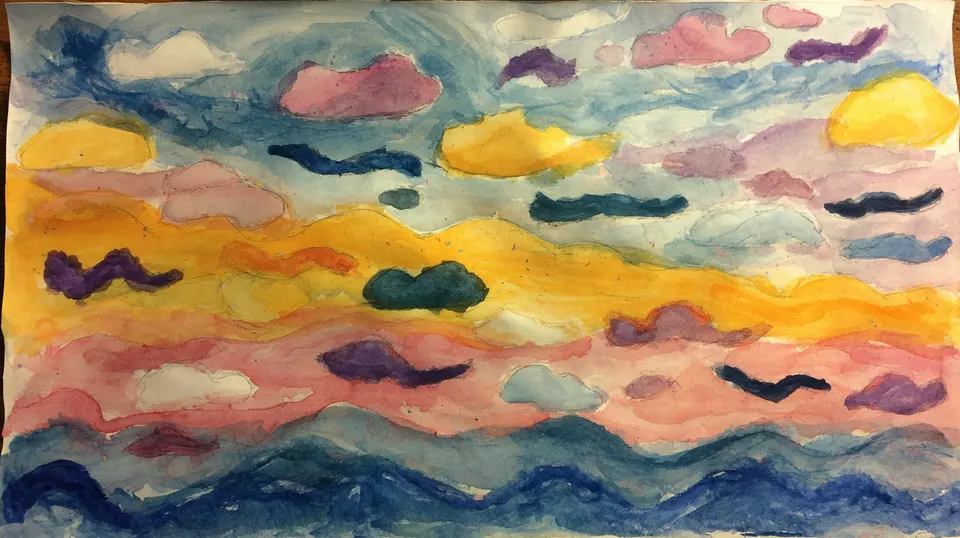
– Why not? What if it can reach ideas we never could? And can a machine have imagination?
– The theme of imagination and feelings in AI is central to many creative works that are themselves an expression of human imagination. Since we mentioned that writing is all but on its way out, let's look at films—masterpieces like Ex Machina, Bicentennial Man and A.I. Artificial Intelligence, which deal with these very themes. So, if people keep creating such works in search of an answer to this question, let's not stop asking it and feeding our human imagination. The answer itself might not even matter…
– In your view, what is a generated illustration—a joint creation of human and machine, of the machine alone, or…?
– It's also the product of all the other creators whose data was used to train and develop the AI.
– Can something created by AI move us? Bring us to tears? Make us laugh sincerely? Honestly, all three have already happened to me.
– You're not the only one. In fact, many AI works are rated as powerful, especially by people who don't know they're looking at something generated. But here's the interesting part: studies show that an AI-written piece may be rated as more appealing than a human one. Yet many AI works taken together are, over time, rated by readers as all the same—equally emotional, equally boring. That's why
many experts express their fear that soon all written forms will be identical, with recycled ideas and similar text structures.
Imagine, for example, a world in which the pastoral world of Elin Pelin, the Bulgarian master of village short stories, sounds indistinguishable from the magical realism of García Márquez. That would bring me to tears.
– Or the other way around? There's another thing worth testing in a future experiment.
But if you know you'll spend decades learning to write or draw, to become an accomplished creator, while today algorithms do it indistinguishably from humans, faster and in many cases more originally… what will be the point of continuing to develop creativity?
– The point is to develop ourselves and society through our ideas—especially for those who come after us.
The bad thing is that a great many people, especially creators, really are asking what the point is now that AI is taking over their functions. Some lose their jobs, others start using AI to keep up with the business world and its deadlines and content-optimization tricks. And a third group—the worst case, especially for people who are still developing their skills—get “stuck in a loop” and uncritically accept whatever AI gives them, at work, in education, in their personal lives…
From a tool, AI becomes a crutch, and crutches can trip you up too.
The industry itself may become undesirable, as happened with many social professions. The work of writers and translators may not be so sought after by young people. There's a risk that everyone will take the easy road of quick answers.
– As a parent, how do you deal with this problem of the easy road?
– It's hard not to take it, definitely. You throw a frozen pizza in the oven for dinner, you book a venue for a celebration instead of inviting guests over, you cut in line “just to ask something,” you switch on the cordless vacuum because you're in a hurry to get the chores done, though maybe nobody is even chasing you.
The sad thing is that our children copy us and take the easy road too
And we ourselves, somehow with good intentions, keep wanting things to be easier for them for longer, even though it's in every child's nature to choose the harder road: to find out for yourself that the stove is hot, to touch the snow yourself despite the mud on it, to see for yourself whether that puddle really does come up over your shoes…
– When do you plan to introduce your child to artificial intelligence?
– I don't know. I've heard that her classmates use AI, and I haven't even opened ChatGPT in front of her. Which may be a mistake, because that way she might fall behind with technology. I've introduced her to lots of topics, but this one, about taking the easy way in education, I don't want to yet.
– In the school of the future, will we still learn to draw?
– Oh, I hope we'll never stop drawing, even if it comes to be seen as something old-fashioned.
To have fingers blackened by the shading that didn't come out right, to have stains on our clothes from the paint we smeared on the paper, to laugh at figures where we can't tell whether it's a horse or a car.
– A few weeks ago everyone got obsessed with making pictures in the style of Japanese animation… and once again the conversation about artificial intelligence turned to some cute app rather than its great potential, the way I try to steer it on this site. What is the most important conversation about the relationship between AI and humans, and how can we “unleash” it?
– I think it would be precisely a conversation about the responsibility we have toward ourselves, our loved ones, society and those who come after us. Unfortunately, these days everyone wants to be heard, and we don't very often listen to the person across from us, especially if their opinion differs from ours. That's why
what often happens isn't conversation but one-way expression of opinion.
And here the theme of the easy road comes up again: we're afraid of missing out on the latest thing, we worry we won't be noticed, and so we copy. As you put it—
at a time when we can be anything, we choose to be the same.
– Can we invent new genres, new arts, where we can escape competition with AI?
– Oh, I can't wait for that to happen! But for that, the industry itself needs to support artists a bit.
These days everything seems to be a remix of something
—remixes of hits, copied websites, sequels and mash-ups of old films… So it would be wonderful if those who are already established in the industry somehow put a stop to the recycling of ideas and paved the way for bold performers who could set new genres.
You never know—as with the story of the musician Sixto Rodriguez, a single performance can turn into a whole movement on the other side of the world. And the performer might not even find out…
– And could we cross that threshold beyond which the human being as creator, influencer, actor, face or athlete is simply no longer needed?
– If we keep producing uniform content that nobody even reads or watches, maybe there won't be such a need. But I can't and don't want to imagine the world without creators!
– How far off is that? What will be left for people if we get there?
– If that happens, I think we'd lose ourselves.
I keep telling myself that the way we use AI is like the tragic story in Flowers for Algernon. It's the story of a man with an intellectual disability who becomes a genius after a medical experiment, but when the treatment takes an unexpected turn, he slides back, painfully and consciously, into his former state.
In the same way, we're now experimenting with AI with smiles on our faces, reaching the brilliant peak of technology where the machine passes for a human. But what will happen when we cross to the other side of the curve, when we fall from the peak? Will we realize how AI has taken away our capacity for reasoned thought, if our children don't open books, don't click on websites, don't check the opinions they copy? Will we be able to apply a new treatment?
– It's obvious that we can't tell generated content from created content, especially on social networks. Is there a recipe for getting out of this net? Out of fluid truth, social bubbles, the lack of criteria?
– Personally, I'm worried. About how
people get locked in these social bubbles, suffocated by algorithms that feed them false and extreme content,
about children who form an unrealistic image of their own appearance and give in to dangerous challenges.
Banning technology, however, is not a recipe for success. In my view, the recipe lies in developing creative and critical thinking.
– What would be your boldest idea for the next experiment? This question was made up by AI, and I really liked the wording…
– I'll answer you with ChatGPT 😊
“AI Town”—A mini-society coordinated by AI
🧠 Idea: Create a small, real settlement (or a simulated environment with real participants) where daily organization is managed jointly by people and a central AI assistant.
– Let's give it a try! Thank you both for the fascinating conversation and for the idea. And any further ideas on important topics are always welcome!