Today's guest needs no introduction—even his first name alone is enough to turn heads.
Kitodar Todorov is a popular actor and television host. But he is also a meme hero and a seasoned gamer who invites guests to play online while they talk about life…
The occasion for our meeting is the “GG LAN Party” event, held under the motto “You play, good wins” from May 23 to June 1 in Sofia and on Twitch, with a colorful program that includes Kitodar and his “Dota 2 LAN Party”.
Will this turn into a fun conversation? Or will it rather give us reasons to stop and think…? About our place in today's world of technology, about computer games as a way of life. About the difficult balance and the big questions.
And how exactly are the Kitodar memes born, the ones that amuse all of us and become so popular online?
“Our entire modern civilization is built on little machines we depend on, and that's really dumb. A truly free person shouldn't consider their phone something extremely important, or their computer either. We lose that over time, because it feels like they give us everything. Like technology gives us freedom, and it doesn't. On the contrary, it creates more dependencies for us.”
An unexpected conversation awaits!
– I'd really love for this to be a fun interview—I'm fed up with sad topics. But I've noticed it with you too: your humor always carries a slight dose of sadness.
– They go together; theater is tears and laughter. It's better for things to go lightly, but we should also say what troubles us. Or what we like.
– We talk a lot about critical thinking, about how it helps us separate the wheat from the chaff. Is that really so? I don't believe it, for many reasons—for example, the “broken” public conversation, or the fact that today we can't tell what's human from what's generated by artificial intelligence.
– And not just that. Ever since civilization has existed, the system has been trying to find ways to manipulate people through some kind of propaganda. It uses everything available—religion, science, art, culture. In the end, power always takes advantage of these things.
But not so that people become more enlightened—for commercial reasons. Money always comes first.
– But in my view, on the internet we're moving to the next level, where not only are we the product of social networks, we're also very easy to manipulate.
– But when was it ever different? It's just that the scale and the accessibility are different. Three hundred years ago, if you lived in some village, information reached you very slowly, if it came at all. Beyond that, nothing is different.
I graduated in puppetry, and one of the few things I remember—I wasn't exactly studious, but I really liked this—was the story of the Punch and Judy puppets. They started out in Italy and became very popular because they were a kind of news broadcast. That is, the responsibility lay with the character, not with the puppeteer, who said whatever he wanted through the puppets, voiced all kinds of opinions, harsh ones, accusing ones.
Puppets based on Punch and Judy made it to Czechia and Poland. And when the Germans conquered those countries,
they locked them up in a safe so there would be no counterpropaganda to their own. That's how powerful art and culture can be.
It has always been like this! That's why the first thing every new regime purges is faith and culture, so it can create its own. It's a natural principle, very harsh and unpleasant, but everyone does it to this day.
– But does culture have the same place in the online world? Is the IT “regime” really building a culture of its own? In my view, the superficial and the knee-jerk rule. Influencers, who aren't necessarily creators of meaningful, important, relevant content, are the authorities—not the media or artists.
– Is it really different from 50 or 500 years ago? I don't think so. The problem is rather that the scale is enormous and now everyone is included—both the masses and the elite.
In the old days, it was the elite who were privileged. Through television, through newspapers, a huge mass of people joined the game—anyone who wanted to. Even a homeless person can find a newspaper and read the news, whereas 200 or 300 years ago only the palace and its inner circle had access to any more refined culture. Everyone else got by as best they could, again with petty, vulgarized things.
Mozart was buried in a common grave, even though he played at royal courts.
There's something else I discovered for myself two or three months ago. I think the simple person—in the good sense of the word, the one who never had much, who works in the fields, in the factory—has dreamed for centuries of living like a king. With my grandma and grandpa, whenever we had a good time at the seaside, or ate something tasty, they'd say: “We ate like kings, we had a royal time.”
That was wedged into people even subconsciously—the desire to feel how kings live. In some form, as an illusion, it came true. Today, even on a small salary, you can afford four days in Hisarya, a Bulgarian spa town, swim in a pool, use the jacuzzi and other royal things.
It's a facade and an illusion, but still, that's how it is. For the past 20 years or so, though,
that isn't enough for us, and now we want to feel like gods.
I think this striving toward the ego is a very strong signal. “Me and everyone else.” “I am the center of the Universe; the others are some theatrical event I'm taking part in, they're a means for my profit and, above all, for my hatred. I can hate everyone else because they don't think like me. They're dumb, stupid, orcs.”
All sorts of ugly terms get used for the others, the ones who are different from me. And
this is a kind of deification of the individual, which is ruinous.
But perhaps that, too, comes from the scale of information reaching everyone so easily. Everyone becoming an authority in the online space, or at least considering themselves one.
Everyone being able to voice their personal opinion. And in the end, that may turn out to be the problem.
– As another guest of mine put it, “the false sense that our opinion matters.” There you go—sadly, once again we didn't start with laughter, and we've arrived at a problem.
– It may not be a problem; it may be the beginning of something very good—there's no way to predict. Let's say I'm more pessimistic, I admit, like you. But I also think I could be wrong. It's very important not to decide at all costs whether things are going badly or well.
I believe people as individuals should be respected—every single person in the world, in the past, in the future and in the present. But the masses always worry me.
I don't like crowds of people, because that's when the individual disappears.
Concerts and rallies have always unsettled me—every gathering of people destroys the individual and, in my view, does the work of a certain circle of people who know how to manipulate.
That's not new either; it's been so since the world began. Will the individual prevail, or the crowd? It's not in our power to judge.
– But look, the internet gives you, as an individual, the chance to create content and have it travel far.
– Absolutely! Everyone can express their personality in some form—through a Facebook post, a video or a TikTok live. But here comes
another problem—to what extent should this be controlled? And who should control it?
Should there be any limits, moral, ethical or otherwise?
In my view, humanity has never answered that question, from the very beginning, from the moment it appeared. Whatever the choice, it will always be a compromise. If we say “freedom of speech,” that means anyone can say whatever they want. There shouldn't be censorship—censorship is interference by some authorities, which can also be corrupted; we have plenty of examples in history. Or it can be steered toward a goal that doesn't serve the people, or serves only certain circles. I think it's an uncontrollable process.
It sounds very appealing for everyone to freely speak their mind, without any censorship. But that carries the risk of extreme ideas reaching many people and leading to violence. I don't think this can ever be solved.
– Except that now there's artificial intelligence too, capable of creating any kind of content.
– It turned out Milli Vanilli weren't the real deal either—other singers were behind them, and yet it was, let's say, likable music.
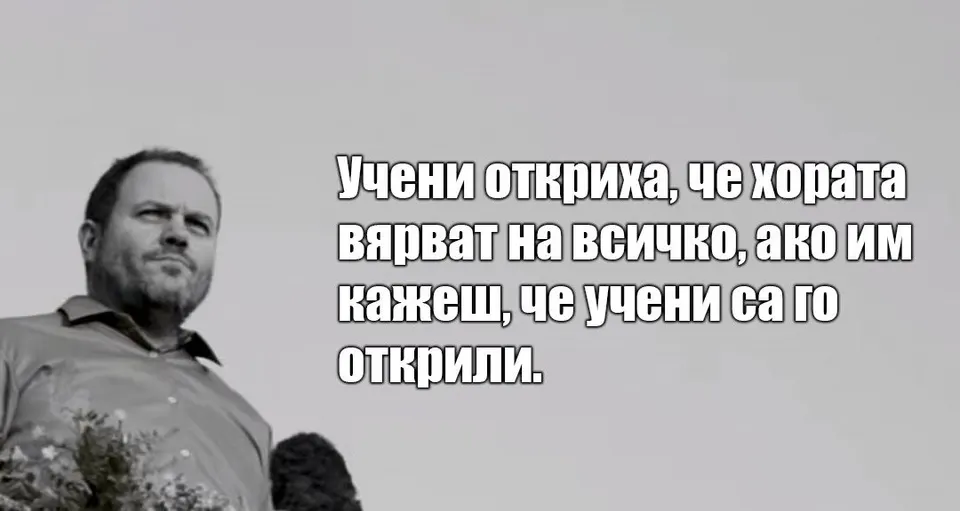
– So the truth doesn't matter, only the content?
– In my view, here we come back once again to the commercial principle—is there a profit, who holds the key to it, who will benefit.
Truth is a rather relative thing. I don't think anyone should say: “This is the truth.” There should always be an “in my opinion,” an “I think that.” If someone claims to know the truth, that means they're God, which is rather proud.
Truth is a subjective, relative thing. 2 + 2 = 4. Fine, I agree that somewhere logic is unified, but in the end it may turn out not to be so. That's rather extreme, but we can still allow that somewhere, deep down, we went wrong back in Ancient Greece and mathematics isn't actually an entirely exact science.
– In geometry, that turns out to be the case. But let's try to smile again. How did you come up with the idea of making memes of yourself? Because it turned out to be a format that became hugely popular…
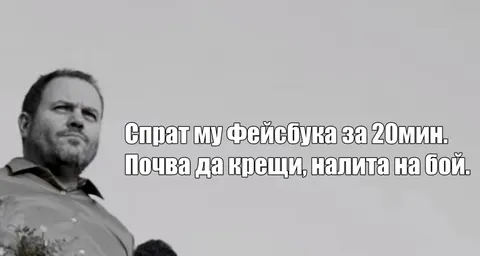
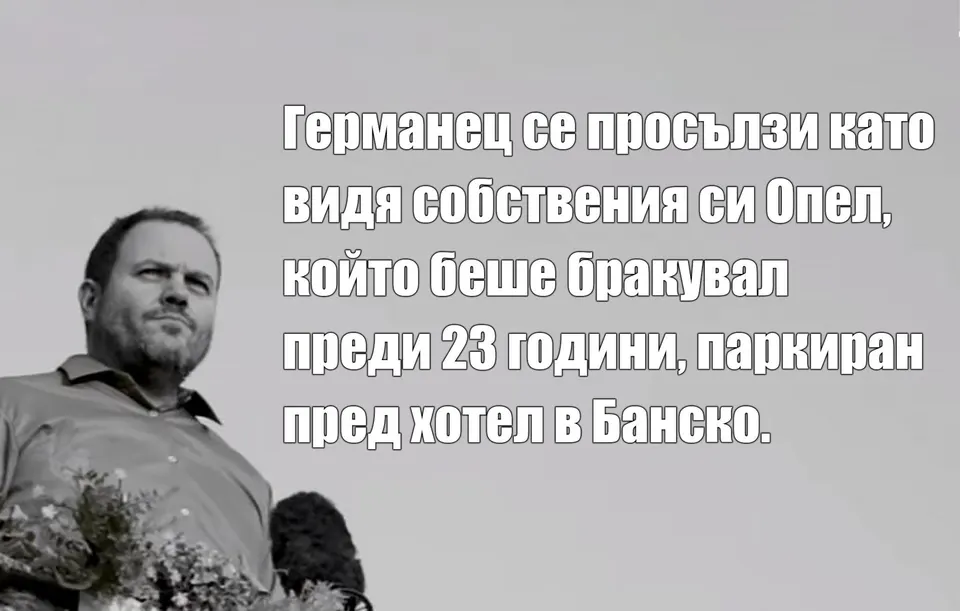
– Oh, that's not mine—let me tell you. One day, in 2019, someone writes to me: “This is really cool,” and sends me a little black-and-white meme. I wondered: is it from some film, where did I say that… And I got confused!
It turned out that a guy, without asking me, without us knowing each other, had made a page called “Kitodar Todorov.” At the time we were doing Friday at 5, the TV show, and this… got on my nerves a bit. Before that, someone had made an Instagram page, but started putting in political stuff. I'm very much against that—I don't like politics at all. I managed, with great difficulty, to get that page banned; I photographed my ID card and who knows what else.
That's why it bothered me that there was a “Kitodar Todorov” page without my knowledge and permission. I started trying to get it banned, but it had already built up quite a lot of followers. At some point one of the people we worked with found out who was running it, and we met at a café. It turned out he worked 20 meters from the café, at a pharmacy, and he thought we'd been following him.
– Now this is getting fun, I can picture the scene…
– We met—the guy's name is Dancho. I told him what he'd done wasn't very cool, he agreed, and we started wondering what to do. It's a fan page, but you have to go to the description to see that, and nobody does.
I asked Dancho to change the name so it was clear it was a fan page of Kitodar Todorov—that would be much fairer. I also asked
for no politics and no religion—let's just make little memes, let him post them, as long as they're not tied to those directions.
He agreed, and afterward we even shot a video in which I say I allow Dancho to use the page.
Three or four months later, Martin Kadinov suggested I start streaming games on Facebook. It was the end of 2019; I hadn't played for a year or two, but I liked the idea. For that we needed a page, and I didn't have one, just a profile I use once every two years. I called Dancho, and somehow we became partners—to this day we run that profile together.
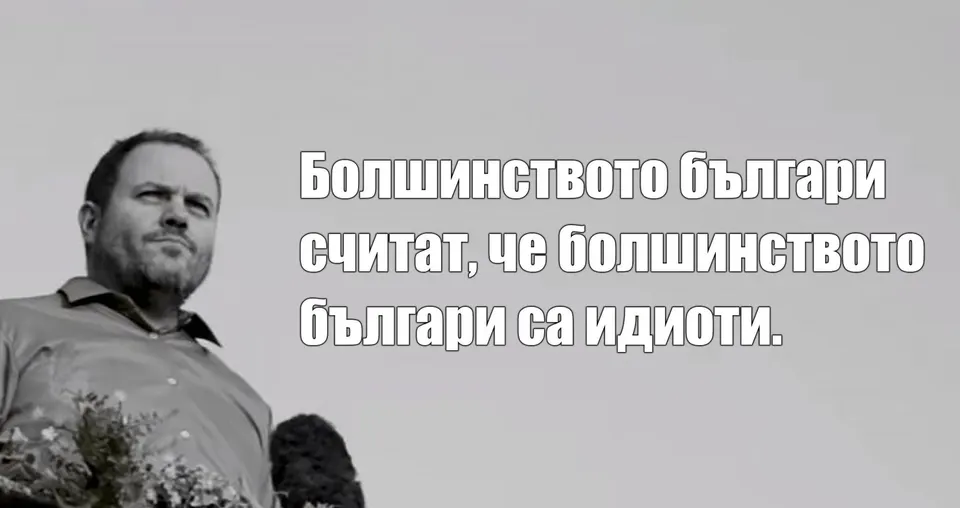
– I'm supposed to follow the media stream, I often come across these memes, and I always thought they were yours. Look how interestingly and unexpectedly stories unfold in the age of social networks…
– There's an illusion for you.
– Which brings us to games. The last time I played computer games was at the end of the last century, and back then everyone was saying they were making young people stupid, what a generation was going to come out of it… A quarter of a century has passed, and I haven't noticed that happening, at least not because of games. When do games make you dumber?
– It can absolutely happen.
If gaming is the main thing you do, it's the same as becoming an alcoholic, a drug addict, a TV addict.
That is, when gaming turns into an addiction, it's a problem. I'm convinced of it, even though I love playing. It just has to be in moderation. Same as when Facebook or TikTok takes up most of your free time—then it's a problem. It's much better to read through Dostoevsky's works over one summer, for example.
For me, games are an addiction, and I find that a problem. Let's say not as much as seven or eight years ago, but games really can cut you off from normal communication with other people. When my son was born, I'd wait until 9 p.m. for him and my wife to go to bed so I could start playing until 1 or 2 a.m., and in the morning I'd get up short on sleep. That's not normal, especially when it's every day.
Sure, you can replace it with a game of belot, the Bulgarian card game, or Monopoly, or chess. The important line is for it not to become an addiction, but simply time to rest. To relax that way, to distract yourself, because games can also distract you from the insane daily grind.
They certainly give me some satisfaction and some distraction.
The point is for it to stay within some norm. If a person can control themselves, games aren't a bad thing. If not, better not to play at all. The ultimate goal, especially of mobile games, is to get you to pay pennies for something that comes very close to gambling.
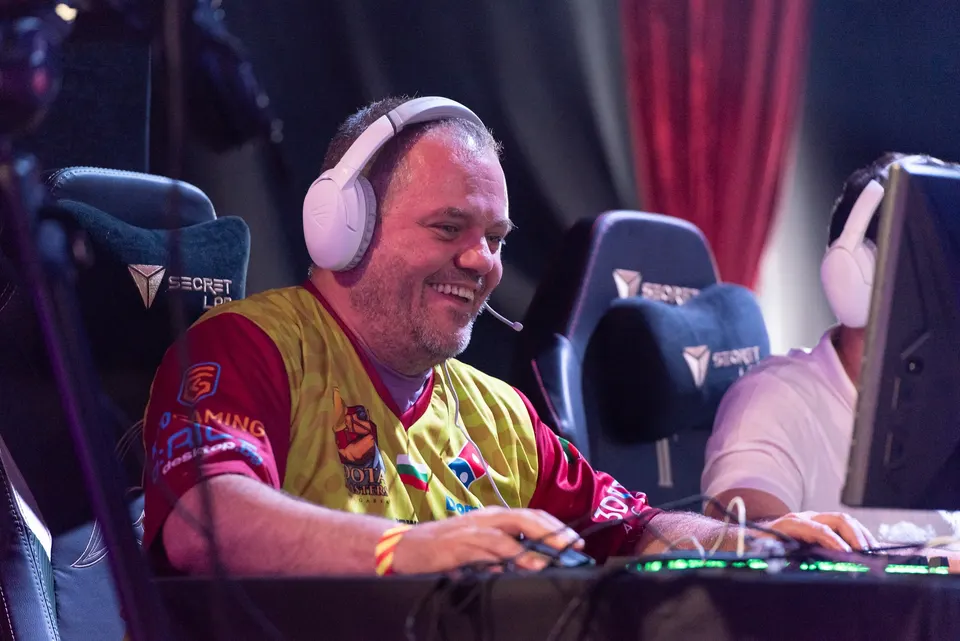
– And yet, once you've found the balance, streaming games gives you the chance to meet interesting people.
– That's true. But ten or so years ago, people online would say sensible things to each other while playing: “Where are you from, what's your name?” Now all that's left is “Go to hell!” Communication got lost; it turned into aggression of some form. You'll rarely see “Good luck!” or “Have a nice game!” Whereas back then it was a way of getting to know each other—people were polite and wanted to learn about the other person.
Whether games are to blame, or the overall state of humanity, is another topic. Or maybe games have contributed to people becoming rude? I can't judge, but it's most likely far more complex.
Very intelligent people often work in the entertainment business. Just like the film industry, gaming attracts talented musicians and actors. That is, it's a kind of art. It doesn't have only downsides—I love games. But it's important for a person to be able to control themselves.
– Isn't a big part of this problem our first encounter with technology? This is a big topic for me—how we, as parents, introduce our children to technology, how we present it to them, how we also show them the alternatives. So that they develop self-control, too.
– But I don't believe in that. I don't believe the family can win that fight. Unless it's by force, which isn't cool.
My son didn't have a phone for many years, or tablets, computers, laptops. Until they could buy one themselves, they wouldn't have one—that was my system. It lasted until he turned 14; he read, he even wrote little fantasy books. He went outside, helped stray cats, fed them, took them to the vet—he did much more meaningful things than getting stuck in a screen.
One day my father simply gave him a phone, and all of that disappeared.
That really makes me angry, very angry.
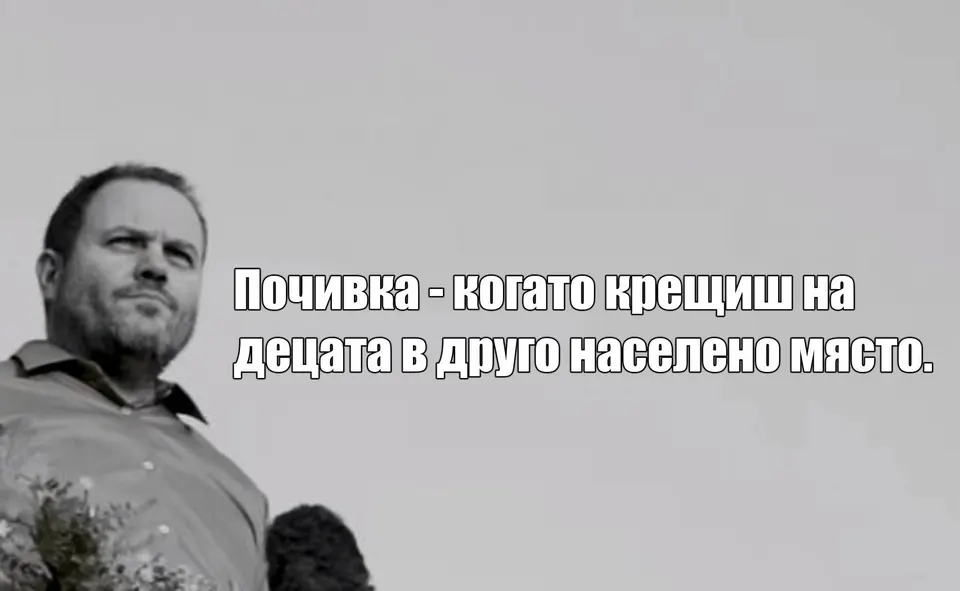
Technology is so close to us that I don't see how anyone can escape. Just the other day I had no phone, there was an outage and… I actually felt great. No one can find me, I can't find anyone. Suddenly, one dependency fewer.
You just don't think about that stupid gadget. Such a great feeling!
On the other hand, I'm sure a huge number of people suffered enormously from not having a phone. Businesses were in trouble.
Our entire modern civilization is built on little machines we depend on, and that's really dumb. A truly free person shouldn't consider their phone something extremely important, or their computer either. We lose that over time, because
it feels like they give us everything. Like technology gives us freedom, and it doesn't. On the contrary, it creates more dependencies for us
– Even Bill Gates goes away from all technology for a month every year. And many other tech leaders develop a habit of freeing themselves from that dependency… while profiting from ours.
– Commerce. That's the problem with free trade. When there's no control, everyone does whatever they want. That's the problem with a purely commercial principle when there's no control.
I remember some games that reminded you that you hadn't taken a break in three hours and it was time to rest. Yes, it was a single game, but the makers themselves were signaling that you were overdoing it and it was time to do something else. That's an isolated case, though;
now the goal is for you to play more and more, to get hooked, so you want to buy more and more. And there's no control over that at all.
– Just like social networks, for example.
– We're back to who should be responsible for that control and who should make the decision. And again we arrive at the point where there's no fixing it. Everyone gets by as best they can.
Running away from the jungle, we humans walked into a much harsher jungle.
Running away from everyone fending for themselves, and trying to create a society protected from external and internal forces, we ultimately ended up with a society protected from neither. Everyone does whatever they want and saves themselves individually. That's my sense of the modern world.
A professor of game theory at Sofia University, a philosopher, said something 10 or 15 years ago that made a very strong impression on me—he talked about how important it is who is the subject and who is the object in every relationship between people. He gave sport as an example. If back in the day the object was the player, now it's the audience, and sport actually serves it entirely and exclusively. And so
sport has devalued, because it no longer matters in itself, only in how it will reflect on the audience and what the audience will buy. The show!
Everything around us is an ad nudging you to spend your money in the right place—and that place, of course, is “my business.”
– While gradually the human being becomes almost superfluous on both sides of that model.
– That's right. I used to think it was a local, Bulgarian problem, but it turned out to be a global one. You pollute the environment and somehow you don't think that in 100 years it could lead to a problem, a massive one. Your children will suffer, but it doesn't concern you.
People in general, when there's profit to be had, don't think about what consequences it could lead to. They don't care at all.
Especially with newly discovered things. People pounce and don't give a damn what they'll lose, whether someone will die. “What matters is that I get 10 million or 200 billion, because that gives me some security.”
Everyone in the world thinks that way once they get close to the racket.
– Because, as you say, we take ourselves for gods, while we're the same fragile, mortal, sinful creatures we were before technology—wise words from another guest of mine.
– Exactly, but everyone wants to be great. Nobody wants to say: “I'm weak and feeble in everything.” Always, because of greed and pride, civilizations have reached a cynicism that in turn led to their ruin. The model hasn't changed.
In the Old Testament you can see how the Jewish people, when things are good, forget about God and start making idols, little bracelets, whatever they please. Some prophet comes and says: “This won't pass, you know. It's going to get really bad.” They stone him. At some point what he said comes true, and fire and brimstone rain down on them. “Oh, Lord, we're sorry, we really are in a bad way.”
Then things pick up again, and again come the little anklets, the little idols, the little orgies. That process has never changed.
It's incredible how we don't learn from our history.
Supposedly it's an important subject because we learn from our mistakes. Absolutely not true—it even seems to me that we deliberately do precisely the wrong things we know have happened in the past.
– Apparently we can't do it any other way—that's just how it is.
– Again we come to the point that there's practically no solution to the problem, because we humans aren't gods. Very few things depend on us, and
the only power we have is over our choices. Nothing else belongs to us
– not our bodies, not even our thoughts are ours. The only things that are ours are the choices we make based on the thoughts that come to us and the things that happen to us.
How will you choose? Ideally the choices would be right, but unfortunately they often aren't. When we realize that we're truly insignificant compared to our planet, let alone the Universe, that frightening infinity, and time, which is also frighteningly infinite into the past and the future…
Only when we humble ourselves will we be able to communicate normally.
The film The Gods Must Be Crazy has made a big impression on me. It tells, simply and with a wonderful sense of humor, how badly people have screwed themselves over with this desire to complicate the system they live in. How, when you have more, you actually fool yourself that you live better.
And how much we've lost from primal man, that tribe that gathered water from the morning leaves, that had no words like “hatred” or “guilty”…. But… things are what they are.
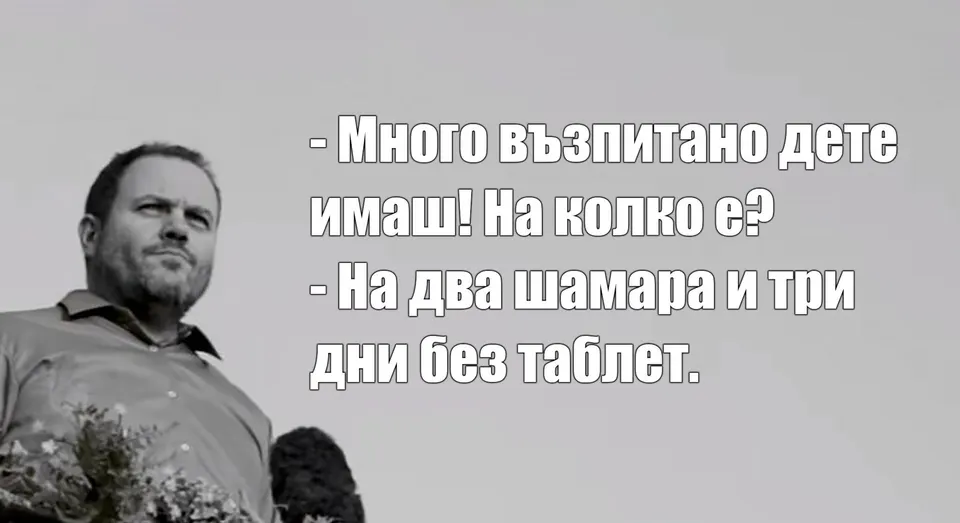
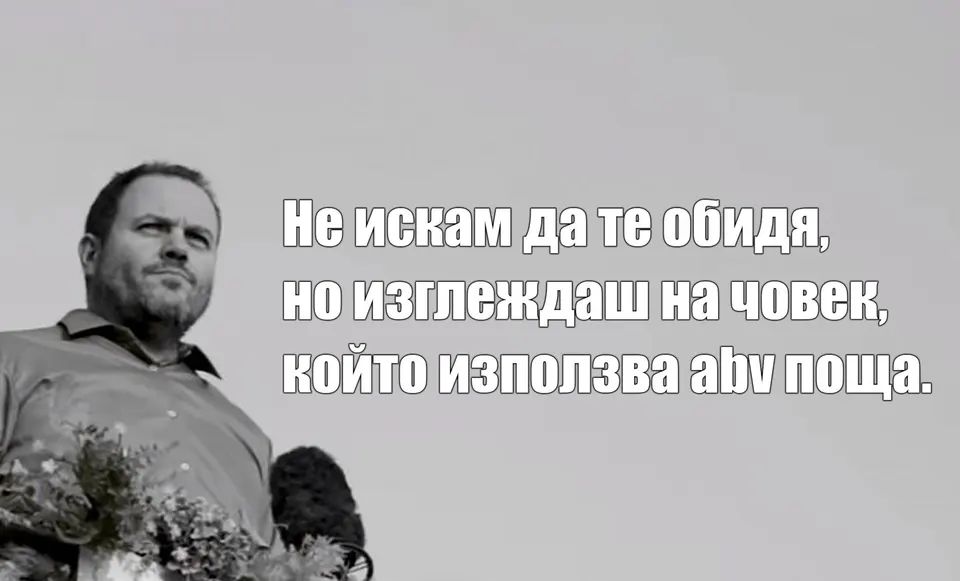
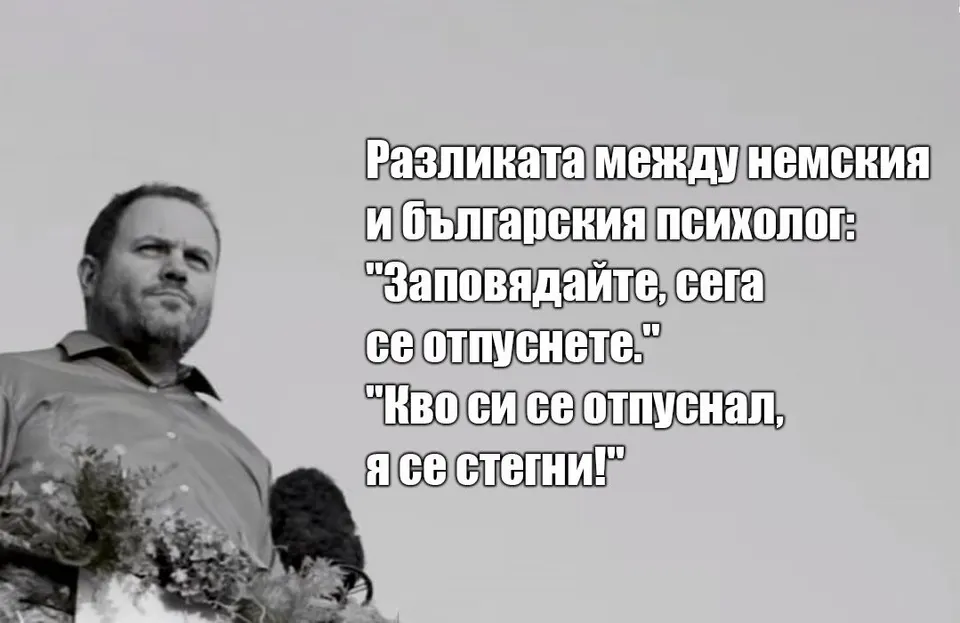
– Well, the fun conversation didn't quite happen… to make up for it, I'll garnish it with Kitodar and Dancho's memes. But I don't regret it—your point of view was really interesting to me. And we'll get to the fun part, I hope very soon, at GG Lan Party 2025. It would be great if we could meet there!