Artificial intelligence is throwing down the gauntlet to artists in more and more fields. While many believe the technology is far from creating better than humans, more and more often, and more abruptly, the opposite turns out to be true. So where do creativity, art and imagination go from here? How do we value the journey when the result comes easy? We live in a surprising world where you have to adapt to survive.
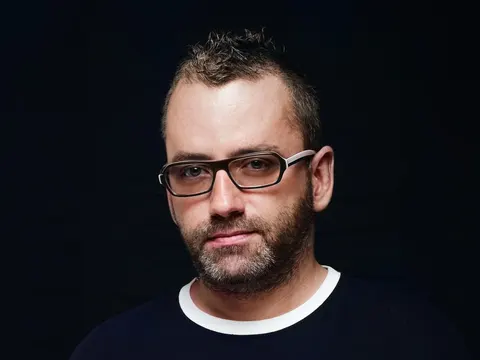
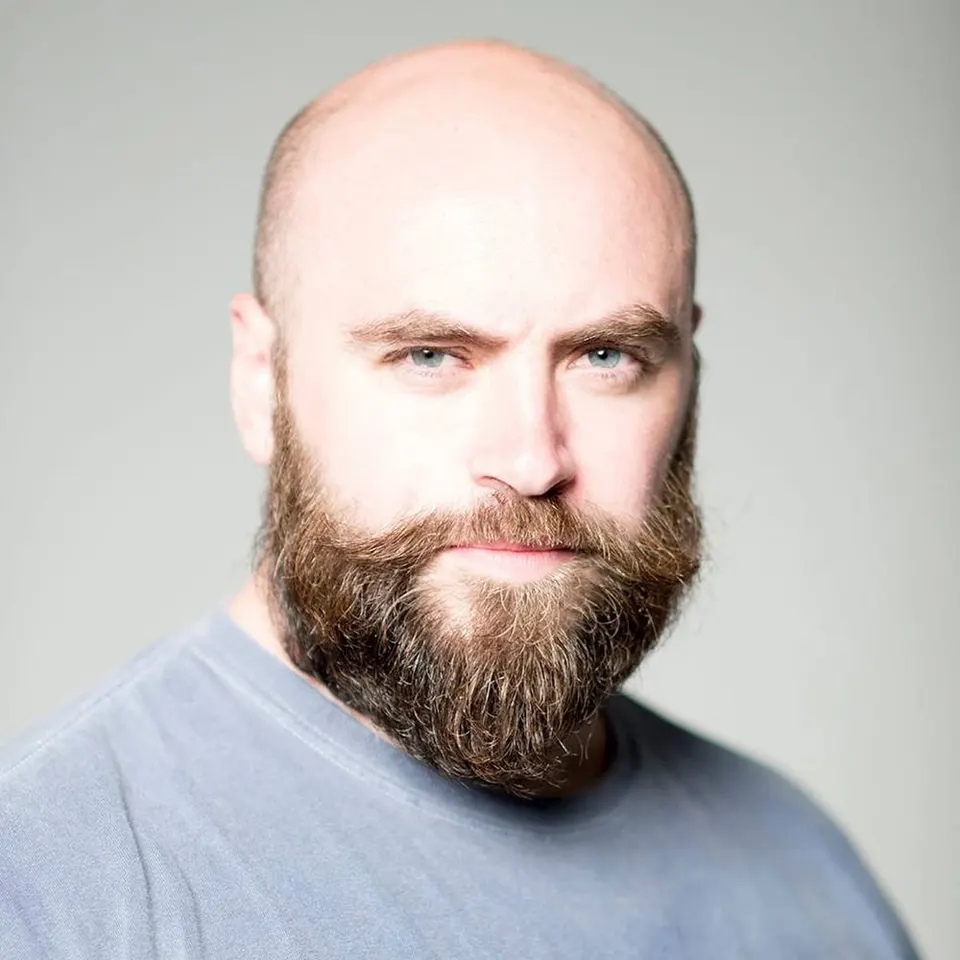
Lubomir Sergeev is a photographer, digital artist, director and producer with 30 years of experience in advertising. He has worked on five continents and has lived in London and New York. He holds a long list of awards, among them the Victoria, considered the most prestigious in the world of photography. For 12 years in a row he has been included in the global selection of the “200 Best Digital Artists.”
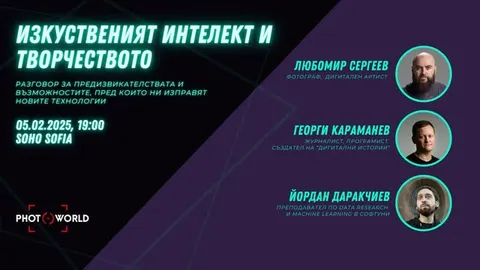
Together with him and the artificial intelligence lecturer Yordan Darakchiev, we will continue the conversation at a special event on February 5 at 7 p.m. at Soho Sofia.
Do you have an opinion on these topics? Do you think they matter? We look forward to seeing you there (more about the event), and now it’s time for our guest’s fascinating take on the big questions of our time.
– Artificial intelligence is getting more and more involved in art—from creating images all the way to poetry. As someone who has spent 30 years creating exceptionally high-quality, original images, do you have an answer to the classic question Bulgarian traffic cops ask when they’re angling for a bribe: so what are we going to do now?
– What? We’ll hold hands and start dancing. AI is a technology I’ve been working with for quite a while, ever since it appeared. There’s no point throwing a tantrum, or overthinking it either.
If you sit down and do that, it may well pass you by and be gone before you’ve come up with anything.
Ever since it came out, we literally clapped our hands and hugged each other. In my world there was a period of wondering, mostly about copyright—that was a big drama. Even the 3D artist I work with had joined some European coalitions, and the ambitions were very serious, along the lines of:
don’t use AI, because you’re destroying everyone’s work.
But that passed. For a year and a half now I’ve been using it constantly for work, almost never in its pure form—it can’t really be used that way, it needs a bit of touching up. But I work with it all the time, and I’m counting on it getting better and better.
– How do you see this synergy—using it without it replacing us?
– I don’t think it will ever replace us. It will certainly surprise us every day, or every month at the most. But that’s the kind of time we live in—a surprising one.
I use it and I’m very happy it’s developing so well. About ten times now I’ve been asked whether my pictures could be used to train this or that AI model. I’m absolutely in favor, first because we can’t stop progress. And second, because
I want it to serve me better and better.
– What does your way of working with AI look like right now?
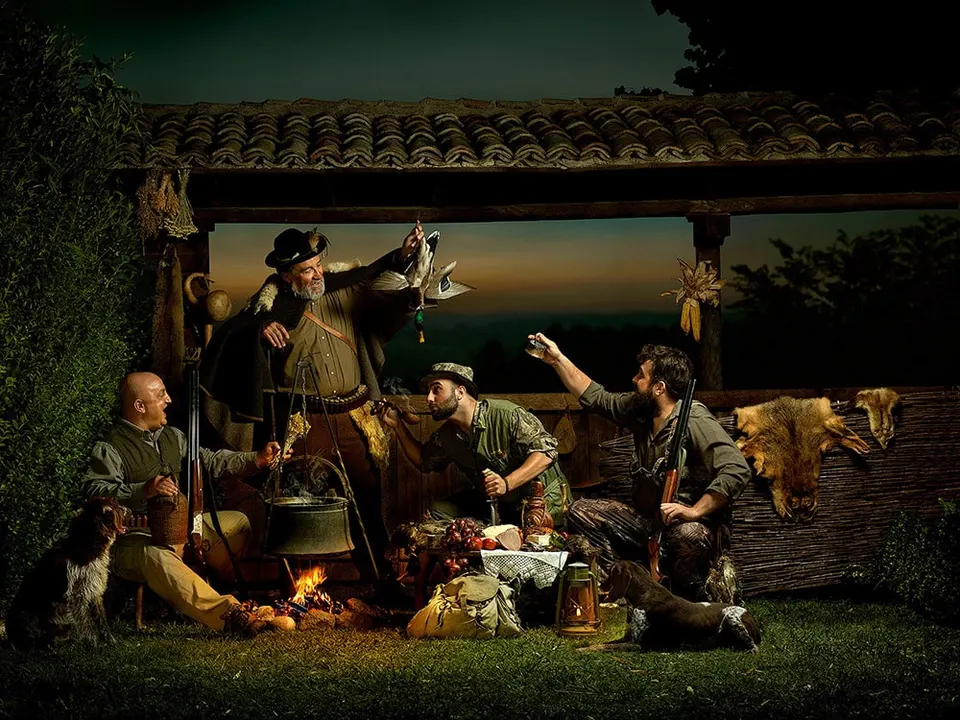
– Most often I make storyboards. My photography, and the video I’ve been doing for a while now, is very hard to describe before it gets approved. Ninety percent of my work is on commission, to a brief, and when I have to explain to someone who’s been doing accounting until now that we’re going to shoot two crocodiles wrestling with a referee in the background wearing the latest Nike T-shirt, he stares at me for a very long time, blankly, until he understands what I’m telling him.
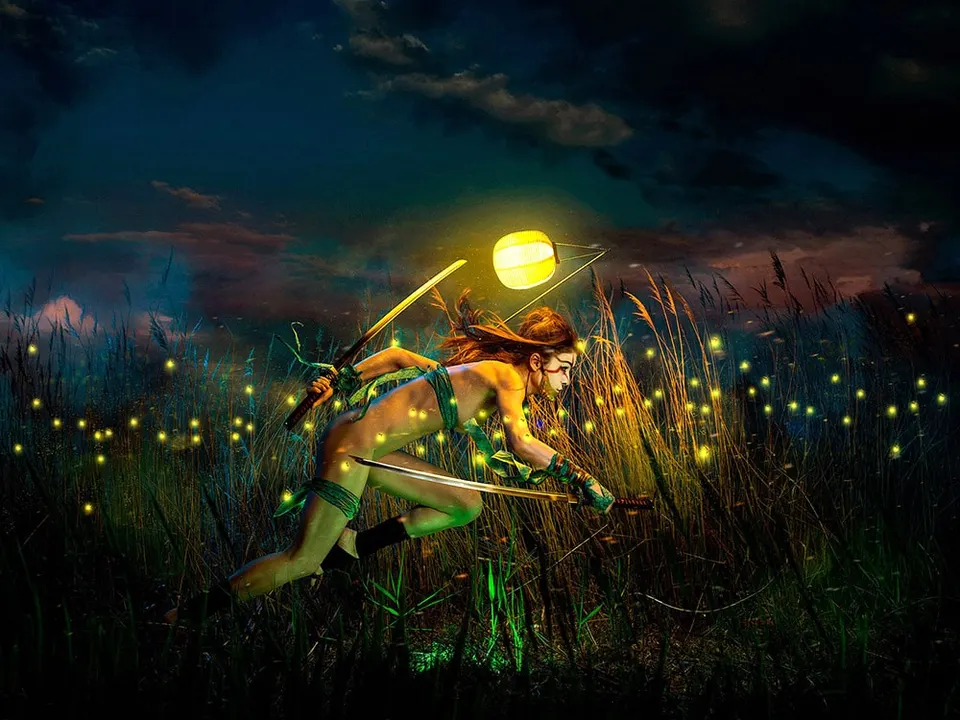
That’s why I use some of the image generators—mostly Midjourney, which turned out to work best for me—to illustrate what on earth I’m trying to say. What the result will be. Naturally, it never comes out the way I want, and I shape it a little.
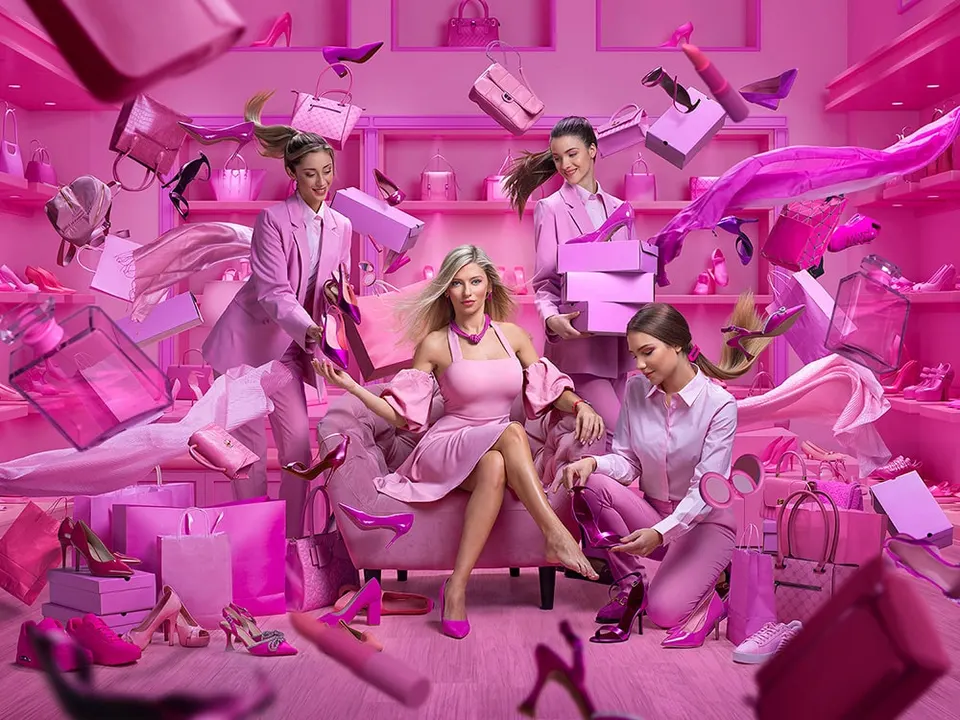
Second—the practical side. We had to shoot a young woman opening a door to reveal a children’s bedroom lit by moonlight, with books on the walls, curtains, pillows. To do it, we’d have needed a whole day of preparation, and the budget would have grown far too much. And that’s only 20 percent of the picture—a little door, a gap, and you glimpse something.
We sat down, did the math, said to ourselves, “It won’t work!” and simply generated it,
touched it up a bit and used it as part of the overall composition. I use things like that more and more often, and lately I’ve been doing it with video too.
– You say it won’t replace us, but I see areas where it’s happening. For example, to illustrate my texts I no longer need to search a stock image bank and pay; I just generate something that does the job. There you go—it’s already replacing a lot of stock photographers.
– It’s certainly replacing quite a lot of people in that industry in one way or another, but it doesn’t concern me personally. Thirty-odd years ago, to show two people shaking hands in an article, you either used the archive of the outlet in question or hired some people to shoot it for you. When stock photography appeared, everyone who earned their living with that kind of photography went through a real drama.
Now we’re living through the same thing—stock photography won’t be used anymore unless specific people are needed; you just generate some image and you’re done.
By the way, I somehow sensed it coming. Before anyone was talking about AI, several times I needed human faces that don’t exist. I happened upon a site that generated them and said to myself, “There’s real money in this! How has nobody thought of doing it?” And
before I’d even finished the sentence, they went and did it, and in a way that made our heads spin, and we didn’t understand what was happening.
– Exactly, and I went through that very site. It happened incredibly fast. We thought it could happen with text, with some repetitive tasks, but image generation came out of nowhere.
– If you think about it, though, it’s somehow natural, and some clever minds knew it a long time ago. I recently came across some new generated influencers… well, I look at the picture and I’m starting to be unable to tell the difference between what’s shot and what’s generated.
– True, it’s no longer possible—I did an experiment like that. That’s why I somehow can’t make sense of your calm.
– To be honest, there was a period when I got worried. But I was more influenced by the crowd. For me, the whole fuss around AI is a marketing event. In fact, for the most part it’s pure marketing. Their goal is to get you to go and try it, so they can train it further with that. Which, globally speaking, is wonderful.
I don’t think it will get out of hand. I know the industry, I know what monstrous corporations and minds stand behind it. And that’s why I’m calm.
Besides, I’ve always been more of a curator than a “maker.” People don’t come to me to shoot something, but to dream it up and justify why it should be done that way.
– Fine, but that role isn’t guaranteed either. AI can be extremely creative—if you use a good model and describe precisely what’s needed, it can come up with a brilliant scene. It will give you 10 ideas, 9 of which are good for nothing, but the 10th is so good it could never have occurred to you. I say this because I too am surprised by ideas like that when I write.
– Oh yes, definitely. I think that’s wonderful!
We have to learn to use these things. Our civilization has always worked on this principle. Two or three hundred years ago, to write a letter to your grandmother, you had to go to someone who knew how to read and write and tell him, “Tell my grandmother. Period. That I’ll have to go away somewhere. Period.” That person sits down, writes it, shows you a scrawl that means nothing to you. Then he sends it on by telegraph, or whatever there is.
At some point everyone learns to write—not suddenly, but it happens. And just as everyone learned to write, everyone can now take photos. In 10 years everyone will be able to copy prompts and create their own, unless something more intuitive gets invented. This whole process has always existed.
But even though we all know how to write, look, you do it much better than a million other people.
Using exactly the same letters they have. Your story is simply better. From that point of view, I believe that with my stories, being better, there’s nobody who can rattle me or tell them better than I do.
It will most likely do it faster, it will help more people, it will be easier to understand, but I’m not worried that at some point it will beat me.
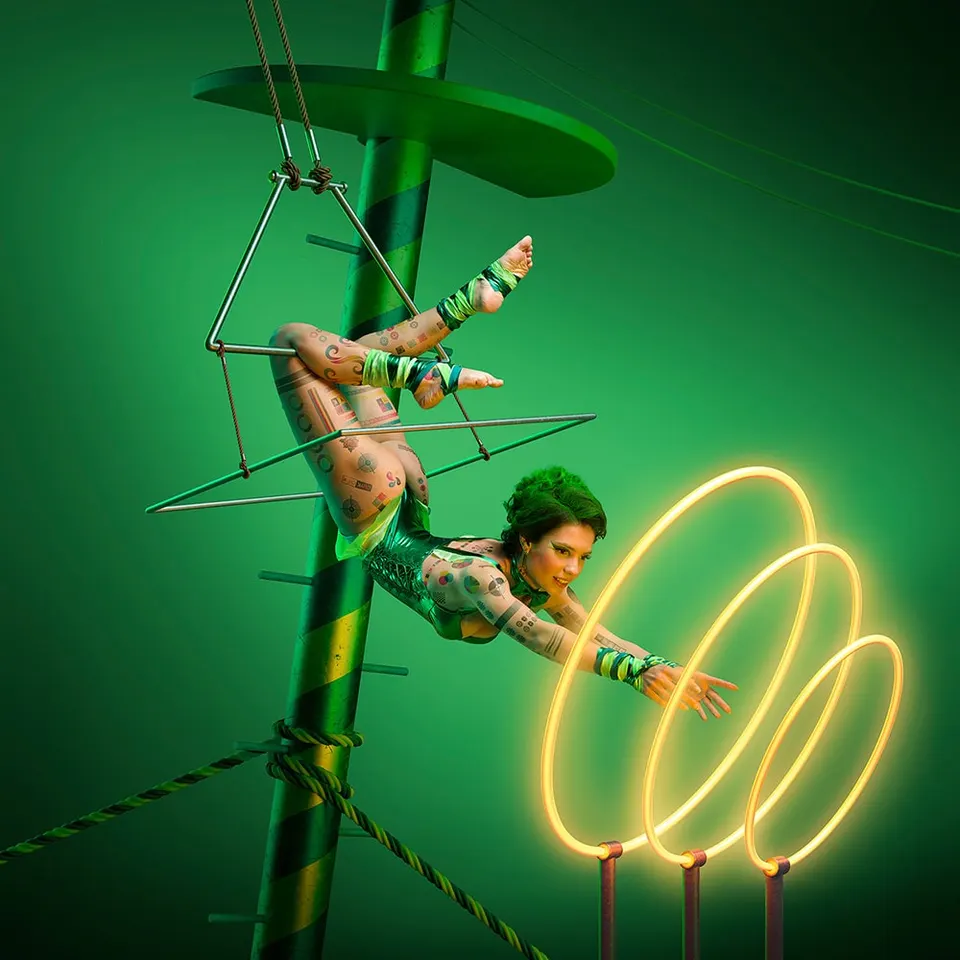
– When the first AI of this kind for images appeared, my first association was precisely with your photographs—we started enjoying it by writing surreal scenarios: “An astronaut riding a horse and drinking beer on the Moon.”
– On the one hand I like it, but on the other
it irritates me, because young people’s consumption of culture is being brutally dulled, their sense of aesthetics blown to smithereens.
And that’s disastrous for the future.
– But why cultivate that sensibility and perception? Fine, someone will write better than a million other people, but AI will also write better than 999,000. It’s very demotivating, like learning a foreign language knowing AI will do better than you and 99 percent of other people.
– The future right now is more opaque and murky than it has ever been.
But I keep thinking that in my world, in my industry, AI will be used for research and for predicting how things should be. Whether to make this mobile banking product one way or another, and it will be infallible. After that, though, there will be a curator figure, a human—perhaps such specialists are only just beginning to emerge—who will say what the conceptual direction should be. From there on, the AI executor will be called in. That’s how I imagine it. Having always been a curator, I really don’t think I have anything to worry about.
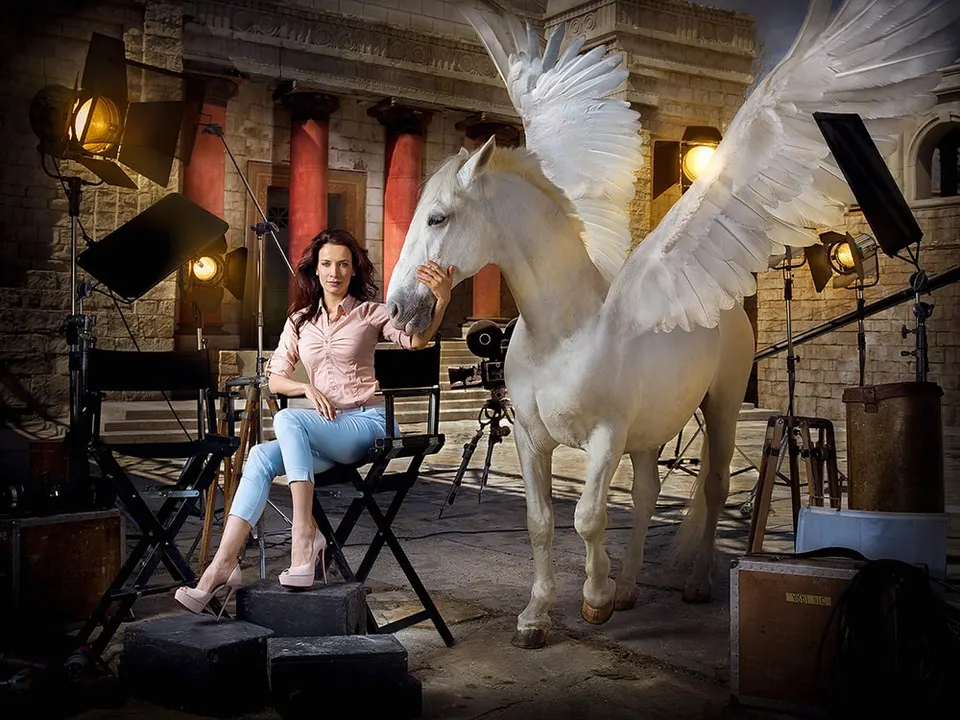
– I see one more direction for the future of your profession—hyper-personalization. AI gives you a tool supplemented by the “knowledge” of social networks and internet giants, and that will make it perfect. Today Facebook knows many people better than their partners do. And that will create the next step in advertising, which is dystopian.
– I agree. I already see it with these perfect social media algorithms—showing me what they think I want to see. I’m a photographer and digital artist, I post photographs, but I don’t look at them. The algorithms get a bit stumped, they don’t know what to show me. They show me wildly varied things, because I myself am wildly varied in what I look for.
– Is there something you can’t wait to see appear? A technology that doesn’t exist yet?
– I hope AI keeps getting better, because I suffer from the fact that it can’t do what I want. Right now, to use something, I combine 15 prompts with several stock images and with elements I’ve shot on location, with all the blood and sweat. From that point of view, I want it to become higher quality, better.
I still find mistakes and have to correct them. These are very photographic matters—for example, depth of field often gets confused. Which things should be in focus and which shouldn’t, where each subject should sit in the composition. If you place three subjects in depth, meters apart—a mother with a baby, a grandmother behind her and a kitchen—ChatGPT helps me create a prompt, but Midjourney starts getting confused about what goes in which plane. I generate them separately, assemble them, fix the background, and only then do I get what I’m after. I wish I didn’t have to assemble them.
Everything I use, AI or not, is just tools so I can do my job and express myself the way I think is right. At this stage AI is just a tool for me. Yes, a wonderful tool! But there’s still more to get out of it.
– And is there something that would frighten you if you saw it was capable of doing it?
– Yes, and it’s already capable of doing it. I see how
it damages the aesthetics and philosophy of young people, of our future.
Of those whose fingers will be on the red button tomorrow. They no longer think about things in detail. AI is getting young people used to focusing on the result; the process is gone. Everyone wants to get the finished picture, nobody wants to bother creating it.
I take photos because I like taking photos.
What comes out in the end? That’s a detail. That’s how, in my view, AI is harming young people right now. They forget how to do it because they don’t see the process. They don’t know what it’s like to go out, to sweat, to find the people, line them up in front of the camera, wait for the sun to sit just right, wind the film or load the digital camera, and shoot.
For me that’s an immense pleasure. I’d do it for that alone. But right now young people, and people who use AI in general, are all about the result. That’s the sad story.
– How can we return to the process when there really… is no obvious point? You see, for example, that AI creates something much better than you’ll ever be able to in a given field. What would motivate you to dive into the process? Why make things hard for yourself?
– Right now there’s a boom in analog photography; people buy chemicals, film rolls, they shoot… A single roll costs 45 leva (about $24)!
There will always be that, the parallel world. There will always be the seekers of the process, the connoisseurs who will look for the moment. But we can’t stop progress either.
Personally, I put my hope in what you do. Your site shows things, opens people’s eyes, wakes them up. But otherwise the consumption of AI-generated images will just keep growing.
– We can see that return with vinyl records too, but it’s for those 10 percent at most, the true connoisseurs, who nonetheless seem doomed to be a minority from now on.
– They really are a minority. I don’t know if it’s worth fighting that. There’s really nothing to throw a tantrum about. Somehow, in my own eyes, I’m turning into an armchair philosopher who grumbles. Meanwhile
we increasingly live in a society that belongs to those who adapt.
If you don’t adapt, you fall behind. You know how many photographers I see, young people without work, because they don’t want to adapt or can’t.
– I think it’s like that in every field now… Thank you for the fascinating conversation, I’d be glad to continue it soon!
Do you have an opinion on these topics? Do you think they matter? Come and continue the conversation on February 5 at 7 p.m. at Soho Sofia. Besides today’s guest and me, the conversation about the challenges and opportunities new technologies present us with will also include the artificial intelligence lecturer Yordan Darakchiev. More about the event here.